How an Abyssinian Compares to a Bengal as a Pet
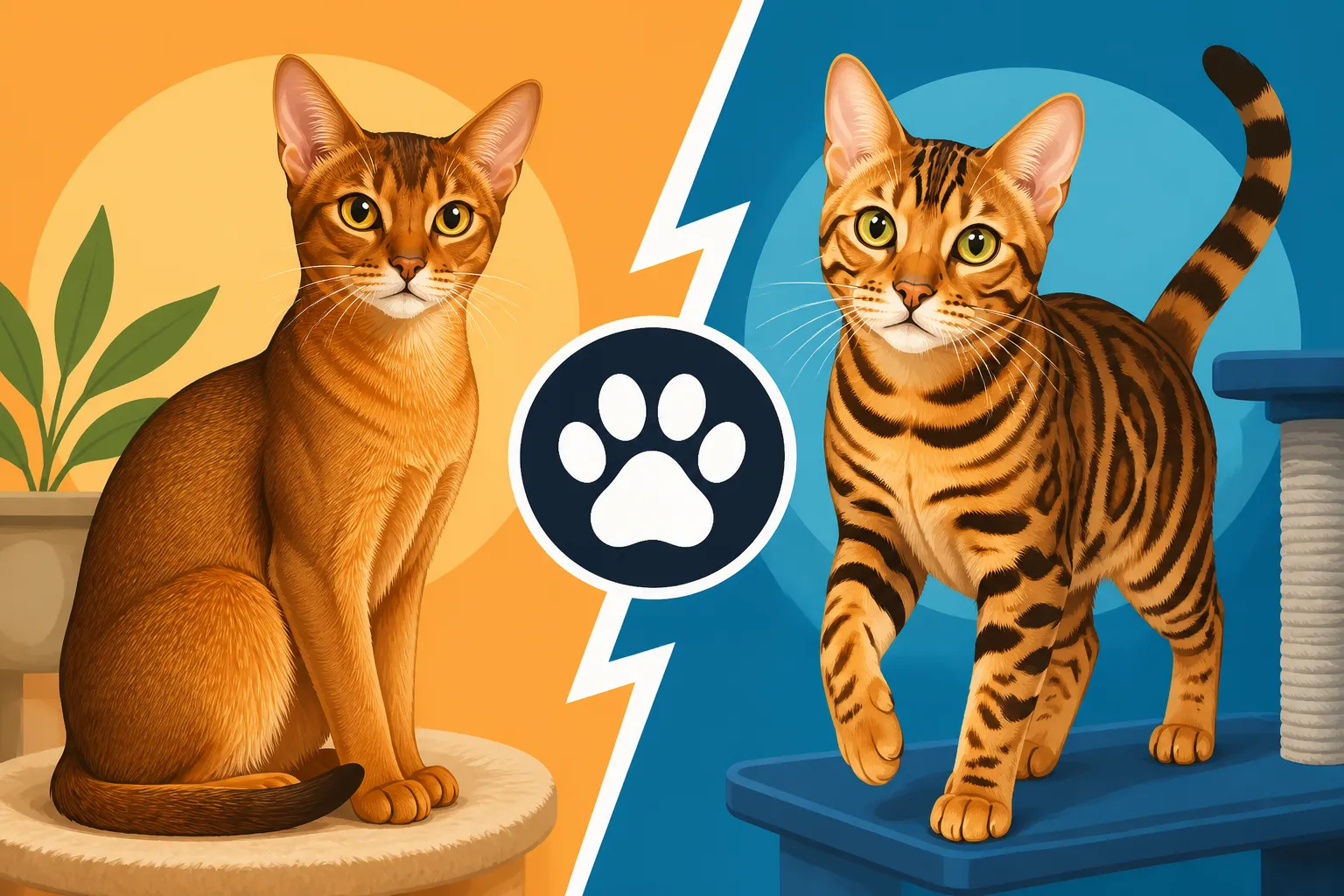
Choosing between an Abyssinian and a Bengal can be tricky: both are athletic, curious cats, but their energy, play style, and daily needs may feel quite different at home. This guide compares the two breeds as pets, from companionship and exercise to grooming and household fit, so you can picture what life with each might actually look like.
Personality and everyday companionship
How their energy shows up at home
Abyssinians are often busy, social cats who like to be involved in whatever is happening. One may trail you from room to room, perch nearby while you work, or investigate an open cupboard the moment you turn your back. Their affection can be less about settling on a lap for a long stretch and more about staying close, joining an activity, or finding a high spot with a view of you.
Bengals are also active and inquisitive, but their play can come across as especially physical and intense. Many enjoy chasing, climbing, exploring, and interactive games that let them stalk and pounce. That does not mean every Bengal is boisterous or every Abyssinian is constantly on the move; individual temperament, early socialization, age, and the cat’s home environment all matter.
Both breeds tend to do best when daily life offers more than food, a litter box, and a quiet corner. They need attention and outlets for their curiosity. If you are drawn to an Abyssinian’s need to participate in household life, The Abyssinian Is the Busiest Cat in the House offers more detail on what that can look like day to day. For the Bengal, the practical question is similar: can you provide predictable play and safe places to explore, rather than expecting an energetic cat to entertain itself indefinitely?
Affection, independence, and social needs
Neither breed comes with a guarantee of a particular cuddling style. Abyssinians are frequently people-oriented, but an affectionate Aby may show it by following you, chirping, or settling close by rather than curling up on your lap. Bengals may also seek interaction and companionship, though some are more independent or selective about when they want contact.
Think about the kind of companionship you enjoy. If you want a cat that often stays in the same room and watches what you are doing, an Abyssinian may suit you well. If you enjoy active, hands-on play and a cat that turns ordinary moments into opportunities to investigate, a Bengal might feel like a better match. Either way, “independent” should not be mistaken for “fine without company or enrichment.”
A second compatible pet can help in some homes, but it is not a guaranteed fix for boredom. Cats need gradual introductions and enough separate resources, and personalities have to fit. For an Abyssinian, Why a Second Cat Suits an Abyssinian explores the benefits and trade-offs. If you are comparing breeds because you work long days, consider the broader needs described in Why an Abyssinian Should Not Be Left Alone All Day before deciding that either cat will simply adapt to a quiet, empty home.
Exercise, play, and the home environment
Meeting their need for activity
Both breeds need regular opportunities to move, chase, climb, and think. A short burst of play can help, but many young or energetic cats benefit from several engaging sessions spread through the day. Wand toys, tossable toys, food puzzles, and games that encourage a safe version of hunting can make indoor life more satisfying.
Abyssinians often enjoy having a “job”: learning a cue, retrieving a toy, investigating a puzzle, or joining a routine. They may also be quick to invent their own entertainment, which can mean batting small objects off a shelf or testing whether a door is truly closed. A Bengal may similarly need varied activities and interactive play, and some individuals take a particular interest in water or exploring new spaces. Build a routine around your own cat’s preferences rather than relying on breed stereotypes.
When choosing toys, focus on safe construction, variety, and whether your cat actually uses them. If you browse a retailer such as Chewy, for example, compare toy types and product details rather than assuming a large toy pile will solve boredom. Rotate toys so familiar items regain interest, supervise toys with strings or small detachable parts, and put away anything your cat might chew or swallow. For more ideas on giving an active cat purposeful engagement, see How to Give an Abyssinian a Job.
Climbing, space, and safety
A vertical route can matter as much as open floor space for either breed. Cat trees, secure shelves, window perches, and sturdy scratching posts create places to climb and observe. In a smaller home, a thoughtful setup can make the room more interesting without requiring a large amount of additional floor area.
The important word is secure. Check that shelves are firmly anchored, trees do not wobble, and there is a clear route up and down. Keep breakable items away from launch points, and make windows safe with suitable screens. If your cat is a determined climber, do not count on a standard fence or an open window to keep it contained.
Abyssinians are nimble and often attracted to high vantage points; Bengals can also be powerful, agile climbers. You may need to make adjustments after you see what your own cat attempts. How to Make an Abyssinian's Climbing Route Safe offers practical ideas for planning a route that lets a cat climb without turning shelves, appliances, or unstable furniture into hazards.
Daily care, grooming, and household fit
Grooming, feeding, and routine costs
Both breeds have short coats that are generally simpler to maintain than a longhaired cat’s coat. A gentle weekly grooming session can remove loose hair and give you a chance to notice changes in the skin, coat, or body condition. Avoid assuming that short hair means no shedding or no grooming; the amount of loose hair can vary with the individual cat and the season.
Food needs depend on age, health, activity, and body condition, not breed name alone. Feed a complete diet appropriate for your cat’s life stage, keep fresh water available, and ask your veterinarian for help assessing portions. A very active cat still can gain excess weight if treats and meals routinely exceed its needs. When comparing food options at a local shop or through Chewy, read the label and compare complete nutrition information rather than choosing solely by marketing language.
Plan for routine veterinary care, dental checks, parasite prevention where appropriate, and emergency expenses. A breeder or rescue can share the health history they have, but no single conversation replaces ongoing veterinary care. If you are weighing the broader suitability of the breed, Whether an Abyssinian Is the Right Cat for You can help you consider lifestyle fit alongside appearance and personality.
Children, dogs, and other pets
Abyssinians and Bengals can both live successfully with children or dogs in the right circumstances, but the introduction and household habits matter. Teach children to let the cat approach, avoid grabbing or chasing, and recognize when it wants space. Give the cat escape routes and high resting places where small hands and enthusiastic dogs cannot follow.
With dogs, use gradual introductions, supervision, and physical separation when needed. A confident cat may choose to investigate a dog, while a shy cat may need a longer adjustment period. A dog’s behavior matters as much as the cat’s: a calm dog that responds to cues is a different prospect from one that fixates on, pursues, or corners cats.
Small animals such as birds, rodents, and rabbits should be protected with secure separation. Even a friendly cat may have strong chasing instincts, and supervision alone is not a reliable substitute for a barrier. For an Abyssinian-focused look at household introductions and expectations, How an Abyssinian Behaves With Children and Dogs is a useful companion read.
Which breed may fit your life better
A practical comparison
The best choice is not the breed with the more impressive reputation. It is the cat whose needs and temperament fit your everyday routine, home, and expectations. Use the comparison below as a starting point, then ask breeders or rescues about the particular cat’s behavior and history.
| Consideration | Abyssinian | Bengal |
|---|---|---|
| Typical activity style | Curious, social, and often keen to join household activity | Often energetic, athletic, and strongly engaged by play and exploration |
| Companionship | May follow people and stay nearby without being a lap cat | May seek interaction and active play; individual preferences vary |
| Enrichment | Benefits from climbing, puzzles, training, and shared activities | Benefits from varied play, climbing, and opportunities to investigate |
| Grooming | Short coat; regular light grooming is usually manageable | Short coat; regular light grooming is usually manageable |
| Home setup | Secure vertical space and interactive routines are helpful | Secure climbing options and active play routines are helpful |
| Best first question | Can I include an inquisitive cat in my daily routine? | Can I meet the needs of an athletic, curious cat consistently? |
An apartment can work for either breed if the environment is safe and enriched. Square footage alone does not determine whether a cat will thrive. Consider whether you can provide vertical space, daily interaction, scratching options, hiding and resting areas, and a way to keep the cat safely indoors. For Abyssinians, Whether an Apartment Suits an Abyssinian discusses how to think beyond floor space.
Questions to ask before choosing
Before you commit, ask about the cat in front of you rather than relying only on general breed descriptions. Find out how it responds to being handled, what kind of play it enjoys, whether it has lived with other animals, and how it behaves when left alone. For a kitten, ask what social experiences it has had and how the breeder or rescue supports a gradual transition to a new home.
Be honest about your schedule. If you are away most of the day, can you arrange meaningful interaction before and after work? Could a trusted person visit if needed? Do you have the time and patience to introduce a new pet carefully, manage climbing safely, and redirect unwanted behavior without punishment? If the answer is uncertain, it may help to meet adult cats as well as kittens. An adult’s established temperament can make it easier to understand what daily life with that particular cat may involve.
Also think about what you want from a pet. If your ideal cat is content to nap alone for much of the day and rarely seeks activity, either breed could feel like more work than you expected. If you enjoy interaction, play, and making small changes to keep a home engaging, an Abyssinian or Bengal may be rewarding. The right fit is the individual cat whose needs you can meet consistently—not simply the breed that looks most appealing in a photo.
Disclaimer
This article is for general informational purposes only and does not constitute professional advice. Laws, prices and regulations vary by location and change over time. Consult a qualified professional for guidance on your specific situation.