What 150 Years Have Not Changed About the Abyssinian
The Abyssinian has changed in some ways since the breed first appeared in Victorian-era cat shows, but its defining qualities are still easy to recognize: a finely ticked coat, an athletic build, alert curiosity, and a need to be involved in whatever the household is doing. This guide separates the traits that have endured from the details that have shifted over time.
The Abyssinian’s signature appearance has endured
The ticked coat remains the clearest hallmark
An Abyssinian’s coat is not patterned with the bold stripes or spots many people expect from a cat with a wild-looking appearance. Instead, individual hairs carry alternating bands of color, creating a softly blended, shimmering effect across the body. The result is distinctive without looking like a conventional tabby pattern.
That basic feature has remained central to the breed’s identity. The exact shades and coat quality vary, but the impression is familiar: a close-lying coat with a lively, even appearance that seems to change as the cat moves. Light falling across the back can make the banding more noticeable; in dimmer rooms, the same coat may look more subdued.
The ticking is part of what makes the Abyssinian recognizable, but it is also why coat color descriptions can be confusing. The named colors refer to the overall effect of the bands, not to a single solid shade from nose to tail. For a closer look at the mechanics behind that appearance, see How an Abyssinian's Agouti Banding Works and Why an Abyssinian Has No Tabby Stripes.
A lithe, athletic outline remains part of the look
The Abyssinian has long been associated with an agile, balanced body rather than a heavy or stocky one. Its long legs, fine-boned frame, and alert posture contribute to an impression of readiness. Even when it is resting, an Abyssinian may look as though it is listening for the next interesting sound or deciding whether a nearby shelf is worth investigating.
That build is not just a visual detail. It suits a cat that likes to jump, climb, and move quickly through its environment. A tall cat tree, stable shelves, or another safe route to elevated spots can be more useful than adding open floor space alone. If you are setting up a home for one, How Many Vertical Levels an Abyssinian Needs offers practical ideas for making height accessible.
Breed descriptions and show preferences have developed over time, so not every Abyssinian looks identical. Some appear finer, some more substantial, and individual proportions vary. Still, the recurring impression of an elegant, active cat is one of the breed’s most recognizable constants.
The familiar colors have a long-running place in the breed
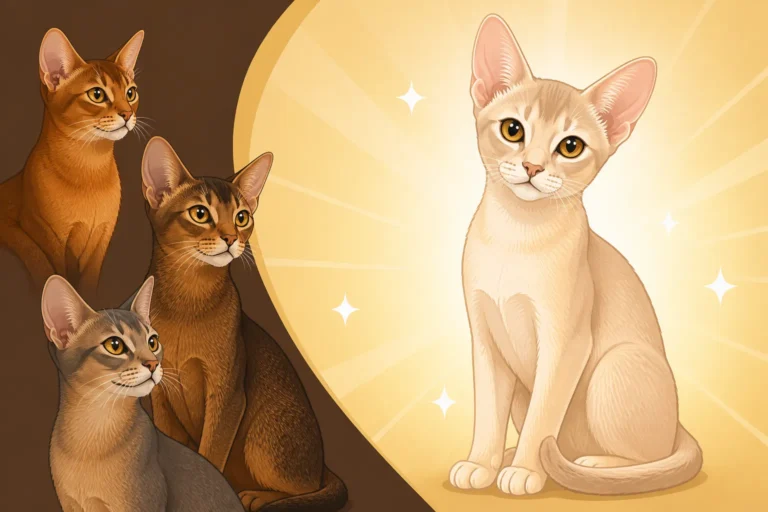
Ruddy, sorrel, blue, and fawn are the four commonly recognized Abyssinian colors in major North American breed standards. Their names can differ between registries and countries, which can make a color seem unfamiliar even when the coat itself is easy to recognize. A sorrel Abyssinian, for example, may be called red in some settings.
These colors share the same basic visual idea: a ticked coat rather than a solid one. The warm or cool tone changes, but the coat’s banded quality remains the feature tying the colors together. That consistency helps explain why the breed can look varied while still having a strong, recognizable appearance.
| Enduring feature | What it looks like | What may vary |
|---|---|---|
| Ticked coat | Alternating bands of color on individual hairs | How strong or even the ticking appears |
| Athletic outline | Lean, balanced, ready-to-move posture | Size, proportions, and individual build |
| Coat color | A blended overall shade rather than a striped pattern | Registry naming and shade intensity |
| Alert expression | Large, attentive eyes and forward interest | Eye color, expression, and facial detail |
Curiosity and activity are still at the heart of the breed
The Abyssinian tends to participate rather than observe
Many cats are content to watch household activity from a comfortable distance. An Abyssinian is more likely to come over, inspect the groceries, follow someone into another room, or investigate the open drawer. This can feel wonderfully companionable, especially for someone who enjoys an interactive pet. It can also be tiring if you pictured a cat who would quietly occupy a sofa cushion all afternoon.
That curious temperament is not a promise that every Abyssinian will behave the same way. Personality depends on the individual, early experiences, health, and environment. But prospective owners should expect a cat that notices routines and opportunities. A cupboard that has opened once may become a regular point of investigation; a high bookcase may become a favored lookout.
The same curiosity makes enrichment important. Rather than relying on a pile of toys left in one spot, rotate play options and create safe ways to climb, explore, and forage. When choosing basic interactive toys, Chewy is one place owners may encounter wand toys and puzzle feeders; whichever retailer you use, check that toys are sturdy and supervise play with loose strings.
Movement and play still matter in daily life
An Abyssinian’s energy is not simply about running around. It often includes short bursts of active play, climbing, watching the outdoors, and seeking company. A cat that has had little stimulation may find its own entertainment, perhaps by pawing at a cabinet, knocking an object from a shelf, or turning a quiet morning into a chase around the house.
A useful routine can be simple: a play session before breakfast, a food puzzle during a busy part of the day, and another interactive session in the evening. The point is not to tire the cat out completely. It is to give its attention and hunting instincts an outlet. A teaser toy can mimic the start-stop movement of prey, while a treat puzzle encourages problem-solving.
Foraging toys, climbing paths, and rotating games often work better as a mix than as a single solution. A puzzle feeder that is initially interesting may become easy once the cat has mastered it. Chewy carries a range of enrichment products, but homemade options can also work when they are safe, clean, and suitable for the cat. For more ideas, see Why Foraging Suits an Abyssinian's Mind.
Engagement does not always mean lap sitting
A common mismatch between expectation and reality is assuming that an affectionate Abyssinian will spend long stretches curled on someone’s lap. Many enjoy being close without remaining still. They may perch beside a person, follow them from room to room, supervise work from a chair back, or seek a brief cuddle before moving on to the next activity.
This style of companionship can be easy to misread. A cat that leaves the lap is not necessarily rejecting its person. It may simply prefer to keep moving and stay involved from a nearby vantage point. An owner working at a desk might find the cat on the windowsill, on a shelf above the monitor, or beside the keyboard, watching the day unfold.
If you want a cat that is consistently content to sit quietly for long periods, the Abyssinian’s social style may feel demanding. If you enjoy a companion that checks in, follows your routine, and brings a little motion into the room, that same quality can be a major part of the appeal. How an Abyssinian Shows Affection Instead of Lap Sitting explores this difference in more detail.
The coat is distinctive, but care is still relatively straightforward
The short coat does not need elaborate grooming
The Abyssinian’s close coat is one of the easier parts of living with the breed. It generally does not require the regular dematting and extensive brushing associated with longer coats. A gentle weekly pass with a suitable grooming mitt or comb can help remove loose hair and give you a chance to notice changes in the skin or coat.
More grooming is not always better. Aggressive brushing or tools designed to strip out undercoat can flatten the coat or irritate the skin. If your cat dislikes being handled, begin with brief, calm sessions and stop before either of you becomes frustrated. A few gentle strokes followed by a reward can build comfort more effectively than trying to finish a full grooming routine at once.
A basic grooming mitt or soft comb is easy to find through many pet retailers, including Chewy, though the specific tool matters less than using it gently and choosing one suited to a short coat. More detail is available in An Abyssinian Needs Brushing Once a Week and No More and Why the Wrong Brush Flattens an Abyssinian's Ticking.
Dental care deserves more attention than coat styling
Because the coat is low-maintenance, it can be tempting to think the Abyssinian is a low-maintenance cat overall. That is not quite right. Routine care also includes checking ears, trimming claws as needed, monitoring weight, and paying attention to the mouth. Getting a cat used to gentle dental handling early can make later care less stressful.
Toothbrushing is a gradual process, not a wrestling match. Start by letting the cat investigate the toothbrush and pet-safe toothpaste, then work toward brief contact with the teeth. If brushing is not possible, ask a veterinarian about appropriate alternatives and dental checks. Treats marketed for dental care do not replace a professional examination or treatment when a problem is present.
Look for signs such as red or swollen gums, dropping food, reluctance to chew, or a change in eating habits. These signs do not identify a specific condition on their own, but they are good reasons to arrange a veterinary assessment. The guide Brushing an Abyssinian's Teeth Matters More Than Its Coat explains why oral care deserves a regular place in the routine.
A low-shedding appearance does not mean no loose hair
Abyssinians may seem to shed less conspicuously than cats with dense or long coats, but loose hair still exists. It can be easier to miss because the coat is short and lies close to the body. Seasonal changes, indoor heating, stress, and health can all affect how much hair you notice.
A small amount of loose hair on a grooming mitt is usually less important than a sudden change in coat condition. Patches of thinning, persistent scratching, a dull or rough coat, or excessive grooming should be discussed with a veterinarian. The coat can offer clues about general well-being, but it cannot tell the whole story.
Regular handling also helps an owner learn what is normal for their cat. If the coat suddenly feels different or the cat reacts strongly to touch, pay attention to the change rather than assuming it is simply a grooming issue.
What has changed, and what prospective owners should know
The breed’s history is not the same as a proven family tree
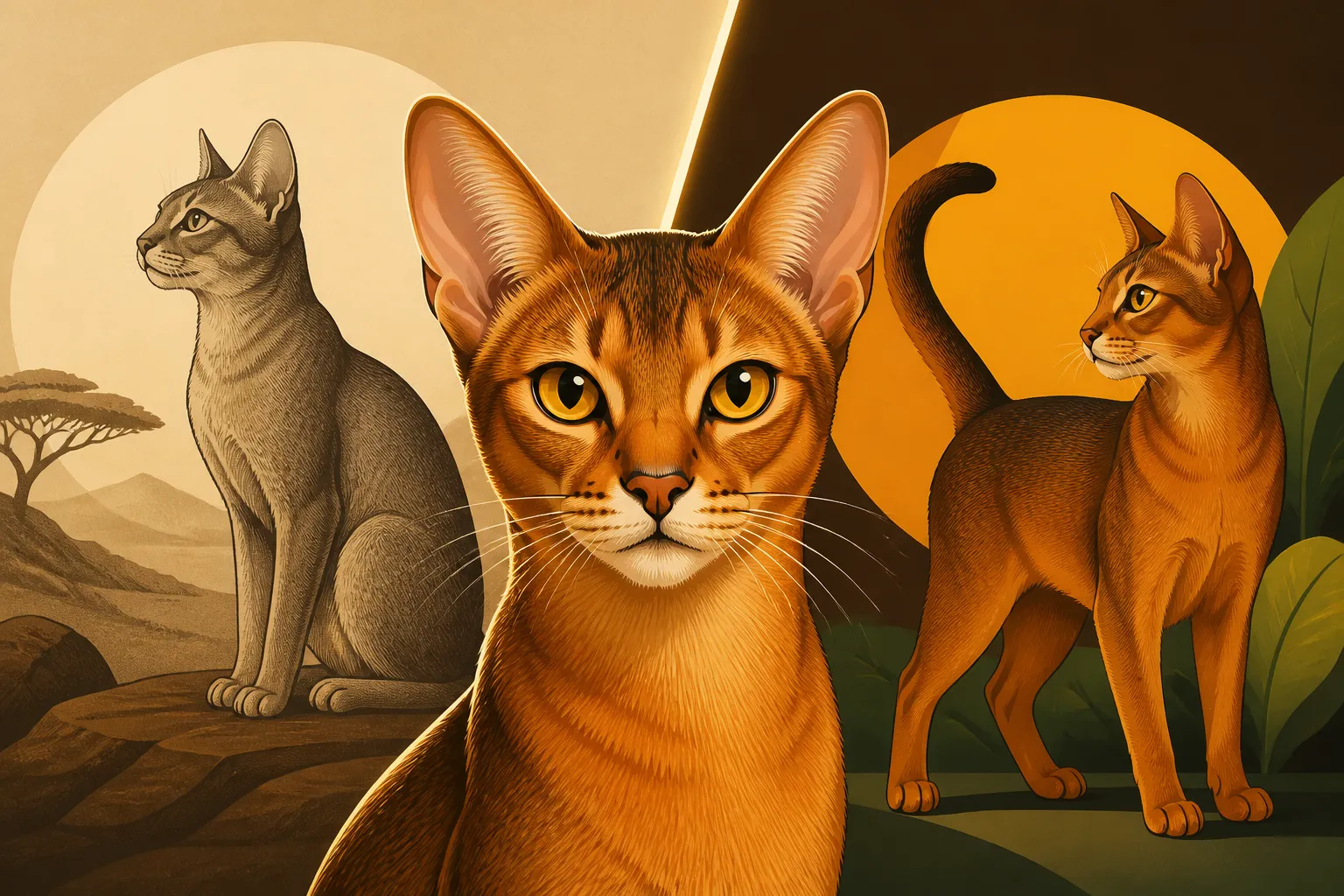
The name Abyssinian suggests a clear connection to Abyssinia, the former name commonly associated with Ethiopia. The breed’s origin story, however, is more complicated than the name implies. Early accounts and popular stories helped shape how people talked about the cat, but a story about where a breed came from is not the same as documented ancestry connecting every modern Abyssinian to a particular historical cat.
That distinction matters when talking about what “has not changed.” The breed’s recognizable appearance and reputation have persisted through generations of breeding, but it would be too strong to claim an unbroken, fully documented line extending back to a single ancient population. Modern breeding practices and registration shaped the breed as it is known today.
The history is still fascinating, especially because the Abyssinian has long invited comparisons with cats depicted in ancient art. For a careful look at the evidence and the story behind the name, see The Abyssinian Is Probably Not From Abyssinia and What Genetic Studies Say About the Abyssinian's Origin.
Modern care is different, even when the cat’s needs feel familiar
The home environment has changed dramatically since early show-era Abyssinians were first described. Most companion cats today live indoors, rely on their people for structured play, and share space with household appliances, screens, and modern furniture. The need for stimulation is not new, but the ways owners meet it have changed.
An indoor cat can still climb, hunt through play, and watch birds from a window. A tall, stable cat tree, secure window perch, and daily interaction can make a home more engaging without giving a cat unsupervised access outdoors. Cat-safe shelves should be firmly installed, and climbing routes should avoid fragile objects, hot surfaces, and hazards such as open windows without secure screens.
Care expectations have also become more deliberate. Owners can record weight, keep track of veterinary visits, and build routines around dental care and enrichment. Those habits do not change the breed’s underlying temperament; they help people meet its needs in a modern household.
Choosing an Abyssinian still means choosing an active companion
Before bringing one home, be honest about your schedule and expectations. An Abyssinian may be a good fit for someone who enjoys play, can provide safe climbing options, and is happy to have a cat nearby during everyday tasks. It may be a harder fit for someone who wants a very quiet pet that is comfortable being left without much interaction for long stretches.
That does not mean every household needs a second cat, or that every Abyssinian will be unhappy as an only pet. It does mean companionship and enrichment should be planned rather than left to chance. A predictable play routine, a view from a secure window, and food puzzles can help, while a compatible animal companion may suit some households after careful introductions.
The core decision is less about whether the Abyssinian has stayed exactly the same and more about whether its enduring traits suit your life. The coat may be easy to care for, but the cat itself is often highly engaged. People who enjoy that combination tend to appreciate the breed’s energy and presence; people expecting a decorative, hands-off pet may be surprised by how much participation it wants.
Disclaimer
This article is for general informational purposes only and does not constitute professional advice. Laws, prices and regulations vary by location and change over time. Consult a qualified professional for guidance on your specific situation.