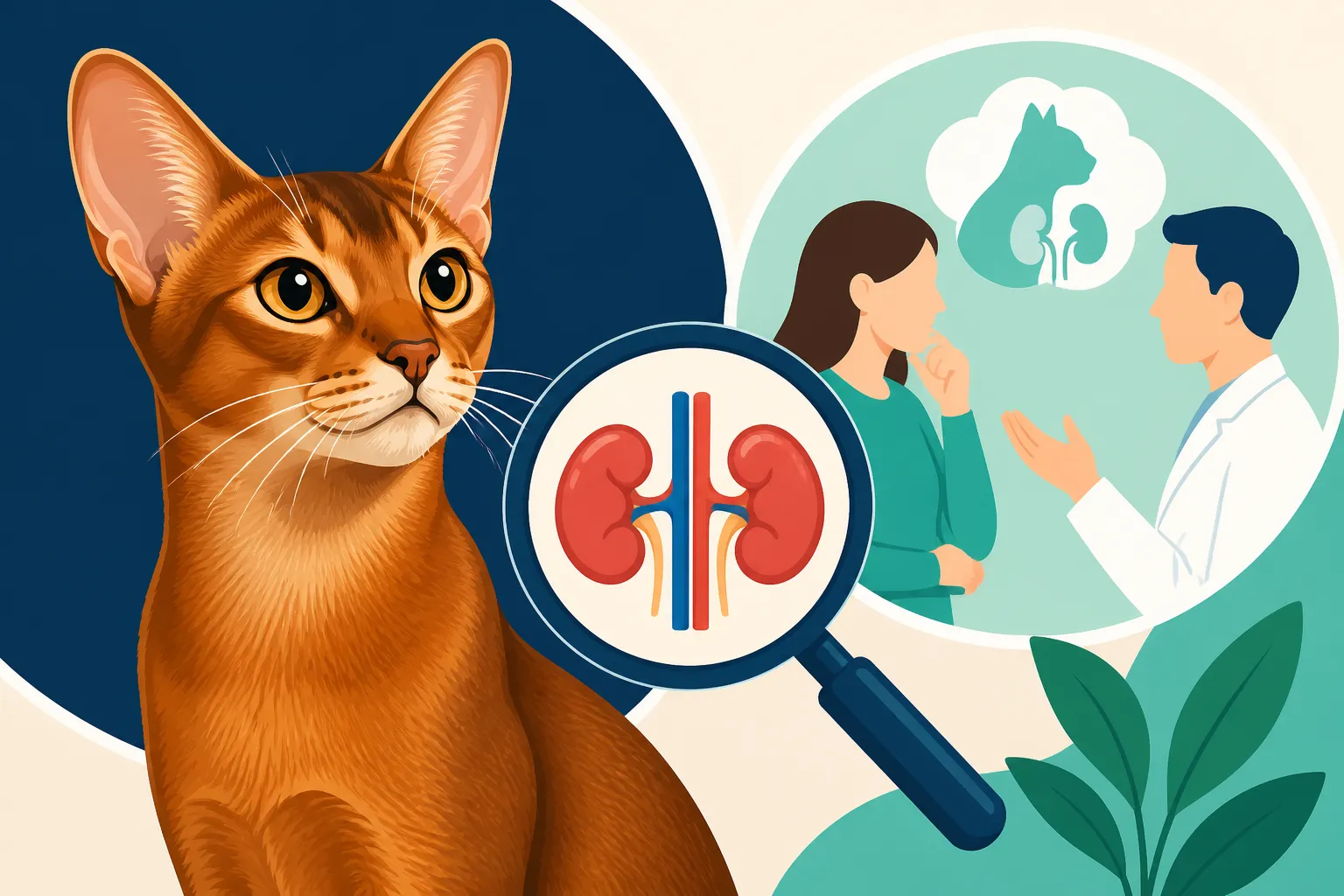
What to Ask About an Abyssinian Line’s Kidney History
It’s absolutely heartbreaking to think about, but one of the most devastating health challenges an Abyssinian cat can face is kidney disease, particularly a cruel genetic predisposition called renal amyloidosis. As a future or current Abyssinian parent, you deserve to feel empowered and informed, not overwhelmed, when it comes to understanding this serious issue. This guide is here to walk you through exactly what questions you need to ask breeders about their lines' kidney history, helping you make the most informed decision possible.
Understanding Renal Amyloidosis in Abyssinians
When we talk about kidney problems in Abyssinians, one particular condition looms large: renal amyloidosis. This isn't just a simple kidney infection or the kind of age-related decline many older cats face; it's a specific, often aggressive disease that can strike far too young. It's a heavy topic, but knowing about it is your first line of defense.
What is Renal Amyloidosis?
At its core, renal amyloidosis is a disorder where abnormal protein — specifically, an amyloid protein variant – begins to deposit in various organs, but most critically for Abyssinians, in the kidneys. Think of it like a slow, insidious build-up of microscopic gunk that the body can't clear. These sticky, insoluble proteins accumulate within the kidney tissue, slowly choking off the normal function of these vital organs. Over time, these deposits damage the nephrons, which are the tiny filtering units of the kidneys. As more and more nephrons are affected, the kidneys lose their ability to filter waste products from the blood, leading to a cascade of health issues and ultimately, kidney failure. It’s a silent thief, often working in the background until the damage is extensive.
This isn't a condition your cat can "catch" from another animal or from environmental factors; it's a genetic predisposition, meaning it's something they inherit from their parents. Because of this, understanding the lineage of your Abyssinian is incredibly important. The disease doesn't just appear out of nowhere; there's a genetic blueprint involved, even if we don't fully understand all the nuances of that blueprint yet.
Why No Gene Test Exists for Abyssinian Amyloidosis
One of the biggest frustrations for both breeders and prospective owners is the agonizing fact that, unlike other genetic diseases with clear markers, there is currently no definitive DNA test for Abyssinian renal amyloidosis. You might wonder why, in this age of advanced genetic testing, we can't just swab a cat's cheek and get an answer. The truth is, it's far more complex than a single gene mutation.
Renal amyloidosis is believed to be a polygenic condition. This means that instead of being caused by a single "bad" gene, it likely involves multiple genes interacting with each other, possibly alongside environmental triggers, to express the disease. Pinpointing all these interacting genes and understanding their combined effect is an immense scientific challenge. It's not like searching for one specific misspelled word in a book; it's more like trying to understand how an entire library of books influences a single outcome, with some books holding more sway than others. Therefore, unlike genetic tests for conditions like Why No Gene Test Exists for Abyssinian Amyloidosis or How the CEP290 Test Clears an Abyssinian, where a clear "positive" or "negative" result can be given, amyloidosis remains elusive. This lack of a direct test is precisely why breeders must rely so heavily on meticulous record-keeping and family history, and why you, as a buyer, need to know what questions to ask.
How Young an Abyssinian Can Lose Its Kidneys
The onset of renal amyloidosis can be shockingly early and rapid in Abyssinians, which is part of what makes it so devastating. While many cats develop chronic kidney disease as they age, typically in their senior years, Abyssinians with amyloidosis can show signs of kidney failure much, much younger. It’s not uncommon for affected cats to begin showing symptoms between one and five years of age, though some can be older or even younger. This is a crucial distinction.
Imagine bringing home a vibrant, playful kitten, full of energy and mischief, only for them to start showing signs of serious illness before they even reach middle age. This is the reality for some families with Abyssinians affected by amyloidosis. The progression can be swift once clinical signs appear, leading to a heartbreakingly short lifespan. While some cats might live for a year or two after diagnosis with careful management, others decline much faster. The early onset nature of this disease underscores why asking about generational health is not just prudent, but absolutely essential. It’s not just about what an Abyssinian lives; it's about making sure you’re not looking at a cat whose expected How Young an Abyssinian Can Lose Its Kidneys is drastically cut short.
Why Family History is Paramount
Given the absence of a direct genetic test for renal amyloidosis in Abyssinians, the most powerful tool we have is detailed family history. It’s the closest thing to a crystal ball we’ve got, and a responsible breeder understands its critical importance. Relying solely on the health of the immediate parents isn't enough; you need to dig deeper into the ancestral lines.
The Limitations of Individual Cat Testing for Amyloidosis
You might think that if the parents of a kitten are healthy, then the kitten must be fine. While healthy parents are always a good start, for amyloidosis, individual blood tests like checking creatinine or SDMA levels in a young, seemingly healthy cat aren't enough to rule out the risk. These blood values are markers of current kidney function and damage, not predictors of future disease in a cat that hasn't yet started showing symptoms.
A cat could have normal bloodwork today, yet still carry the genetic predisposition for amyloidosis and develop kidney failure years down the line. It's like checking someone's blood pressure; a normal reading doesn't tell you if they have a genetic predisposition to heart disease that might manifest later in life. So, while your breeder should be performing regular vet checks on their breeding cats, including bloodwork, understand that Why a Normal Creatinine Does Not Clear an Abyssinian from the risk of developing amyloidosis later. These tests become vital for monitoring once a cat is older or showing signs, but they don't act as a preventative screening tool for young, healthy animals.
How a Breeder Tracks Kidney Deaths by Line
A truly responsible Abyssinian breeder views their breeding program as a long-term commitment to the health and well-being of the breed. This means meticulous, almost obsessive, record-keeping that goes far beyond just pedigrees and show titles. When it comes to something as insidious as amyloidosis, they're tracking the lifespans and causes of death for every cat in their lines, even those that have moved to pet homes.
They keep detailed notes on when a relative passed away and, crucially, why. Did an aunt die of kidney failure at three years old? Did a grandparent live to a ripe old age of 15 with no kidney issues? This data, gathered over decades, helps them identify "risk lines" – those families where amyloidosis has appeared – and "clear lines" – those where it has not. This kind of deep historical tracking is essential because it allows them to make informed decisions about which cats to breed, aiming to minimize the risk of passing on this devastating predisposition. This is also why a good breeder will often have older cats in their home, allowing them to assess longevity and health trends personally. If a breeder can tell you Why Abyssinian Breeders Track Kidney Deaths by Line, you know you're talking to someone serious about breed health.
What an Abyssinian's Grandparents Reveal About Its Kidneys
The focus shouldn't just be on the immediate parents of a kitten; it absolutely needs to extend to the grandparents and even great-grandparents. Think of it like a family tree for health. Because amyloidosis is inherited, even if the direct parents appear healthy, they could be carriers or come from lines where the disease has manifested in previous generations. The genetic dice can roll in many ways, and a disease that skips a generation can still pop up in the next.
When you ask about the health of the grandparents, you're looking for patterns. Has the maternal grandmother lived to a healthy old age, or did she pass from kidney failure relatively young? What about the paternal side? A strong history of longevity and kidney health in all four grandparents and their siblings offers much more reassurance than just seeing healthy parents. A responsible breeder will be able to discuss the health of these ancestral cats openly and will often proactively provide this information. They understand that What an Abyssinian's Grandparents Reveal About Its Kidneys is a cornerstone of responsible breeding for this particular ailment.
Essential Questions to Ask Your Breeder
Now that you understand the background, let's get down to brass tacks: what specific questions should you be firing off to prospective breeders? These questions aren't meant to be accusatory but rather to open up a transparent dialogue about their breeding practices and the health history of their cats.
Direct Questions About the Breeding Pair's Ancestry
Don't be shy about asking direct, pointed questions about the health history of the specific cats involved in your kitten's lineage. This is critical for assessing risk.
- "Have any cats in the direct lineage of this kitten – parents, grandparents, or their full siblings – ever been diagnosed with or died from renal amyloidosis or unexplained kidney failure?"
- This question is designed to get specific details. A good breeder will have these records and be able to discuss them openly, even if the answer isn't perfect. No line is entirely without any health issues, but it's about transparency and how they manage known risks.
- "At what age were they diagnosed or did they pass away from kidney issues, and what were the circumstances?"
- The age of onset is incredibly important. A cat dying of kidney failure at 14 is a very different scenario from one who succumbed at three. Early onset is a huge red flag for amyloidosis. Knowing the circumstances can also provide context, though it might be upsetting to hear.
- "Can you provide information on the general lifespan and causes of death for the parents and grandparents of this kitten?"
- This helps you gauge overall longevity trends in the line. While kidney disease is a focus, general health and longevity in the line speak volumes about the breeder’s commitment to robust genetics. You want to see a history of cats living into their teens, not dying prematurely from undisclosed causes.
Inquiring About the Breeder's Screening Protocols
Beyond just history, you want to know what a breeder is doing now to actively monitor and mitigate risks. Their practices reveal their dedication to the health of the breed.
- "What proactive measures do you take to monitor kidney health in your breeding cats, particularly as they age?"
- Responsible breeders understand that even without a genetic test, they can monitor their adult breeding cats for early signs of kidney issues. This often includes yearly bloodwork (including SDMA, BUN, Creatinine) and urine tests (like urine protein:creatinine ratio, or UPC). These tests can catch kidney dysfunction in its very early stages, allowing a breeder to make informed decisions about retiring a cat from breeding if potential issues arise, preventing the spread of problematic genes.
- "Do you share these results, and how do you use this information to make breeding decisions?"
- A transparent breeder will be happy to show you actual vet records, even if they redact sensitive personal information. They should be able to articulate how they analyze this data. Do they avoid breeding cats with a high UPC ratio? Do they pair cats from lines with strong kidney health with those from lines with less certain histories to dilute potential risk? Their answers should reflect a thoughtful, proactive approach.
- "Do you retire cats from breeding if kidney issues appear in their offspring or close relatives?"
- This is a crucial question. A breeder focused on the long-term health of the breed will make difficult decisions. If a cat produces offspring who later develop early-onset amyloidosis, or if a close relative of a breeding cat succumbs to the disease, a responsible breeder will re-evaluate that cat's place in their program. It's not about blaming the cat, but about protecting future generations.
Understanding the Health Guarantee's Scope
Health guarantees can provide some peace of mind, but it's vital to understand their specific limitations, especially concerning diseases like amyloidosis.
- "What does your health guarantee specifically cover regarding kidney disease, and what are the terms if a kitten develops issues related to renal amyloidosis?"
- Many breeders offer guarantees against genetic diseases for a certain period, but amyloidosis is often a tricky area due to its polygenic nature and late onset. Some guarantees might cover conditions that manifest within the first year, but amyloidosis can appear much later. Be prepared for a guarantee that might not explicitly cover amyloidosis, or covers it only under very specific circumstances, because of the challenge in testing for and predicting it.
- "How long does the health guarantee run, and what actions are required on my part to keep it valid?"
- Understand the timeframe. A guarantee for a few months for an issue that might appear years later is of limited comfort. Also, be aware of any conditions, such as regular vet visits or specific dietary requirements, that might be necessary to keep the guarantee active. Asking Whether an Abyssinian Guarantee Covers Kidney Disease is one of the most important questions you can pose.
Here's a quick comparison of what you might hear:
| Question | Red Flag Breeder Answer | Responsible Breeder Answer |
|---|---|---|
| Any amyloidosis in lines? | "Never! My cats are perfect!" (without documentation) | "We've had X cat affected at Y age, but we've bred away from that line, or monitor closely." |
| What age were relatives affected? | "I don't really keep track of pet homes, sorry." | "Aunt Mildred passed at 4 from kidney issues, but her full sister lived to 16 healthy." |
| Proactive monitoring? | "My vet says they're fine at their annual checkup." | "Our breeding cats get yearly blood panels and UPC ratios after age 2, here are the results." |
| How do you use this info? | "If they're healthy, I breed them." | "We evaluate trends, aim to pair strong lines, and retire cats if a pattern emerges." |
| Health guarantee for kidney disease? | "Covers everything!" (without written specifics) | "Our guarantee covers genetic issues for X years, but amyloidosis is complex and requires specific conditions due to no test." |
Red Flags and Trusting Your Gut
When you're dealing with such a serious and elusive condition like renal amyloidosis, trusting your breeder is paramount. But trust isn't just given; it's earned through transparency and genuine commitment to breed health. There are definite red flags to watch out for that should make you pause and reconsider.
Signs a Breeder May Be Hiding Information
A breeder who is evasive or defensive when you ask questions about health history should immediately raise your suspicion. This isn't just about a potential communication style; it can indicate an unwillingness to disclose potentially problematic information. If they consistently offer vague answers, like "all my cats are healthy" without providing any specific details or documentation, that's a problem. A reputable breeder will have detailed records and be willing to share them, even if those records aren't perfect.
Furthermore, if a breeder seems to downplay the severity or prevalence of amyloidosis within the Abyssinian breed, be wary. They might suggest it's "not really an issue anymore" or that "it only affects a tiny percentage." While it may not affect every Abyssinian, it is a significant concern for the breed, and a responsible breeder acknowledges this reality and actively works to address it. A lack of transparency around health guarantees, or a refusal to let you speak with their vet (with their vet's permission, of course) about their general health protocols, are also major warning signs.
Why an Abyssinian Sold Cheap Is Usually Untested
It's tempting to look for a bargain, but when it comes to pedigree animals, a significantly lower price often comes with hidden, and potentially heartbreaking, costs. Responsible breeding is expensive. It involves significant investments in health testing (for conditions that do have tests, like Pyruvate Kinase Deficiency Is the Abyssinian's Best Known Test and PRA-rdAc Takes an Abyssinian's Sight by Five), quality food, excellent veterinary care for breeding cats and kittens, and the time and effort required for meticulous record-keeping and screening potential buyers.
A breeder selling kittens for a price that seems "too good to be true" is usually cutting corners somewhere, and health screening is often the first thing to go. This isn't just about the upfront cost of DNA tests; it's also about the ongoing veterinary monitoring for adult breeding cats that helps track potential amyloidosis risk. If a breeder isn't investing in these fundamental aspects of responsible breeding, then the likelihood of genetic health issues, including amyloidosis, can increase dramatically. This is why Why an Abyssinian Sold Cheap Is Usually Untested is a truism in the world of pedigree cats. You might save a little money on the purchase price, but you could end up with massive veterinary bills down the line.
The Importance of Breeder Transparency
At the end of the day, transparency is the bedrock of a good relationship with your breeder and the best indicator of their ethical standards. A truly responsible and ethical Abyssinian breeder will welcome your questions, no matter how many you have or how detailed they are. They understand that you're investing your heart and your resources into a new family member, and you deserve to be fully informed.
They won't just provide information; they'll proactively offer it. They’ll educate you about the breed's specific health challenges, including amyloidosis, and explain their strategies for minimizing risk. They will openly discuss the known issues within the breed and within their own lines, demonstrating a commitment to honesty over perfection. This level of openness builds trust and shows that they are dedicated to the long-term welfare of their cats, not just making a quick sale. When a breeder is open about How to Vet an Abyssinian Breeder Before Paying, it speaks volumes about their integrity.
Life with an Abyssinian and Kidney Health
Bringing an Abyssinian into your home, whether you've vetted the breeder thoroughly or adopted an adult, means committing to their lifelong care. For Abyssinians, this commitment includes being proactively aware of kidney health, even if their lineage seems solid.
Early Detection and Ongoing Monitoring
Even if you’ve done your homework and found a breeder with excellent lines, ongoing vigilance is key throughout your Abyssinian's life. Regular veterinary check-ups are non-negotiable, and they become even more critical as your cat enters middle age. Your vet can perform routine blood and urine tests that, while not preventative for amyloidosis, are crucial for catching any kidney issues in their earliest stages. Pay close attention to subtle changes in your cat's behavior. Are they drinking more water than usual? Are they making more frequent trips to the litter box, or producing larger volumes of urine? These are often the first, most easily missed signs of kidney trouble. Don't dismiss Why a Thirsty Young Abyssinian Is a Red Flag as just normal cat behavior; it warrants a vet visit.
It's a good practice to keep a mental note of your cat's normal drinking and urination habits. If you notice a persistent increase, especially in a young or middle-aged Abyssinian, don't hesitate to schedule a vet appointment. Early detection, even with amyloidosis, can sometimes buy you valuable time and allow for supportive care that can improve quality of life.
Dietary Considerations for Kidney Support
Diet plays a surprisingly significant role in supporting overall kidney health in cats, and this is especially true for Abyssinians, regardless of their genetic predisposition to amyloidosis. Cats are designed to get much of their water intake from their food, so a high-moisture diet is critically important. This means feeding wet food, whether canned, pouch, or fresh options, over a diet composed solely of dry kibble. Dry kibble, even premium brands, simply doesn't provide enough hydration, forcing the kidneys to work harder.
Making sure your Abyssinian has access to plenty of fresh, clean water is also vital. Some Abyssinians love drinking from running water, so a cat fountain can be a fantastic investment to encourage higher water intake. Consider options available at retailers like Chewy, where you can find a wide variety of cat fountains and high-quality wet foods. If your cat does receive a diagnosis of kidney disease, your vet will likely recommend a prescription kidney-support diet. Always consult with your veterinarian before making significant dietary changes, especially for a cat with a health condition. Remember, Why Wet Food Protects an Abyssinian's Kidneys isn't just a marketing slogan; it's a physiological truth for felines.
The Role of Pet Insurance
Let's be realistic: managing chronic conditions like kidney disease can be incredibly expensive. From diagnostic tests to specialized diets, medications, and ongoing veterinary visits, the costs can add up quickly. This is where pet insurance can be an absolute lifesaver. It acts as a financial safety net, allowing you to make medical decisions based on what's best for your cat, rather than solely on your budget.
However, the key to pet insurance is to get it before any symptoms of illness appear. Like human health insurance, pet insurance policies typically exclude pre-existing conditions. If your Abyssinian shows signs of kidney disease before you enroll them, that condition will almost certainly not be covered. So, if you're bringing home a kitten, one of the first things you should do is investigate pet insurance providers like Healthy Paws. Getting a policy in place while your kitten is young and healthy provides the best chance for comprehensive coverage should a condition like amyloidosis manifest later in life. It's truly worth considering Whether Pet Insurance Is Worth It for an Abyssinian as part of your overall financial planning for your new family member. While the monthly premiums might seem like another expense, they can protect you from devastating financial strain if a major health crisis occurs. Owning an Abyssinian means budgeting for their What an Abyssinian Costs to Keep Every Year, and insurance is a smart part of that.
Disclaimer
This article is for general informational purposes only and does not constitute professional advice. Laws, prices and regulations vary by location and change over time. Consult a qualified professional for guidance on your specific situation.