How a Somali Turns Up in an Abyssinian Litter
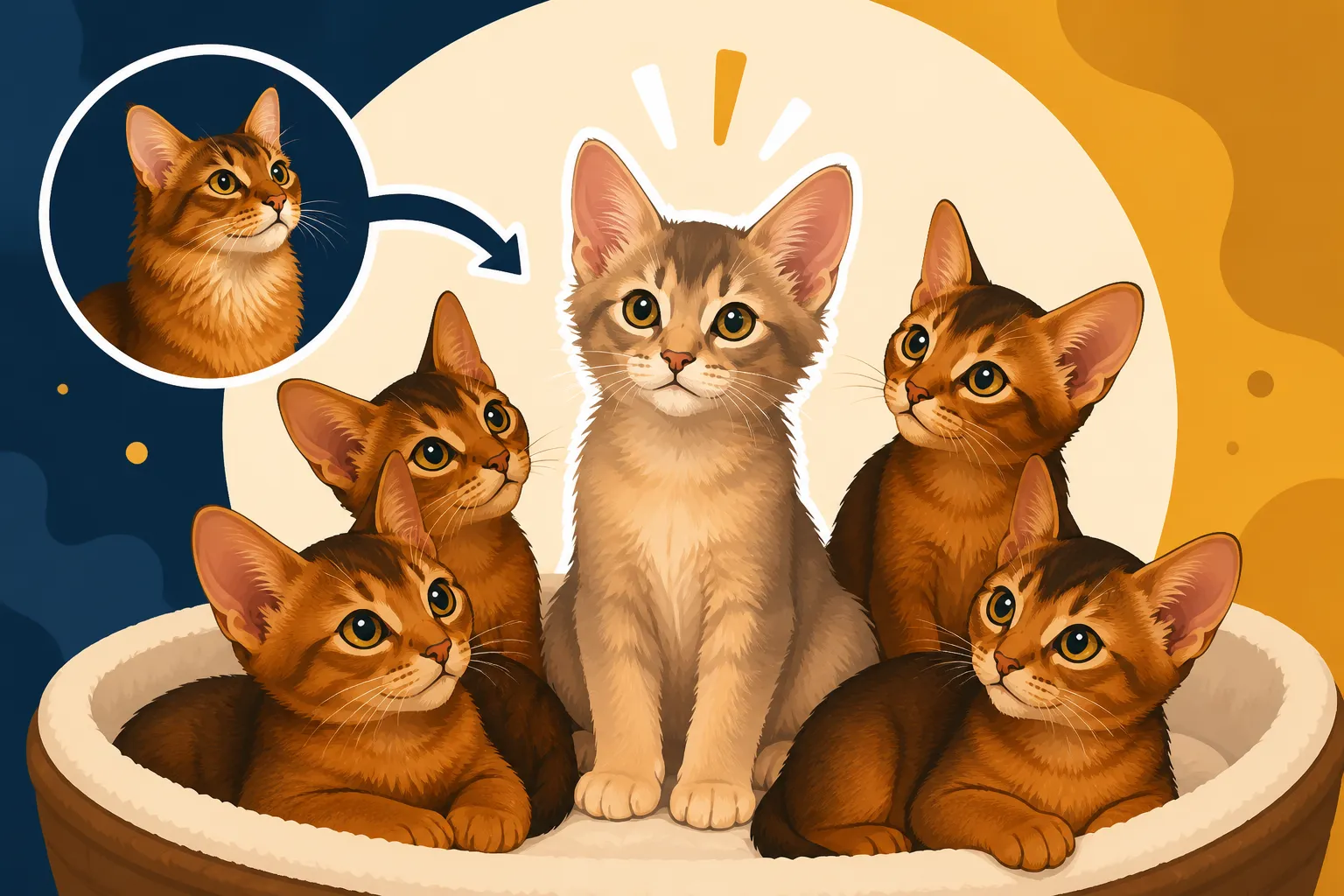
You're excitedly awaiting the arrival of an Abyssinian kitten, perhaps even visiting a litter of those stunning, sleek-coated bundles of energy. Everything is going according to plan, all the kittens have that distinct ticked Abyssinian look… until you notice one, perhaps two, with a noticeably softer, longer, almost fluffy coat. It's a surprise many new and even experienced Abyssinian owners encounter: a long-haired kitten, a "Somali," in a purebred Abyssinian litter. This guide will unravel the genetic mystery behind these beautiful long-haired surprises, explain how to identify them, and discuss what it means for breeders and owners alike.
The Genetic Link Between Abyssinians and Somalis
The appearance of a Somali kitten in an Abyssinian litter isn't a fluke or a sign of an impure lineage; it's a fascinating example of Mendelian genetics at play. The Somali breed itself is, quite literally, an Abyssinian with long hair. They share the same vibrant personality, the same svelte body type, and the same keen intelligence. The only significant difference lies in their coat length, a trait governed by a single, recessive gene.
The Recessive Longhair Gene
To truly understand how a long-haired kitten can pop up in a short-haired litter, we need to talk about genetics, specifically the FGF5 gene. In cats, coat length is determined by a pair of genes, one inherited from the mother and one from the father. The gene for short hair (let's call it "L") is dominant, while the gene for long hair (let's call it "l") is recessive. This means that if a cat inherits at least one "L" gene, it will have short hair. For a cat to have long hair, it must inherit two copies of the recessive "l" gene (ll), one from each parent.
An Abyssinian, by definition, has short hair. However, many Abyssinians can be carriers of the longhair gene without showing any outward signs. Think of it like a secret. A cat with two dominant "L" genes (LL) will have short hair and cannot pass on the longhair trait. A cat with one dominant "L" and one recessive "l" gene (Ll) will also have short hair, but it carries the "l" gene and can pass it on to its offspring. These are known as carriers. Since the longhair gene is recessive, you can't tell by looking at an Abyssinian if it's a carrier; its sleek, short coat will be identical to that of an Abyssinian that doesn't carry the gene at all. It's a genetic whisper that can lie dormant for generations, only revealing itself under specific circumstances.
How Carriers Pass on the Trait
The magic – or surprise, depending on your perspective – happens when two Abyssinian cats who are both carriers of the recessive longhair gene (Ll) are bred together. Each parent has a 50% chance of passing on their "L" gene and a 50% chance of passing on their "l" gene to each kitten. When these genetic dice are rolled, there are four possible combinations for each kitten:
- LL (Short hair, not a carrier): The kitten inherits the dominant short-hair gene from both parents. It will have short hair and won't carry the long-hair gene.
- Ll (Short hair, carrier): The kitten inherits the dominant short-hair gene from one parent and the recessive long-hair gene from the other. It will have short hair but will be a carrier, just like its parents.
- lL (Short hair, carrier): Same as above, just inherited from the opposite parent.
- ll (Long hair): The kitten inherits the recessive long-hair gene from both parents. This is your Somali kitten!
Statistically, if you breed two carrier Abyssinians, approximately 25% of the litter will be long-haired Somalis, 50% will be short-haired Abyssinians who are also carriers, and 25% will be short-haired Abyssinians who are not carriers. Of course, genetics isn't always perfectly statistical in a small litter of three or four kittens, so you might get a litter with no Somalis, or even a litter where half are long-haired! This is precisely why the trait persisted for so long in Abyssinian lines before the Somali was recognized as its own breed. It wasn't an intentional cross; it was the quiet unfolding of a recessive gene that had been present all along. Breeders must be aware of Which Two DNA Tests an Abyssinian Must Have to manage these traits responsibly.
Recognizing a Somali Kitten in an Abyssinian Litter
When you're dealing with tiny, fluffy newborns, it can be tricky to tell the difference right away. All kittens are pretty fluffy, after all! However, as they grow, the subtle distinctions become more apparent. It's an exciting process to observe, especially for breeders keen to identify these long-haired beauties early on.
Early Signs of Longer Hair
At birth, all Abyssinian kittens, whether genetically short or long-haired, tend to have a soft, downy coat. The ticked pattern that defines the Abyssinian breed, where each hair has bands of color, is just starting to develop. However, even in the first few weeks, you might start to notice subtle differences. A Somali kitten will often have a perceptibly softer, slightly fuller appearance to its coat. While an Abyssinian kitten's fur lies quite close to its body, the Somali might have a bit more "loft." Look closely at the fur around the ears and tail. Somali kittens often show early signs of longer furnishings around the ears and a slightly bushier tail than their short-haired siblings. It’s not dramatic, mind you, but if you have a keen eye and are comparing littermates, you might pick up on it.
Some breeders describe the long-haired kittens as having a "halo" of fluff around their heads or a slightly more pronounced ruff. The hairs on their little britches, around their hindquarters, might also seem just a touch longer. This isn't usually enough to make a definitive call, but it can certainly pique a breeder's interest and prompt closer observation as the weeks progress. They also might feel slightly different to the touch, with a silkier, less dense texture than their Abyssinian siblings. Patience is key here, as the true nature of their coat will reveal itself more fully with time. Understanding How a Breeder Tells an Abyssinian From a Somali at Birth involves knowing these subtle cues.
Coat Development Over Weeks
The most significant differences in coat length usually become unmistakable around 8 to 12 weeks of age, which is typically when kittens are starting to be weaned and are much more active. By this point, the Abyssinian kittens will have developed their characteristic short, close-lying, ticked coat. You can run your hand over their back, and the fur will spring back neatly. Their tails will be well-tapered with relatively short fur. This is also When an Abyssinian Litter's Coat Length Becomes Obvious.
A Somali kitten, on the other hand, will start to develop a noticeable medium-long coat. Their tails will become distinctly plume-like, much fuller and bushier than their short-haired siblings. You'll see more obvious ear tufts and noticeable "toe tufts" (longer hair between their paw pads). The fur around their neck will form a soft ruff, and they'll have "britches" – longer fur on their hind legs – that are more pronounced. While the Abyssinian's gorgeous ticking makes The Ticked Coat Is the Whole Abyssinian Grooming Job relatively simple, a Somali's longer coat will require a bit more attention. The overall impression will be one of elegant fluffiness compared to the sleekness of an Abyssinian. It’s a striking contrast that makes for a beautiful and unique addition to any litter. They truly embody the phrase How an Abyssinian Differs From a Somali when it comes to their outward appearance, even if their inner spirit is nearly identical.
The History of the Somali Breed's Emergence
The Somali didn't just appear out of nowhere; its origins are deeply intertwined with the Abyssinian breed itself. For many years, the occasional long-haired kitten was seen as an undesirable trait, an aberration in otherwise pristine Abyssinian lines. But eventually, a few forward-thinking individuals recognized the beauty and potential of these long-haired variants.
Accidental Discoveries in Abyssinian Lines
Before the Somali was recognized as a distinct breed, breeders would occasionally find long-haired kittens in their Abyssinian litters. For a long time, these kittens were simply considered "fluffies" or "long-haired Abyssinians." Many breeders, striving for the strict short-hair standard of the Abyssinian, either quietly placed these kittens as pets without papers or, unfortunately, culled them to maintain the "purity" of their lines. This was driven by the breed standard, which strictly defined the Abyssinian as a short-haired cat. The fact that the longhair gene was recessive meant it could be passed down silently through generations of apparently short-haired cats, only to resurface when two carriers happened to be bred together.
The existence of these long-haired kittens was often a source of embarrassment or confusion for breeders who believed their lines were "pure." However, the truth was that the longhair gene had been present in the Abyssinian gene pool for a very long time, likely originating from early crosses during the breed's development. It's a reminder that genetics are complex and that even the most carefully managed lines can hold hidden traits. The Abyssinian's own history is quite fascinating, with stories like Why the Abyssinian Was Named After a Country It Is Not From highlighting the often-mythologized past of many breeds. The "accidental" appearance of Somalis is just another chapter in the rich tapestry of feline genetics.
The Decision to Develop a New Breed
It wasn't until the 1960s that serious efforts began to develop these long-haired Abyssinians into a recognized breed. A key figure in this movement was Evelyn Mague, an American Abyssinian breeder, who, after acquiring several long-haired Abyssinians, became fascinated by their potential. She championed the idea of establishing them as a separate breed, calling them "Somalis" because Somalia borders Abyssinia (now Ethiopia), creating a natural association with their Abyssinian heritage. This name helped to acknowledge their genetic ties while giving them their own distinct identity.
Mague, along with other dedicated breeders in North America and later in Australia and Europe, began a careful breeding program. Their goal was to maintain all the desirable Abyssinian traits—the vibrant ticking, the elegant body, the active and intelligent temperament—while consistently producing the beautiful medium-long coat. Through selective breeding of long-haired individuals and carrier Abyssinians, they successfully established the Somali breed. It took years of dedication and careful record-keeping, along with convincing various cat registries, but by the mid-1970s, the Somali had achieved championship status in several major cat associations, including the CFA (Cat Fanciers' Association). This decision not only preserved a unique genetic variation but also gave the world another stunning, beloved breed.
Implications for Abyssinian Breeding and Registration
For Abyssinian breeders, the presence of the longhair gene in their lines has significant implications, both for responsible breeding practices and for navigating the rules of cat registries. Modern genetic testing has made managing this trait much easier than in the past, when breeders relied solely on observation.
Testing for the Longhair Gene
Today, Abyssinian breeders have a powerful tool at their disposal: DNA testing. Labs like Optimal Selection offer comprehensive genetic panels that include testing for the longhair gene (FGF5). This means a breeder can have their breeding cats tested to determine if they are clear (LL), a carrier (Ll), or affected (ll, meaning they are a Somali). This knowledge is invaluable for making informed breeding decisions.
If a breeder knows one of their Abyssinian cats is a carrier, they can choose to breed it only with an Abyssinian that has tested clear for the longhair gene. In this scenario, all offspring will be short-haired. Statistically, 50% will be clear (LL) and 50% will be carriers (Ll). This strategy ensures that no long-haired kittens will be produced, but it also allows the carrier line to continue contributing its other desirable traits to the breed. If both parents are carriers, the breeder knows there's a 25% chance of Somalis appearing, which might be desirable if they also breed Somalis, or something to avoid if they are strictly breeding Abyssinians. Knowing How the Abyssinian's DNA Panel Is Ordered is a fundamental part of ethical breeding today. When choosing a kitten, it's vital to inquire Why an Abyssinian Breeder Should Show You the Abyssinian Parents' Results to understand the genetic background.
Registration Rules and Ethical Breeding
Cat registries, such as the CFA or TICA (The International Cat Association), have specific rules regarding the registration of Somalis born in Abyssinian litters. Generally, a long-haired kitten born to two registered Abyssinians would be registered as a Somali. It wouldn't be registered as an Abyssinian, even though its parents are Abyssinians, because it does not meet the Abyssinian breed standard for coat length. This distinction is crucial for maintaining the integrity of both breeds.
Ethical breeding practices for Abyssinians now almost universally include testing for the longhair gene. Responsible breeders aim for transparency and will be upfront about the genetic status of their breeding cats. Some breeders choose to actively remove the longhair gene from their Abyssinian lines by only breeding carriers to clear cats and then carefully testing the offspring to ensure future generations are clear. Others, particularly those who breed both Abyssinians and Somalis, might be perfectly happy to have Somalis appear, as they are equally beautiful and valuable, just under a different breed name. The key is transparency and responsible management of the genetic health and characteristics of their cats.
Life with a Somali from an Abyssinian Litter
If you're one of the lucky few to find a Somali kitten in an Abyssinian litter, you're in for a treat! While their grooming needs will differ, their core personality and many of their health considerations will be remarkably similar to their Abyssinian siblings.
Similarities in Temperament and Activity
One of the most wonderful aspects of a Somali from an Abyssinian litter is that you get all the fantastic personality traits of the Abyssinian, just wrapped in a glorious, fluffy package. Abyssinians are renowned for being incredibly active, curious, and intelligent cats, often described as "clowns of the cat world." They are natural climbers and explorers, always seeking out the highest vantage points in your home. A Somali kitten will share this zest for life entirely. You can expect them to be constantly on the go, playing with toys, exploring every nook and cranny, and engaging with their human family members. They crave interaction and mental stimulation, making puzzle toys a fantastic investment. Just like an Abyssinian, a Somali will likely follow you from room to room, supervising your every move, and will want to be involved in whatever you're doing. They thrive on attention and can become quite demanding if left to their own devices for too long. If you're looking for a quiet lap cat, neither an Abyssinian nor a Somali is likely your best fit!
Because they are so active and intelligent, both breeds benefit immensely from environmental enrichment. Vertical space is paramount. Providing tall cat trees, wall-mounted shelves, and access to window perches will help satisfy their innate need to climb and survey their territory from above. They are often good candidates for leash training and enjoy supervised outdoor adventures in a secure catio. Pet insurance, such as a plan from Healthy Paws, can be a smart move for such active and playful cats, as their adventurous spirit can sometimes lead to unexpected bumps or scrapes requiring vet attention. Their high energy levels mean they burn a lot of calories, so a high-quality, protein-rich diet is essential to fuel their adventures. The joy of owning one of these cats is in embracing their boundless energy and providing plenty of outlets for their brilliant minds. They require more engagement than your average couch potato cat, but the rewards are endless affection and entertainment.
Differences in Grooming Needs
While a Somali shares its Abyssinian cousins' vibrant personality, its longer coat does mean a difference in grooming requirements. An Abyssinian's short, close-lying coat requires minimal grooming; a weekly wipe with a grooming mitt is usually sufficient to keep it gleaming, as their unique ticked fur means An Abyssinian Needs Brushing Once a Week and No More. Their lack of a dense undercoat means they shed less than many other breeds.
A Somali, however, with its medium-long, soft, and dense coat, will require more regular attention to prevent matting and keep it looking its best. While Somalis don't typically have the extremely long, thick coats of some Persian varieties, their fur can still tangle, especially in areas like behind the ears, under the armpits, and on their britches and tail. Regular brushing, ideally a few times a week, is recommended to remove loose hair, prevent knots, and distribute natural oils. A good quality slicker brush or a metal comb with rotating teeth can be very effective. This routine also provides a wonderful bonding opportunity between you and your cat. While Somalis are generally meticulous self-groomers, they appreciate the extra help, especially as they get older. If you're wondering What an Abyssinian Costs to Keep Every Year, remember to factor in these slightly increased grooming supply costs for a Somali. The gorgeous plumed tail and soft ruff are worth the extra few minutes of brushing, and the tactile experience of their silky fur is simply delightful.
Table: Abyssinian vs. Somali Traits
| Feature | Abyssinian | Somali |
|---|---|---|
| Coat Length | Short, close-lying | Medium-long, semi-long, fluffy |
| Coat Texture | Fine, silky, resilient | Soft, dense, silky |
| Undercoat | Minimal to none | Noticeable, but not excessive |
| Tail | Well-tapered, short-haired | Plume-like, bushy |
| Ear Tufts | Minimal or absent | Often pronounced |
| Toe Tufts | Minimal | Often pronounced |
| Grooming Needs | Minimal (weekly brush) | Moderate (2-3 times a week brushing) |
| Origin | Ancient breed, developed in Britain | Long-haired variant of the Abyssinian |
| Genetics | Short-hair gene (LL or Ll) | Two copies of recessive long-hair gene (ll) |
| Temperament | Active, intelligent, curious, playful, vocal | Active, intelligent, curious, playful, vocal |
| Body Type | Svelte, muscular, lithe | Svelte, muscular, lithe |
| Colors | Ruddy, Sorrel, Blue, Fawn (and Silvers) | Ruddy, Sorrel, Blue, Fawn (and Silvers) |
Why Abyssinians Breeders Test for Long Hair
In the world of pedigree cat breeding, maintaining breed standards is paramount. For Abyssinian breeders, this means ensuring their cats meet the specified characteristics, and coat length is a primary one. The short, ticked coat is the hallmark of the Abyssinian. While the Somali is a recognized and beloved breed in its own right, its long hair is a disqualifying fault for an Abyssinian in the show ring. Therefore, breeders dedicated to the Abyssinian standard utilize genetic testing to manage the longhair gene within their catteries.
Maintaining Breed Standards and Line Purity
The primary reason Abyssinian breeders test for the longhair gene is to maintain the integrity of the Abyssinian breed standard. When exhibiting cats in shows, every aspect of the cat's appearance is judged against a detailed standard, and a long coat on an Abyssinian would immediately lead to disqualification. For breeders who dedicate years, often decades, to perfecting their Abyssinian lines, ensuring that their kittens will conform to the breed standard is crucial. DNA testing allows them to confidently select breeding pairs that will produce only short-haired Abyssinian offspring, or at least predict the likelihood of long-haired kittens appearing. This level of foresight wasn't possible before genetic testing became widely available, leading to the "surprise" Somalis in past generations.
Beyond show ring considerations, some breeders simply prefer to keep their Abyssinian lines free of the longhair gene to preserve what they consider "pure" Abyssinian genetics. While scientifically the presence of the recessive gene doesn't make an Abyssinian less "pure" in terms of its core ancestry, many breeders strive for clear lines for all known genetic traits. It helps them to manage their breeding program with greater predictability and confidence, ensuring that their reputation as Abyssinian specialists is upheld. Without testing, managing this recessive trait would be a constant guessing game, potentially resulting in unplanned long-haired kittens that might not fit the breeder's specific goals or market.
Responsible Breeding Practices and Avoiding Surprises
Testing for the longhair gene is also a vital component of responsible breeding. It allows breeders to make informed decisions that benefit both the breed and potential kitten owners. Imagine a scenario where a breeder unknowingly breeds two carrier Abyssinians. The appearance of long-haired kittens in a litter intended to be all Abyssinians could be unexpected for the breeder and certainly for a prospective buyer looking specifically for a short-haired Abyssinian. While beautiful, these Somali kittens might not be what the buyer initially sought.
By testing, breeders can avoid these surprises. If a breeding cat is identified as a carrier, the breeder can then make an educated choice: either breed it to a cat that is genetically clear (LL) to ensure all offspring are short-haired (though 50% will still be carriers), or use it in a controlled breeding program where the appearance of Somalis is anticipated and planned for, especially if they are also breeding Somalis. This transparency is crucial. When purchasing a kitten, particularly an Abyssinian, prospective owners appreciate knowing the genetic background of the parents, ensuring they understand what to expect. This also impacts the pricing structure, as Whether a Somali Costs More Than an Abyssinian can sometimes depend on availability and demand, but knowing the genetic probability helps breeders price their litters appropriately. Overall, testing empowers breeders to manage their lines proactively, ensuring genetic health and adherence to breed type, while also allowing for the beautiful diversity that gave us the Somali in the first place.
Disclaimer
This article is for general informational purposes only and does not constitute professional advice. Laws, prices and regulations vary by location and change over time. Consult a qualified professional for guidance on your specific situation.