How to Verify an Abyssinian’s Test Certificate
Bringing a new Abyssinian kitten into your home is an incredibly exciting time, but the joy can quickly turn to anxiety when you start thinking about their health. Many prospective owners feel overwhelmed trying to navigate the world of reputable breeders and the complex health tests that are supposed to guarantee a healthy start. This guide is here to walk you through exactly how to verify your Abyssinian's health test certificates, so you can have peace of mind that your new family member has the best possible genetic background.
Why Verifying Health Certificates Is Absolutely Crucial
It’s a sad reality, but in the desire to find a beautiful, active Abyssinian kitten, some people fall victim to unscrupulous breeders who either don't test their cats or falsify results. You're investing not just money, but your heart and future with this little creature, and the thought of bringing home a kitten destined for heartache due to preventable genetic conditions is truly awful. Verifying health certificates isn't about distrusting your breeder; it's about being a responsible, informed owner and safeguarding your kitten's future, and your own emotional and financial well-being.
Protecting Your Kitten's Future
Imagine falling head over heels for an adorable Abyssinian kitten, only to discover a few months or years down the line that they're suffering from a painful or debilitating genetic disease that could have been avoided with proper testing. Conditions like Pyruvate Kinase Deficiency (PKD) or Progressive Retinal Atrophy (PRA-rdAc) can severely impact an Abyssinian's quality of life and lead to significant veterinary bills. These are not minor issues; they can mean blindness or chronic anemia. Responsible breeders test their breeding cats to ensure they aren't passing on these devastating genes. When you verify a certificate, you’re not just looking at a piece of paper; you’re looking at the potential for a long, healthy life for your cat. This proactive step helps ensure your Abyssinian isn't unknowingly carrying a genetic time bomb. How the Abyssinian's DNA Panel Is Ordered explains more about the types of tests involved.
Safeguarding Your Investment and Your Heart
Let’s be honest, Abyssinian kittens are not inexpensive, and for good reason—a lot of care, time, and genetic screening goes into raising a healthy, well-socialized litter. The initial purchase price is just the beginning; the lifetime cost of owning an Abyssinian can be substantial. If you end up with a cat plagued by a genetic illness, your veterinary costs could skyrocket. We're talking about repeated vet visits, medications, specialized diets, and potentially even emergency care, all while watching your beloved pet suffer. Beyond the financial strain, the emotional toll of caring for a chronically ill pet is immense. You want to focus on enjoying your Abyssinian's playful antics and affectionate nature, not on managing constant health crises. This is why paying careful attention to What an Abyssinian Breeder Should Have Tested Before You Buy is so important.
What a Legitimate Abyssinian Test Certificate Should Look Like
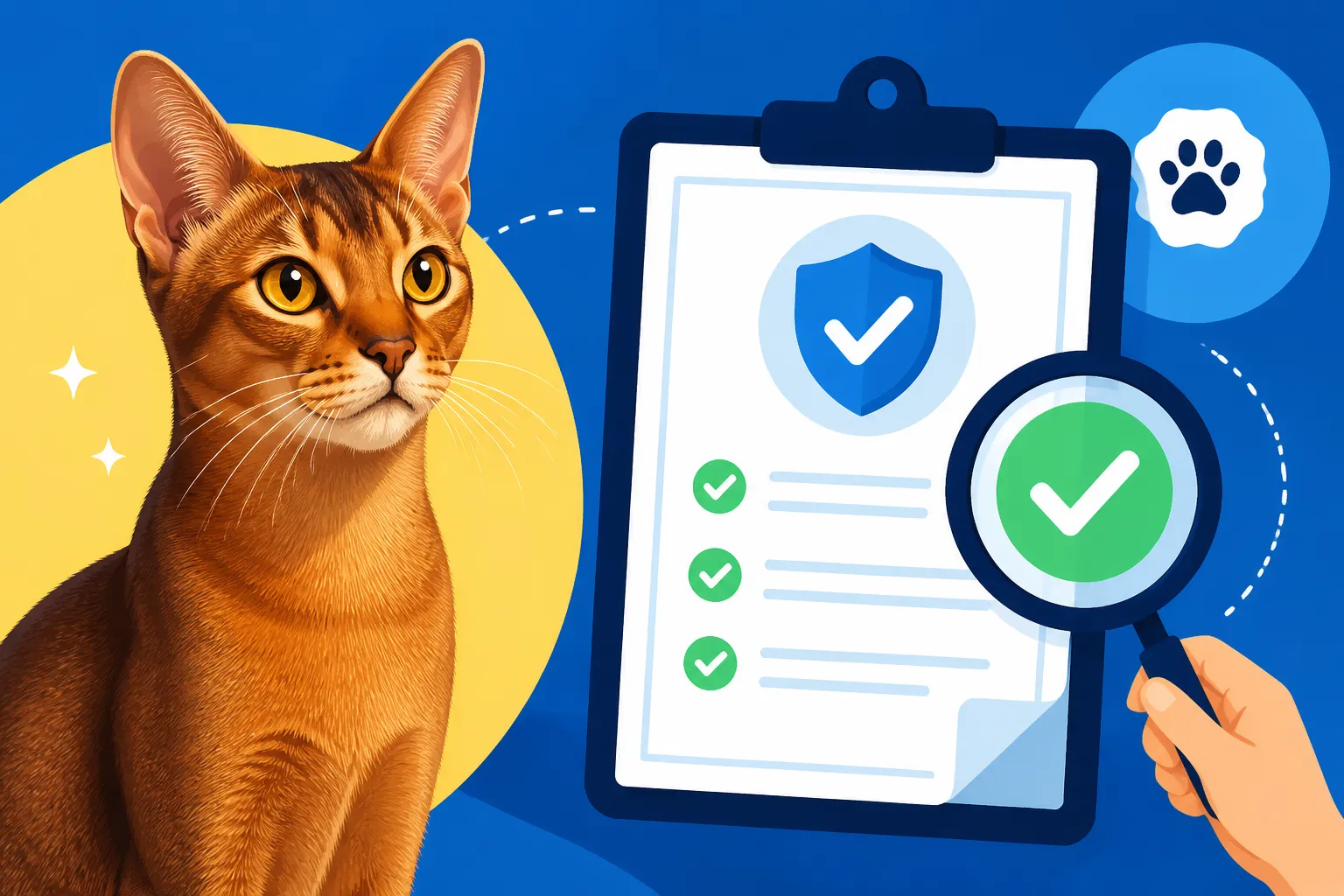
When a reputable Abyssinian breeder presents you with health certificates, they should be clear, detailed documents from a recognized veterinary genetic testing laboratory. These aren't just handwritten notes; they are official lab reports. Knowing what to look for on these documents is your first line of defense against potential issues.
Key Information on the Certificate
A proper genetic test certificate for an Abyssinian should contain several pieces of critical information. Firstly, it needs to clearly identify the cat that was tested. This means the cat's registered name, its registration number (if applicable), and often its microchip number. This is crucial for matching the certificate to the actual parent cat. Secondly, the specific tests performed should be listed. For Abyssinians, this will typically include Pyruvate Kinase Deficiency (PK-def) and Progressive Retinal Atrophy (PRA-rdAc). Each test result will usually state "Clear," "Carrier," or "Affected." A "Clear" result means the cat does not carry the gene. A "Carrier" means they carry one copy but are not affected themselves. An "Affected" result means they have two copies and will likely develop the condition. Finally, the laboratory name and contact information must be present, along with the date the test was performed and the signature of a lab official or veterinarian.
Let's break down the information you should expect to see:
- Cat's Full Registered Name: This is the official name the cat has with its registry, like "Ch. [Cattery Name]'s Golden Hour."
- Registration Number: This number links the cat to its official pedigree, often with The Cat Fanciers' Association (CFA) or The International Cat Association (TICA).
- Microchip Number: A permanent identifier that should match the chip implanted in the cat. This is an absolutely critical piece of information for verification.
- Breed: Clearly stated as "Abyssinian."
- Date of Birth: Helps confirm the cat's age against its registration.
- DNA Test Name: Specifically look for "Pyruvate Kinase Deficiency" (or PK-def) and "Progressive Retinal Atrophy" (or PRA-rdAc, sometimes listed as CEP290). Pyruvate Kinase Deficiency Is the Abyssinian's Best Known Test and PRA-rdAc Takes an Abyssinian's Sight by Five are two great resources for understanding these conditions.
- Result: For each test, it should clearly state "N/N Clear," "N/PK Carrier," "N/PRA Carrier," "PK/PK Affected," or "PRA/PRA Affected." For breeding, you ideally want "Clear" parents, or at least a "Clear" parent bred to a "Carrier" parent to avoid affected kittens. Why Two Clear Abyssinian Parents End the Problem is key here.
- Lab Name and Contact: The official letterhead and details of the genetic testing laboratory (e.g., Optimal Selection, UC Davis Veterinary Genetics Lab, Wisdom Panel).
- Date of Test: When the sample was processed.
- Vet or Lab Signature: An official endorsement of the results.
Understanding the Results: Clear, Carrier, Affected
It's common to see "Clear" results for both parents, which is ideal. However, sometimes a reputable breeder might use a "Carrier" cat in their program. This isn't automatically a red flag, but it demands careful breeding practices. A carrier cat, while healthy itself, possesses one copy of the gene for the disease. If a carrier is bred to another carrier, there's a 25% chance that some kittens in the litter will inherit two copies of the gene and be "Affected" by the disease. This is why understanding How a Carrier Abyssinian Differs From an Affected One is so important. A responsible breeder will never breed two carriers together for these autosomal recessive conditions. They would always breed a carrier to a clear cat, ensuring no kittens will be affected, though some may still be carriers themselves.
How to Cross-Reference Certificates with Public Databases
The absolute best way to verify an Abyssinian’s health certificate is to cross-reference it with a public database. Many reputable genetic testing laboratories and breed registries maintain online databases where results can be looked up using the cat’s registered name or microchip number. This step empowers you as the potential owner to independently confirm the information you've been given.
Using Online Registry and Lab Databases
Most major genetic testing laboratories that cater to breeders, such as Optimal Selection or the UC Davis Veterinary Genetics Laboratory, offer online portals where you can search for a cat's test results. Typically, you'll need the cat's full registered name, or sometimes a microchip number or the unique lab ID from the certificate itself. These databases are designed to provide transparency and build trust within the breeding community and with prospective pet owners.
Here’s a general approach:
- Identify the Lab: Look at the breeder's certificate to see which laboratory performed the tests.
- Visit the Lab's Website: Navigate to their official website. Look for a "Verify Results," "Public Database," or "Breeders & Owners" section.
- Enter Search Criteria: Input the cat's registered name, microchip number, or the specific lab ID provided on the certificate.
- Compare Results: The online results should match exactly what is on the physical certificate the breeder provided. Pay close attention to the cat’s name, breed, date of birth, microchip number, and, of course, the specific genetic test results (Clear, Carrier, Affected).
Some breed registries also offer a centralized database. For example, the Cat Fanciers' Association (CFA) or The International Cat Association (TICA) might have links or information on how to access such data, or individual breeders might list their cats' official health statuses directly on their cattery websites, linking back to the public lab results for verification. If a breeder states their cats are "N/N Clear," this verification step is where you confirm it with objective third-party data.
Why Verification Is Your Best Tool
Verification is critical because it eliminates doubt. A paper certificate, while important, could theoretically be altered or be for a different cat if a breeder were dishonest. When you compare it to a publicly accessible, verifiable database entry directly from the testing laboratory, you gain undeniable proof. This is also how you can confirm that the specific cat you are interested in—the parent of your potential kitten—is the one actually tested, not just a random cat from the cattery. A reputable breeder will be happy to assist you in this process, guiding you to the correct links and IDs. Any reluctance to help you verify should be a major red flag.
Red Flags and What to Do
The process of verifying health certificates should feel empowering, not like detective work. If you encounter resistance or inconsistencies, trust your gut. There are definite red flags to watch out for that suggest a breeder might not be as transparent or ethical as they should be.
Signs of a Potentially Dishonest Breeder
Sometimes, what a breeder doesn't do or say can be as telling as what they do. Here are some common red flags to be aware of:
- No Certificates Offered: This is the most glaring red flag. If a breeder doesn't offer any health certificates for the parent cats, or claims they "don't believe in" genetic testing, walk away immediately. It suggests they either haven't tested or know their cats carry undesirable genes. Remember Why an Untested Abyssinian Is Cheaper for a Reason. The initial savings are never worth the potential future heartache and cost.
- Hesitation or Refusal to Show Certificates: A reputable breeder will be proud to share their health clearances. If they make excuses, drag their feet, or flat-out refuse to show you the certificates for the kitten's parents, it's a huge warning sign.
- Generic or Incomplete Certificates: Beware of certificates that look unofficial, are handwritten, lack specific detail (like the microchip number), or don't come from a recognized veterinary genetic testing lab. Look for official letterheads and clear lab contact information.
- Results Don't Match Public Databases: If you manage to find a public database entry and it contradicts the paper certificate you've been given, this is a serious problem. It could indicate a falsified document.
- Breeding Two Carriers Together: If you see certificates showing both parents are "Carriers" for the same genetic disease (e.g., both are N/PK Carriers), and they are being bred, this is a sign of an irresponsible breeder. While some breeders might use a carrier sparingly in a program if they have particularly valuable traits, they would always breed them to a "Clear" cat to ensure no affected kittens.
- Selling Kittens Too Young: Reputable Abyssinian breeders will typically not let kittens go to new homes before 12-14 weeks of age. This allows for proper socialization, vaccinations, and ensures they are weaned and healthy. An Abyssinian kitten leaving at eight weeks is a sign the breeder is cutting corners. Why an Abyssinian Kitten Leaves at Fourteen Weeks outlines the many reasons for this standard practice.
- Lack of Health Guarantee: While a health guarantee won't cover every single possible ailment, a reputable breeder will offer one for genetic conditions that were tested for. Understand What an Abyssinian Health Guarantee Actually Promises and its limitations.
What to Do If You Suspect Issues
If you encounter any of these red flags, or simply feel uneasy, it's important to proceed with caution.
- Ask for Clarification: Start by politely asking the breeder for clarification on any discrepancies or missing information. A legitimate misunderstanding can sometimes occur. Give them the benefit of the doubt, but be firm in your request for complete and verifiable information.
- Contact the Lab Directly: If you have a certificate but can't verify it online, or if the breeder is hesitant, consider contacting the genetic testing laboratory directly. They can usually confirm the authenticity of their reports if you provide the cat's details and the certificate ID.
- Consult with a Veterinarian: If you're seriously considering a kitten from a breeder you have doubts about, discuss your concerns with your own veterinarian. They can offer advice on what health clearances are standard for the breed and help you interpret test results. They might also advise on the potential costs of managing an affected cat, something services like Healthy Paws pet insurance might help with, but it's always better to avoid the issue altogether.
- Walk Away: If your concerns are not adequately addressed, or if you feel pressured or dismissed, it’s always best to walk away. No matter how adorable the kitten, supporting unethical breeding practices only perpetuates the problem. There are plenty of reputable breeders out there who prioritize health and transparency.
Remember, a responsible breeder wants to place their kittens in loving homes and will welcome your due diligence. They understand you're making a significant commitment. By taking these steps to verify your Abyssinian's health test certificates, you're not only protecting your future pet but also contributing to the overall health and integrity of the Abyssinian breed. Quality food is great for a healthy pet, but those costs pale in comparison to dealing with a preventable genetic illness.
The Importance of Ongoing Health Monitoring
Even with verified certificates from parents, it's vital to remember that health is an ongoing journey, not a one-time check. Genetic testing for PK Deficiency and PRA-rdAc is excellent, but it doesn't cover every potential health issue. Abyssinians, like all breeds, can be prone to other conditions that aren't genetically testable in the same way, such as certain dental issues or kidney problems like renal amyloidosis.
Beyond Genetic Tests
While DNA tests are critical, they are not a silver bullet for total health. For example, Renal Amyloidosis Is the Abyssinian Problem Nobody Can Test For highlights a significant health concern that relies on careful pedigree research and ongoing vet check-ups rather than a simple genetic swab. This means that even with clear genetic panels, a good breeder will also share information about the health and longevity of their breeding lines. They'll be transparent about any known health issues in the cat's lineage, even those without a DNA test.
Regular Veterinary Check-ups
Bringing home a kitten with clear genetic tests is a fantastic start, but it absolutely doesn't replace the need for regular veterinary care. Your Abyssinian kitten will need a thorough check-up shortly after you bring them home, followed by annual wellness visits throughout their life. These visits allow your vet to monitor their overall health, including dental health, weight, and general well-being. Early detection of issues like How Juvenile Gingivitis Starts in an Abyssinian Kitten or any other developing health concerns is crucial for successful treatment and a good quality of life. Be prepared for your Abyssinian Dental Work Is the Biggest Line in the Budget – this is one area where proactive care truly pays off.
A Lifetime of Care
Owning an Abyssinian is a long-term commitment, potentially The Twelve to Fifteen Years an Abyssinian Usually Gets or even longer for well-cared-for individuals. This means committing to proper nutrition, mental enrichment, and regular veterinary care, including those important annual check-ups. A comprehensive approach, combining careful breeder selection and verification with ongoing, attentive care, is the best way to ensure your energetic and loving Abyssinian companion thrives for many years to come.
| Certificate Element | What to Look For | Red Flag |
|---|---|---|
| Cat Identification | Registered name, Microchip #, Date of Birth | Generic name, Missing microchip, Inaccurate DOB |
| Test Names | Pyruvate Kinase Deficiency, PRA-rdAc (CEP290) | Only one test listed, Vague "health screen" |
| Test Results | Clear, Carrier, Affected (specific codes like N/N, N/PK) | Ambiguous terms, Handwritten changes, Two carriers bred |
| Laboratory Information | Official lab name (e.g., Optimal Selection, UC Davis), Address, Contact | Unknown lab, No contact info, Generic template |
| Date of Test | Recent date, clearly legible | Old dates for young cats, Illegible date |
| Official Signatures | Vet/Lab official signature, Stamp | Unsigned, Unofficial looking |
| Public Database Match | Matches exactly in online verification portal | No online record, Discrepancies in results |
Disclaimer
This article is for general informational purposes only and does not constitute professional advice. Laws, prices and regulations vary by location and change over time. Consult a qualified professional for guidance on your specific situation.