Which Cardboard Games an Abyssinian Likes
If you've ever lived with an Abyssinian, you know the struggle: a brilliant, high-energy cat that needs constant mental engagement, or else they find their own "fun," often involving things like emptying cupboards or scaling your highest shelves. It can be truly exhausting trying to keep up with their boundless curiosity! This guide dives into one often-overlooked, yet incredibly effective, solution: cardboard games, and how these simple, accessible tools can provide endless hours of appropriate stimulation for your clever companion.
The Abyssinian's Insatiable Need for Mental Stimulation
Anyone who shares their home with an Abyssinian knows they aren't your average couch potato cat. These felines are the definition of "busy," always on the move, exploring every nook and cranny, and constantly seeking out new challenges. It's not just about physical exercise; their sharp minds crave puzzles and problem-solving, which is why they truly are The Abyssinian Is the Busiest Cat in the House. When an Abyssinian isn't given enough to do, they don't just get bored—they can become destructive, anxious, or develop unwelcome habits.
Think about it from their perspective: they are natural hunters, full of instinctual drives to stalk, pounce, and figure things out. In a domestic setting, these drives don't just disappear. If they don't have appropriate outlets, they'll turn their energy and intelligence towards whatever they can find, which might be your delicate houseplants, the cabinet full of spices, or even your carefully arranged shelves. This isn't naughtiness; it's simply an Abyssinian being an Abyssinian. Providing them with opportunities to engage their minds is not a luxury, but a necessity for their well-being and for the peace of your home. They excel at figuring things out, often much faster than you anticipate, which is why consistent mental enrichment is key.
Why Standard Toys Aren't Always Enough for an Abyssinian
While a good wand toy or a collection of bouncy balls can provide some physical exertion, they often fall short in challenging an Abyssinian's intellect. Many standard toys are too simple, offering immediate gratification without requiring any thought. An Abyssinian can get bored of these quickly, moving on to the next exciting thing, or worse, becoming frustrated. This is why you might find that Why an Abyssinian Loses Interest in a Toy Fast is a common refrain among owners.
Cardboard games, however, tap into a different part of their brain. They often involve an element of foraging, problem-solving, or the thrill of "breaking into" something to get a reward. This mimics the natural hunting sequence more closely than simply chasing a laser dot. The act of tearing, pushing, and manipulating cardboard provides sensory feedback that can be incredibly satisfying for a cat, especially one with strong predatory instincts. It also offers an outlet for chewing and shredding, which can save your furniture and other household items from becoming targets.
The Problem of Boredom in an Active Breed
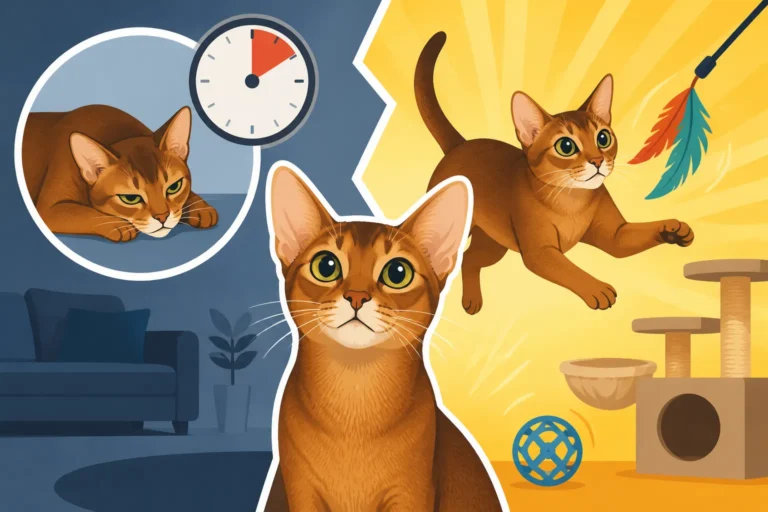
A bored Abyssinian isn't just a nuisance; it's an unhappy cat. When they lack proper mental stimulation, they might start exhibiting behaviors like excessive vocalization, over-grooming, or even aggression born out of frustration. You'll definitely notice What an Abyssinian Does When It Is Bored if you don't provide outlets. They need to feel like they have a "job" to do, even if that job is just figuring out how to get a treat from a cleverly designed box.
Imagine being stuck in a room with nothing to do for hours on end, day after day. You'd likely start pacing, fiddling with things, maybe even talking to yourself! It's not so different for our Abyssinian friends. Cardboard games, particularly those that dispense treats or require manipulation, offer a tangible goal and a rewarding outcome. This engagement helps to channel their natural energy and intelligence into positive activities, reducing the likelihood of them inventing their own, less desirable, forms of entertainment. Plus, they can be easily rotated to keep things fresh, which is crucial for a cat that thrives on novelty.
Types of Cardboard Games Your Abyssinian Will Adore
The beauty of cardboard games is their versatility. You can go simple or complex, and the material itself is endlessly adaptable. For an Abyssinian, the key is anything that requires them to think, paw, push, or even tear a little to get to a reward.
The Classic Treat Puzzle Box
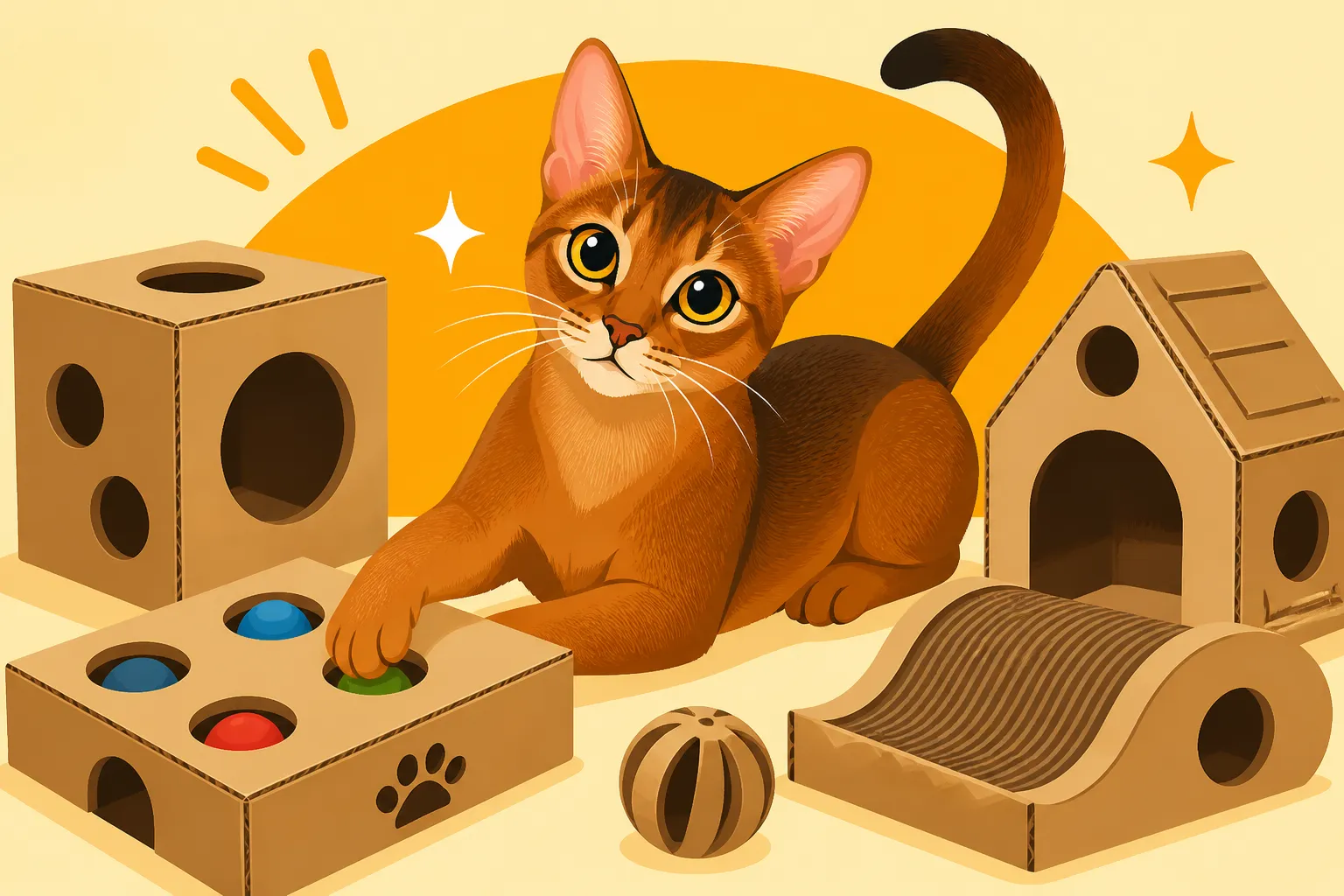
This is perhaps the most straightforward and effective cardboard game. It involves hiding treats or small toys inside a cardboard box with various openings, flaps, or obstacles. The Abyssinian then has to figure out how to get the goodies out. This taps directly into their foraging instincts, and Why Foraging Suits an Abyssinian's Mind perfectly explains why this type of game is such a hit.
You can start simply with a shoebox, cutting a few holes of different sizes on the top and sides. Place a few favorite treats inside and let your Abyssinian go to work. As they get better, you can increase the difficulty:
- Add crumpled paper or toilet paper rolls inside the box to create more barriers.
- Use a box with internal compartments.
- Tape down some flaps, leaving small gaps for them to paw at.
- Place smaller boxes inside a larger box, nesting the treats within the innermost one.
The joy of watching an Abyssinian methodically, yet enthusiastically, bat and strategize to extract a treat is truly something. They love the challenge, and the reward makes it all worthwhile, especially since Why an Abyssinian Learns Faster When It Is Hungry.
Cardboard Crinkle Tunnels and Mazes
Abyssinians love to explore and dash through confined spaces. Cardboard tunnels, whether store-bought or DIY, provide an exciting new landscape for them to navigate. The crinkly sound that many of these tunnels make adds another layer of sensory stimulation, mimicking the rustling of leaves or prey.
You can create simple tunnels by taping together a few large cardboard boxes, cutting entrance and exit holes. Arrange them in different configurations, creating a new maze each time. Foraging opportunities can be added here too: hide treats along the path, encouraging them to explore every turn. You can also buy collapsible crinkle tunnels, often found on Amazon, which can be easily stored and pulled out for playtime. These provide not just a place to hide and pounce, but also a fantastic way for them to burn off some of that incredible Abyssinian energy.
Shredding Boxes and Tearing Toys
Sometimes, the simplest games are the best. Abyssinians have a strong urge to "destroy" things, not out of malice, but as part of their predatory play. A dedicated shredding box can be a fantastic outlet. Take an empty delivery box, fill it loosely with crumpled paper, empty paper towel rolls, or even some safe, natural packing peanuts. Toss a few treats in and let your Abyssinian go to town.
The act of tearing and shredding satisfies a primal urge and provides a wonderful sensory experience. It's perfectly safe, as long as the cardboard and paper are free from staples, tape that could be ingested, or harmful inks. This kind of play is excellent for relieving stress and preventing them from turning their attention to your important documents or upholstered furniture. You'll be amazed at how much fun they have making a glorious mess, and it saves your more expensive What Toys an Abyssinian Gets Through in a Year.
DIY vs. Store-Bought Cardboard Solutions: What Works Best
When it comes to cardboard games for your Abyssinian, you generally have two routes: making them yourself or purchasing them. Both have their merits, and often, a combination works best to keep things interesting.
The Joy of DIY Cardboard Creations
Making your own cardboard games is incredibly satisfying, economical, and allows for endless customization. You probably already have the main ingredient: empty delivery boxes! With a pair of scissors or a utility knife (used safely, of course), some pet-safe glue or tape, and a dash of creativity, you can craft a wonderland for your Abyssinian.
Pros of DIY:
- Cost-Effective: Most materials are repurposed household items.
- Customizable: You can tailor the size, shape, and difficulty level to your specific Abyssinian's preferences and skill.
- Eco-Friendly: Reusing cardboard reduces waste.
- Engaging Process: The act of creating something for your cat can be a bonding experience, and you learn what they respond to.
- Novelty: You can easily create a new game every week, preventing boredom.
Cons of DIY:
- Time-Consuming: It takes effort to design and assemble the games.
- Durability: DIY creations might not last as long as some commercial products, especially with a determined Abyssinian.
- Safety Checks: You need to be diligent about removing staples, excessive tape, or sharp edges.
For example, a simple "dig box" can be made from a large moving box filled with scrunched-up newspaper and a few treats. Or, you can create a multi-level puzzle by cutting holes in several smaller boxes and stacking them, securing them with pet-safe adhesive. The possibilities are truly limited only by your imagination, and your Abyssinian will appreciate the effort!
Exploring Store-Bought Cardboard Games
The market offers a surprising array of cardboard-based cat toys and enrichment items. These can range from simple cardboard scratchers to elaborate multi-level puzzle boxes designed for intellectual stimulation. Websites like Amazon have a huge selection, making it easy to find options.
Pros of Store-Bought:
- Convenience: Ready to use right out of the box.
- Durability: Often designed to withstand more rigorous play.
- Safety Tested: Reputable brands design products with pet safety in mind.
- Variety: Many innovative designs you might not think to create yourself.
Cons of Store-Bought:
- Cost: Can be more expensive than DIY options.
- Less Customizable: You're limited to the manufacturer's design.
- Less Novelty: Once your Abyssinian figures out a purchased puzzle, it might lose its appeal unless you can modify it or rotate it out.
When buying, look for products specifically marketed for cats, ensuring they use non-toxic materials. Cardboard scratchers, for instance, are great for providing an appropriate surface for claw maintenance and stretching, which ties into the need for vertical scratching posts discussed in Where to Put an Abyssinian's Scratching Posts. Many also feature built-in balls or tracks for added entertainment.
Here’s a quick comparison to help you decide:
| Feature | DIY Cardboard Games | Store-Bought Cardboard Games |
|---|---|---|
| Cost | Very Low (repurposed materials) | Moderate to High |
| Customization | High (tailored to your cat's needs) | Low (fixed designs) |
| Durability | Varies, generally lower | Generally higher, designed for longevity |
| Safety | Requires careful human inspection | Manufacturer-tested, but always check reviews |
| Novelty | Easy to create new variations frequently | Depends on design; often relies on rotation |
| Effort | High (requires time and creativity) | Low (buy and use) |
| Best For | Creative owners, specific challenges, frequent changes | Convenience, proven designs, those short on time |
Ultimately, a blend of both can offer the best of both worlds. Use your old Amazon delivery boxes to whip up quick, disposable puzzles, and invest in a couple of sturdier, commercially made cardboard puzzle feeders or crinkle tunnels to add to the rotation.
Maximizing the Fun: Tips for Introducing and Refreshing Cardboard Play
Abyssinians are intelligent, but even they might need a little encouragement to understand a new game, especially if they're used to simpler toys. Once they get the hang of it, the challenge is keeping them interested.
Introduction: Making the First Impression Count
When you introduce a new cardboard game, whether DIY or store-bought, make it an enticing experience.
- Start Simple: Don't make the puzzle too hard at first. For a treat box, use larger holes and highly appealing treats. Which Treats an Abyssinian Will Actually Work For are key here! You want them to succeed quickly to build confidence and positive association.
- Use High-Value Rewards: Place their absolute favorite treats inside. The smell alone can draw them in.
- Demonstrate (Gently): Show them how it works. Slowly paw at the box, letting a treat fall out. Let them see you placing the treats inside. Your Abyssinian learns quickly by observation.
- Positive Reinforcement: When they engage with the game, even if they don't solve it perfectly, offer praise and encouragement.
- Location, Location, Location: Place the game in an area where your Abyssinian feels comfortable and typically spends time, perhaps near their favorite An Abyssinian Needs Height More Than It Needs Floor perch or by a window.
Remember, Abyssinians thrive on interaction. Sometimes, the best way to get them hooked on a new game is to play with them initially, guiding their paws or making exciting noises as a treat falls out.
Keeping the Novelty Alive: Rotation and Reinvention
The brilliant mind of an Abyssinian means they can solve puzzles remarkably fast. What was a challenging game yesterday might be a five-second sprint today. This is where rotation and reinvention become your best friends.
- The Rotation Method: Don't leave all the games out all the time. Instead, have a few different cardboard games (and other types of puzzle toys) and rotate them every few days or once a week. This makes each reappearance feel fresh and exciting. How to Rotate an Abyssinian's Toys is a fantastic strategy to prevent boredom.
- Increase Difficulty Gradually: As your Abyssinian masters a game, make it a little harder. Reduce the size of the holes, add more internal obstacles, or use treats that are slightly less potent in smell, requiring more effort to locate. If Why an Abyssinian Solves a Puzzle Feeder Too Quickly is your issue, it's time to level up!
- Change the Rewards: Occasionally switch up the treats you use. A different flavor or texture can make an old game feel new.
- Combine Games: Place a smaller puzzle box inside a crinkle tunnel. Or hide a favorite wand toy (without the stick, for safety) within a shredding box for them to dig out.
- Reinvent DIY Games: For your homemade creations, simply take them apart and build something new! Cut different holes, create new mazes, or use different types of interior obstacles. This is where DIY truly shines in maintaining novelty.
- Location Changes: Even moving a familiar game to a new spot in the house can make it more interesting for an Abyssinian who loves to explore every inch of their territory.
By regularly refreshing their environment and offering varied challenges, you'll keep your Abyssinian engaged, happy, and intellectually stimulated. This approach not only prevents boredom but also reinforces positive behaviors, ensuring your clever companion remains a joyful, well-adjusted member of your family. It's all about understanding that their active minds need an outlet, and these simple cardboard games provide a fantastic, budget-friendly way to do just that.
Disclaimer
This article is for general informational purposes only and does not constitute professional advice. Laws, prices and regulations vary by location and change over time. Consult a qualified professional for guidance on your specific situation.