Why the Ticked Coat Leaves an Abyssinian Almost No Undercoat
It's a common sight for cat owners to find fluffy tufts of undercoat clinging to their furniture, or even to watch their feline companions practically shed a whole new cat twice a year. But if you're an Abyssinian owner, or thinking of becoming one, you might have noticed something different: your Aby's coat feels incredibly soft and sleek, yet seems to lack that dense, woolly layer common to many other breeds. This unique coat structure isn't just a matter of aesthetics; it's a fundamental aspect of Abyssinian genetics that influences everything from grooming needs to how they cope with different temperatures. This guide will dive deep into why the Abyssinian's ticked coat is so distinct, and what it means for your beautiful, active companion.
Understanding the Abyssinian's Ticked Coat: A Unique Structure
When you look at an Abyssinian, one of the first things that strikes you is the incredible texture and appearance of their fur. It's not striped, it's not spotted, and it certainly isn't a solid block of color. This distinct look, known as ticking, is the defining characteristic of the breed's coat, and it's intrinsically linked to why they have such a minimal undercoat.
The Agouti Gene and Banding: What It Actually Means
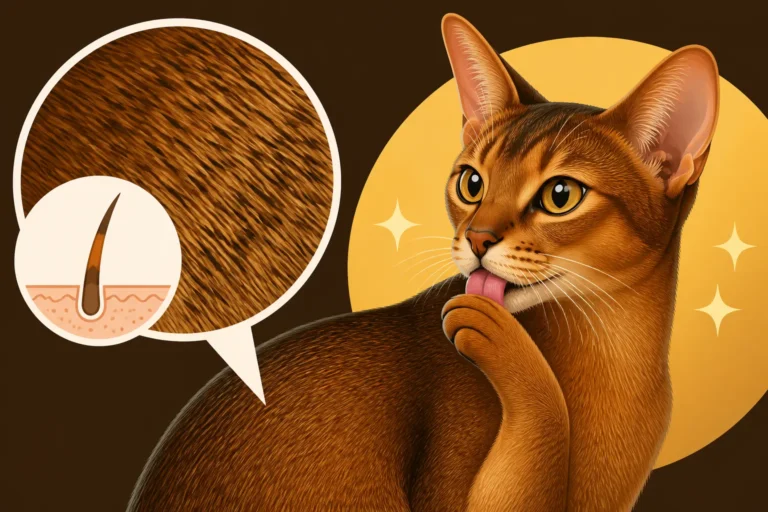
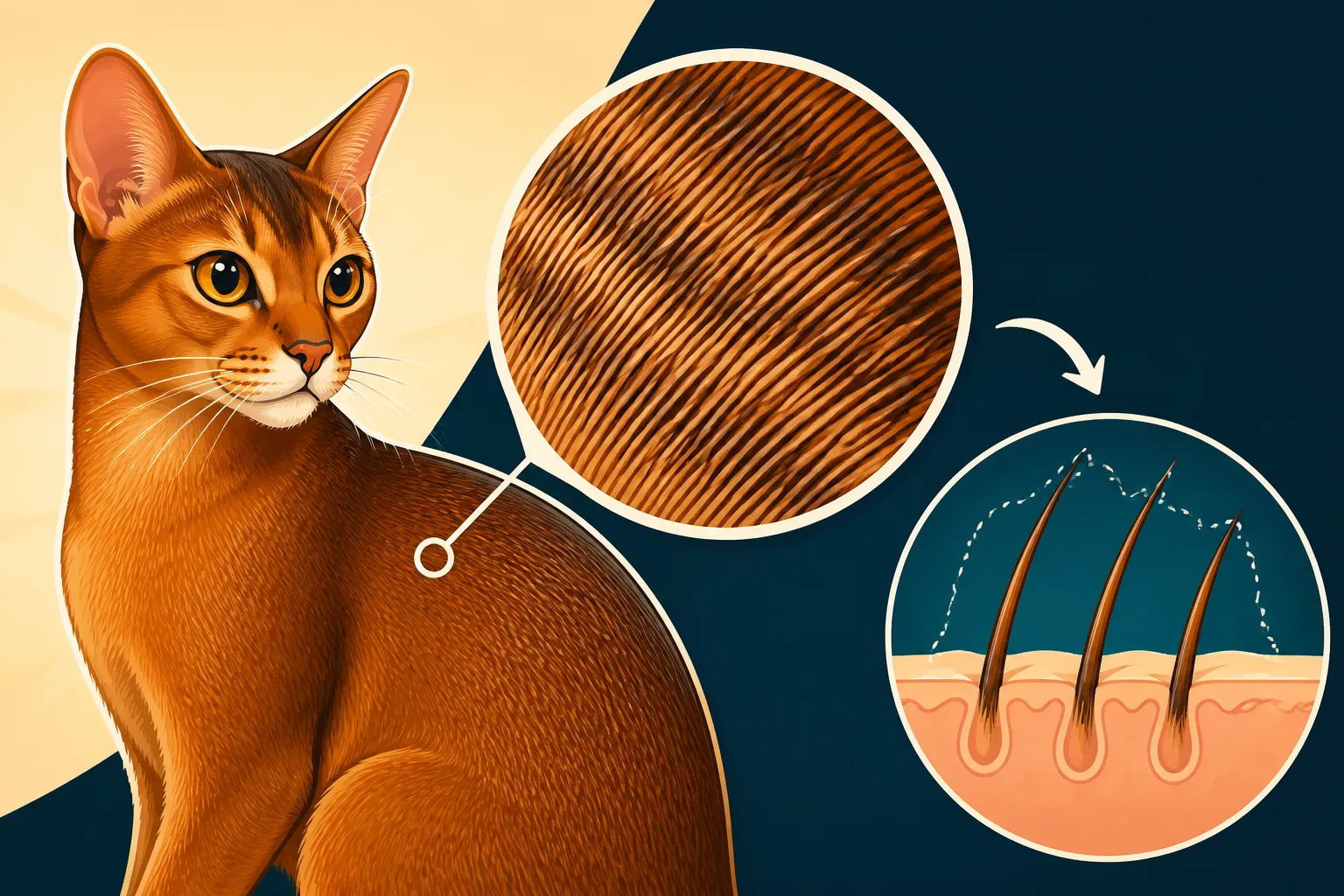
The secret to the Abyssinian's coat lies in the agouti gene. This gene is responsible for creating the banded color on each individual hair shaft. Instead of a single, solid color from root to tip, an Abyssinian's hair has alternating bands of dark and lighter pigment. Think of it like a miniature zebra stripe on each strand of fur. Most Abyssinian hairs will carry three or four distinct bands, with the darkest pigment concentrating at the tip. This banding creates a shimmering, iridescent effect as your Abyssinian moves, making their coat seem to shift and glow in different lights. It's truly mesmerizing to watch.
This agouti effect is why the breed is often celebrated for its "wild" appearance, evoking images of their ancient ancestors. It's a highly sophisticated genetic trait that requires careful breeding to maintain its integrity, ensuring that each hair contributes to the overall rich, warm color and the unique play of light. This intricate banding pattern doesn't just look beautiful; it's a core component of how their entire coat system functions, or rather, doesn't function in the traditional "double coat" way.
The Absence of Traditional Patterns: Why No Stripes or Spots
Unlike many domestic cats, Abyssinians do not display traditional tabby markings such as stripes, swirls, or spots on their bodies. You won't find the classic "M" on their forehead, or distinct rings on their legs. While some Abyssinians might exhibit faint ghost tabby markings when they're very young, particularly on their legs or tail, a truly well-bred Aby's coat will be clear of these patterns as they mature. This lack of traditional patterning is another direct consequence of the agouti gene's influence, which prioritizes the banded ticking over the development of other forms of melanin distribution.
The goal in Abyssinian breeding is a clear, even ticking across the entire body, with the exception of the dark "ticked" areas on the face, ears, and tail tip, which help define the breed's expressive features. This emphasis on a pattern-free body coat means that the genetic machinery that might produce a dense undercoat for contrast or pattern depth in other breeds simply isn't activated in the same way for an Abyssinian. It's all about showcasing that magnificent, finely banded outer coat. This singular focus on the ticked appearance of the guard hairs means there's less genetic imperative for a thick, insulating underlayer, leading directly to the fine, single coat we adore.
The Role of the Undercoat in Feline Coats
To truly appreciate the Abyssinian's unique coat, it helps to understand what a "normal" cat undercoat actually is and does. Most cat breeds, both domestic and wild, rely heavily on their undercoat for protection and comfort.
What is an Undercoat and Why Do Most Cats Have One?
An undercoat is essentially a layer of very fine, soft, downy hairs that lie closest to the cat's skin, beneath the coarser, longer outer guard hairs. Its primary function is insulation. In colder climates, a thick undercoat traps air, creating a thermal barrier that keeps the cat warm. In warmer climates, it can also help to regulate body temperature by preventing the sun's rays from directly reaching the skin, and by facilitating air circulation when the cat sheds some of it. Think of it as a cat's built-in thermal underwear.
Breeds like the Maine Coon, Norwegian Forest Cat, or even many common domestic shorthairs have a noticeable undercoat. If you were to run your fingers through their fur, you'd feel the outer guard hairs, but underneath, there would be a distinct layer of soft, almost woolly fur. This undercoat can vary in density and length depending on the breed and individual cat, often becoming thicker in winter and shedding out heavily in spring. Without this insulating layer, many cats would struggle to maintain their body temperature effectively in varying environmental conditions.
How an Undercoat Differs from Guard Hairs
It's important to distinguish between the two main types of hair found in a cat's coat: guard hairs and undercoat. Guard hairs are the longer, tougher, and often more pigmented hairs that form the outermost layer of the coat. These are what give the cat its primary color, pattern, and much of its texture. They also provide protection against physical abrasions, moisture, and UV radiation. They're the first line of defense, repelling water and dirt.
The undercoat, on the other hand, consists of those shorter, finer, often lighter-colored hairs that are much softer to the touch. They don't have the same protective qualities as guard hairs against external elements; their job is purely thermal. When you see a cat "blowing its coat," it's usually referring to the massive shedding of its undercoat as seasons change. The Abyssinian's lack of a substantial undercoat means that its guard hairs essentially stand alone, without that dense, fluffy support system underneath. This contributes to the sleek, close-lying nature of their fur, and gives it a distinctly different feel compared to a cat with a full double coat.
The Abyssinian's Minimal Undercoat: A Genetic Trait
The Abyssinian's single coat is a testament to its unique genetic blueprint, diverging significantly from the double-coated norm seen in most felines. This isn't a flaw or a deficiency; it's a deliberate genetic characteristic that defines the breed.
Genetic Predisposition for a Single Coat
The Abyssinian has a genetic predisposition for what is essentially a "single coat" or a very thinly undercoated coat. This means that the genes responsible for producing a dense, insulating layer of fine underhairs are either less active or entirely absent compared to breeds with robust double coats. Instead, their genetics favor the development of strong, finely ticked guard hairs that lie close to the body. This gives their fur its incredibly smooth, almost satiny feel, and its lustrous sheen. It's part of what makes them so elegant and distinctive, almost like polished sculptures with fur.
This genetic trait is highly valued in the breed standard, which describes the Abyssinian coat as "fine, soft, and silky, but dense enough to have a natural sheen." There's no mention of a thick undercoat, because it simply isn't part of the ideal Abyssinian profile. This is why you'll never feel that thick, plush layer beneath the top coat on a well-bred Aby; their genetics simply don't produce it. Breeders actively select for this trait, understanding its importance to the breed's overall health, appearance, and character. Why an Abyssinian's Single Ticked Coat Barely Sheds is a direct consequence of this genetic design.
The Practical Implications of a Thin Undercoat
While a gorgeous feature, the Abyssinian's thin undercoat comes with practical implications for owners. The most significant is their sensitivity to temperature. Without that insulating layer, Abyssinians can get cold much more easily than their double-coated cousins. You might find your Aby seeking out the warmest spots in the house – curled up on a sunny windowsill, burrowed under a blanket, or snuggled close to you. Why a Coat With No Undercoat Leaves an Abyssinian Cold is a constant reality for these active cats. This means you need to be mindful of their environment, especially during colder months or if you live in a drafty home. Providing warm beds, blankets, and access to sunny spots isn't just a luxury for an Abyssinian, it's a necessity.
Another implication, which is often seen as a benefit, is reduced shedding. Since they don't have a dense undercoat to "blow" seasonally, the amount of fur they shed is considerably less than many other breeds. This isn't to say they don't shed at all – all cats shed – but the volume and visibility of their shed fur are significantly diminished. This can be a huge plus for owners who prefer a cleaner home or have mild sensitivities to cat dander, though it's important to remember that no cat is truly hypoallergenic. This minimal shedding also impacts their grooming routine, making it a much simpler affair than for many other breeds.
Grooming and Care Considerations for a Single-Coated Abyssinian
Caring for an Abyssinian's unique coat isn't complicated, but it does require a slightly different approach than you might use for a cat with a more conventional double coat. It's less about tackling mats and heavy shedding, and more about maintaining that beautiful sheen and ensuring skin health. The Ticked Coat Is the Whole Abyssinian Grooming Job is surprisingly minimal for such an elegant creature.
Choosing the Right Grooming Tools
Because Abyssinians have such a fine, close-lying coat with minimal undercoat, heavy-duty deshedding tools or slicker brushes are entirely unnecessary and can even be detrimental. These tools are designed to pull out thick undercoat, which an Aby simply doesn't possess in abundance. Using them can damage their delicate guard hairs and flatten the beautiful ticking that gives them their distinctive look, rather than enhancing it. Why the Wrong Brush Flattens an Abyssinian's Ticking explains this in more detail.
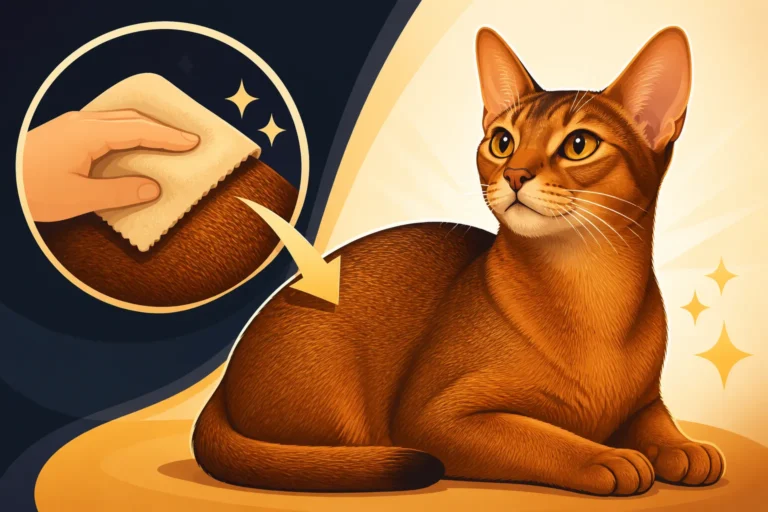
Instead, focus on tools that gently remove loose hairs and polish the coat. A soft rubber grooming mitt or a damp chamois cloth is perfect for this. The rubber mitt gently massages the skin, stimulating circulation and helping to release any shed hairs without pulling or damaging the coat. A chamois cloth, used after a light brush, can buff the coat to a magnificent shine, highlighting the depth of their ticking. You can find excellent quality rubber mitts and chamois cloths on Amazon or Chewy, making it easy to stock up on the right tools for your Aby's needs. The goal is to enhance their natural beauty, not to aggressively strip their coat.
Temperature Sensitivity and Environmental Needs
The Abyssinian's sparse undercoat means they are not as well-equipped to handle cold temperatures as many other cat breeds. They don't have that extra layer of insulation to keep them warm when the mercury drops. This makes them particularly susceptible to feeling chilly in drafty rooms, during colder seasons, or if they spend time outdoors (which we generally advise against for Abyssinians due to their playful and curious nature, making them escape artists and targets for predators).
As an owner, you'll need to be mindful of their comfort. Provide plenty of warm, soft sleeping spots, perhaps an enclosed cat bed or a cozy blanket fort. Many Abyssinians adore heated cat beds, especially in winter. Ensure your home environment is consistent and warm enough for them. You might notice your Aby seeking out sunny patches, snuggling under blankets, or insisting on sleeping right next to you for warmth. Why an Abyssinian Finds the Warmest Spot Without Help is simply their instinct kicking in to compensate for their lack of a thick undercoat. They'll also appreciate access to high perches and cat trees that are away from drafts, allowing them to survey their domain from a comfortable, warm vantage point.
Shedding: What to Expect from an Abyssinian
One of the pleasant surprises for many Abyssinian owners is the relatively low amount of shedding compared to breeds with dense undercoats. Since they primarily have guard hairs, and those hairs are fine and close-lying, they don't produce the copious amounts of fur that can carpet your home with other breeds. This doesn't mean they don't shed at all – all cats shed to some degree – but the shed hair is usually less noticeable and easier to manage.
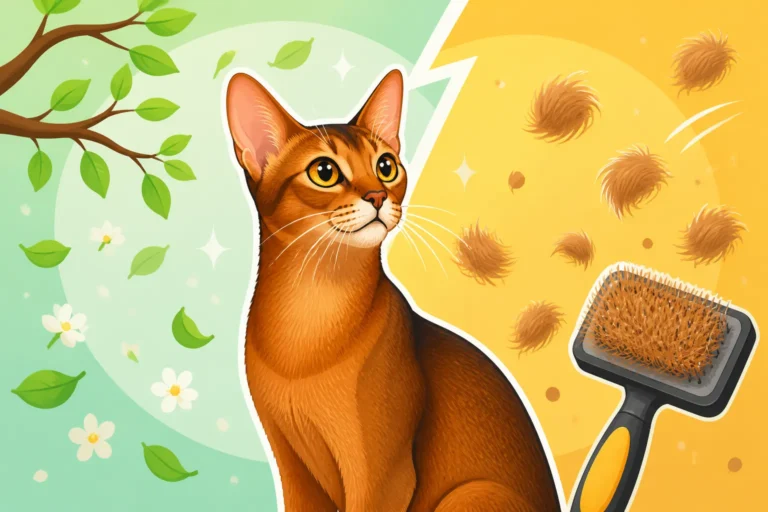
You might see slightly more shedding during seasonal changes, typically in spring as they lighten their coat for warmer weather, and in autumn as they prepare for winter. However, even these seasonal "sheds" are usually minimal for an Abyssinian. Regular, gentle grooming with a rubber mitt once a week is usually sufficient to capture any loose hairs and keep their coat in pristine condition. This minimal shedding is a significant advantage for those who love cats but dislike constant fur cleanup, making the Abyssinian a surprisingly tidy companion, especially considering their high energy levels!
Health and Comfort Aspects Related to the Coat
Beyond aesthetics and grooming, the Abyssinian's single coat also plays a role in their overall health and how we perceive their suitability for certain households. It's a key factor in understanding their unique physiology.
Skin Health and Hypoallergenic Claims
With such a fine, close coat and minimal undercoat, an Abyssinian's skin is more exposed than that of a double-coated cat. This means their skin health is paramount, as there's less buffer against environmental irritants or dryness. Owners should pay attention to any signs of redness, flakiness, or excessive scratching, as these can indicate skin issues that might be less apparent on a thicker-coated cat. A healthy diet rich in omega fatty acids can help maintain skin moisture and coat luster.
It's also worth addressing the "hypoallergenic" myth. Because Abyssinians shed less, some people mistakenly believe they are hypoallergenic. Unfortunately, this isn't true. Cat allergies are primarily caused by Fel d 1, a protein found in a cat's saliva, skin, and urine, not just their fur. While less shedding might mean less dander (skin flakes coated in Fel d 1) is distributed around the home, Abyssinians still produce this allergen. Therefore, while someone with mild allergies might find them more tolerable, a truly allergic individual will likely still react. Whether an Abyssinian Sets Off Cat Allergies clarifies this common misconception; the low undercoat doesn't eliminate the allergen.
Overall Well-being and Coat Condition
An Abyssinian's coat is a fantastic indicator of their overall health. A healthy Abyssinian will have a coat that is sleek, shiny, and lies close to their body, with a noticeable shimmer when they move. If you notice your Aby's coat becoming dull, dry, brittle, or coarse, it can be a sign of underlying health issues, nutritional deficiencies, or even stress. Changes in coat quality can sometimes be an early warning sign for conditions like kidney problems, thyroid imbalances, or internal parasites.
Nutrition plays a massive role in maintaining that enviable Abyssinian sheen. A high-quality diet, rich in animal protein and essential fatty acids, is crucial. Always ensure your Aby has access to fresh water, as hydration is also key for healthy skin and fur. Regular veterinary check-ups are vital to catch any issues early, ensuring your Abyssinian's coat remains a vibrant reflection of their excellent health. Why a Lean Abyssinian Hides Illness Longer Than a Heavy Cat is particularly true, and coat changes can be one of the few subtle signs you catch.
Disclaimer
This article is for general informational purposes only and does not constitute professional advice. Laws, prices and regulations vary by location and change over time. Consult a qualified professional for guidance on your specific situation.