Why an Old Abyssinian Stops Using the Top Shelf
Aging Abyssinian cats avoiding top shelves often suffer from arthritis, muscle loss, vision decline, or hidden illnesses.
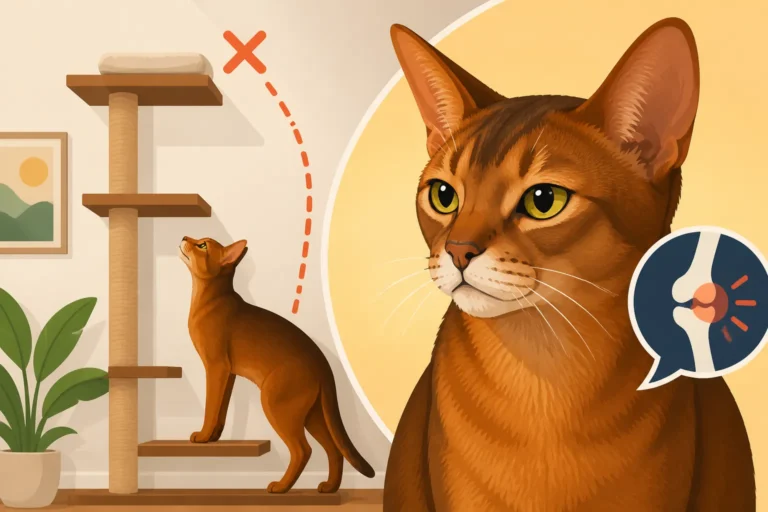
Aging Abyssinian cats avoiding top shelves often suffer from arthritis, muscle loss, vision decline, or hidden illnesses.
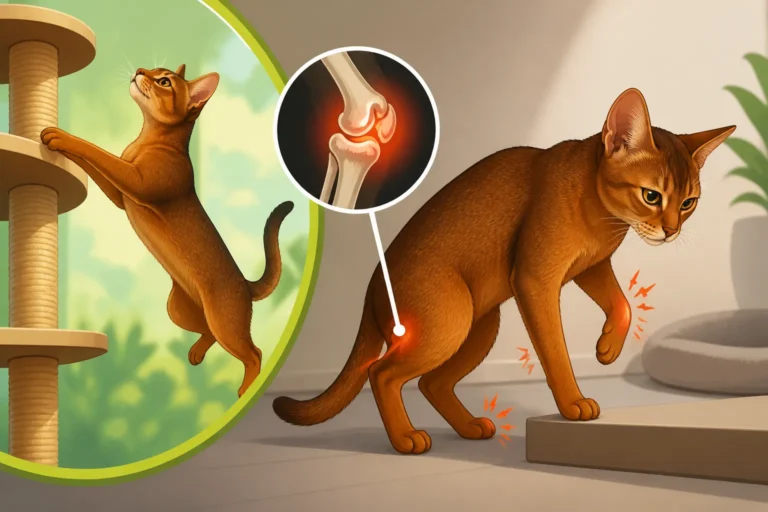
Abyssinian arthritis signs include avoiding high perches, hesitating before jumping, and struggling with grooming routines.
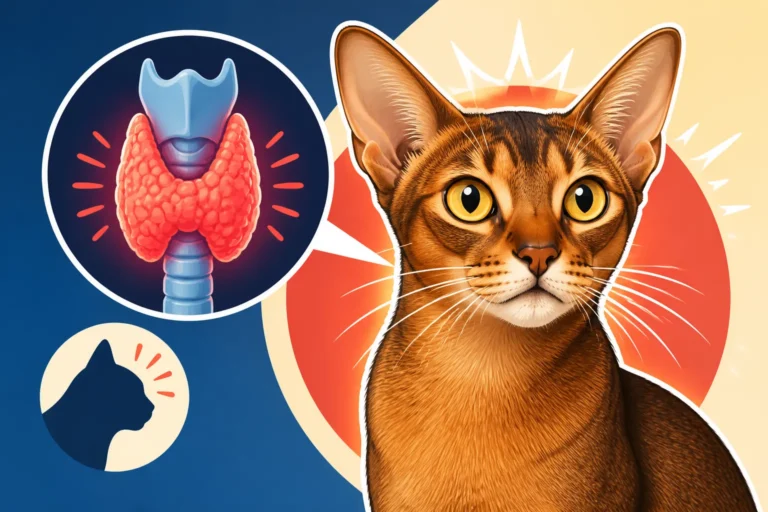
Hyperthyroidism in older Abyssinians causes weight loss and high energy, requiring veterinary diagnosis and proper treatment options.
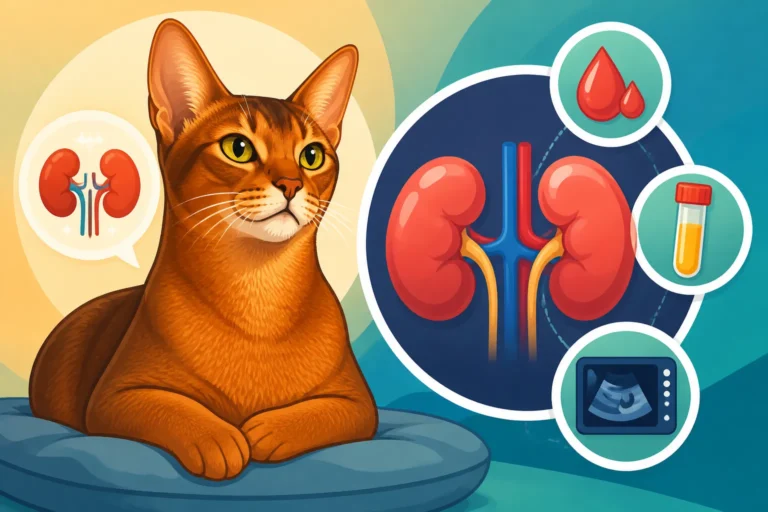
Proactive veterinary monitoring helps detect kidney disease early in aging Abyssinians through routine blood tests and urinalysis.
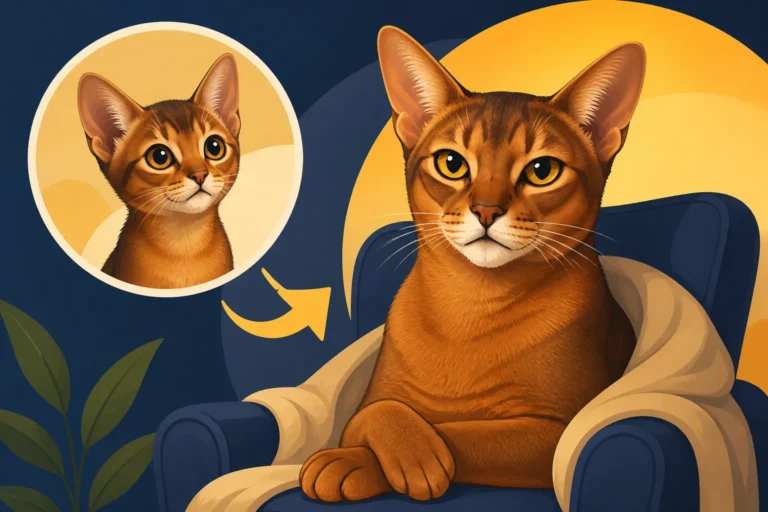
Abyssinian senior care explains when cats reach age seven, detailing subtle signs of aging, veterinary screenings, and diet adjustments.
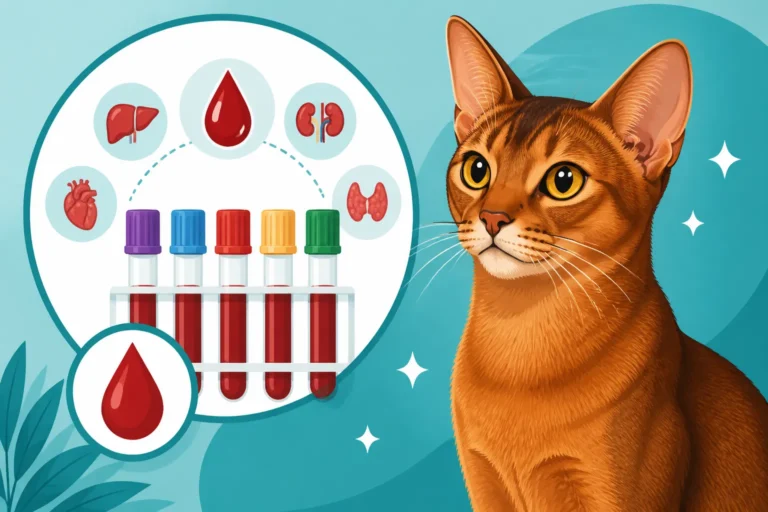
Annual blood panels for Abyssinians reveal early kidney compromise and other organ function changes before symptoms appear.
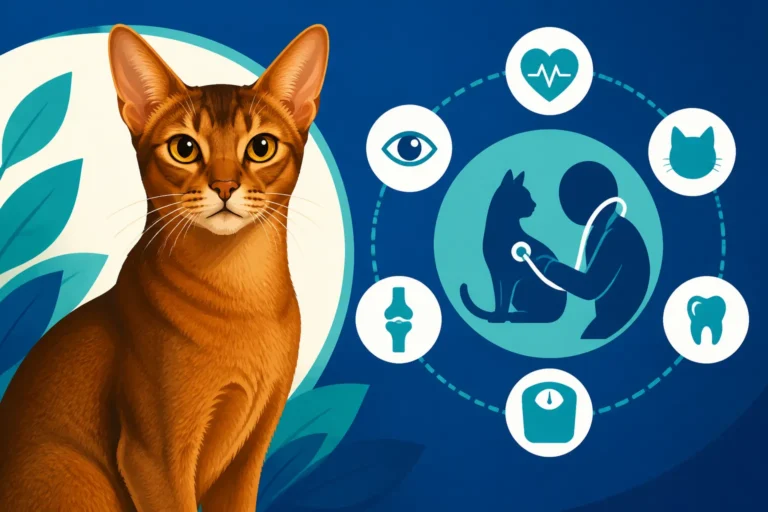
Adult Abyssinians need annual veterinary checkups, while cats aged eight and older require examinations every six months.
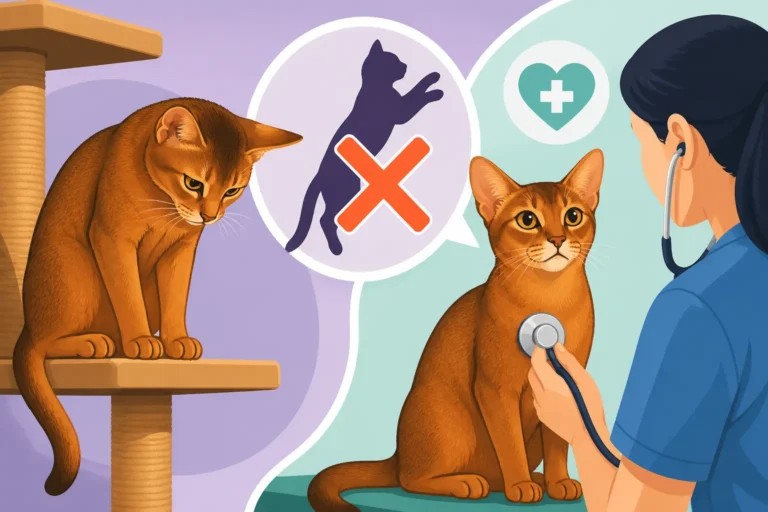
An Abyssinian cat stopping climbing signals pain or illness, requiring a prompt veterinary examination and diagnostic testing.
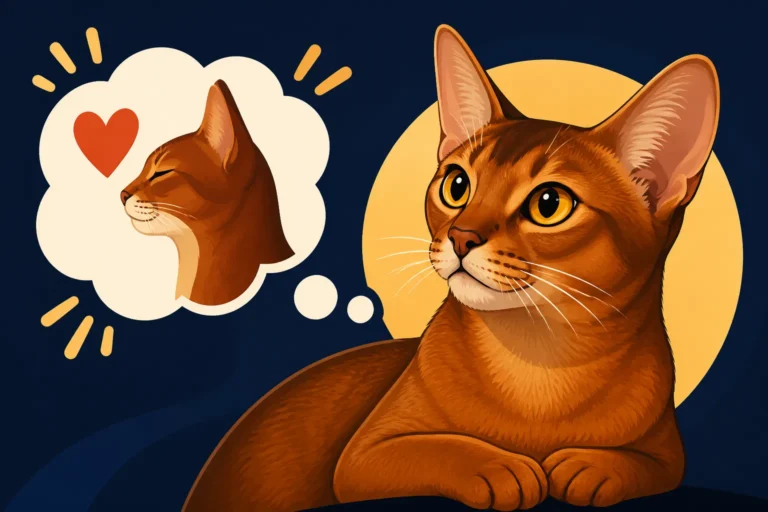
Abyssinian cats suddenly turning quiet and inactive often indicate hidden illnesses like kidney disease, dental pain, or severe gastrointestinal issues.
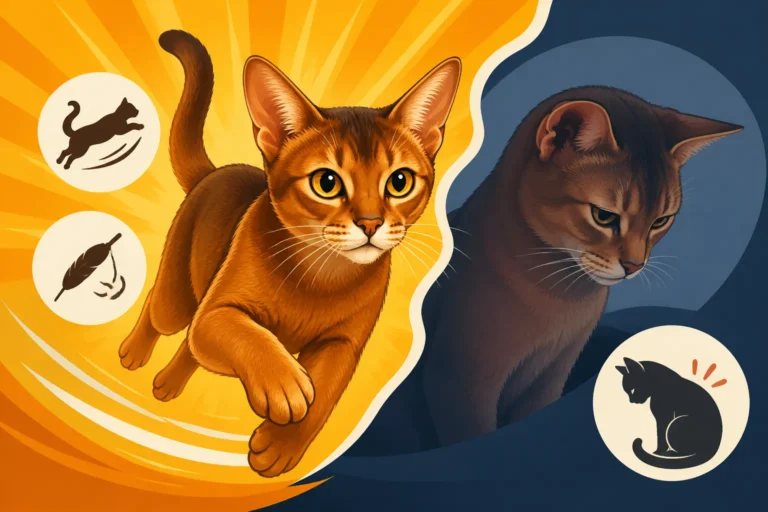
Abyssinian cats hide pain behind boundless energy, making subtle behavioral and physical changes crucial for detecting illness early.