How to Clean an Abyssinian’s Large Ears
Abyssinian ear cleaning methods explained for owners, including weekly checks, required supplies, and safe debris removal techniques.
The daily stuff, done right.
Feeding amounts by life stage, coat and skin routines, dental and nail care, exercise needs, and what changes as they age.
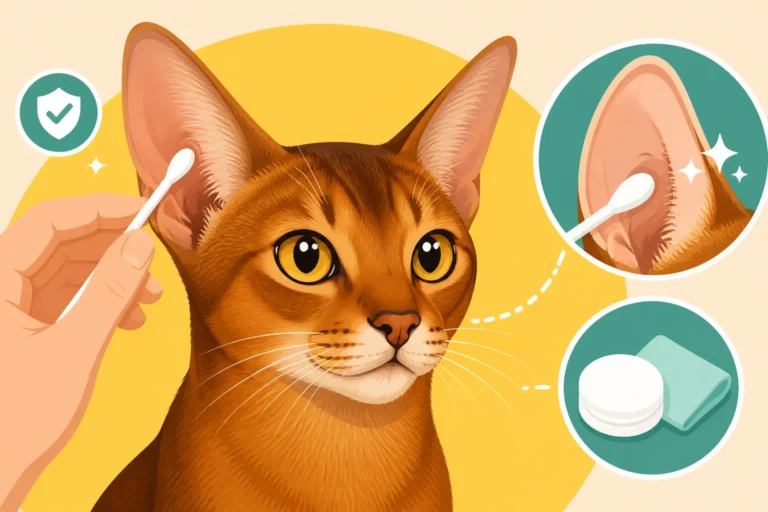
Abyssinian ear cleaning methods explained for owners, including weekly checks, required supplies, and safe debris removal techniques.
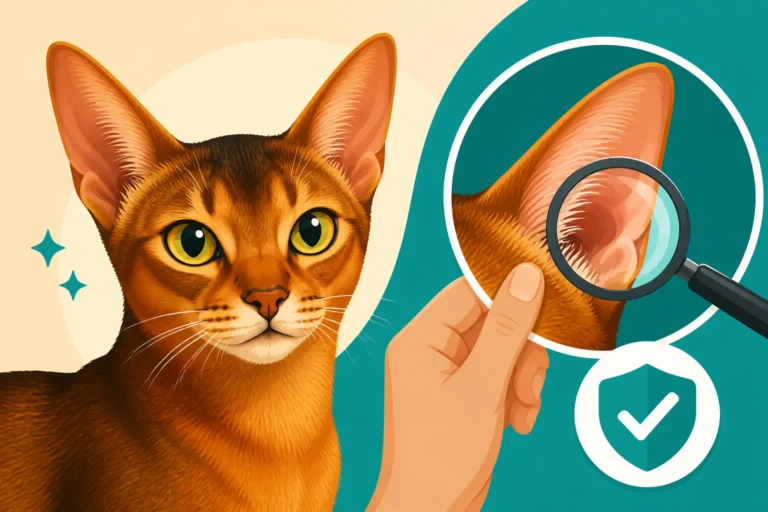
Weekly Abyssinian ear checks prevent wax buildup, mites, and infections caused by their large, open ear canal shape.
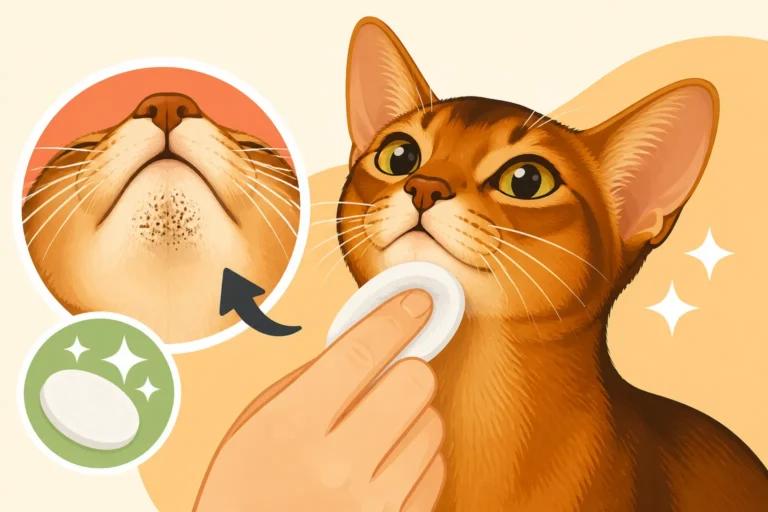
Abyssinian chin blackheads occur from active sebaceous glands and plastic bowls, requiring gentle cleaning and bowl replacement.
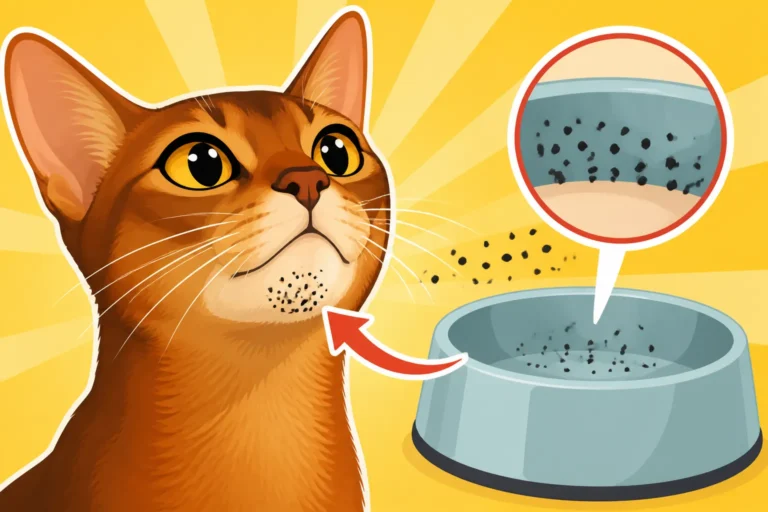
Abyssinian chin blackheads occur when hair follicles clog with keratin due to constant contact with contaminated food and water bowls.
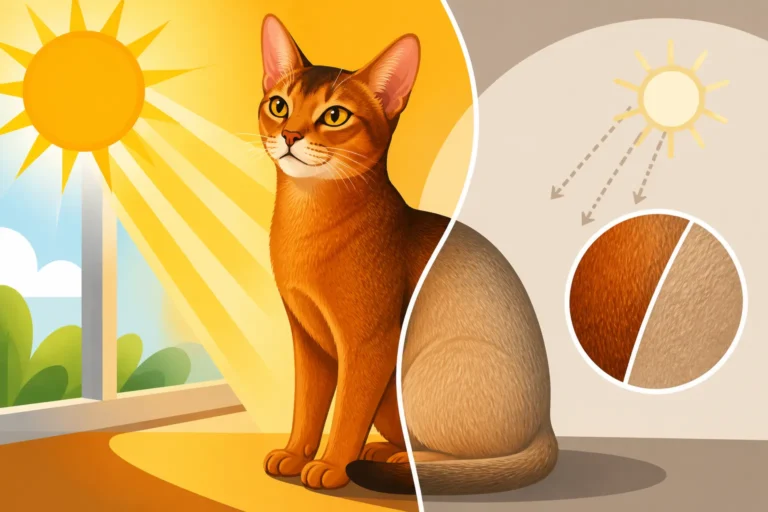
Sunlight exposure breaks down pigment bands in Abyssinian cat fur, causing the ticked coat color to fade over time.
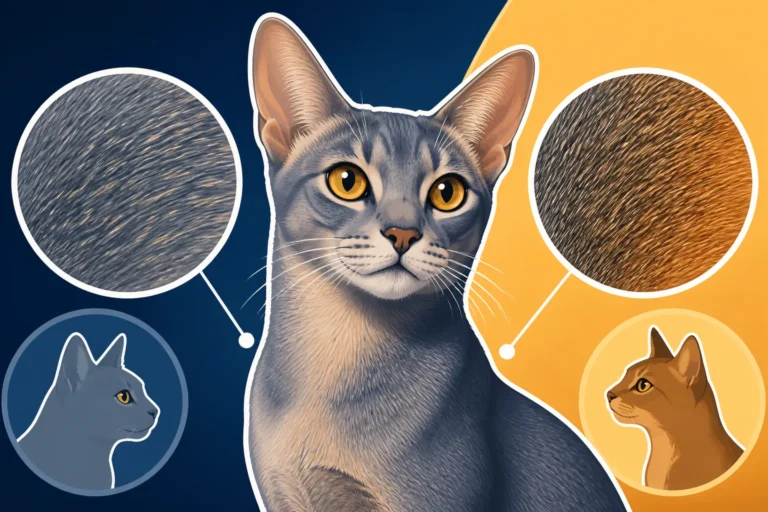
Blue Abyssinian ticking features three or four alternating hair bands and dilute genes that create a grey coat.
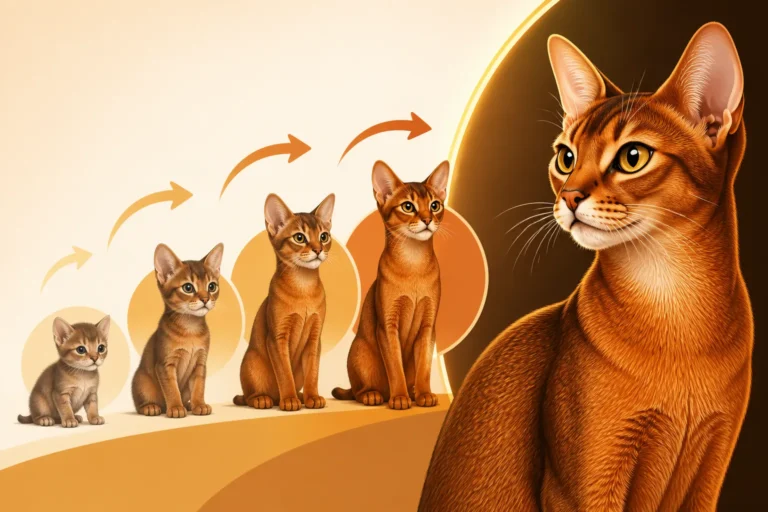
Ruddy Abyssinian coat development and the agouti gene explained through kitten stages, genetics, and banding patterns.
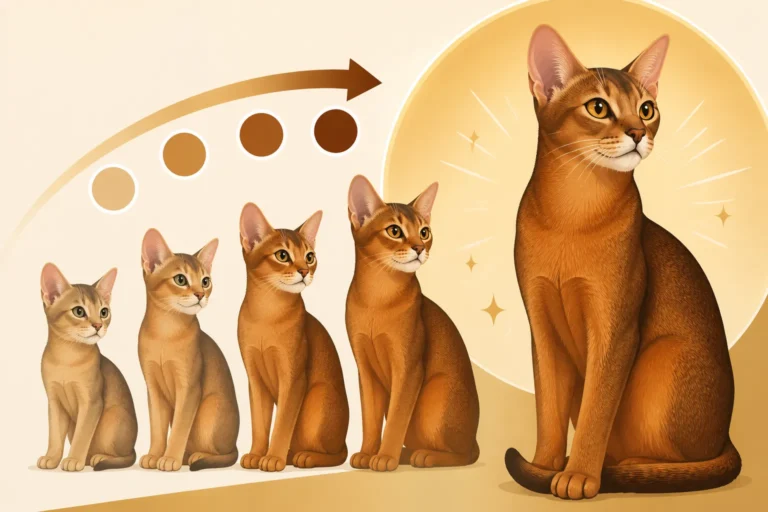
Abyssinian coat development and agouti banding explain when adult ticked color settles over the first six to twelve months of growth.
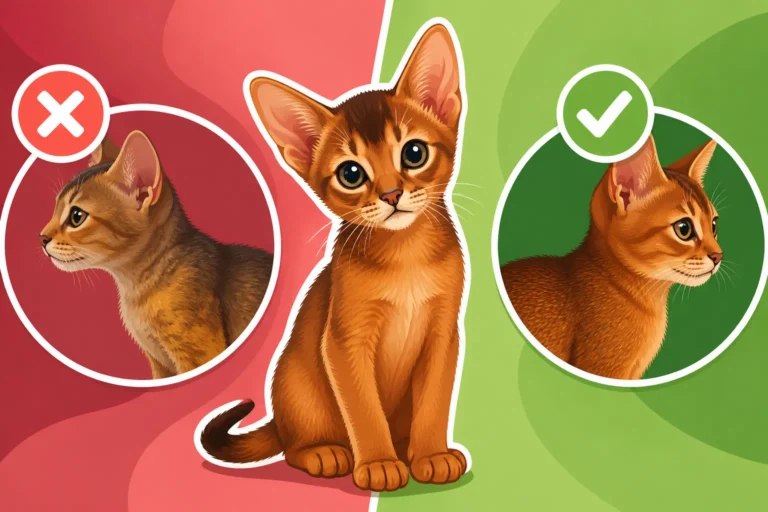
Ten week old Abyssinian kitten coats often show faint stripes, patches, and muted colors before mature agouti banding develops.
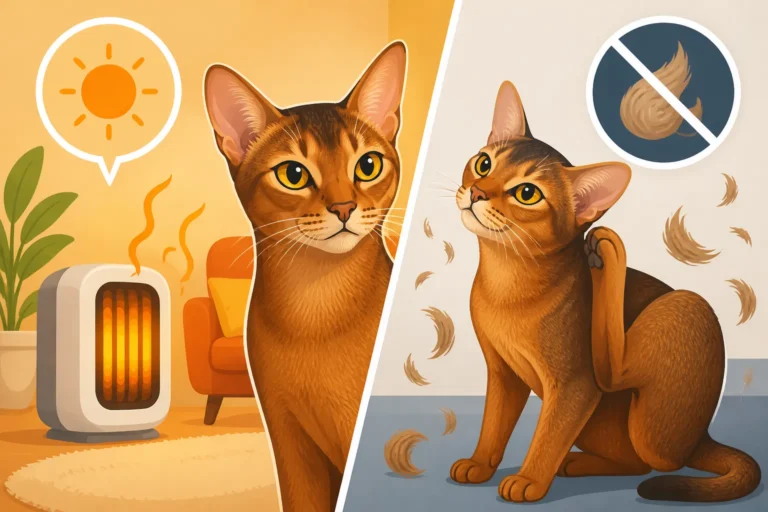
Indoor heating and dry air alter Abyssinian cat hair turnover by drying the skin, affecting their single-layer ticked coat.