What Litter Costs for One Abyssinian
If you've welcomed an energetic Abyssinian into your home, you're quickly learning that their zest for life extends to every corner, including their litter box. While the upfront cost of a beautiful Aby kitten is significant, many new owners are often surprised by the ongoing, sometimes substantial, expense of keeping their litter situation pristine. This guide will walk you through what to expect when budgeting for your Abyssinian's litter, helping you understand the variables and how to manage this often-underestimated household cost.
The Unexpected Cost of Abyssinian Litter
It’s easy to think of litter as a simple, static expense, but for an Abyssinian owner, it’s anything but. These intelligent, active cats have habits that can significantly impact how much litter you go through, and therefore, how much you spend.
Why Abyssinians Go Through More Litter Than You Think
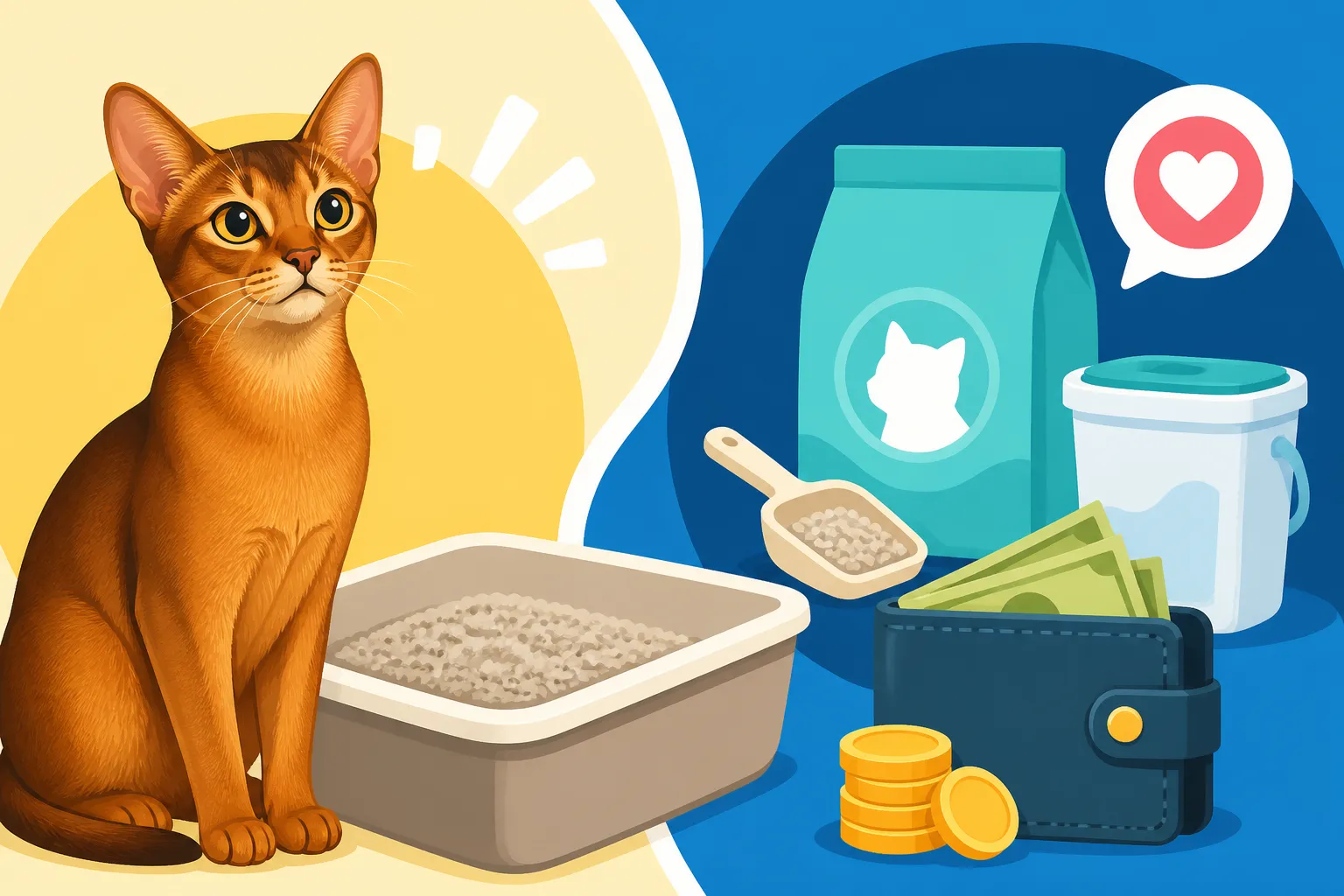
Abyssinians are not exactly dainty when it comes to their bathroom habits. They are known for their enthusiastic digging, often creating miniature archaeological digs before and after each use of the litter box. This isn't just a charming quirk; it means a lot of litter gets disturbed, potentially kicked out of the box, and thoroughly mixed with waste. Unlike some more sedate breeds, an Aby approaches its litter box with the same gusto it approaches a feather wand toy.
Think about it: a cat that really digs to China before doing its business, and then proceeds to bury it with equal fervor, is going to churn through more material. This intense digging can break down clumping litter more quickly, making it harder to scoop clean and leading to more frequent full litter changes. We've all been there, staring into a litter box that looks like a war zone after our Abyssinian has decided to redecorate it. This isn't just about hygiene; it directly impacts your monthly litter consumption. Why an Abyssinian Digs Before and After Every Visit delves deeper into this particular Abyssinian trait, explaining the instinct behind it and why it's so pronounced in the breed.
Beyond the Bag: Hidden Litter-Related Expenses
The bag of litter itself is just one part of the equation. Abyssinians, with their lean, athletic builds and high activity levels, are generally healthy, but their specific needs can still rack up peripheral costs. For instance, their metabolism and hydration needs mean they're regular visitors to the litter box. How Much Water an Abyssinian's Amyloid Risk Demands highlights the importance of water intake for their kidney health, which in turn means more frequent urination and, consequently, more litter usage.
Then there’s the issue of tracking. That finely ticked coat is gorgeous, but it's not a magnet for litter. Many Abyssinians love to jump out of the box with purpose, often carrying tiny granules with them, scattering them across your floors. This means you might invest in litter mats, special vacuum cleaners, or even higher-quality, low-tracking litters that often come with a higher price tag. The cost of a good litter scoop, liners, and potentially even an air purifier for odor control can also add up, especially if you’re trying to keep up with a fastidious Abyssinian in a smaller living space. These aren't always costs you think of when you first consider cat ownership, but they become very real when you're living with an active, curious Aby.
Deciphering Litter Types and Their Price Tags
When you walk down the pet aisle or browse online, the sheer variety of cat litter can be overwhelming. Each type comes with its own set of pros, cons, and, of course, a distinct price point that will affect your monthly budget for your Abyssinian.
Clumping Clay Litter: The Common Contender
This is probably what most people think of when they hear "cat litter." Clumping clay litters, often made from bentonite clay, are popular for a reason: they form solid clumps when wet, making it relatively easy to scoop out waste and keep the box clean. They also tend to be quite absorbent and offer decent odor control for many households. The price point is generally accessible, making them a go-to for many cat owners.
However, for an Abyssinian, there are considerations. Their vigorous digging can sometimes break apart weaker clumps, leading to "muddy" spots at the bottom of the box that are harder to clean and can harbor odors. The dust from some clay litters can also be a concern, both for your Aby's respiratory health and for keeping your home clean. Tracking is another common complaint; those fine clay particles love to hitch a ride on paws and coats. While they might seem like the cheapest option per bag, the rate at which an active Abyssinian goes through it, coupled with potential dust and tracking issues, might mean you're buying more frequently and spending more on cleaning supplies. You'll find many popular brands offering various formulas, often available in large bags at retailers like Chewy.
Non-Clumping and Alternative Litters: A Niche Market
Before clumping litter became widely available, non-clumping clay was the standard. These litters absorb urine rather than forming solid clumps, meaning you typically have to empty and entirely replace the litter more frequently to maintain hygiene and odor control. While a single bag might be cheaper than clumping varieties, the need for more frequent full changes can make the long-term cost surprisingly higher for an Abyssinian.
Beyond traditional clay, there's a growing market for alternative litters made from materials like recycled paper, wood pellets, corn, wheat, or even walnuts. These "natural" litters often appeal to owners looking for more environmentally friendly options, or those concerned about dust and artificial fragrances. Their prices can vary wildly, with some being comparable to mid-range clumping litters and others commanding a premium. Some, like wood pellets, require a specific type of sifting litter box system to work effectively, adding another initial cost. They generally boast good odor control through natural means and can be lower in dust and tracking. However, an Abyssinian's preference for texture is key here. Which Litter Texture an Abyssinian Will Not Refuse is an excellent resource for understanding how your Aby's delicate paws and discerning nature might influence their acceptance of these alternative textures. Some cats are very particular, and switching to an alternative litter might result in an unhappy cat who refuses to use the box, leading to entirely different, and more stressful, costs.
Silica Gel Litters: The High-Tech, Higher-Priced Option
Silica gel litters, often called "crystal litters," are made from silica gel beads that absorb moisture and odor without clumping. They work by dehydrating urine and evaporating moisture, leaving behind only the solid waste to scoop. The major advantage of silica gel is its longevity; a single bag can often last a month or more for one cat, significantly reducing how often you need to replace the entire box contents. They are also virtually dust-free and have excellent odor control.
The trade-off, of course, is the initial cost. Silica gel litters are generally the most expensive option per bag. However, because you use less of it over time, the monthly cost can sometimes balance out, or even be lower, than continually replacing cheaper clay litters. For an Abyssinian, the lack of dust and superior odor control can be a huge benefit, especially in smaller homes. The texture is unique, and while many cats adapt, some may not appreciate the feel of the crystals. If you are considering this type, test a small bag first to ensure your Aby approves. Given their high activity, any litter that tracks less and keeps the air cleaner is a definite plus for many Abyssinian households.
Here’s a quick overview of the different litter types and their general characteristics:
| Litter Type | Pros | Cons | Typical Cost Shape (Per Bag) | Usage Frequency (for 1 Aby) | Odor Control | Dust Level | Tracking |
|---|---|---|---|---|---|---|---|
| Clumping Clay | Forms scoopable clumps, widely available | Can be dusty, tracking common, heavy | Low to Mid | Moderate | Moderate | Moderate | Moderate |
| Non-Clumping Clay | Inexpensive per bag | Requires full changes often, less odor control | Low | High | Low | Moderate | Moderate |
| Wood Pellets | Natural, biodegradable, good odor control | Requires special sifting box, texture may be an issue | Mid | Moderate | Good | Low | Low |
| Corn/Wheat/Walnut | Natural, biodegradable, often low dust | Texture preference, can be pricier, potential for bugs | Mid to High | Moderate | Good | Low | Low |
| Silica Gel (Crystal) | Excellent odor control, low dust, long-lasting | Highest initial cost, unique texture, can be sharp | High | Low (less frequent changes) | Excellent | Very Low | Low |
Factors Influencing Your Abyssinian's Litter Budget
The type of litter you choose is just one piece of the puzzle. Several other factors unique to your Abyssinian and your home environment will play a significant role in how much you actually spend on litter each month.
Number of Litter Boxes and Cleaning Frequency
The general rule of thumb for cats is one litter box per cat, plus one extra. So, for a single Abyssinian, ideally, you'd have two litter boxes. While this might seem like overkill, it provides options for your cat and helps maintain cleanliness. More boxes, however, naturally mean more litter. If you have two large litter boxes, you're essentially doubling your litter consumption compared to just one. For an Abyssinian, who might be a bit particular about a dirty box, having multiple options can prevent inappropriate elimination, which is a much costlier problem to solve than buying extra litter.
Beyond the number of boxes, how often you scoop is paramount. Abyssinians are known for their fastidious nature; they appreciate a clean environment. If you’re not scooping at least once, preferably twice, a day, you’ll find yourself needing to perform full litter changes more frequently. This is especially true with clumping litters, where left-over urine can quickly break down the integrity of the remaining clean litter. A well-maintained box requires less frequent complete litter replacements, which can save you money over time. It's a balance: scoop diligently, and your litter stretches further. Neglect it, and you'll be tossing out entire boxes of partially used litter more often.
Abyssinian's Diet and Waste Output
What goes in must come out, and your Abyssinian's diet directly impacts their waste output, which, in turn, influences your litter usage. A high-quality diet, rich in animal protein and with appropriate fiber, generally leads to smaller, firmer stools and more manageable urine volume. Cheaper foods with a lot of fillers can result in larger, softer, and more frequent waste, meaning you'll be scooping more often and using more litter to cover and absorb.
For example, if you're feeding a premium wet food diet, your Abyssinian will likely have smaller, less odorous bowel movements because their body is utilizing more of the nutrients. This is also why we discuss What an Abyssinian Eats in a Month and Why a Full Bowl Turns an Abyssinian Into a Grazer – diet isn't just about nutrition; it's about managing waste. Similarly, a cat that is well-hydrated, which is vital for Abyssinians, will produce more urine. While this is a good thing for their health, it means the litter needs to be highly absorbent and effectively clump (if you're using clumping litter) to manage the liquid waste without soaking through or becoming messy. Paying attention to your cat's dietary needs can indirectly help manage litter costs by optimizing waste consistency and volume.
Odor Control Needs and Household Preferences
Let's be real: nobody wants a smelly house. For many Abyssinian owners, odor control is a major factor in litter choice, and often, better odor control comes with a higher price tag. Some litters rely on strong fragrances, which can be off-putting to both cats and humans. Others use activated charcoal, baking soda, or other natural absorbents to neutralize smells without adding artificial scents. The effectiveness of these features directly impacts how often you feel the need to refresh or completely change the litter.
Your personal sensitivity to odors, the size of your living space, and whether you have guests frequently can all influence how much you're willing to spend for superior odor control. If you live in a small apartment with your Abyssinian, you might prioritize a high-performance, higher-priced litter like silica gel to keep smells at bay. If you have a larger home with good ventilation and are diligent about scooping, you might get away with a more economical clumping clay. Remember, an Abyssinian is an active companion that will be all over your home, so keeping their environment fresh is key to harmonious living. Sometimes, the peace of mind that comes from a truly odor-free home is worth the extra cost per bag of litter.
Strategies for Managing Abyssinian Litter Costs
Even with an active Abyssinian and their particular habits, there are smart ways to manage your litter expenses without compromising on cleanliness or your cat’s comfort. It's all about making informed choices and being a bit strategic.
Buying in Bulk and Subscriptions
One of the most straightforward ways to save money on cat litter for your Abyssinian is to buy it in larger quantities. While a 10-pound bag might seem cheaper initially, the cost per pound or per use is almost always lower when you purchase a 40-pound bag. This requires having adequate storage space, but the savings can really add up over time. If your Abyssinian approves of a particular brand and type of litter, stocking up when it's on sale or investing in a large container makes financial sense.
Many online retailers, like Chewy, offer subscription services where you can schedule regular deliveries of your preferred litter. These subscriptions often come with a discount, saving you money, and the convenience of having heavy bags delivered right to your door is invaluable. Plus, it ensures you never run out, avoiding those last-minute, emergency trips to the store where you might overpay. For an active Abyssinian, consistency in litter type is also beneficial, so having a steady supply helps maintain their routine. Consider the long-term impact on your budget, as What an Abyssinian Costs Over Fifteen Years reveals just how much these small, recurring expenses add up.
Optimizing Litter Box Maintenance
Effective litter box maintenance is not just about cleanliness; it's a huge factor in cost savings. The more diligently you scoop, the longer your litter lasts. For an Abyssinian, who likes to dig, scooping twice a day helps remove waste before it has a chance to be broken down and spread throughout the box. Regular scooping means you're removing only the soiled litter, leaving more clean litter behind, thus extending the time between full litter changes.
Ensure your litter boxes are adequately sized. How Big an Abyssinian's Litter Box Should Be emphasizes that Abyssinians benefit from larger boxes, giving them ample space to dig and reducing the chance of accidental misses or litter being kicked out. A larger box also allows for a deeper layer of litter, which can help absorb more and prevent urine from reaching the bottom of the pan, preserving the life of the entire litter contents. Even adding a good quality litter mat can significantly reduce tracking, which means less litter is scattered and wasted outside the box, indirectly saving you money.
DIY Solutions and Smart Swaps
Sometimes, a little ingenuity can go a long way in trimming down litter costs. While not suitable for all Abyssinians, some owners explore DIY litter options. For example, some people use kiln-dried pine pellets from feed stores, which are far cheaper than pet-branded wood litters. However, this often requires a sifting litter box and careful monitoring of your cat’s acceptance, as the texture and scent can be quite different. Always introduce any new litter gradually to avoid rejection.
Another smart swap is focusing on prevention rather than constant replacement. Investing in an extra-large, high-sided litter box can contain your Abyssinian's enthusiastic digging, preventing litter from ending up on the floor. While the box itself might be a slightly higher upfront cost, it saves you money on lost litter and cleaning supplies in the long run. If odor is a major concern, consider adding a sprinkle of plain baking soda to the bottom of the box before adding litter, or placing an open box of baking soda near the litter area. These simple, inexpensive additions can boost odor control without having to switch to a more expensive, fragranced litter.
The Long-Term Financial Picture of Abyssinian Litter
Understanding litter costs isn't just about the monthly bill; it's about looking at the bigger picture and realizing how these seemingly small expenses contribute to the overall financial commitment of owning an Abyssinian.
Annual and Lifetime Litter Expenditures
When you break it down, the cost of litter for a single Abyssinian can easily range from a modest amount to something more substantial each month, depending on your choices. Let's say, on average, you spend a certain amount on litter for your Aby monthly. Multiply that by twelve, and you have your annual litter expense. This figure might surprise you! It becomes a significant recurring budget line item, much like their food or annual vet visits. When considering What an Abyssinian Costs to Keep Every Year, litter is definitely one of those unavoidable, consistent outlays.
Over the average 12-15 year lifespan of a well-cared-for Abyssinian, these annual costs accumulate into a very substantial lifetime expenditure. We're talking about years of daily scooping, regular bag purchases, and occasional full replacements. This highlights why being strategic about litter choices, taking advantage of bulk discounts, and optimizing usage isn't just about saving a few dollars here and there; it's about making a financially sustainable choice for the entire duration of your cherished Abyssinian's life. Think about how much you could save or reallocate to other essential Why Abyssinian Dental Work Is the Biggest Line in the Budget or How Often an Abyssinian Needs Its Teeth Cleaned if you're smart about litter.
The Health-Cost Connection of Litter Choices
Choosing the right litter isn't just about price and odor control; it can have significant implications for your Abyssinian's health, and thus, your veterinary budget. Litters that are excessively dusty, for instance, can contribute to respiratory issues in some cats, leading to vet visits and medication. While Abyssinians are generally robust, any added irritant can be problematic. If your cat develops sneezing, coughing, or asthma-like symptoms, your litter might be a culprit, and the cost of addressing those health concerns will far outweigh any savings you made on cheap, dusty litter.
Similarly, an Abyssinian's natural fastidiousness means they can develop litter box aversion if the box isn't clean or the litter texture is unpleasant. This can lead to inappropriate urination or defecation outside the box. Besides the damage to your home and the stress it causes, addressing behavioral issues often involves vet check-ups to rule out medical causes, specialized cleaning products, and sometimes even a cat behaviorist. These costs can quickly escalate. By investing in a litter that your Abyssinian is happy to use, and maintaining a clean box environment, you're not just buying litter; you're investing in your cat's comfort, health, and ultimately, saving yourself from potentially much higher veterinary and repair bills down the line. It's a prime example of how spending a little more upfront on quality can prevent larger, more expensive problems later.
Disclaimer
This article is for general informational purposes only and does not constitute professional advice. Laws, prices and regulations vary by location and change over time. Consult a qualified professional for guidance on your specific situation.