How Many Meals a Day an Abyssinian Should Get
It's a common struggle for Abyssinian owners: you've got this whirlwind of energy constantly zipping around, and you find yourself wondering if you're feeding them enough, or too much, or at the right times. Their intense metabolism and playful antics mean that a one-size-fits-all approach to mealtime just doesn't cut it. This guide is here to help you navigate the nuances of feeding your active Abyssinian, ensuring they get the sustained energy and nutrition they need throughout their busy day.
Understanding Your Abyssinian's Unique Metabolism and Activity Level
Abyssinians aren't your typical couch potatoes. They are renowned for their incredible energy levels, boundless curiosity, and a physical prowess that would make many other breeds blush. This isn't just a charming personality trait; it's a fundamental aspect of their biology that directly impacts their nutritional requirements and, by extension, how often they need to eat. Trying to feed an Aby like a placid domestic shorthair is a recipe for an under-fueled, over-hungry, and potentially frustrated feline.
Why the "One Bowl a Day" Myth Doesn't Work for Abyssinians
Many cat owners are accustomed to the idea of simply putting a large bowl of dry kibble down once a day and letting their cat graze at will. For some less active or larger breeds, this might suffice, but for an Abyssinian, it's rarely ideal. Their metabolism is often described as running at a higher gear, burning through calories at an impressive rate. This means that a single, large meal can be quickly digested, leaving them hungry again much sooner than you might expect. Imagine trying to power a high-performance sports car with just one fill-up for an entire cross-country trip – it simply won't sustain them.
Beyond the metabolic rate, Abyssinians are natural hunters, and in the wild, cats eat many small meals throughout the day, not one massive feast. A single meal often means a huge spike in energy followed by a crash, which can lead to begging, frantic behavior, or even weight loss if their calorie needs aren't met consistently. This breed thrives on consistency and sustained energy, not boom-and-bust cycles.
The Impact of High Activity on Calorie Needs
Every leap, every sprint, every curious climb up your curtains or cat tree burns significant calories. An Abyssinian is almost constantly in motion, even when they appear to be napping, they often have an ear twitching or a tail flicking, ready to spring into action. This relentless activity means their energy expenditure is far higher than a cat that prefers lounging on a sunny windowsill for hours. It’s not uncommon for an Abyssinian to eat more than a cat twice its size simply because of this incredible energy output. You can read more about just how much fuel they need in How Many Calories an Adult Abyssinian Burns.
If an Abyssinian isn't getting enough fuel, or if that fuel is delivered in infrequent, large doses, they can quickly become lethargic (for an Aby, which is still quite active for other breeds!), or even start to lose condition. Consistent, smaller meals help to keep their blood sugar stable, provide a steady stream of energy, and support their impressive musculature. It’s about providing that constant trickle of fuel rather than a sporadic downpour, allowing their bodies to efficiently absorb nutrients and maintain their peak performance.
The Grazing Dilemma: Why a Full Bowl Can Be Problematic
While the idea of free-feeding might sound convenient – just fill the bowl and let them eat when they please – it actually introduces several potential issues for an Abyssinian. What might seem like an easy solution can often lead to behavioral challenges, overconsumption, or even a lack of engagement with their food. Understanding these drawbacks can help you see why a more structured approach is often beneficial for this intelligent and energetic breed.
Turning an Abyssinian into a Grazer: The Unintended Consequences
Leaving a full bowl of food down all day can inadvertently train your Abyssinian into an unhealthy eating pattern. Instead of seeing mealtime as a distinct event that requires focus, they might pick at their food sporadically throughout the day. While some might argue that this mimics natural grazing, it often lacks the mental stimulation and satiety that comes from a dedicated meal. For Abyssinians, who are highly intelligent and easily bored, constant access to food can dull their interest. They might take a few bites, get distracted, then come back later, potentially leading to food waste or the food becoming stale.
Furthermore, free-feeding can sometimes contribute to overeating, even in active cats. While Abyssinians are typically lean, some individuals might still overindulge if food is always available, especially if they are bored or seeking comfort. This can make it difficult to monitor their actual intake, which is crucial for identifying early signs of illness or managing weight. It also removes the opportunity for food to be used as a positive reinforcement tool during training or enrichment activities. The connection between constant food availability and a diminished sense of reward is something to really consider for this clever breed, as discussed in Why a Full Bowl Turns an Abyssinian Into a Grazer.
The Boredom Factor and Food Motivation
An Abyssinian left with an ever-present bowl of food loses one of the most powerful motivators for interaction and mental engagement: food itself. For a cat as smart and active as an Aby, mealtime shouldn't just be about sustenance; it should be an enriching experience. If food is always there, it loses its special appeal. When they're bored – and a bored Abyssinian can be a destructive Abyssinian – they might still approach the food bowl out of habit or lack of other stimulation, eating when they're not truly hungry. This is often why you hear the complaint, Why an Abyssinian Asks for Food It Does Not Need, even when the bowl is full.
Structured mealtimes, on the other hand, can transform eating into an exciting part of their day. It provides a routine, something Abyssinians often thrive on, and gives them something to anticipate. When food is presented at specific times, it becomes a valuable resource that can be used for puzzle feeders, training exercises, or simply as a moment of focused engagement between you and your cat. This scarcity, or rather, this intentional timing, enhances the perceived value of the food, making your Abyssinian more motivated to work for it or engage with you around it.
Recommended Feeding Schedules: Finding the Right Balance
So, if free-feeding isn't the best fit, what's the ideal approach for your energetic Abyssinian? The key lies in mimicking their natural feeding patterns more closely, providing frequent, smaller meals that keep their engines running smoothly without overwhelming their digestive system or leading to boredom. This strategy supports their high metabolism and active lifestyle beautifully.
The Case for Three Meals a Day (or More)
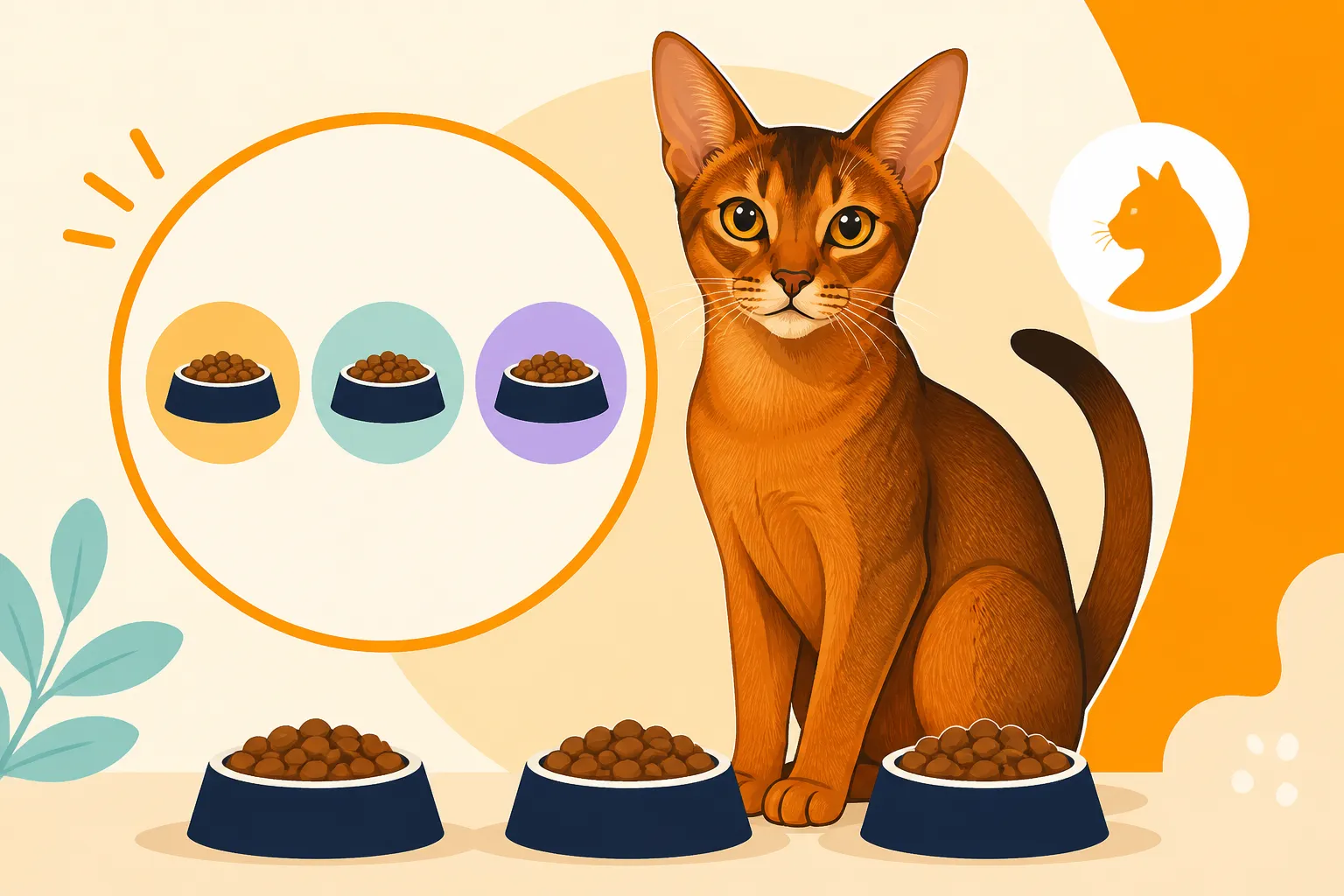
For most adult Abyssinians, a schedule of three meals a day is often the sweet spot. This approach provides several distinct advantages:
- Stable Energy Levels: Spreading meals throughout the day prevents those drastic energy peaks and valleys. Your Aby gets a steady supply of fuel, keeping them zippy and engaged without becoming overly frantic from hunger or crashing into lethargy after a single large meal. This is particularly important for a breed that literally never seems to stop moving.
- Improved Digestion: Smaller, more frequent meals are generally easier on a cat's digestive system. They can process and absorb nutrients more efficiently, reducing the likelihood of upset stomachs or nutrient deficiencies.
- Reduced Hunger-Related Behaviors: When your Abyssinian knows food is coming at regular intervals, they are less likely to pester you incessantly, destroy things out of boredom, or develop food-guarding tendencies. The predictability brings a sense of security. As discussed in Why Three Meals Suit an Abyssinian, this rhythm aligns well with their natural instincts.
- Mental Enrichment Opportunities: Each mealtime becomes a chance for interaction, puzzle feeders, or simply a dedicated moment of calm focus.
If your schedule doesn't permit you to be home for all three meals, automated feeders can be a lifesaver. Brands like PetSafe or SureFeed offer excellent options. You can find a wide range of reliable automatic feeders on retailers like Chewy or Amazon. These devices can dispense a portion of food at pre-set times, ensuring your Aby's routine stays consistent even when you're not there. For some particularly high-energy Abyssinians, especially younger ones, even four smaller meals might be beneficial.
Adjusting for Age, Weight, and Health Concerns
It’s important to remember that these are general guidelines, and your Abyssinian is an individual with unique needs.
- Kittens: Abyssinian kittens are miniature bundles of pure, unadulterated energy. Their bodies are growing rapidly, and their activity levels are off the charts. They typically require more frequent meals – sometimes four to five small meals a day – to support their growth and maintain their high metabolism. Think of them as tiny, demanding athletes who need constant refueling. You can learn more about their specific needs in How Many Calories an Abyssinian Kitten Needs. As they mature, you can gradually transition them to three meals a day.
- Senior Abyssinians: As Abyssinians age, typically after ten or twelve years, their metabolism might slow slightly, and their activity levels may decrease. However, their nutritional needs remain high for maintaining muscle mass and organ health. Some senior Abyssinians might benefit from fewer, slightly larger meals (e.g., two main meals) if they struggle with frequent small meals, or they might still thrive on three if their appetite is good. Monitoring their weight and muscle condition is key.
- Health Concerns: Certain health conditions can significantly impact feeding schedules. For Abyssinians, due to their genetic predisposition to What Amyloid Is and Why It Reaches Abyssinian Kidneys, ensuring adequate hydration is crucial. This often means incorporating more wet food, and the timing of these meals can influence water intake. Cats with kidney disease, for instance, might benefit from smaller, more frequent meals to encourage appetite and manage phosphorus levels. Your veterinarian is always the best resource for tailoring a feeding schedule to specific health needs.
The Role of Food Type and Quality in Meal Frequency
Beyond when you feed your Abyssinian, what you feed them plays an enormous role in how satisfied they feel and how well their body functions. The type and quality of food can directly influence how frequently they need to eat, impacting their satiety, energy levels, and overall health, especially for a breed with specific health predispositions.
Wet Food vs. Dry Kibble: Hydration and Satiety
When it comes to Abyssinians, wet food is often championed by breeders and veterinarians, and for very good reason. Cats, by nature, have a low thirst drive, evolved to get most of their hydration from their prey. Dry kibble, by its very definition, contains very little moisture. For an active Abyssinian, this can be a significant problem, as even with a water bowl or fountain, they may not drink enough to compensate. This is particularly concerning given the breed's known risk for kidney issues, including renal amyloidosis. Providing ample hydration through their diet is a proactive measure against these potential problems. Why Wet Food Protects an Abyssinian's Kidneys delves deeper into this.
Wet food, with its high moisture content, helps ensure your Abyssinian stays properly hydrated, supporting kidney function and overall health. Furthermore, wet food often has a higher protein-to-carbohydrate ratio and can be more satiating than an equivalent caloric amount of dry kibble. The moisture and often richer flavor can make them feel fuller for longer, which might reduce begging between meals. If you're feeding primarily wet food, you might find that two or three solid meals are perfectly adequate, whereas an Abyssinian on a purely dry diet might feel hungry more frequently. Many high-quality wet food options are available, including fresh foods made with minimally processed ingredients. You can also find a vast selection on Chewy.
Protein Content and Sustained Energy
Abyssinians are lean, muscular athletes, and their diet needs to reflect that. A high-quality diet rich in animal-based protein is absolutely essential for maintaining their muscle mass, supporting their high energy output, and keeping them feeling satisfied. Protein is a more complex macronutrient for a cat's body to break down, meaning it provides a more sustained release of energy compared to carbohydrates. When an Abyssinian consumes a meal high in appropriate protein, they tend to feel fuller for a longer period, which can naturally extend the time between meals without them becoming ravenously hungry.
Conversely, a diet heavy in carbohydrates or with low-quality, plant-based proteins can lead to rapid digestion, blood sugar spikes, and then a quick return to hunger. This can exacerbate issues like begging or frantic behavior between scheduled meal times. When choosing a food, look for options where meat is the first and primary ingredient. Understanding Which Protein Percentage an Abyssinian Needs can help you make informed decisions when selecting food that truly fuels your active companion. A diet optimized for high-quality protein allows for a more stable energy curve throughout the day, complementing a multi-meal feeding schedule.
Practical Tips for Implementing a Meal Schedule
Switching up your Abyssinian's feeding routine can feel a bit daunting, especially if they're already accustomed to a certain way of doing things. But with patience, consistency, and a few smart strategies, you can smoothly transition them to a schedule that better suits their unique needs and brings more calm to your household.
Transitioning Your Abyssinian to a New Routine
Cats are creatures of habit, and Abyssinians are no exception. A sudden, drastic change to their feeding schedule or food can lead to stress, digestive upset, or food refusal. The key is a gradual transition:
- Introduce New Times Slowly: If your Aby is used to free-feeding, start by picking up the food bowl after an hour or two in the morning and evening, gradually shortening the "open" window. Then, start offering small, fixed meals. If you're moving from two to three meals, introduce the third meal (perhaps midday) as a smaller portion, gradually increasing it as your cat adjusts.
- Consistency is King: Once you decide on a schedule, stick to it as rigidly as possible, especially in the first few weeks. Cats have an internal clock, and they thrive on predictability. Even weekend lie-ins should be adjusted to keep their meal schedule consistent.
- Positive Reinforcement: Make new meal times a positive experience. Talk to your Aby, praise them when they eat, and make the food appealing. Don't hover, but be present in a comforting way.
- Manage Expectations: Your Abyssinian might initially protest with extra vocalizations or by pushing empty bowls around. Be firm but gentle. They will learn the new routine. Don't immediately give in to begging outside of meal times; this only reinforces the behavior.
Remember, a successful transition isn't about speed, it's about making steady, gentle progress.
Making Mealtime an Enrichment Opportunity
For a highly intelligent and active breed like the Abyssinian, mealtime offers a fantastic opportunity for mental and physical enrichment. This is where you can truly give your Aby a "job" and tap into their natural hunting instincts, making their meals more satisfying and their lives more stimulating.
- Puzzle Feeders: These are invaluable tools for Abyssinians. Instead of simply eating from a bowl, your cat has to work to get their food, simulating the effort they would expend hunting. This slows down their eating, prevents boredom, and provides mental challenge. There's a huge variety available on Chewy and Amazon, from simple treat balls to more complex feeders that require pawing, batting, or problem-solving. Make sure to start with easier puzzles and gradually increase the difficulty to keep them engaged.
- Foraging Games: Don't just put the food in one spot! Try hiding small portions of their kibble (if you're feeding dry) in various safe locations around the house – on low shelves, inside cardboard boxes, under a crinkly mat. This encourages their natural foraging behavior and keeps them active and thinking between their main meals. As you'll discover in Why Foraging Suits an Abyssinian's Mind, this simple act can greatly enhance their daily life.
- Interactive Feeding Toys: Some toys dispense food as your Aby plays with them. This combines their love for play with their need to eat, creating a truly enriching experience.
- Training with Meals: Use a portion of their meal to practice tricks or reinforce good behavior. A few pieces of kibble or a small lick of wet food can be a powerful motivator for an Abyssinian to learn "sit," "stay," or even to come when called.
By turning mealtime into an engaging activity, you're not just feeding your Abyssinian's body; you're also nourishing their clever mind and keeping them happily occupied.
Abyssinian Feeding Schedule Guide
This table offers a general guide to how many meals an Abyssinian should get, but always observe your individual cat's needs and consult your vet for personalized advice.
| Age / Life Stage | Recommended Meals per Day | Key Considerations |
|---|---|---|
| Kitten (8-16 weeks) | 4-5 small meals | Rapid growth and very high energy levels. Frequent, small meals support metabolism and steady development. Gradually reduce frequency as they mature. |
| Young Adult (4 mos-1 year) | 3-4 meals | Still growing and incredibly active. Needs consistent fuel to build muscle and support boundless play. Transitioning from kitten schedule should be gradual. |
| Adult (1-7 years) | 3 meals | Optimal for maintaining stable energy, aiding digestion, and preventing hunger pangs for this highly active breed. Can use automatic feeders for midday meals. |
| Mature Adult (7-10 years) | 2-3 meals | Activity may slightly moderate, but still high energy. Continue with 3 meals if possible, or transition to 2 larger meals if preferred and weight is stable. Monitor weight closely. |
| Senior (10+ years) | 2-3 meals | Energy levels may decrease, but nutrient needs remain high. Focus on easily digestible, high-quality protein. Smaller, more frequent meals can aid digestion and appetite for some, while others may prefer 2 larger ones. Hydration is even more crucial. Caring for an Abyssinian Past Ten |
Disclaimer
This article is for general informational purposes only and does not constitute professional advice. Laws, prices and regulations vary by location and change over time. Consult a qualified professional for guidance on your specific situation.