Why an Abyssinian’s Coat Shimmers When It Moves
One of the most captivating things about an Abyssinian cat is the way their coat seems to dance with light, shimmering and shifting with every move they make. It's not just a trick of the eye; there's a specific, beautiful reason behind this phenomenon, rooted deeply in their unique genetics and coat structure. If you've ever found yourself mesmerized by your Abyssinian's living tapestry of fur, you're about to understand the magic behind it.
The Secret to the Abyssinian's Shimmer: Ticking
The primary reason an Abyssinian's coat shimmers and looks so dynamic is its remarkable 'ticked' pattern. This isn't just any cat coat; it's a masterpiece of natural design that makes the fur appear alive.
What is Agouti Ticking?
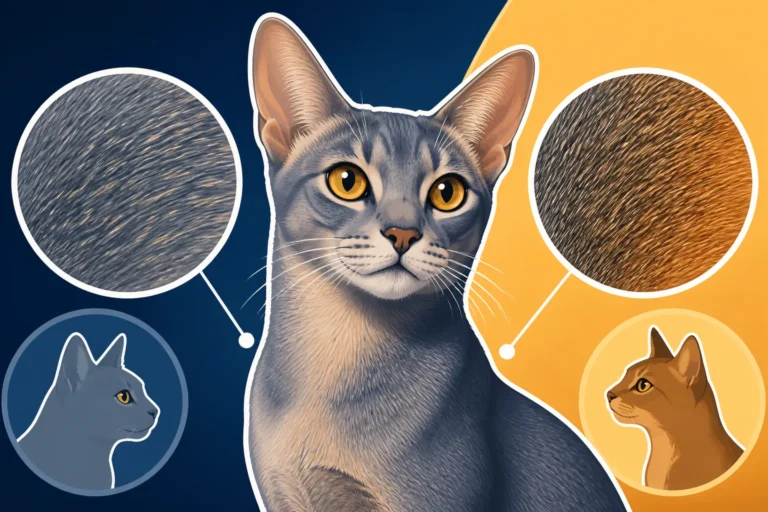
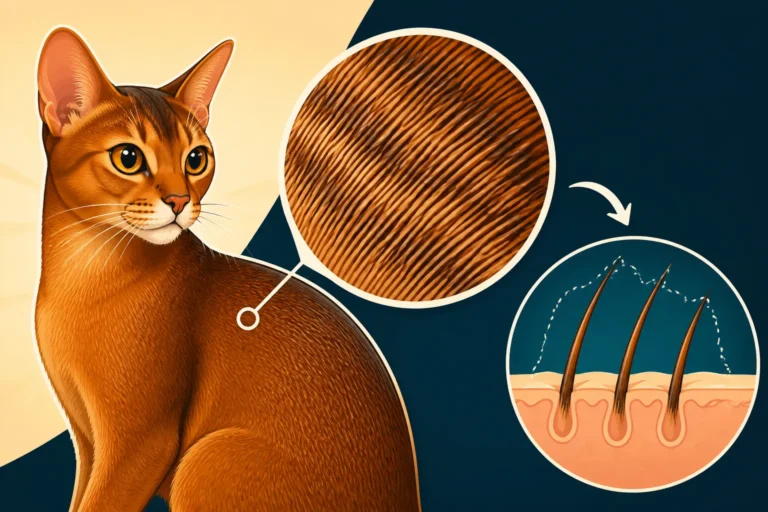
At the heart of the Abyssinian's shimmer is what we call agouti ticking. Imagine each individual hair on your cat's body not as a single solid color, but as a miniature canvas painted with multiple bands of pigment. Typically, an Abyssinian hair will have three to four distinct bands of color, alternating between lighter and darker shades. The tip of each hair is always the darkest band, giving the coat its rich depth. This phenomenon is distinct from a solid colored cat, where each hair is one uniform color from root to tip, or a tabby, where the pattern is created by sections of ticked hairs against sections of solid colored hairs.
Because almost every hair on an Abyssinian has this banding – except for some unpigmented hairs on the underside and sometimes a small patch of solid color on the chest or legs – the entire coat becomes a complex tapestry of light and shadow. As light hits these individual hairs, it reflects off the different color bands at varying intensities, creating an optical illusion that's truly stunning. It's like looking at a finely woven silk fabric that seems to change color as you move around it. You can really get into the specifics of How an Abyssinian's Agouti Banding Works if you're curious about the mechanics.
How the Ticking Creates the Illusion of Movement
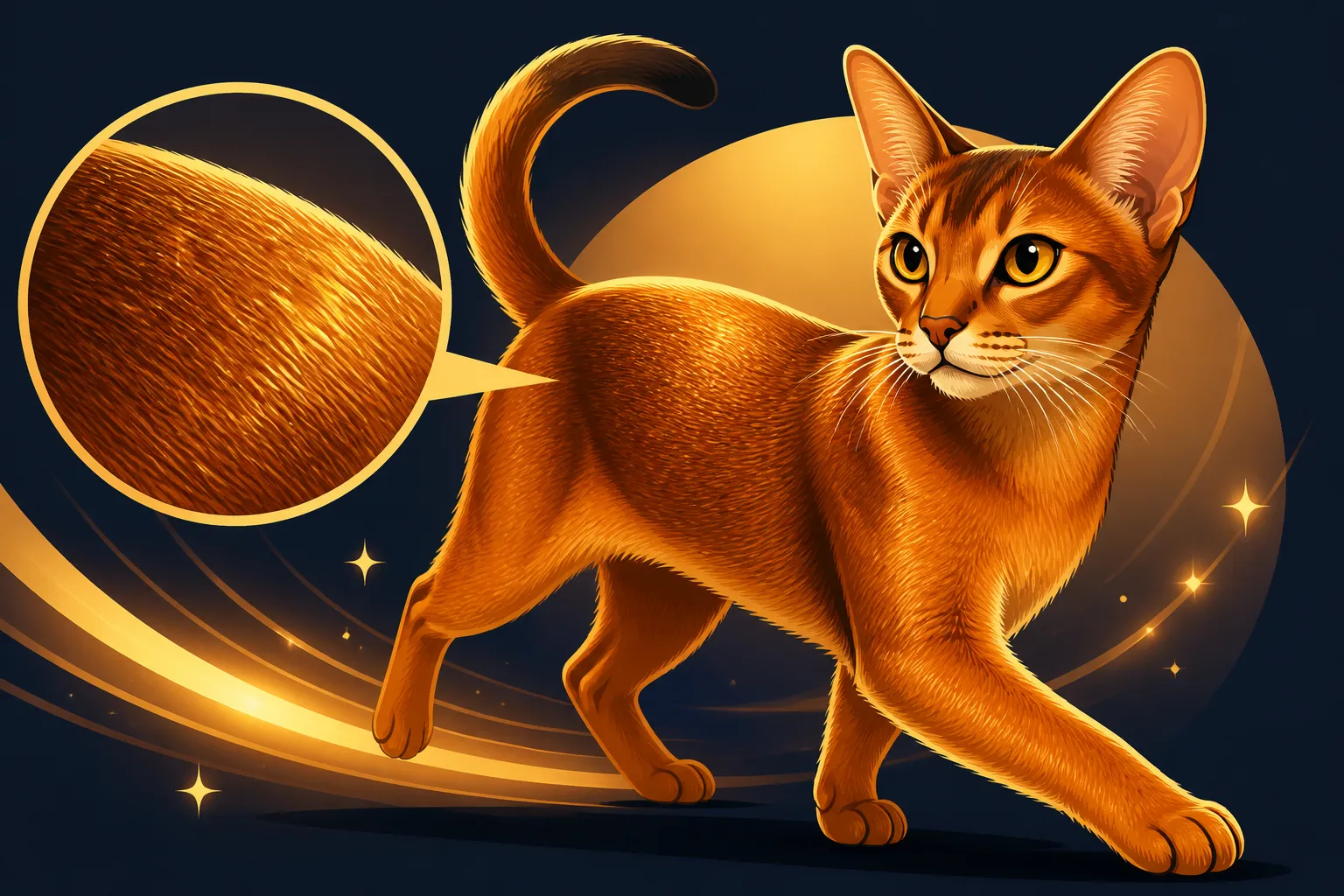
The shimmering effect is a direct result of how these multiple color bands interact with ambient light. As your Abyssinian moves, even slightly, the angle at which light strikes their fur changes constantly. One moment, the light might catch predominantly the lighter bands on thousands of hairs, giving a brighter, almost golden gleam. The next instant, as your cat stretches or turns, the darker bands might be more illuminated, creating a deeper, richer hue.
Think of it like sunlight hitting a field of ripe wheat swaying gently in the breeze. The movement of the stalks and the subtle variations in their texture and color create a constant play of light across the entire field. An Abyssinian's coat behaves in a similar fashion. This continuous interplay of light and shadow over the banded hairs creates the illusion that the coat itself is moving, rippling, and shimmering, even if the cat is just standing still. This is why you'll often see an Abyssinian's coat described as having a "living" quality. It's not just a flat color; it's a dynamic, ever-changing spectrum right before your eyes. The absence of bold tabby stripes or patterns means there's nothing to break up this continuous flow of light, allowing the ticking to truly shine through. Why an Abyssinian Has No Tabby Stripes explains this difference in more detail.
The Unique Structure of an Abyssinian's Coat
Beyond the ticking itself, the physical structure of the Abyssinian's coat plays a huge role in amplifying that magnificent shimmer. It's not just about the colors on the hairs, but also the hairs themselves.
The Single Coat and Minimal Undercoat
Unlike many cat breeds that boast a dense, fluffy undercoat beneath their coarser guard hairs, the Abyssinian has a notably different arrangement. They possess what is often referred to as a "single coat" or, more accurately, a coat with a very sparse and fine undercoat. This means that the majority of their fur consists of those beautifully ticked guard hairs that lie close to their body.
What does this minimal undercoat mean for the shimmer? Well, a thick undercoat can often obscure the individual ticked hairs, dulling their effect and making the coat appear more uniform. With an Abyssinian, there's no bulky layer to hide the magic. Every ticked hair is on full display, directly exposed to the light. This allows the light to penetrate deeply into the coat and reflect off those multiple bands without obstruction, enhancing the vibrancy and the dynamic play of color. It's one of the reasons Why the Ticked Coat Leaves an Abyssinian Almost No Undercoat. This sleek, close-lying coat also means that the light can catch the hairs more uniformly across the body, contributing to the overall fluid shimmer rather than a patchy appearance.
Fine Texture and Light Reflection
The individual hairs of an Abyssinian's coat are also remarkably fine and soft to the touch. This isn't a coarse, wiry fur; it's smooth and silky, which has a significant impact on how light behaves when it hits the surface. Fine, smooth hairs tend to reflect light more cleanly and intensely than coarser, more irregular hairs. Imagine the difference between polished marble and rough-cut stone – the polished surface catches and bounces light far more dramatically.
When thousands of these finely textured, individually banded hairs are packed together, lying close to the body, they create a surface that is incredibly efficient at reflecting light. The light doesn't get absorbed or scattered haphazardly; it bounces off the smooth surface of each band, enhancing the perception of depth and movement. This fine texture contributes directly to the coat's lustrous, almost liquid appearance, making it seem like spun gold or polished bronze, depending on the coat color. The way How Fine an Abyssinian's Coat Feels directly relates to this brilliant reflective quality.
Factors Enhancing the Shimmer
While ticking and coat structure are inherent to the breed, there are definitely things we can do as owners to ensure that magnificent shimmer is always at its best.
Coat Health and Nutrition
A healthy cat equals a healthy coat, and nowhere is this more evident than in the shimmering depths of an Abyssinian's fur. Just like our own skin and hair, a cat's coat is a direct reflection of its internal well-being. A diet rich in high-quality protein, essential fatty acids (especially omega-3s and omega-6s), and vital vitamins and minerals is absolutely crucial. These nutrients are the building blocks for strong, healthy hair follicles and contribute to the natural oils that keep the coat soft, supple, and reflective.
If an Abyssinian isn't getting adequate nutrition, their coat can quickly become dull, dry, and brittle. The hairs might lose their smooth texture, making them less capable of reflecting light effectively. You'll notice the shimmer less, and the colors might appear muted. Some owners find that incorporating specific supplements, like fish oil, can give an extra boost, or choosing high-quality food brands that prioritize these nutrients. It's amazing how much difference a good diet makes to their vibrancy; Why an Abyssinian's Kidneys Make Water Intake Matter is another reason diet is so vital.
Regular Grooming (Light Touch)
You might hear that Abyssinians are low-maintenance when it comes to grooming, and it's true they don't have the heavy shedding or matting issues of long-haired breeds. However, a little gentle, regular grooming can go a long way in maximizing that beautiful shimmer. The goal isn't to de-shed aggressively, which can damage their delicate coat, but to remove loose hairs and distribute natural oils.
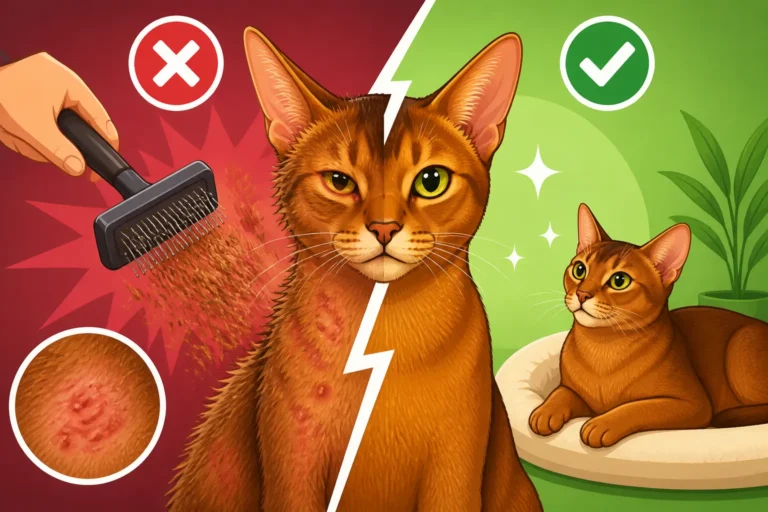
A soft rubber grooming mitt or even just a quick wipe with a chamois cloth can work wonders. The gentle pressure helps to polish the hairs, making them lie even flatter and smoother, which in turn enhances their light-reflecting properties. It also stimulates the skin, promoting healthy oil production. Over-grooming or using the wrong tools, like slicker brushes designed for cats with thick undercoats, can actually disrupt the ticking and flatten the coat's natural spring, ironically reducing the shimmer. Remember, An Abyssinian Needs Brushing Once a Week and No More is usually plenty. A quick buff with a chamois, available on platforms like Amazon, truly does help How a Chamois Brings Up an Abyssinian's Shine and remove any dust that might dull the coat.
Lighting Conditions
The environment your Abyssinian is in can dramatically impact how pronounced their shimmer appears. While their coat always has this quality, it truly comes alive under certain lighting conditions. Natural sunlight, especially softer morning or late afternoon light, is undoubtedly the best for showcasing their magnificent fur. The broad spectrum of natural light allows all the color bands on each hair to be illuminated and reflected, creating the most vivid and dynamic shimmer.
Indoors, the type of artificial lighting matters too. Warm, bright light with a good color rendering index will allow the coat's true beauty to shine. Harsh, direct spotlights or very dim lighting might make the coat appear flatter or less vibrant. You'll often notice that your Abyssinian's coat looks one way in the dappled light of your living room and entirely different when they're stretching out in a sunbeam on the windowsill. It's a coat that thrives on light, constantly inviting you to admire its intricate beauty.
Distinguishing the Shimmer from Other Coat Features
Sometimes new Abyssinian owners might mistake certain aspects of the coat for the shimmer, or wonder if other coat types achieve a similar effect. Let's clarify!
Ticking vs. Tabby Patterns
It's easy to confuse ticking with a tabby pattern if you're not familiar with the nuances of cat coats, but they are fundamentally different. Ticking, as we've discussed, is the banding of color on each individual hair shaft. It creates a shimmering, almost iridescent effect across the entire body because the majority of hairs are ticked.
A tabby pattern, on the other hand, is a specific design on the cat's body, made up of stripes, swirls, or spots. These patterns are formed by patches of solid-colored hairs contrasting with patches of ticked (agouti) hairs. While tabby cats have agouti hairs within their pattern, the overall visual is one of defined markings, not a uniform shimmer across the whole coat. The Abyssinian breed standard actually penalizes visible tabby markings like barring on the legs or a necklace marking on the chest, precisely because the ideal Abyssinian coat should be a clean, even ticked field that allows the shimmer to dominate. This distinct look is a hallmark of the breed, a clear separation from its wilder ancestors, and highlights why An Abyssinian's Agouti Banding Works so beautifully.
The Four Main Colors and Their Shimmer
Abyssinians come in four main, recognized colors: Ruddy, Sorrel, Blue, and Fawn. While the base color and the shades of the bands will differ for each, the principle of ticking and the resulting shimmer remain constant across all of them.
- Ruddy (or Usual): This is the classic, original Abyssinian color, often described as a warm, reddish-brown or coppery tone with black ticking. The shimmer in a Ruddy Abyssinian often appears as rich, golden-orange highlights dancing over a deeper, earthy base. How a Ruddy Abyssinian's Coat Develops details its particular hues.
- Sorrel (or Red): Sorrels feature a warmer, cinnamon-red base with chocolate-brown ticking. Their shimmer tends to be a vibrant, fiery red or copper, often giving them a truly radiant glow.
- Blue: Blue Abyssinians have a soft, slate-gray or blue-gray base with darker blue ticking. The shimmer on a Blue Abyssinian is often described as silvery or smoky, giving them an ethereal, almost liquid metal appearance. For a deeper dive, read How a Blue Abyssinian's Ticking Differs.
- Fawn: Fawn is the diluted version of Sorrel, resulting in a warm cream or beige base with light cocoa or dark cream ticking. The shimmer on a Fawn Abyssinian is very delicate and subtle, often appearing as soft, shimmering champagne or rosy cream tones.
Each color expresses the ticking and shimmer in its own unique, beautiful way, but the underlying mechanism that creates the dynamic, light-play effect is the same. It’s truly part of what makes the breed so captivating.
Comparing Abyssinian Coat Features for Shimmer
To help put it all in perspective, here's a quick comparison of how specific Abyssinian coat traits contribute to that eye-catching shimmer.
| Feature | Description | Contribution to Shimmer |
|---|---|---|
| Agouti Ticking | Each hair has multiple bands of light and dark pigment. | Primary cause. Light reflects off varied bands, creating dynamic color shifts and movement. |
| Sparse Undercoat | Very little dense, insulating fur beneath the guard hairs. | Allows ticked hairs to lie flat and be fully exposed to light, enhancing reflection. |
| Fine Hair Texture | Individual hairs are soft, smooth, and sleek. | Smooth surface of hairs reflects light more cleanly and intensely than coarse hair, increasing luster. |
| Close-Lying Coat | Hairs lie flat against the body. | Creates a uniform, unbroken surface for light to play across, maximizing the continuous shimmer effect. |
| Lack of Tabby Patterns | Minimal to no visible stripes, spots, or whorls on the body. | No strong patterns to disrupt the continuous flow and play of light over the ticked hairs, allowing the shimmer to dominate. |
| Natural Oils | Healthy skin produces oils that coat the hair. | Keeps the coat conditioned, smooth, and more reflective, preventing a dull or dry appearance. |
The mesmerizing shimmer of an Abyssinian's coat is truly a testament to nature's artistry. It's a complex interplay of genetic ticking, fine hair texture, a sleek single coat, and good overall health. When you look at an Abyssinian, you're not just seeing a cat; you're witnessing a living, breathing work of art, constantly shifting and sparkling with every subtle movement. It's one of the many reasons these captivating felines hold such a special place in the hearts of their owners, offering a visual delight that truly sets them apart.
Disclaimer
This article is for general informational purposes only and does not constitute professional advice. Laws, prices and regulations vary by location and change over time. Consult a qualified professional for guidance on your specific situation.