How to Move an Abyssinian Onto a New Food
If you've ever tried to switch your Abyssinian's food cold turkey, you've likely faced the feline equivalent of a dramatic, multi-act play involving hunger strikes, upset tummies, or simply a disdainful sniff. Abyssinians are known for their spirited personalities, and that often extends right into their feeding habits, making food transitions a real challenge. This comprehensive guide will walk you through exactly how to navigate changing your Abyssinian's diet smoothly, minimizing stress for both of you and keeping their sensitive system happy.
Why Abyssinian Cats Can Be Tricky with Food Changes
Let's be honest, Abyssinians are creatures of habit. They thrive on routine, and any disruption can throw them off. When it comes to their food, this isn't just about pickiness; there are some very real physiological reasons why changing their diet can be more of a saga than with other breeds. Understanding these quirks is the first step to a successful transition.
Their Sensitive Digestive Systems
One of the biggest reasons Abyssinian owners dread food changes is their breed's propensity for a sensitive stomach. Unlike some cats that can graze on anything without a second thought, an Abyssinian's digestive tract can react quite strongly to novel ingredients or sudden dietary shifts. We're talking about everything from mild gas and bloating to full-blown vomiting and diarrhea. It's not just a matter of discomfort for them; it can lead to dehydration and a refusal to eat, which, for such an active cat, can quickly become a concern. Their bodies are just not designed for rapid adjustments.
Think about it: in the wild, a cat's diet would be fairly consistent – small prey caught frequently. Their systems evolved to process these consistent protein sources, not a sudden swap from chicken to fish, or from one kibble brand to another with completely different fillers or protein ratios. When you introduce a new food too quickly, their gut microbiome, which is a delicate balance of bacteria, doesn't have time to adapt to breaking down the new ingredients. This imbalance is often what leads to those uncomfortable digestive upsets we all want to avoid.
Their Fussy Palates and Habits
Beyond the physical sensitivities, Abyssinians often develop strong preferences for particular textures, shapes, and flavors. They might love the crunchy texture of their current kibble or the specific aroma of their wet food. Introducing something new can be met with outright refusal, not because it tastes bad, but because it's different. It's not the food they've learned to associate with safety and sustenance. You might find them staring at the new bowl with an expression that clearly says, "What is this peasant food, and where is my usual gourmet meal?" This isn't them being spoiled, though it certainly feels that way sometimes; it's a deep-seated behavioral trait.
This pickiness isn't just about taste either. The shape of the kibble, how it feels in their mouth, even the exact consistency of a pate versus a shredded wet food can make a huge difference. Many Abyssinian owners have stories of buying an expensive, high-quality food only for their cat to turn up their nose at it. It's a testament to their strong will and ingrained habits. Sometimes it feels like they're just testing your patience, but remember, it’s often deeply rooted in their nature. They thrive on predictability, and food is a huge part of their predictable daily rhythm.
The Impact of Stress on Their Appetite
Abyssinians are highly intelligent and incredibly attuned to their environment. Any change, no matter how small, can be a source of stress. A new food, especially if forced upon them, can contribute to this. Stress manifests in various ways in cats, and a reduced appetite or refusal to eat is a very common one. If your Abyssinian is already feeling a bit off, perhaps due to a household change, a new pet, or even just a different routine, introducing a new food can push them over the edge.
It's a vicious cycle: you want to switch their food for their health, but the act of switching itself causes stress, which then makes them less likely to eat. This is particularly concerning for Abyssinians, who are high-energy cats. They burn a lot of calories, and going without food for too long can have serious health implications. Their metabolism is always on overdrive, meaning they need a consistent intake to maintain their energy levels and lean muscle mass. A day or two of not eating can already start to make a noticeable difference in their demeanor. Why an Abyssinian Hides Pain Behind Its Energy is a good read if you want to understand how they mask discomfort.
The Golden Rule: Slow and Steady Wins the Race
When it comes to changing your Abyssinian's food, there is absolutely no rush. Seriously, throw out any timeline you might have in your head about doing it in a couple of days. For these spirited felines, a slow, deliberate approach is not just a suggestion; it's a necessity for success and their well-being. Trying to speed things up will almost certainly lead to a setback, wasted food, and a very unhappy cat.
Understanding the Gradual Transition Method
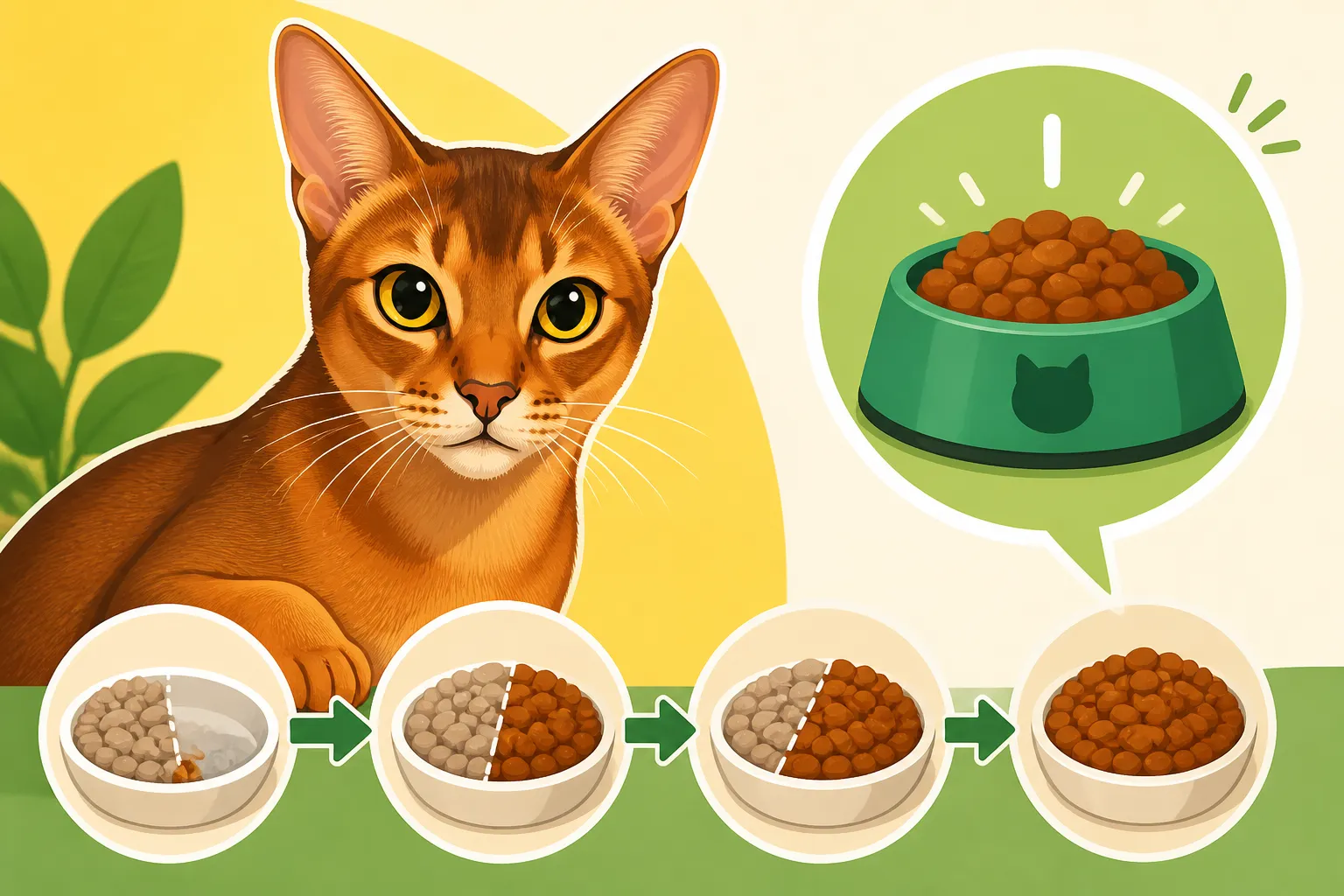
The core principle behind successful food transitions for Abyssinians is gradual introduction. You're not just swapping one food for another; you're gently easing their system and their preferences into the new diet. This means mixing the new food with their old food, slowly increasing the proportion of the new food while decreasing the old over an extended period. This method gives their digestive enzymes time to adjust to the new proteins, fats, and carbohydrates, preventing gut upset. It also allows their discerning palate to slowly get used to the new taste and texture, making it less likely they'll stage a hunger strike.
Think of it like introducing a new friend to your social circle – you don't just throw them into the deep end of a party. You introduce them gradually, letting everyone get acquainted. For a cat with their acute sense of smell and taste, even a small amount of new food might be detectable, so going slow helps them accept the change with minimal fuss. Many owners have found that even a "sniff test" can be enough to turn an Abyssinian off a new food, which is why blending it with something they already love is so crucial.
What to Watch For During the Transition
During this gradual process, your role is that of a keen observer. You need to pay close attention to several key indicators that your Abyssinian is tolerating the change or if you need to slow down further.
- Appetite: Are they eating the mixed food with the same enthusiasm they ate their old food? A slight hesitation at first is normal, but outright refusal for more than a meal or two is a red flag.
- Stool Consistency: This is perhaps the most important indicator. You're looking for normal, well-formed stool. Any signs of loose stool, diarrhea, or constipation mean you're going too fast.
- Vomiting: Any vomiting, especially shortly after eating, is a definite sign of digestive upset.
- Energy Levels: While Abyssinians are naturally energetic, a significant drop in energy could indicate they're not feeling well.
- Behavioral Changes: Are they more withdrawn, hiding, or displaying unusual anxiety? These could be subtle signs of stress related to the food change.
Keep a mental note, or even a small log, of how much new food you're introducing and how your cat is reacting. If you notice any of these negative signs, it's time to pump the brakes immediately.
When to Pause or Revert
Knowing when to hit pause or even backtrack is critical. If your Abyssinian shows any signs of digestive upset (vomiting, diarrhea, severe constipation), or refuses to eat the mixed food for more than 24 hours, you must revert to the previous, higher ratio of old food, or even go back to 100% old food until their system stabilizes. It’s far better to take an extra week or two on the transition than to have a sick cat.
Sometimes, you might find that a particular new food just doesn't agree with your Abyssinian, regardless of how slowly you introduce it. If you've tried the gradual method over several weeks and they consistently react negatively, it might be time to consider a different new food altogether. Don't feel like you've failed; every cat is different, and some foods simply aren't a good fit. This is particularly true if you are changing to a completely different protein source or a food with ingredients they haven't encountered before. Remember, the goal is a healthy, happy cat, not rigid adherence to a specific food.
Step-by-Step Guide to Transitioning Your Abyssinian's Food
Alright, let's get down to the practical steps. This isn't just about pouring a different kind of kibble into the bowl; it's a careful process that requires patience and attention to detail.
Choosing the Right New Food
Before you even think about mixing, you need to select the new food. This is a critical step, especially for an Abyssinian. Look for high-quality ingredients, with a named meat source (like “chicken meal” or “salmon”) as the primary ingredient. Abyssinians need a diet rich in animal protein to fuel their incredible energy levels. Which Protein Level Keeps an Abyssinian's Muscle On is a great resource here. Consider a wet food option, or at least a diet with a higher moisture content, to support kidney health – a common concern for many purebred cats. Many high-quality options are available, including fresh or limited-ingredient diets, which can be great for sensitive stomachs. Amazon also has a vast selection, but be sure to read reviews and ingredient lists carefully.
Consider also the type of food. Are you switching from kibble to wet food, or wet to kibble? Or perhaps a different brand of the same type?
- Kibble to Kibble: Look for similar protein sources if possible, and ideally a high-quality, easily digestible formula.
- Wet to Wet: Again, similar protein sources can ease the transition. Pay attention to texture – a pate lover might reject chunks, and vice versa.
- Kibble to Wet (or vice versa): This can be the trickiest transition due to the vast difference in texture and moisture. You might need to go even slower, perhaps even longer than the suggested timeline below.
Always consult your vet if you have specific dietary concerns or if your Abyssinian has any pre-existing health conditions that might influence food choice. They can offer tailored recommendations.
The Seven-to-Ten Day Transition Plan
This is a general guideline; remember, for an Abyssinian, it might take longer. Don't hesitate to extend any stage if your cat shows signs of discomfort.
| Day | Old Food Ratio | New Food Ratio | Observation | Action if Issues Arise |
|---|---|---|---|---|
| 1-2 | 75% | 25% | Normal eating, stool | Slow down to 90/10 for a few more days |
| 3-4 | 50% | 50% | Continued normal appetite and digestion | Revert to 75/25 for a few days until stable |
| 5-6 | 25% | 75% | Still eating well, no changes | Revert to 50/50 for a few days until stable |
| 7-10 | 0% | 100% | Fully transitioned, thriving | Revert to 25/75 for a few days, then try to increase slowly |
Detailed Breakdown for Each Day:
- Days 1-2 (75% Old, 25% New): Start by mixing a small amount of the new food into their regular meal. Make sure it's thoroughly combined so they can't just pick out the old stuff. Serve it at their usual feeding times. Watch for any hesitation, changes in eating speed, or signs of an upset stomach in the litter box. If they're a bit wary, sprinkle a favorite treat on top or try a lickable treat to encourage them.
- Days 3-4 (50% Old, 50% New): If the first two days went smoothly, increase the new food to half the portion. This is often where you'll start to see if their stomach or palate is going to protest. Continue to observe their appetite, stool, and general demeanor closely. If anything seems off, hold at the 75/25 ratio for another day or two.
- Days 5-6 (25% Old, 75% New): Now you're heavily favoring the new food. By this point, your Abyssinian's digestive system should be largely acclimated. Most of the meal should be the new food. If you've made it this far without issues, you're on a great path!
- Days 7-10+ (100% New): If all previous stages were successful, you can now offer 100% of the new food. However, for a truly sensitive Abyssinian, you might want to spend an extra few days at 75% new, then slowly go to 90% new for a couple of days before the full switch. This can extend the process to two weeks, but often prevents any last-minute digestive hiccups. Remember, Why an Abyssinian Refuses a Sudden Food Change applies even if it's just the final 10%!
Remember, consistency is key. Feed them at the same times each day, in the same location. Abyssinians thrive on routine, and changing their food is already a big enough disruption.
Handling Refusals and Pickiness
So, what happens when your Abyssinian looks at you with utter disdain and walks away from their bowl? It's frustrating, but it's part of owning one of these strong-willed cats.
- Don't give in immediately: If they refuse a meal, don't immediately replace it with their old food. Leave the mixed food down for their usual mealtime (e.g., 20-30 minutes), then remove it. Try again at the next scheduled meal. If they go a full 24 hours without eating, contact your vet, as prolonged fasting can be dangerous for cats.
- Enhance appeal: Try warming wet food slightly to bring out the aroma. You can also mix in a tiny bit of something they absolutely adore, like a small amount of tuna juice (in water, not oil), or a high-value treat that has a strong smell, but only use this sparingly so they don't expect it all the time.
- Patience is key: Your Abyssinian might try to outwait you. Be stronger! As long as they are healthy and not going too long without food, they will eventually eat. Just remember to proceed at their pace, not yours.
- Consider a different flavor/protein: If they consistently refuse even tiny amounts of a new food, that particular flavor or protein source might genuinely be unappealing to them. It might be time to choose a different new food and start the process again from scratch. Perhaps chicken didn't work, but salmon will. Which Wet Food Suits an Abyssinian discusses various options.
Hydration is Key
Throughout any food transition, especially if you're switching from wet to kibble or if there are any signs of GI upset, adequate hydration is absolutely paramount. Abyssinians are already prone to certain kidney issues, so encouraging water intake is always important. Why an Abyssinian's Kidneys Make Water Intake Matter.
- Water bowls: Ensure multiple fresh water bowls are available in different locations around the house. Clean them daily.
- Water fountains: Many Abyssinians are fascinated by running water and will drink more from a fountain.
- Wet food: If you're able to incorporate wet food into their diet, even as a partial meal, it's a fantastic way to boost their moisture intake. Why Kibble Alone Leaves an Abyssinian Short of Water explains this further.
- Add water to kibble: If they're on dry food, you can try adding a small amount of warm water to their kibble to make it softer and more aromatic.
Monitoring their water intake and urine output is crucial. If you notice they're drinking significantly less, or their urine volume decreases, it's time to check in with your vet.
Common Pitfalls and How to Avoid Them
Even with the best intentions, it's easy to make mistakes during a food transition. Knowing these common pitfalls can help you steer clear of them and keep your Abyssinian on track.
Rushing the Process
This is, without a doubt, the number one mistake owners make. We get impatient, we see our cat tolerating 25% new food well, and we think, "Great, let's jump to 75%!" or even 100%. While some robust cats might get away with it, an Abyssinian almost certainly won't. Rushing leads directly to digestive upset, food aversion, and then you're back to square one, often with a more suspicious and resistant cat. It can feel like two steps forward, three steps back.
The problem with rushing is that while a cat might seem fine on a higher percentage of new food for a day or two, their digestive system might be silently struggling to catch up. Then, suddenly, a few days later, you're cleaning up vomit or dealing with diarrhea. It’s not worth the stress or the potential health issues. Embrace the slow lane, even if it feels agonizingly gradual. Your Abyssinian will thank you for it with a healthier gut and a happier demeanor.
Ignoring Subtle Signs of Discomfort
Abyssinians are incredibly stoic animals. Their high energy and playful nature often mask underlying discomfort or illness. This means that during a food transition, you need to be extra vigilant for subtle clues that something isn't right. It won't always be obvious vomiting or explosive diarrhea.
Look for:
- Slightly softer stool: Not full-blown diarrhea, but just a little less firm than usual.
- Reduced grooming: If they're not feeling well, they might neglect their meticulous grooming habits.
- Less playful: A usually active Abyssinian being a little less enthusiastic about their favorite wand toy can be a sign.
- Changes in litter box habits: Are they straining more? Spending more time in the box? These could indicate constipation or discomfort.
- Lip licking or excessive swallowing: These can be subtle signs of nausea.
Don't dismiss these minor changes. If you spot them, don't increase the new food ratio. Hold steady at the current ratio for a few more days until these signs disappear, or even reduce the new food slightly. Early intervention saves a lot of trouble down the line. Why a Lethargic Abyssinian Needs Blood Work Fast delves into why subtle changes should always be taken seriously.
Switching Foods Too Frequently
Another common mistake, born out of frustration, is rapidly switching from one new food to another if the first attempt doesn't go perfectly. "Well, chicken didn't work, so let's try fish! Oh, fish upset her, let's try duck!" This constant chopping and changing is incredibly disruptive to your Abyssinian's digestive system and can create even more food sensitivities and aversions. Their body is constantly trying to adapt to new proteins and ingredients, which can lead to chronic inflammation or a permanently upset stomach.
If one new food isn't working, take a step back. Revert to their old food completely for a full week or two to allow their system to reset and stabilize. Once they are completely back to normal, then you can select a different new food and start the slow transition process all over again. Research your options thoroughly before picking the next alternative. Sometimes finding the right food is a process of elimination, but it should be a calm, methodical elimination, not a frantic trial-and-error approach.
Underestimating the Power of Routine
Abyssinians are deeply rooted in their routines. Their feeding times, the location of their bowls, even the person who feeds them – these are all important elements of their day. When you change their food, you're already disrupting a core part of their routine. Don't exacerbate it by changing other factors simultaneously.
- Stick to feeding times: Feed them at the exact same times every day. If you usually feed three meals a day, maintain that. Why Three Meals Suit an Abyssinian explains why this can be beneficial.
- Consistency in location: Keep their food bowls in the same, quiet, safe location.
- Predictable environment: Try to avoid making any other major changes (like moving furniture, introducing new pets, or having a lot of visitors) during a food transition. Give them stability wherever else you can.
By keeping everything else consistent, you minimize the overall stress and help your Abyssinian feel more secure, making them more likely to accept the dietary change. This attention to routine demonstrates respect for their sensitive nature and builds trust, which is invaluable when dealing with these clever and sometimes demanding cats.
Disclaimer
This article is for general informational purposes only and does not constitute professional advice. Laws, prices and regulations vary by location and change over time. Consult a qualified professional for guidance on your specific situation.