Who Bred the First Somali
For anyone who’s ever admired the striking beauty of an Abyssinian and then stumbled upon its fluffier cousin, the Somali, there’s often a moment of delightful confusion. "Are they related? Is it just a longhaired Abyssinian? And who on earth decided to give it that name?" It’s a common puzzlement, and one that often leads to a rabbit hole of historical anecdotes and genetic mysteries. This guide is here to untangle the fascinating story of the Somali cat, tracing its surprising origins directly back to the Abyssinian breed and introducing you to the pioneering individual credited with championing its recognition.
The Mystery of the Early Longhaired Abyssinian Kittens
Before the Somali was officially a "thing," its ancestors were quietly making appearances in Abyssinian litters, often to the bewilderment, and sometimes consternation, of their breeders. Imagine raising a line of sleek, short-coated Abyssinians for generations, only to have a fluffy kitten pop up in a litter of otherwise typical short-hairs. This wasn't an anomaly; it was a genetic secret waiting to be properly understood.
When the Long Hair Gene Was in Abyssinians All Along
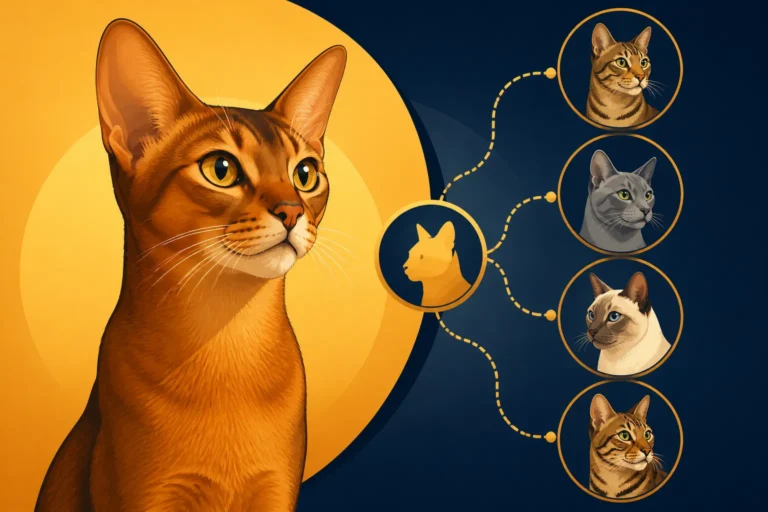
It might seem counterintuitive, but the gene for long hair isn't something that suddenly appeared out of nowhere. It's a recessive gene, meaning a cat needs two copies of it (one from each parent) to express the longhaired trait. If a cat carries only one copy of the gene and one copy of the short-hair gene, it will still have short hair but can pass the long-hair gene on to its offspring. This makes them what we call "carriers."
For generations, many Abyssinians unknowingly carried this recessive gene. Breeders would mate two short-haired Abyssinians who were both carriers, and about a quarter of their kittens would inherit two copies of the long-hair gene, resulting in a beautiful, fluffy coat. These cats were, genetically speaking, just Abyssinians, but with a longer expression of their characteristic ticked coat. It was a perfectly natural occurrence, though one that challenged the strict short-hair standard of the Abyssinian breed (see Why the Long Hair Gene Was in Abyssinians All Along).
This genetic reality meant that the potential for a longhaired variant was always present within the Abyssinian gene pool. It wasn't a mutation or a cross with another breed in recent history that introduced the long hair; it was a hidden trait from ancient times, resurfacing consistently throughout the breed's development. Understanding this is key to appreciating why the Somali isn't some hybrid but rather an extension of the Abyssinian's genetic blueprint.
Why Somali Kittens Were Once Given Away Quietly
In the world of pedigree cat breeding, adhering to the breed standard is paramount. For the Abyssinian, that standard explicitly called for a short, close-lying coat. Any kitten born with longer hair was considered a "fault" – a departure from the ideal. This meant that while these fluffy kittens were undeniably charming, they couldn't be shown or registered as purebred Abyssinians according to the rules of the day.
Consequently, many breeders found themselves in a tricky situation. They adored these kittens, but couldn't integrate them into their Abyssinian breeding programs. The common practice was to quietly place these longhaired "throwbacks" in pet homes, often at a reduced price or even given away for free. They were loved companions, but their genetic significance was largely overlooked. Why Somali Kittens Were Once Given Away Quietly
This period saw countless beautiful, longhaired Abyssinians living as cherished household pets, their potential as the foundation of a new breed unrecognized. It speaks to the dedication of early breeders to the established Abyssinian type, even as nature presented them with a variation that would eventually captivate a new generation of enthusiasts.
Evelyn Mague: The Catalyst for the Somali Breed
While longhaired Abyssinians had been appearing for decades, it took the keen eye and unwavering dedication of a particular individual to see beyond the "fault" and recognize the stunning potential for a new, distinct breed. This pivotal figure was Evelyn Mague, an American Abyssinian breeder with a vision.
Who Evelyn Mague Was
Evelyn Mague was an American Abyssinian breeder operating her Lyn-Lee Cattery. Unlike many of her contemporaries who viewed the occasional longhaired kitten as an undesirable aberration, Mague saw beauty and potential. She possessed a deep appreciation for the Abyssinian personality and recognized that these longer-coated versions retained all the charm and vivacity of their short-haired relatives. Her belief was that these cats deserved to be recognized for their unique appeal rather than be hidden away as mistakes. Who Evelyn Mague Was
Her foresight wasn't just about aesthetics; it was about genetic preservation and embracing diversity within a related lineage. Mague began to gather these "fluffy Abyssinians," not to discard them, but to meticulously breed them, aiming to establish a consistent type that could stand on its own as a recognized breed. This decision was bold, going against the grain of established breeding practices at the time, and it required immense perseverance to achieve her goal.
Which Kitten Started the Somali Breed
While many longhaired Abyssinians contributed to the foundational stock, one particular cat is often cited as a key early ancestor in the formal development of the Somali breed. This was a male cat named George, born in the mid-1960s. George was later renamed Lyn-Lee's Red Ruffian by Evelyn Mague, clearly signaling his connection to her cattery and his distinctive ruddy coloring and longer coat.
Lyn-Lee's Red Ruffian became instrumental in Mague's breeding program. He embodied the desired traits: the Abyssinian body type and personality, combined with the elegant medium-long, ticked coat. By carefully breeding Red Ruffian and other similar longhaired Abyssinians, Mague began to solidify the characteristics that would define the Somali breed. It was through these deliberate pairings and a clear vision that the accidental genetic "fault" transformed into the intentional creation of a new, beloved cat. Which Kitten Started the Somali Breed
The careful selection and breeding of these early cats, guided by Mague's discerning eye, ensured that the Somali not only possessed its signature coat but also retained the healthy, active, and intelligent disposition so characteristic of the Abyssinian. It was a testament to the fact that form and function could be beautifully intertwined in a new breed.
The Early Challenges of Establishing a New Breed
Launching a new cat breed is far from a straightforward task; it's a marathon of meticulous breeding, advocacy, and navigating bureaucratic hurdles. Evelyn Mague and other early Somali enthusiasts faced considerable resistance. The established Abyssinian community, understandably, was protective of their breed standard and often viewed the longhaired variant as an impurity rather than a legitimate new development. There was a strong sentiment that if it wasn't short-haired, it wasn't a "true" Abyssinian.
Registries, the organizations that govern breed standards and grant recognition, also presented a formidable challenge. They required extensive documentation, consistent adherence to a proposed standard over multiple generations, and proof of genetic stability. This meant painstakingly tracking pedigrees, ensuring health, and consistently producing cats that fit the emerging Somali description. It was a slow, deliberate process of educating fellow breeders, judges, and the general public, all while continuing to develop the breed's core characteristics.
These early days were marked by a constant effort to differentiate the Somali, not as a flawed Abyssinian, but as a distinct and equally magnificent breed. It required not only a passion for the cats themselves but also a strategic approach to demonstrate their unique qualities and justify their place in the feline fancy.
The Journey to Championship Status
The transition from a "longhaired variant" to a fully recognized championship breed is a monumental undertaking, demanding years of dedicated work from a handful of passionate breeders. For the Somali, this journey began in earnest in the 1960s and culminated in the mid-1970s with official recognition from major cat registries.
When the Somali Got Championship Status
The tireless efforts of Evelyn Mague and other early Somali breeders eventually paid off. The breed gained provisional recognition from various cat associations, a crucial first step that allowed them to be registered and exhibited, albeit not yet competing for championship titles. This period was vital for demonstrating the breed's consistency and solidifying its unique standard.
It was in 1979 that the Somali officially achieved championship status with the Cat Fanciers' Association (CFA), one of the largest and most influential cat registries in the world. This milestone was a moment of triumph, marking the culmination of years of advocacy, selective breeding, and proving the breed's distinctiveness. Other registries around the world followed suit, granting the Somali its rightful place among the recognized breeds. When the Somali Got Championship Status
This recognition meant that Somalis could now compete on equal footing with other championship breeds, earning titles and captivating judges and audiences with their stunning coats and vivacious personalities. It opened the doors for the breed to flourish, attracting new breeders and enthusiasts who were drawn to its unique blend of Abyssinian charm and luxurious fur.
Why the Somali Was Named After Somalia
The naming of the Somali cat is a clever nod to its genetic heritage and an attempt to give it a distinct identity while honoring its roots. Just as the Abyssinian was historically (though inaccurately) associated with Abyssinia (modern-day Ethiopia), the Somali was named after Somalia, a neighboring country on the Horn of Africa.
This choice was deliberate. It implied a geographic kinship with the Abyssinian, suggesting that the Somali was a natural extension or variation from the same region, even if neither breed actually originated there. The name "Somali" also evoked an air of exoticism and elegance, fitting for a cat with such a striking appearance and a coat that flows like desert sands. Why the Somali Was Named After Somalia
The name thus served a dual purpose: it acknowledged the genetic link to the Abyssinian while simultaneously establishing the Somali as a unique breed with its own identity. It allowed the breed to emerge from the shadow of being merely a "longhaired Abyssinian" and stand proudly as the Somali.
The Role of Registries in Breed Recognition
Cat registries play a critical, albeit often behind-the-scenes, role in the entire world of pedigree cats. They are the gatekeepers, responsible for maintaining breed standards, registering cats, and ensuring the genetic integrity of each recognized breed. For a new breed like the Somali, securing recognition from these organizations was absolutely paramount for its survival and growth. Without it, the breed would remain an unofficial variant, unable to compete, gain wider acceptance, or establish a robust breeding program.
The process typically involves submitting a proposed breed standard, which meticulously details every physical and temperamental characteristic. Breeders must then consistently produce cats that conform to this standard over several generations. This period of provisional recognition allows judges to evaluate the cats and offer feedback, ensuring the breed is truly distinct and sustainable. Only when a breed demonstrates consistency, a healthy gene pool, and sufficient numbers does it gain championship status, thereby entering the mainstream of the cat fancy.
This rigorous process, though challenging, serves to protect the integrity of all pedigree breeds. It ensures that new breeds like the Somali are not merely fads but genuinely distinct and well-established lines with predictable characteristics and a commitment to health and welfare.
Understanding the Abyssinian-Somali Connection
The relationship between the Abyssinian and the Somali is one of the closest in the feline world, a testament to shared ancestry and a fascinating lesson in genetics. They are, in essence, two sides of the same coin, with a single gene dictating their primary visual difference.
Why a Somali's Coat Takes Two Years to Finish
One of the most common questions about the Somali, particularly for those used to the quick development of a short-haired Abyssinian kitten, is why their beautiful, flowing coat takes so long to mature. Unlike many longhaired breeds that exhibit their full coat length fairly early, a Somali kitten's coat will gradually fill out and lengthen, often taking up to two full years to reach its full glory. Why a Somali's Coat Takes Two Years to Finish
During this developmental period, the kitten's coat may appear slightly uneven, or the distinct 'ticking' – the banding of color on each individual hair shaft – might not be as pronounced as it will eventually become. The characteristic 'ruff' around the neck, the fluffy breeches on the hind legs, and the magnificent bushy tail, often described as fox-like, all develop slowly. This lengthy maturation process is due to the inherent growth cycle of longer hair and the breed's genetic makeup, which prioritizes a fine, soft texture that grows at a steady, rather than rapid, pace. Patience is truly a virtue for those waiting to see a Somali's full coat potential.
Whether a Somali and an Abyssinian Behave the Same
If you've spent any time around an Abyssinian, you know their reputation: active, intelligent, curious, and utterly devoted, if not always a lap cat. The wonderful news for Somali enthusiasts is that these personality traits are virtually identical. The long hair doesn't change the heart and soul of this incredible feline. Somalis are often described as the "Clowns of the Cat Kingdom" or "little dogs" due to their playful antics, intelligence, and tendency to follow their humans everywhere.
They thrive on interaction, love to play fetch, and are masters of climbing to the highest points in a room. Like Abyssinians, they are rarely content to simply sit quietly; they want to be involved in whatever you're doing, whether it's "helping" with chores or supervising your work. Their energy levels are high, and they require plenty of mental and physical stimulation to prevent boredom. So, while you might have more fur to groom, you certainly won't have a quieter, less demanding companion with a Somali compared to an Abyssinian. Whether a Somali and an Abyssinian Behave the Same
This consistency in temperament is a huge part of the Somali's appeal. Owners who love the lively, engaging nature of an Abyssinian can get the same experience, just with an added touch of plush elegance. They are not content to be mere decorations; they are active, participating members of the family who demand, and reward, attention.
Whether Abyssinians and Somalis Are Still Bred Together
In the early stages of the Somali breed's development, it was absolutely necessary to breed longhaired Abyssinians together, and sometimes even back to short-haired carriers, to establish the breed and expand its gene pool. However, once the Somali achieved championship status and established its own distinct lines, the practice of breeding Abyssinians and Somalis together largely ceased in official breeding programs.
Today, reputable breeders typically breed Somalis to Somalis to maintain the breed standard and ensure consistency in coat length and other desired traits. The same applies to Abyssinians, who are bred to other Abyssinians to preserve their short-haired lineage. While the genetic potential for longhaired kittens still exists in some Abyssinian lines if two carriers are bred, these kittens are either placed as pets or, if they meet the Somali standard, may contribute to Somali lines, though this is less common than in the foundational years. Whether Abyssinians and Somalis Are Still Bred Together
This separation in breeding practices helps to maintain the distinct identity and standards of both breeds, preventing confusion and ensuring that each breed continues to thrive as its own unique entity within the cat fancy. It's a testament to the dedication of breeders to preserve the integrity of both the Abyssinian and the Somali.
Living with Both: Similarities and Differences in Temperament and Care
Deciding between an Abyssinian and a Somali often comes down to personal preference for coat length, as their personalities are remarkably similar. However, there are some subtle distinctions in care that prospective owners should be aware of.
How an Abyssinian Differs From a Somali
At first glance, the primary difference between an Abyssinian and a Somali is obvious: coat length. The Abyssinian boasts a short, sleek, close-lying coat, while the Somali flaunts a medium-long, fluffy coat with a plumed tail and distinct "breeches" of longer fur on its hind legs. This visual difference, however, doesn't translate to a vastly different cat underneath.
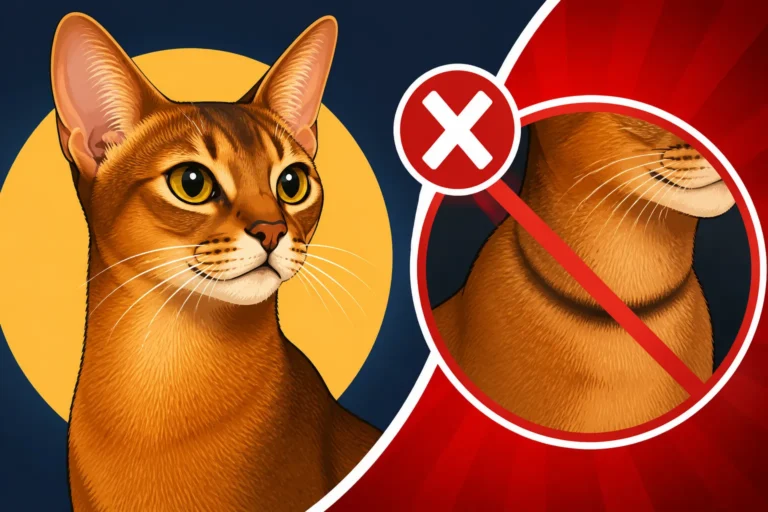
Physically, both breeds share the same elegant, lithe, and muscular body type, often described as regal. They have the same large, expressive, almond-shaped eyes rimmed in dark pigment, giving them an almost kohl-lined appearance, and the same large, alert ears. Their ticked coats, with bands of color on each hair shaft, are identical in pattern, merely differing in length. Temperamentally, they are both highly intelligent, inquisitive, playful, and deeply interactive cats who thrive on companionship and activity. The choice, then, often boils down to whether you prefer a short-haired dynamo or a long-haired, bushy-tailed version of the same energetic spirit. How an Abyssinian Differs From a Somali
Here's a quick comparison of their key traits:
| Feature | Abyssinian | Somali |
|---|---|---|
| Coat Length | Short, sleek, close-lying | Medium-long, fluffy |
| Coat Texture | Fine, silky | Soft, fine, silky |
| Ticking | Distinct bands on each hair | Distinct bands on each hair |
| Undercoat | Minimal | Minimal |
| Tail | Medium length, tapers to a point | Medium length, full, bushy ("fox-like") |
| Breeches (leg fur) | Short | Distinctive, longer fur on hind legs |
| Grooming Needs | Low; weekly mitt/chamois | Moderate; regular brushing to prevent mats |
| Personality | Active, playful, curious, intelligent, outgoing | Active, playful, curious, intelligent, outgoing |
| Body Type | Medium, lithe, muscular, "foreign" | Medium, lithe, muscular, "foreign" |
| Eye Shape | Almond-shaped | Almond-shaped |
| Eye Color | Gold or green | Gold or green |
Why a Somali Kitten Appears in an Abyssinian Litter
Even today, well after the Somali breed has been established, it’s not entirely impossible for a longhaired kitten to appear in an Abyssinian litter. This happens due to the persistent presence of the recessive long-hair gene within the Abyssinian gene pool. If an Abyssinian breeder unwittingly mates two cats who are both carriers of this recessive gene (meaning each parent carries one copy of the long-hair gene and one copy of the short-hair gene), there's a statistical chance that some of their kittens will inherit two copies of the long-hair gene, resulting in a Somali. Why a Somali Kitten Appears in an Abyssinian Litter
This is a classic example of Mendelian inheritance at work. On average, a pairing of two carrier Abyssinians will produce litters with 25% longhaired (Somali) kittens, 50% short-haired carrier kittens, and 25% short-haired non-carrier kittens. These longhaired kittens are genetically pure Abyssinians in every way except for their coat length, and if they meet the Somali breed standard, they can technically be registered as Somalis. It’s a fascinating reminder of the hidden genetic diversity that can exist within a seemingly uniform breed.
Why Abyssinian Breeders Test for Long Hair
For Abyssinian breeders who are dedicated to preserving the short-haired standard of their breed, genetic testing for the long-hair gene (often referred to as the L/l gene or the FGF5 gene) is an invaluable tool. Knowing the genetic status of their breeding cats—whether they are homozygous short-haired (L/L, meaning they don't carry the long-hair gene), heterozygous short-haired (L/l, meaning they are carriers), or homozygous long-haired (l/l, meaning they are Somalis)—allows them to make informed decisions about pairings.
By testing their cats, breeders can ensure they don't accidentally produce longhaired kittens if their goal is strictly to breed Abyssinians. For example, an Abyssinian breeder might avoid pairing two known carriers (L/l x L/l) to eliminate the 25% chance of a longhaired kitten. Genetic testing kits, which can often be found and purchased from pet supply retailers like Chewy, typically involve a simple cheek swab collection that can be done at home. The sample is then sent to a specialized feline genetics lab for analysis. How the Abyssinian's DNA Panel Is Ordered
This proactive approach through DNA testing has revolutionized pedigree breeding. It empowers breeders to manage genetic traits responsibly, ensuring the health and integrity of their lines while also providing transparency to prospective kitten buyers. For anyone acquiring an Abyssinian, asking to see the genetic test results of the parents for the long-hair gene is a very reasonable and responsible question to ensure you understand the kitten's genetic background.
Disclaimer
This article is for general informational purposes only and does not constitute professional advice. Laws, prices and regulations vary by location and change over time. Consult a qualified professional for guidance on your specific situation.