What the First Abyssinian Breed Standard Said
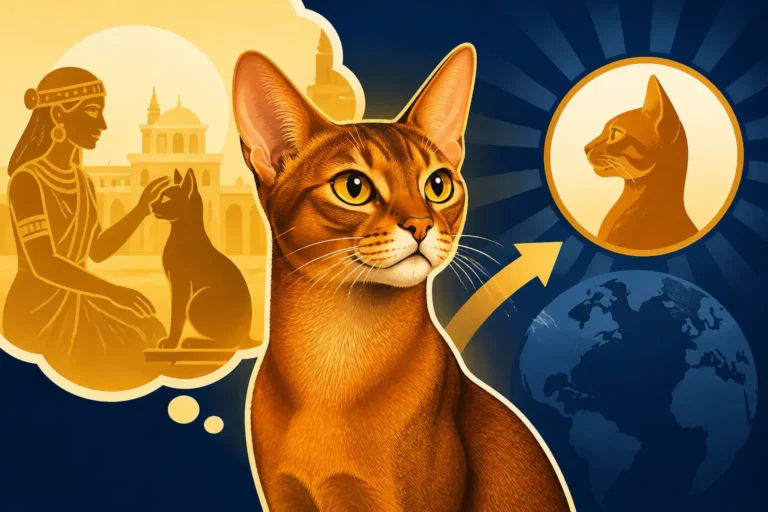
It's easy to look at our beautiful Abyssinian cats today, with their sleek, ticked coats and endless energy, and wonder how they came to be. Many people assume that their look and temperament have always been the same, but the journey from ancient origins to a recognized breed was a fascinating one. This guide will take you back in time to explore the very first breed standards and descriptions that shaped the Abyssinian, giving you a deeper appreciation for the foundation of this incredible feline.
The Dawn of Breed Standards and Early Descriptions
In the nascent days of the cat fancy, long before the structured world of registries and meticulous genetic tracking, the concept of a "breed standard" was much more fluid than we know it today. Imagine a time when cats were simply "cats," and specific types were recognized more by anecdote and general appearance than by a written constitution. Yet, even then, there were individuals who saw something special in certain felines and began the vital work of formalizing their unique characteristics.
The Informal Beginnings of a Standard
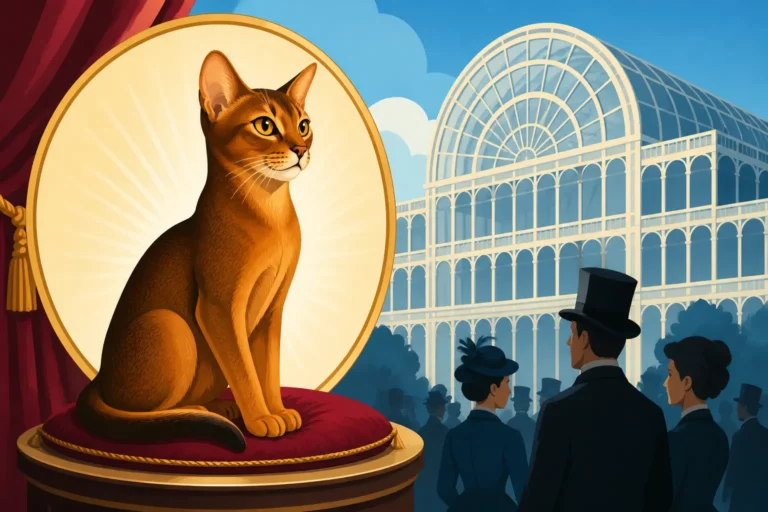
Before any official documents were penned, the "standard" for an Abyssinian existed largely in the minds of early cat enthusiasts and judges. Think about the first cat shows, like the famous one held at the Crystal Palace in London back in 1871. Judges weren't pulling out rulebooks with precise measurements; they were looking for cats that exemplified certain desirable traits. For the Abyssinian, this meant a striking, unusual coat and a lithe, graceful build that hinted at an exotic lineage. These early observations were often based on a handful of notable cats, such as the famous Zula, who was rumored to have arrived from Abyssinia. Zula and the 1868 Story Everyone Repeats Her unique appearance would have been the benchmark, a living embodiment of what breeders and admirers sought to reproduce. The challenge, of course, was articulating these qualities in a consistent manner, especially when dealing with a newly emerging "type" of cat. It was less about ticking off boxes and more about a holistic impression, a sense of what felt "right" for this particular kind of cat. This informal recognition was the crucial first step, sparking interest and creating a collective vision that would eventually demand formalization.
Harrison Weir's Influence on Early Cat Fancy
No discussion of early breed standards in the cat world is complete without mentioning Harrison Weir. He was a true pioneer, often credited with organizing the first formal cat show and championing the idea of distinct cat breeds. While he may not have penned the very first official Abyssinian breed standard as a prescriptive document for a registry, his comprehensive work, "Our Cats and All About Them," published in 1889, served as an incredibly influential blueprint. Weir's descriptions were thorough and detailed, essentially laying the groundwork for what an Abyssinian should look like and how it should behave. He spoke of its "ticked" coat, describing the subtle banding on each individual hair that differentiated it from a striped tabby, often referring to it as the "Ticked Cat." Why the Abyssinian Was Once Called the Ticked Cat This was crucial for establishing its unique identity. He also touched upon its elegant body, its large, expressive eyes, and its generally active and intelligent demeanor. Weir's writings were instrumental in shaping public perception and guiding early breeders who were striving to stabilize the breed's characteristics. His detailed observations became the accepted wisdom, influencing the standards that would later be adopted by official cat organizations. Many early enthusiasts seeking to understand the breed would turn to his work, much like today we might consult a trusted pet retailer like Chewy for breed-specific information or product recommendations.
Key Characteristics Outlined in the First Formal Standard
When the first official breed standards began to emerge, they focused on codifying the distinctive features that made the Abyssinian stand out. These documents, albeit simple by modern standards, highlighted the characteristics that were considered essential for defining the breed.
The Ticked Coat: The Abyssinian's Defining Feature
Undoubtedly, the most important aspect highlighted in the early Abyssinian breed standard was its unique ticked coat. This wasn't just a desirable trait; it was the sine qua non of the breed, the characteristic that truly set it apart. The standard emphasized that each individual hair on the body should display multiple bands of color, giving the coat a shimmering, iridescent quality as the cat moved. How an Abyssinian's Agouti Banding Works The ideal was an even distribution of this ticking, creating a uniform appearance without any distinct stripes, bars, or spots on the body. This meant avoiding "necklaces" on the chest or mackerel-like patterns on the legs, which were considered faults. The beauty of the ticking lay in its subtlety, a wild and naturalistic pattern that evoked images of ancient felines. The standard also noted the Abyssinian's relatively short, close-lying coat with very little undercoat, which contributed to its sleek appearance and made it feel warm and smooth to the touch. Any strong barring, particularly on the legs or tail, would have been seen as a deviation from the desired standard, indicating an undesirable tabby influence. Why an Abyssinian With Barring Is Penalized This meticulous focus on the ticking ensured that the Abyssinian remained visually distinct and its unique genetic trait was preserved through selective breeding.
Body Type and General Conformation
Beyond the captivating coat, the early standards meticulously described the Abyssinian's physical build, aiming for an animal that exuded grace, athleticism, and a certain wild elegance. The desired body type was often described as foreign or svelte, emphasizing a medium-sized cat that was muscular yet lithe. This wasn't a "cobby" or heavily built cat; rather, it was one with a feeling of lightness and agility, perfectly suited for its active and climbing nature. The legs were to be long and slender, complementing the body without appearing fragile, giving the cat its distinctive "on its toes" stance that contributes to its regal bearing. How an Abyssinian Stands on Its Toes A well-proportioned, tapering tail, neither whip-like nor excessively bushy, completed the picture.
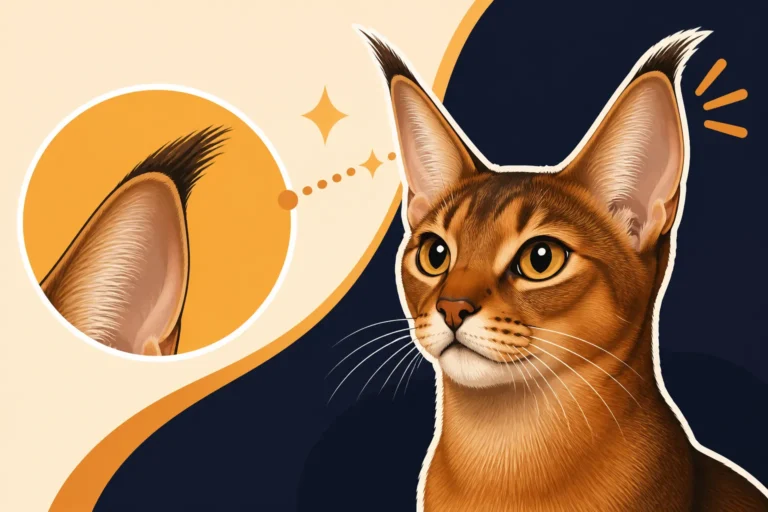
The head was also a key feature, described as a modified wedge shape, meaning it had smooth contours without flat planes, leading into large, expressive ears that were broad at the base and moderately pointed. The ears often had a little tuft at the tip, adding to their alert appearance. What an Abyssinian's Ideal Head Shape Is The eyes were a particular point of beauty, large and almond-shaped, with a keen, intelligent expression, often rimmed with a darker pigment that made them pop. Eye color was typically specified as green or gold, to complement the coat color. This careful articulation of physical traits aimed to create a consistent, recognizable Abyssinian that embodied both beauty and functionality.
Temperament and Movement – More Than Just Looks
While the visual appeal of the Abyssinian was undoubtedly a primary driver for its early recognition, those who championed the breed quickly realized that its spirited personality and distinctive way of moving were just as crucial to its identity. The first standards weren't solely about aesthetics; they also touched upon the living, breathing essence of the cat.
The Energetic and Curious Disposition
Right from the beginning, the Abyssinian’s vibrant personality was a hallmark of the breed, making it clear that this was no ordinary house cat. Early breeders and owners recognized and celebrated their incredibly active, intelligent, and insatiably curious disposition. Unlike many cats content to snooze for hours in a sunbeam, the Abyssinian was (and still is!) famously known as the "clown of cats" or the "busiest cat in the house." The Abyssinian Is the Busiest Cat in the House The standard would have implicitly, if not explicitly, described a cat that was engaged with its environment, always exploring, and keen to be involved in household activities. They are affectionate, but often in their own way, preferring to "help" you with tasks or perch on your shoulder rather than settling for long stretches on your lap. Their intelligence meant they were quick learners, often responding to their names or even learning simple tricks, a trait that further endeared them to their human companions. This lively and interactive temperament was a defining characteristic, setting them apart from more aloof or placid breeds and establishing their reputation as true companions who demand (and reward!) engagement. Breeders even today rely on this inherent curiosity, ensuring their kittens are exposed to various stimuli and toys, often sourced from places like Chewy, to encourage their natural development.
Graceful Movement and Overall Impression
The way an Abyssinian moves is as much a part of its identity as its ticked coat or keen eyes. Early breed standards often describe a cat that moves with exceptional grace, agility, and a boundless energy that seems to defy gravity. Their athletic build, with long, slender legs, enables them to leap, climb, and maneuver with remarkable fluidity. This isn't a lumbering cat; it's a cat that springs into action, seemingly always "on its toes," poised for the next adventure. This agile movement contributed significantly to their exotic, almost wild appearance, reinforcing the idea that they were something special.
The overall impression conveyed by the first Abyssinian breed standard was one of elegant power and vivid intelligence. It painted a picture of a regal yet playful companion, always alert and ready to interact. This combination of physical beauty—the shimmering ticked coat, the lithe body, the expressive eyes—and dynamic personality created a compelling breed identity that has captivated cat lovers for generations. Even today, when judges assess an Abyssinian in the show ring, they look for this harmonious blend of physical attributes and the vibrant, intelligent spirit that animates them. It's about more than just meeting a checklist; it's about embodying the essence of the Abyssinian as a whole.
The Evolution of the Standard and Lasting Impact
The "first" Abyssinian breed standard, whether a formalized document or a consensus born of early cat fancy discussions, was not a static decree. Instead, it was the vital starting point of an ongoing evolution, a living document that would be refined and detailed over more than a century by dedicated breeders and international cat registries.
From Early Descriptions to Modern Refinements
What began as a set of general descriptors and aspirational traits in the late 19th century slowly blossomed into the detailed, prescriptive breed standards we see today from organizations like the Cat Fanciers' Association (CFA) or The Governing Council of the Cat Fancy (GCCF). The initial broad strokes, focusing on the essential ticking, the elegant body, and the lively temperament, provided the core identity. Over time, as breeding practices became more sophisticated and genetic understanding improved, these standards became more precise. For example, the exact nuances of head shape, ear set, and tail length, which might have been vaguely described initially, became carefully delineated. The desired richness and clarity of the coat color, as well as the complete absence of barring on the legs or tail, were reiterated with increasing emphasis. Comparing the American Abyssinian to the British can even reveal subtle differences in interpretation that have evolved over time, reflecting different breeding preferences within the overall framework. How the American Abyssinian Differs From the British Despite these refinements and expansions, the fundamental characteristics identified in those pioneering early standards remain central. The Abyssinian is still defined by its ticked coat, its active and intelligent nature, and its athletic build, proving the enduring wisdom of those who first recognized its unique appeal. These foundational elements are crucial when understanding What an Abyssinian Looks Like Against the Show Standard today.
The Legacy of a Distinctive Breed Identity
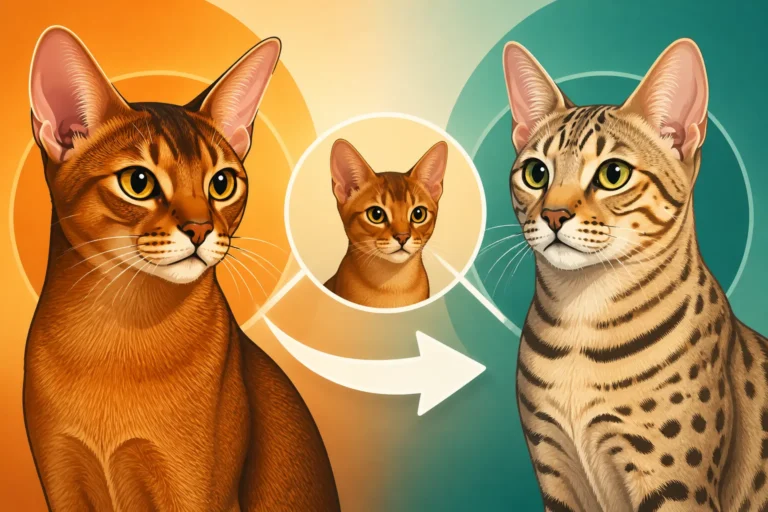
The establishment of these early standards, however informal, was critical in solidifying the Abyssinian's place in the burgeoning world of pedigree cats. By defining what an Abyssinian was, breeders had a clear goal. This clarity allowed them to focus their breeding programs, selecting for traits that conformed to the emerging ideal and, crucially, helped to distinguish the Abyssinian from other emerging breeds. Without this initial codification, the Abyssinian might have simply blended into the general population of domestic shorthairs, its unique features lost to time. Instead, its distinctive appearance, notably the agouti ticking and its regal, wild-like demeanor, became universally recognized. Even when discussing how the Abyssinian differs from other breeds like the Bengal, the established characteristics become the measuring stick. How an Abyssinian Differs From a Bengal
Today, these standards continue to guide ethical and responsible breeding, ensuring the breed's health, temperament, and conformity to its historical type. They are the benchmarks against which Abyssinian cats are judged, not just in the show ring, but also in the everyday lives of owners who cherish these vibrant companions. The legacy of the first Abyssinian breed standard is thus not just a historical curiosity; it is the very blueprint that has preserved the Abyssinian's unique charm and ensured its enduring popularity for generations of cat lovers. When bringing home an Abyssinian kitten, understanding these foundational standards helps us appreciate the careful lineage and intentional breeding that went into creating our energetic, beautiful companions, many of whom thrive on high-quality food and enrichment items readily available from online retailers like Chewy.
Comparison of Early vs. Modern Abyssinian Standard Focus
To illustrate how these early ideas have translated and been refined into today's comprehensive breed standards, let's look at some key aspects:
| Feature | Early Standard Focus (Late 19th Century) | Modern Standard Focus (Today) |
|---|---|---|
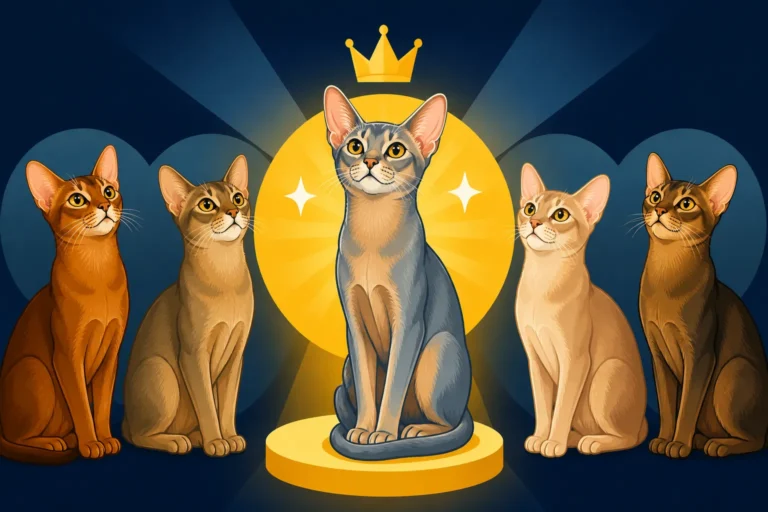
| Coat | "Ticked"; absence of obvious stripes. | Clear, even agouti ticking on each hair; no barring, rings, or markings on body/limbs. Minimal undercoat. Specified colors (Ruddy, Sorrel, Blue, Fawn) with warm tones. |
| Body Type | "Elegant," "lithe," "medium-sized." | Medium length, muscular, supple, and graceful. Long, slender legs with small, oval paws. Arched back. Tail long, thick at base, tapering to a point. |
| Head | Modified wedge; large, expressive eyes; alert ears. | Modified wedge, gently rounded contours, no flat planes. Large, almond-shaped, brilliant eyes (gold or green) set wide. Large, alert ears, broad at base, moderately pointed, set well apart. |
| Temperament | Active, intelligent, curious, playful. | Active, intelligent, curious, adaptable, friendly, and people-oriented. Often described as "dog-like" in their devotion and interactive nature. |
| Movement | Agile, graceful, "on its toes" stance. | Agile, athletic, appearing to stand on its toes. Movement is fluid and graceful, reflecting its lithe body and muscularity. |
| Overall Impression | Exotic, wild appearance, intelligent, graceful. | A regal, colorful, ticked cat of foreign type. Intelligent, outgoing, and playful. Well-balanced, hard, and muscular, showing active interest in its surroundings. |
This comparison shows how the foundational principles of the Abyssinian have remained, while the descriptive details have become much more precise, helping to ensure the consistency and excellence of the breed for over a century.
Disclaimer
This article is for general informational purposes only and does not constitute professional advice. Laws, prices and regulations vary by location and change over time. Consult a qualified professional for guidance on your specific situation.