Why a Fawn Abyssinian Is the Palest of the Four
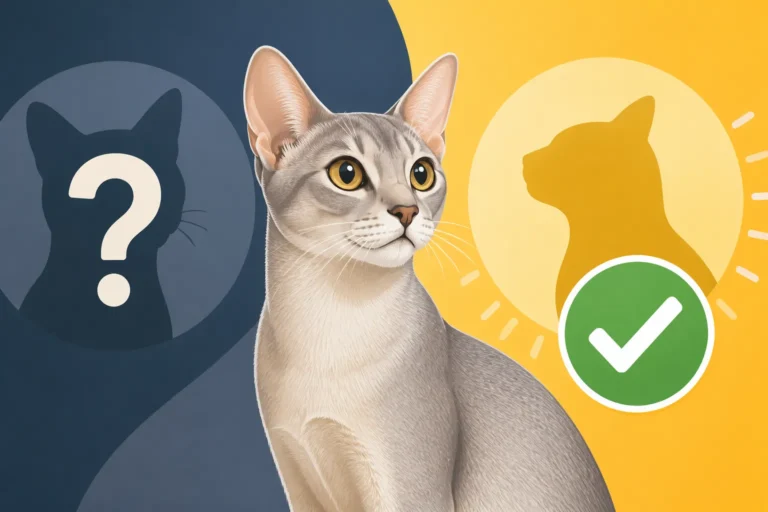
A fawn Abyssinian can look almost sandy beside a ruddy or sorrel cat, but its pale coat is not a separate kind of ticking or a sign of albinism. The color comes from how pigment is expressed across the coat. This guide explains what makes fawn the palest of the four recognized Abyssinian colors, how to tell it from blue and sorrel, and why a kitten’s shade may change as it matures.
What makes a fawn Abyssinian so pale
Fawn is a warm, diluted color
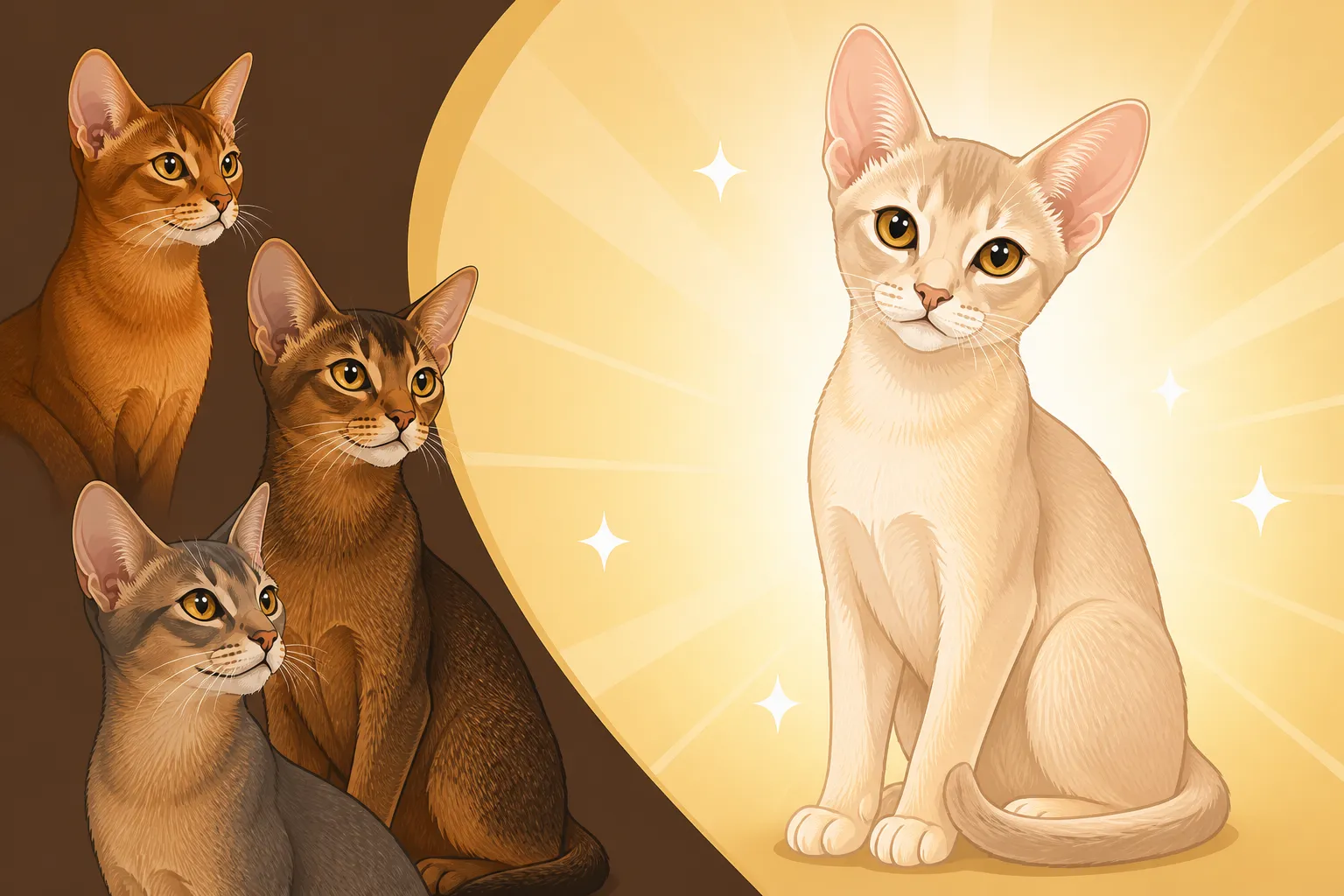
The fawn Abyssinian’s light appearance comes from diluted warm-toned pigment. In simple terms, dilution softens the color that would otherwise appear as sorrel, leaving a pale beige or pinkish-tan ground with darker, muted ticking. The result is still a richly patterned Abyssinian coat, but its colors have less visual intensity than the deeper ruddy and sorrel shades.
That distinction can be easy to miss in photographs. A fawn cat photographed in warm indoor lighting may look cream or even nearly white, while the same coat outdoors may show a stronger beige cast and clearly visible bands. The lighting, camera settings, and the cat’s age all affect how the color reads. For a useful overview of the breed’s palette, see The Four Colors an Abyssinian Comes In.
Fawn is not simply “a light Abyssinian.” It is a specific color combination, and its warm, soft tone separates it from blue, which is also diluted but appears cooler and more slate-like. The coat’s banded hairs remain part of the picture: fawn is pale, but it is not a solid-colored coat.
How fawn compares with the other Abyssinian colors
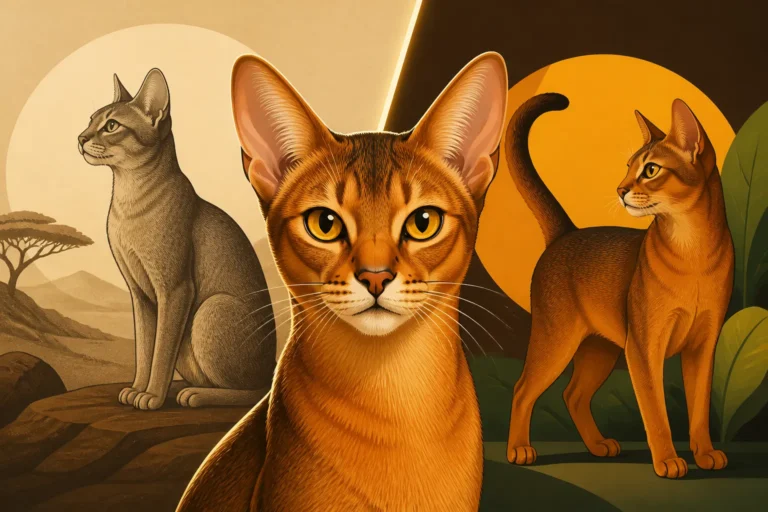
The four commonly recognized Abyssinian colors are ruddy, sorrel, blue, and fawn. Ruddy usually appears deepest, with a warm brown ground and dark ticking. Sorrel has a brighter red or coppery look. Blue is a diluted version of the darker, black-based color and tends to look cool gray-blue. Fawn has a paler, warmer beige appearance.
| Color | Overall impression | Typical ground color | Ticking appearance |
|---|---|---|---|
| Ruddy | Deep and warm | Rich brown or reddish-brown | Dark brown to black |
| Sorrel | Bright and coppery | Warm red or cinnamon | Richer, darker red-brown |
| Blue | Cool and muted | Gray-blue or soft slate | Deeper blue-gray |
| Fawn | Pale and warm | Beige, pinkish tan, or light oatmeal | Soft cocoa or muted brown |
Color names can vary between registries and everyday descriptions, so a cat’s official registration is more reliable than a casual label. Still, the basic visual contrast is useful: fawn tends to look light and warm, while blue looks light and cool. To understand how dilution changes the appearance of blue, read What Dilution Does to a Blue Abyssinian. The warm base color is also easier to understand alongside What Sorrel Means on an Abyssinian.
Pale does not mean unmarked or colorless
A fawn Abyssinian should still show the characteristic agouti effect that gives the breed its shimmering, banded appearance. Individual hairs carry alternating light and dark bands, so the coat can seem to shift as the cat moves. On a fawn, those bands may be more subtle than on a dark ruddy, but they should not make the cat look like a uniformly colored cream domestic cat.
This is why the coat can be hard to judge from one glance. A fawn resting in a patch of sunlight may look nearly solid, while the same cat walking across a room shows a much more noticeable contrast between the pale base and the darker hair tips. The ticking is part of the color, not an extra marking laid over it. How an Abyssinian's Agouti Banding Works explains how the hair bands create that effect.
How to recognize a fawn coat in real life
Look at the overall warmth, not just the lightness
When comparing fawn and blue, start with the undertone. Fawn usually has a warm beige, blush, or light tan cast. Blue tends toward a cooler gray or slate cast. A quick phone photo may flatten those differences, so it helps to look at the cat in indirect daylight and compare the color across the shoulders, sides, and tail.
The tail can be particularly useful because its ticking often looks more obvious there than across the body. Check whether the darker bands look warm brown or cool gray, but avoid judging from the tail tip alone. Lighting can make warm brown look grayish, and shadows can make a pale coat look much darker than it is.
The face, legs, and underside can also appear lighter or darker than the back. That variation does not automatically mean the cat is a different color. Abyssinian coats have natural differences in tone, and the overall color impression matters more than one pale patch or one dark area.
Check more than one feature
Coat color is the main clue, but it is not the only one. Nose leather, paw pads, and eye color can provide supporting details, though exact appearance can vary and should not be used alone to identify a color. If you are looking at a kitten from a breeder, ask how the kitten is registered and whether the parents’ colors are documented. The registration name and pedigree are more dependable than a seller’s informal description.
It is also sensible to ask for photographs taken in natural light rather than relying on heavily edited images. A breeder who can show the kitten’s coat beside its littermates may help you see the differences more clearly. For the broader standards and color terminology used in the breed, Which Abyssinian Colors CFA Recognizes is a helpful reference.
A fawn kitten may be listed with a color that sounds unfamiliar if a breeder or registry uses a different naming convention. Rather than treating that as a warning by itself, ask what the term means and request the official paperwork. How an Abyssinian's Coat Color Is Registered covers why those records matter when color labels are not identical everywhere.
How fawn color develops as an Abyssinian grows
Kitten coats can look less finished
A young Abyssinian’s coat may not show its adult appearance clearly. Kittens can have softer, less defined ticking, and their coats may look blotchy or uneven during development. A pale kitten can therefore seem less distinctly fawn at first, especially in indoor lighting or when its coat is still changing.
As the coat matures, the contrast between the lighter ground and darker bands may become easier to see. The shift is usually gradual rather than a sudden change from one color to another. It is normal for a kitten’s look to become more polished over time, but a cat does not become a different registered color simply because its coat develops.
If you are choosing a kitten, try not to make a final color judgment from a single early photograph. Ask for recent images, ideally taken in natural light, and consider the parents’ adult coats as context. The exact shade can vary between related cats, but seeing the family gives you a better sense of the color range. When an Abyssinian's Adult Color Settles offers more detail on how the coat changes with age.
Sunlight, seasons, and photography can mislead
The same fawn cat can look noticeably different from one room to another. Warm bulbs add a golden cast; cool daylight can make beige look more gray; direct sun can brighten the coat and reduce visible contrast in a photo. Phone cameras may also automatically adjust exposure, making a pale cat seem lighter or darker than it looks in person.
Seasonal changes can affect how a coat appears, too. The coat’s texture and fullness may shift, and a fawn cat with slightly more or less coat can give a different overall impression. These changes do not necessarily mean the underlying color has altered. Compare photographs taken under similar conditions before deciding that the cat’s coat has changed significantly.
If a coat suddenly looks dull, patchy, or unusually thin, that is a different issue from ordinary color variation. Pay attention to the skin and the cat’s general condition, and contact a veterinarian if you notice itching, sores, hair loss, or other changes. Color alone is not a health assessment.
Caring for a fawn Abyssinian’s coat
Keep grooming gentle
Abyssinians have short coats, so routine grooming is usually straightforward. A gentle weekly pass with a soft rubber grooming mitt or suitable comb can lift loose hair without aggressively scraping the coat. Brushing too forcefully or using a harsh deshedding tool may flatten the coat’s natural appearance and irritate the skin; it will not make the fawn color lighter or improve the ticking.
If you are replacing a rough brush, compare the tool’s material and intended use before buying. Chewy’s product listings can be useful for checking whether a grooming mitt is designed for short-haired cats, but the gentlest option is not necessarily the one with the most dramatic shedding claims. Watch your cat’s reaction, use light pressure, and stop if the skin becomes irritated.
Some owners like to finish with a soft cloth or chamois to bring out the coat’s natural sheen. This is optional, not a treatment for color. A healthy fawn coat does not need polishing products, dye, or whitening shampoo to look right. For the breed’s coat texture and grooming approach, see What an Abyssinian's Coat Should Feel Like in the Ring.
Do not try to change the shade
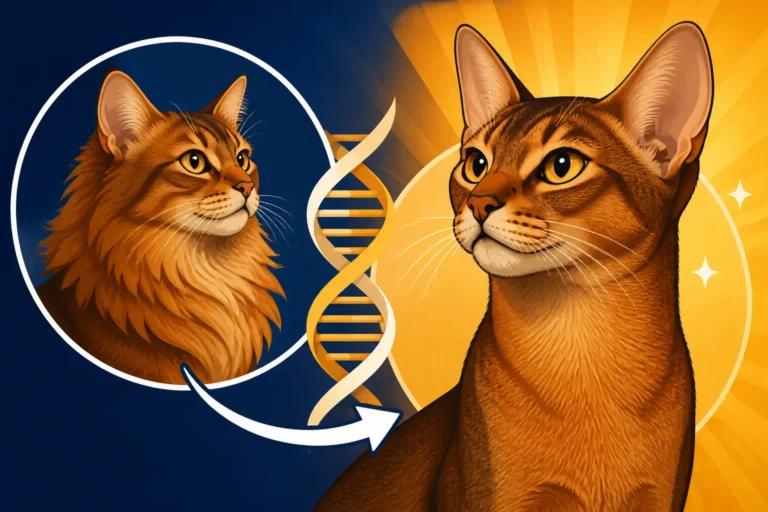
A fawn Abyssinian’s color is part of its genetics. Bathing, special shampoos, supplements, or sunlight exposure cannot turn it into a different recognized color, and deliberate sun exposure can be harmful. Use cat-safe grooming products only when they are genuinely needed, and follow veterinary guidance if there is a skin or coat concern.
If you are browsing Chewy for shampoo, read the label carefully and choose a product made for cats rather than adapting a human shampoo or a product intended for another animal. Most short-haired cats do not need frequent baths. A bath may be appropriate when the coat is dirty or a veterinarian recommends one, but washing a cat solely to make its color look brighter is unnecessary.
Chewy can also help you compare basic grooming supplies when you are setting up for a new cat, but keep the routine simple: gentle handling, occasional brushing, and regular checks of the skin. If the coat changes abruptly or the cat starts overgrooming, look for a cause rather than assuming the color is naturally shifting. Stress, parasites, allergies, and other health issues can affect the skin and coat, so persistent changes deserve attention.
Let the cat’s coat be what it is
A fawn Abyssinian’s appeal is not that it looks pale in every room or photograph. It is the blend of a light warm ground, softer ticking, and the lively shimmer that comes from the breed’s agouti coat. Once you know what to look for, the difference between fawn and the other colors becomes easier to spot without expecting every individual cat to match a perfect swatch.
When comparing cats, focus on the overall warm-versus-cool tone, the ticking across several parts of the body, and the breeder’s documentation. Give a kitten time to develop, view the coat in natural light, and keep grooming gentle. Those simple steps make it much easier to appreciate the color without mistaking lighting, age, or ordinary coat variation for a different color.
Disclaimer
This article is for general informational purposes only and does not constitute professional advice. Laws, prices and regulations vary by location and change over time. Consult a qualified professional for guidance on your specific situation.