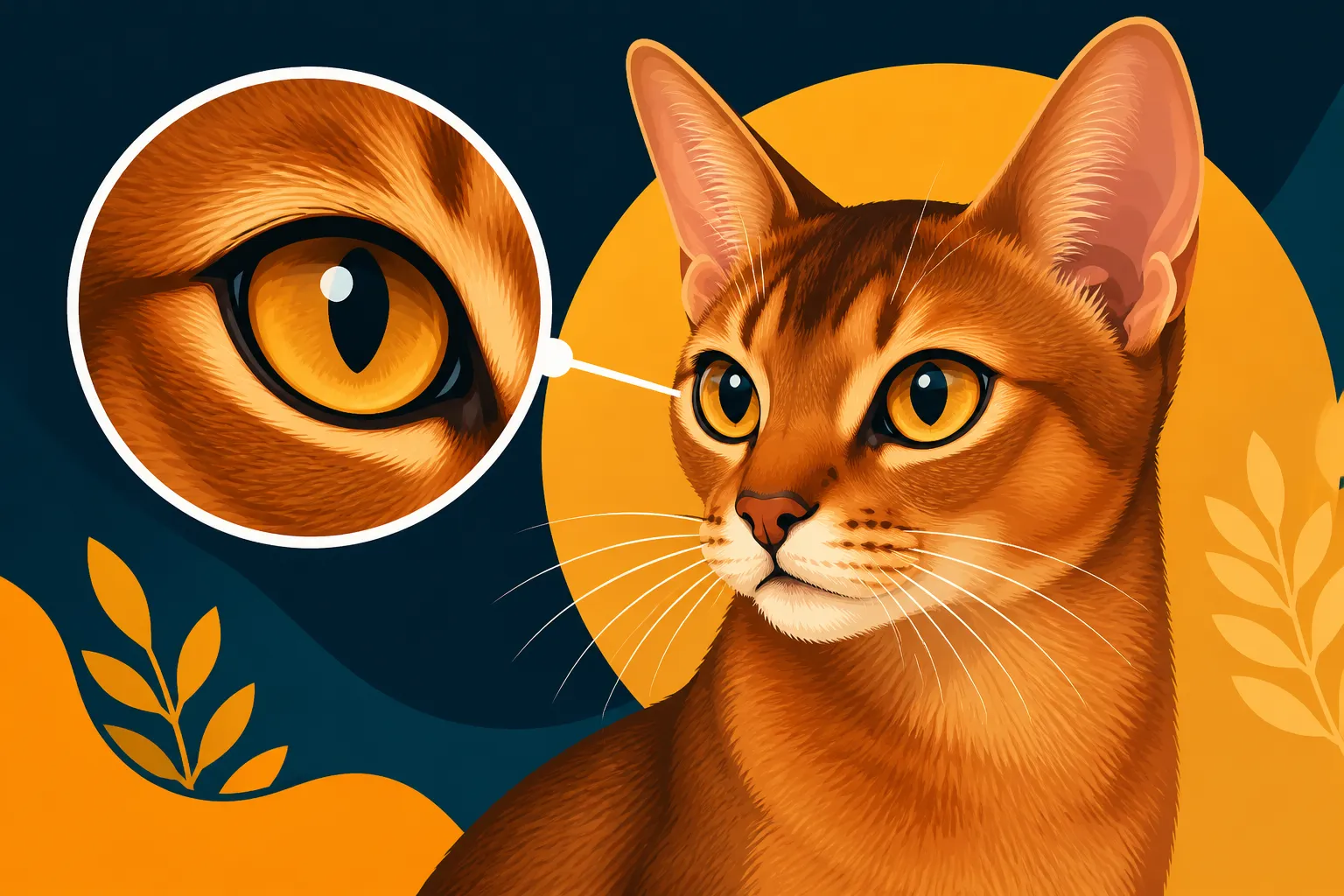
Why an Abyssinian’s Eyes Are Rimmed in Dark
An Abyssinian’s dark eye rims can look like eyeliner, especially against the breed’s bright, almond-shaped eyes. In most cats, this is a normal feature of their coloring—not a sign that the eyes are dirty or inflamed. The key is knowing what the outline looks like when healthy and what changes call for a closer look.
Why Abyssinian eyes look outlined
The dark rim is natural pigmentation
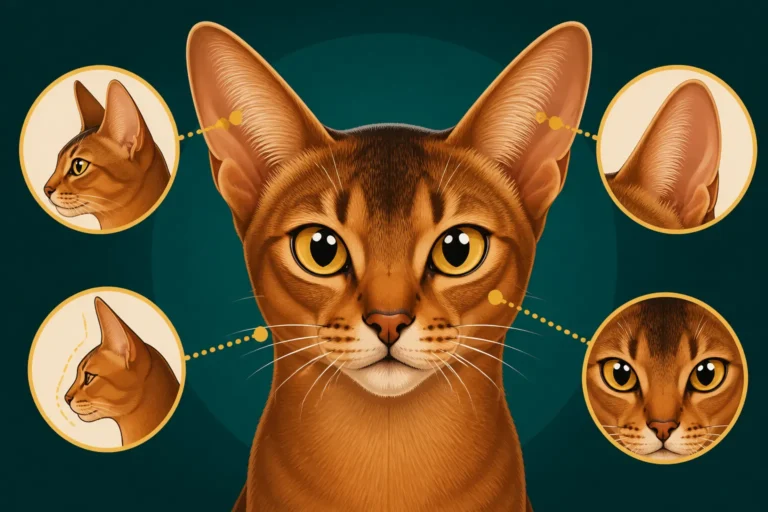
The dark line around an Abyssinian’s eyes is usually pigment in the skin and short hair bordering the eyelids. It is separate from the iris, the colored part of the eye, and from the pupil, the dark opening at its center. Depending on the cat’s coat color and individual coloring, the rim may look nearly black or more like deep brown.
This contrast gives the eyes a clearly defined, almost “lined” appearance. It can be particularly noticeable in photographs or bright daylight, when the surrounding coat catches the light and makes the darker edge stand out. The outline is part of the cat’s overall facial coloring, not makeup-like material that needs to be cleaned away.
Abyssinians also have expressive eyes and a distinctive facial pattern, so their eye rims may catch your attention more than those of a cat with a less contrasting coat. For a closer look at the breed’s overall appearance, see What an Abyssinian Looks Like Against the Show Standard.
How the eye rim fits the breed’s look
Abyssinian standards describe a dark outline around the eyes, often paired with a lighter area above it. Together, those markings frame the eye and contribute to the breed’s alert, distinctive expression. The precise contrast can vary from cat to cat, so one Abyssinian’s outline may appear more dramatic than another’s without either being abnormal.
The outline is not the same thing as a dark ring inside the eye. The iris may be gold, copper, green, or hazel, while the pupil changes size with lighting and arousal. If you are looking at the colored area itself rather than the skin and fur at the edge, that is a different feature. More detail is available in Which Eye Colors an Abyssinian Can Have.
Coat color also affects how prominent the rim seems. A dark border may blend into some facial markings but stand out sharply against lighter fur on another cat. Young cats can change in appearance as their coat develops, too. A kitten’s face may not have the same finished contrast as an adult’s, so a gradual change in the surrounding coat is not, by itself, evidence of an eye problem.
Normal pigmentation versus an eye problem
What a healthy outline usually looks like
A normal dark rim tends to look like an even part of the cat’s coloring. It is generally present on both sides, though the markings need not be perfectly identical. The skin should not appear swollen, raw, wet, or crusted, and your cat should be comfortable opening both eyes.
Look at the whole picture rather than judging the darkness alone. Is your cat behaving normally, following movement, and navigating familiar spaces as usual? Is the eye surface clear, without new cloudiness or persistent discharge? If the outline has looked much the same over time and there are no other changes, it is likely simply part of your Abyssinian’s natural appearance.
It can help to check the eyes during an ordinary, calm moment rather than trying to inspect them while your cat is wriggling away. You might notice the edge while your cat sits near a window or rests beside you. There is no need to pull the eyelids open or touch the eyeball to examine a normal-looking eye.
Signs that deserve attention
A dark rim alone is not usually a warning sign. A change in the eye or eyelid area is more important: new redness, swelling, repeated tearing, thick discharge, crusting, squinting, frequent blinking, or pawing at the face can indicate discomfort or illness. A cloudy-looking eye, a sudden change in pupil size, or an eye that seems painful should also be taken seriously.
Some signs call for faster action than others. An eye injury, sudden vision trouble, marked pain, or chemical exposure needs prompt veterinary guidance. If you are unsure how quickly to act, contact a veterinary clinic and describe what you see rather than trying a home remedy first.
| What you notice | What it may mean | A sensible next step |
|---|---|---|
| Stable dark outline, clear eyes, normal behavior | Likely natural pigmentation | Observe during routine care |
| New watery discharge or mild redness | Possible irritation or another eye issue | Contact your vet if it persists or worsens |
| Squinting, pawing, swelling, or thick discharge | Possible pain or infection | Arrange veterinary advice promptly |
| Cloudiness, injury, sudden vision change, or chemical exposure | Potentially urgent eye problem | Seek prompt veterinary care |
Eye symptoms can have several causes, and appearance alone cannot confirm what is happening. For more on discharge and when it needs attention, read When an Abyssinian's Eye Discharge Means Something.
How to care for the area safely
Leave a clean, healthy eye alone
If the rim is simply dark and the eye is comfortable and clear, routine wiping is not necessary. Frequent cleaning can irritate delicate skin, and scrubbing a normal pigment line will not make it disappear. If a small bit of dried discharge appears at the corner, you can gently soften it with a clean, damp cotton pad or soft cloth, wiping around the eye rather than across its surface.
Use a fresh part of the cloth for each eye. That simple habit reduces the chance of carrying debris from one side to the other. Keep your touch light, and stop if your cat pulls away, squints, or seems uncomfortable. A cat that suddenly resists a normally tolerated touch may be telling you that the area is tender.
When shopping for eye-area products, do not assume that a product is suitable just because it is sold for pets. If you browse Chewy or another retailer, check the label and ask your veterinarian before using wipes, washes, or drops near the eye. Avoid human eye drops, peroxide, essential oils, and improvised cleaning solutions unless a veterinarian specifically instructs you to use something.
Build a low-stress eye check into ordinary care
A quick glance while your cat is relaxed can help you notice changes without turning care into a wrestling match. Look for symmetry, clear eye surfaces, comfortable blinking, and any new wetness or crust at the corners. You do not need to handle the eyelids every day; simply becoming familiar with your cat’s usual appearance makes a sudden difference easier to spot.
If you need basic supplies for gentle cleanup, ask your clinic what they recommend. A pet retailer such as Chewy may be convenient for finding general care items, but the product should still be appropriate for use near the eyes. Keep the packaging or product name handy so you can check with the clinic if irritation develops.
For a cat that hates face handling, go slowly. Let your Abyssinian sniff the cloth, reward calm behavior, and keep any necessary cleanup brief. If the area is painful or your cat repeatedly resists, skip the home inspection and call your veterinarian. Trying to hold a distressed cat still can make a minor task stressful and may worsen an injury.
What to watch over time
Notice change, not just color
Abyssinian eye rims can look darker or lighter depending on the light, the angle, and the contrast with the coat. A single photograph may make the border seem unusually bold, while a shadow can make one side appear different from the other. If you are concerned about a change, compare the eyes in similar lighting and focus on symptoms as well as color.
A gradual, even change in the surrounding coat is different from a sudden change in the eyelid or eye itself. Take note if one eye becomes newly red or watery, if the outline looks swollen, or if your cat starts blinking more often. A photo can help you explain what changed to your vet, but it should not delay care when there is obvious pain, injury, or vision trouble.
You can also mention eye changes during routine appointments, especially if they are new or recurring. The outline itself is not a reason to seek treatment, but your veterinarian can assess the eyelids and eye surface if something looks different from your cat’s normal baseline.
Keep the main distinction in mind
The dark rim is a feature of the Abyssinian’s appearance; discharge, swelling, squinting, cloudiness, and discomfort are signs that the eye may need attention. Those are separate things, even when they appear in the same area. Knowing that distinction helps prevent two common worries: trying to scrub away normal pigment, or overlooking a genuine change because the dark outline has always been there.
If the eyes are clear and comfortable, admire the natural definition and leave the area alone. If a new symptom appears, describe it to your veterinarian and follow their advice rather than reaching for an unapproved product. More breed-specific context on eye shape and facial markings is covered in Why an Abyssinian's Eye Rim Is Outlined, while Why an Abyssinian Has No Tabby Stripes explains another part of the coat pattern that can make the face look especially distinctive.
Chewy and other pet retailers can be useful places to compare general grooming supplies, but buying a product online is not a substitute for an eye exam. If you are unsure whether a wipe or rinse is suitable, ask your clinic before using it. And if your cat has a sudden painful or cloudy eye, prioritize veterinary care over shopping for a cleaning product.
Disclaimer
This article is for general informational purposes only and does not constitute professional advice. Laws, prices and regulations vary by location and change over time. Consult a qualified professional for guidance on your specific situation.