Whether an Abyssinian Suits Someone Working From Home
Working from home can make an Abyssinian’s company feel like a bonus—until the cat walks across your keyboard during a meeting, demands play while you’re on a deadline, or yells outside the one room you’ve closed. This guide explains what daily life with this energetic, people-focused breed can look like and how to tell whether your work routine can meet its needs.
What working from home with an Abyssinian is really like
Expect company, not a quiet office companion
Abyssinians often like being near their people, but that doesn’t necessarily mean they’ll curl up quietly beside you for hours. Your cat may follow you from room to room, perch on a desk, inspect your notebook, or settle somewhere with a clear view of what you’re doing. Some are content to watch; others want to take part.
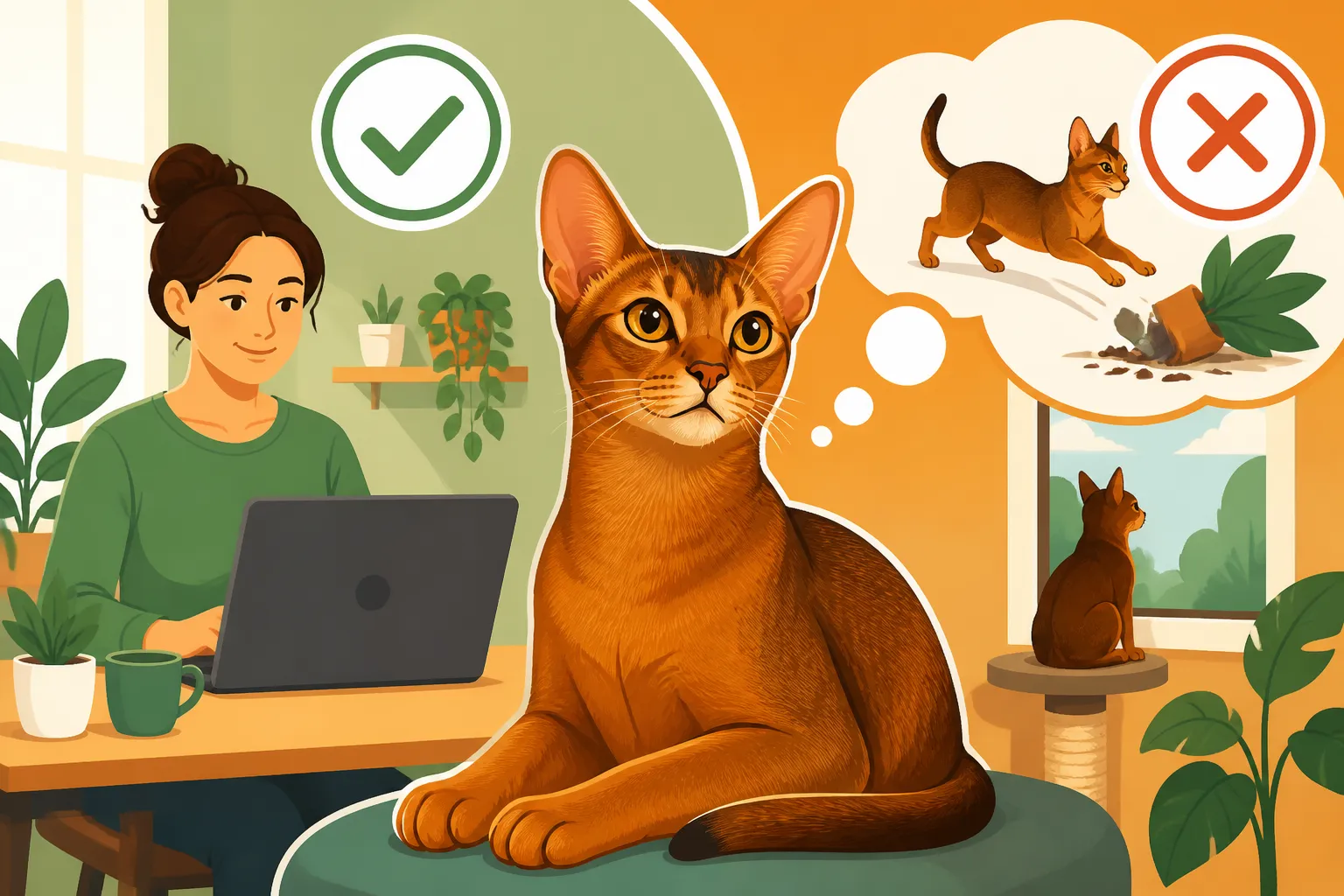
That closeness can be lovely if you enjoy a cat who is involved in everyday life. It can also be distracting when the cat decides your hands, screen, or headset are more interesting than the toy you offered ten minutes earlier. A home office doesn’t automatically make an Abyssinian low-maintenance. It may simply give the cat more opportunities to request your attention in person.
Owners sometimes mistake proximity for lap-cat behavior. An Abyssinian may prefer a nearby chair, a shelf above your desk, or the warm spot beside your laptop rather than sitting still on your knees. If you’re picturing a pet who naps quietly while you work, read Why an Abyssinian Will Not Sit on Your Lap and Why an Abyssinian Follows You Without Sitting Still before deciding whether the breed’s style of companionship suits you.
Your attention may become part of the workday
Abyssinians are curious and quick to notice patterns. They may learn that a particular meeting means you’ll be stationary for a while, or that closing your laptop signals a break. Some will bring a toy, chirp, tap your arm, or position themselves where you can’t ignore them. That behavior may be charming during a slow afternoon and frustrating when you’re presenting to a client.
The key question is not just whether you’re home. It’s whether you can give your cat predictable attention without expecting uninterrupted access to your time. A person who works from home but spends the whole day on calls may be less available than someone who leaves for errands but has a reliable morning and evening play routine.
You’ll also want to consider how you respond when your cat interrupts. If every paw on the keyboard earns a game, a snack, or a long conversation, the behavior may become a very effective way to summon you. A short, consistent break routine can help: give the cat a focused play session before work, offer an activity during a meeting, and reward calm settling when you have a natural pause. For more on reading requests and body language, see How an Abyssinian Signals It Wants Something.
The work environment needs cat-proofing
A lively cat can turn an ordinary office into an obstacle course. Pens roll, paper gets pawed off the desk, charging cords attract chewing, and a warm laptop may look like an irresistible bed. Put breakable objects away from edges, keep small items in drawers, and manage cables so a curious cat can’t tug or chew them.
If you take video calls, plan for interruptions rather than hoping they won’t happen. Keep a safe perch or bed near the desk, and have a quiet activity ready before a meeting starts. A door can help when privacy is essential, but some Abyssinians dislike being shut away from the household and may scratch or vocalize. Introduce boundaries gradually, and don’t rely on isolation as the only way to get through a workday. Why an Abyssinian Hates a Closed Door explores why that response can be so persistent.
How to tell whether your routine fits the breed
Match the cat’s needs to your actual schedule
A home-working schedule varies widely. You might have flexible breaks and space for a cat tree beside your desk, or you might be home all day but unable to step away. Think about a typical week, including busy days, deadlines, travel, and the hours when you’re most focused—not just the ideal day you imagine.
| Work-from-home situation | What may work well | What to plan for |
|---|---|---|
| Flexible hours with regular breaks | Short play and attention sessions can fit naturally into the day | Keep a routine so activity doesn’t depend on the cat interrupting |
| Frequent video calls | A nearby perch and pre-meeting enrichment may help | The cat may still make an appearance or vocalize |
| Long periods of focused work | Independent activities can bridge some gaps | A second play session and social time outside work may be important |
| Small apartment or shared workspace | Vertical routes and a comfortable resting spot can make better use of space | Secure shelves and keep the cat away from hazardous work equipment |
| Work from home with frequent travel | A sitter or other dependable care arrangement is essential | Being home on ordinary days doesn’t solve care needs when you’re away |
Abyssinians generally benefit from activity and interaction, not just access to a person in the same building. Schedule active play before a demanding work block, then offer a separate activity when you need to concentrate. For ideas on making the exercise realistic rather than exhausting, see How Much Play an Abyssinian Needs Each Day.
If your work hours are unpredictable, build a few options into the environment: a window perch, safe climbing spaces, rotating toys, and food puzzles that are suitable for your cat. A puzzle feeder from a pet retailer such as Chewy may be useful when you need a brief stretch of focused work, but it should complement play and social contact, not replace them.
Decide whether one cat is likely to cope
Some Abyssinians live happily as the only cat, especially when they receive regular interaction and have a stimulating environment. Others may benefit from a compatible animal companion. A second cat is not an automatic fix: personalities, introductions, space, and resources all matter, and two cats still need care and attention from you.
If you’re considering a companion, think about the animals as individuals rather than assuming any second pet will keep an Abyssinian occupied. A calm, older cat may find a high-energy youngster overwhelming; another playful cat may be a better match, but there are no guarantees. Introductions should be gradual, with separate feeding areas, resting places, and litter resources so neither animal feels pushed aside.
Your schedule is part of this decision, but it isn’t the only factor. Consider whether you can manage the expense, veterinary care, and adjustment period of another pet. Whether an Abyssinian Can Be an Only Cat and Why an Abyssinian Should Not Be Left Alone All Day can help you weigh companionship against the practical realities of your household.
Set up a workday that meets both your needs
Create a predictable rhythm
Cats often do better when useful things happen in a familiar order. A routine might begin with breakfast and interactive play, followed by a resting period while you start work. A later play break can divide a long stretch of concentration, with another round of attention after you finish for the day.
Keep the routine flexible enough to survive a meeting that runs late. If your cat’s activity depends entirely on you responding whenever it asks, you may find work increasingly interrupted. Instead, initiate play at times you can sustain, and provide safe solo options between sessions. Rotating a few toys can make them more interesting than leaving every toy out all the time.
A food puzzle can keep a cat engaged for a while, but choose an appropriate design and supervise new items until you know how your cat uses them. Chewy is one place owners may look for puzzle feeders or interactive toys; whichever product you choose, check that it is suitable for your cat’s size and play style. For further enrichment ideas, see How to Give an Abyssinian a Job.
Give the cat an appealing place near your desk
A designated spot can make it easier for your cat to settle close by without occupying your keyboard. Set up a stable perch, bed, or cat tree where the cat can see you and observe the room. If it’s near a window, check that the window is secure and that cords or blinds can’t become entanglement hazards.
Vertical space can be especially useful in a smaller home. A shelf route or sturdy cat tree gives the cat somewhere to climb and rest without requiring a large open floor area. Make sure any furniture or wall-mounted shelves are safely installed, and arrange the route so the cat can get down as easily as it climbs up.
Offer a comfortable alternative before you need it. Reward the cat for choosing the perch or bed when you’re working, rather than only moving it there after it has stepped on your keyboard. You can place a favorite blanket or a safe toy nearby, then provide attention during scheduled breaks. A pet retailer such as Chewy may carry beds, climbing furniture, and enrichment supplies, but fit and stability matter more than the label or appearance.
Teach calm boundaries without expecting perfect silence
It’s reasonable to protect your workspace, especially during calls, but an Abyssinian may need time to learn what the boundary means. Begin with short periods in the designated area and reward calm behavior. If you must close a door, give your cat something appropriate to do outside the room and build up the duration gradually instead of suddenly shutting it out for a full work block.
Avoid making unwanted behavior the fastest route to attention. If the cat paws at your monitor and you immediately play, the lesson may be that monitor-pawing works. When possible, pause and redirect to a toy or perch, then reward the behavior you’d like to see. Consistency matters more than scolding, which can add stress without teaching a useful alternative.
Some noise and interruption may still happen. If you need an entirely silent, interruption-free work environment, an Abyssinian may not be the easiest fit. If you enjoy an active companion and can plan around occasional disruptions, the relationship can be rewarding. For help creating a more engaging home setup, read How to Set Up a Room for an Abyssinian Home Alone and Whether an Apartment Suits an Abyssinian.
So, does an Abyssinian suit someone working from home
An Abyssinian can suit a remote worker who enjoys an involved, energetic cat and can build interaction into the day. Working from home may make it easier to offer company and notice changes in behavior, but it doesn’t guarantee that the cat will entertain itself or remain quiet while you work.
The match is less promising if your work requires long, uninterrupted stretches, you cannot provide regular play, or you expect the cat to spend most of the day sleeping out of sight. It may be more workable if you can offer a safe work-adjacent perch, a predictable routine, and enrichment between focused interaction.
Before bringing one home, be honest about your busiest days. Ask yourself whether you can still make time for play when a deadline is looming, whether you can tolerate a cat wandering into a call, and who will care for the cat when you travel. If the answers are yes—or you’re willing to adjust your setup—working from home can be a good foundation for life with an Abyssinian. If not, another breed or an individual cat with a calmer temperament may fit your household better.
Disclaimer
This article is for general informational purposes only and does not constitute professional advice. Laws, prices and regulations vary by location and change over time. Consult a qualified professional for guidance on your specific situation.