Why Abyssinian Owners Rarely Keep Just One
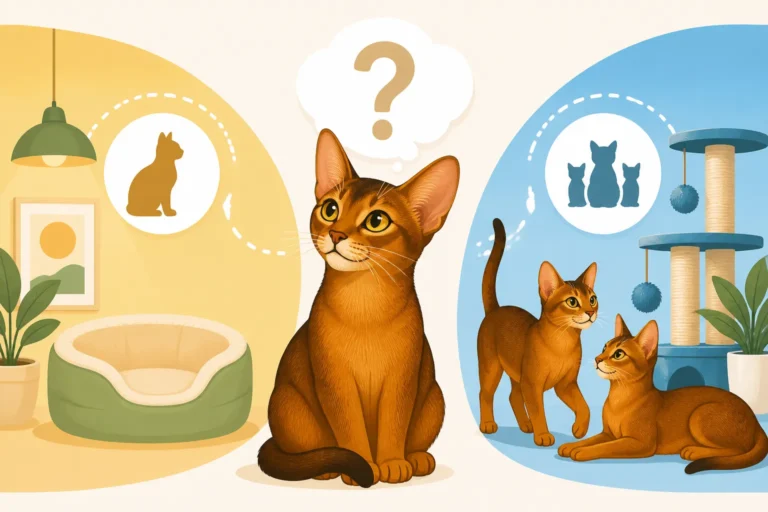
Abyssinians are lively, curious cats, so it’s easy to imagine that a second cat will solve every bout of boredom or keep your first cat company while you’re out. Sometimes a compatible companion does make home life richer. But adding another cat is a real commitment, not a guaranteed fix. This guide explains why many Abyssinian owners choose two, and how to decide what suits your household.
Why Abyssinian owners consider a second cat
A busy cat can bring a lot of energy home
Abyssinians are often alert, playful, and interested in whatever their people are doing. One may follow you from room to room, investigate the grocery bags, perch above your desk, and start a game just as you sit down. That sociability is part of their appeal, but it can also make a quiet, under-stimulating home feel like a poor fit.
A second cat can offer another opportunity for play and interaction. Two cats might chase each other down a hallway, take turns stalking a toy, or simply nap in the same sunny patch. For owners who work outside the home, the idea of a companion can feel reassuring. It’s understandable to wonder whether your cat gets lonely when the house is empty.
Still, another cat is not a substitute for daily attention, play, or a stimulating environment. Some cats enjoy each other’s company; others mainly tolerate sharing space. A second cat might even add tension if the first one values having the home to itself. Before deciding, consider whether your Abyssinian seems to seek feline company specifically, or whether they mainly want more activity from you.
If your cat is restless or getting into trouble, start by looking at their routine and surroundings. More active play, climbing opportunities, food puzzles, and predictable attention may help. What an Abyssinian Does When It Is Bored explores signs that a cat needs more to do, while How Much Play an Abyssinian Needs Each Day can help you think through a workable daily routine.
The companion idea is attractive, but it is not a rule
People sometimes hear that an Abyssinian should never be an only cat. That’s too simple. A cat’s temperament, early experiences, age, health, and history with other cats all matter. Some Abyssinians seem delighted by a feline housemate. Others are content as the only cat, particularly when they have regular company and plenty of engagement at home.
Watch your own cat rather than relying only on breed generalizations. Does your Abyssinian show relaxed curiosity around other cats, or do they become fearful and defensive? Have they lived peacefully with a cat before? Do they seem to seek out interaction, or do they prefer observing from a high shelf? These clues are useful, though they can’t guarantee how a particular introduction will go.
A cat’s behavior can also change for reasons unrelated to loneliness. If your normally energetic Abyssinian suddenly withdraws, stops climbing, or seems unusually quiet, consider a health issue before assuming they need a playmate. What Changes an Abyssinian's Behavior Overnight offers useful context for noticing a sudden shift, and a veterinarian can help assess changes that concern you.
Choosing one cat does not mean you are failing your Abyssinian. The better question is whether you can meet this particular cat’s social and activity needs with the household you have. Whether an Abyssinian Can Be an Only Cat looks more closely at what may help an Abyssinian thrive as a single pet.
What a second cat can and cannot change
A good match can add play and companionship
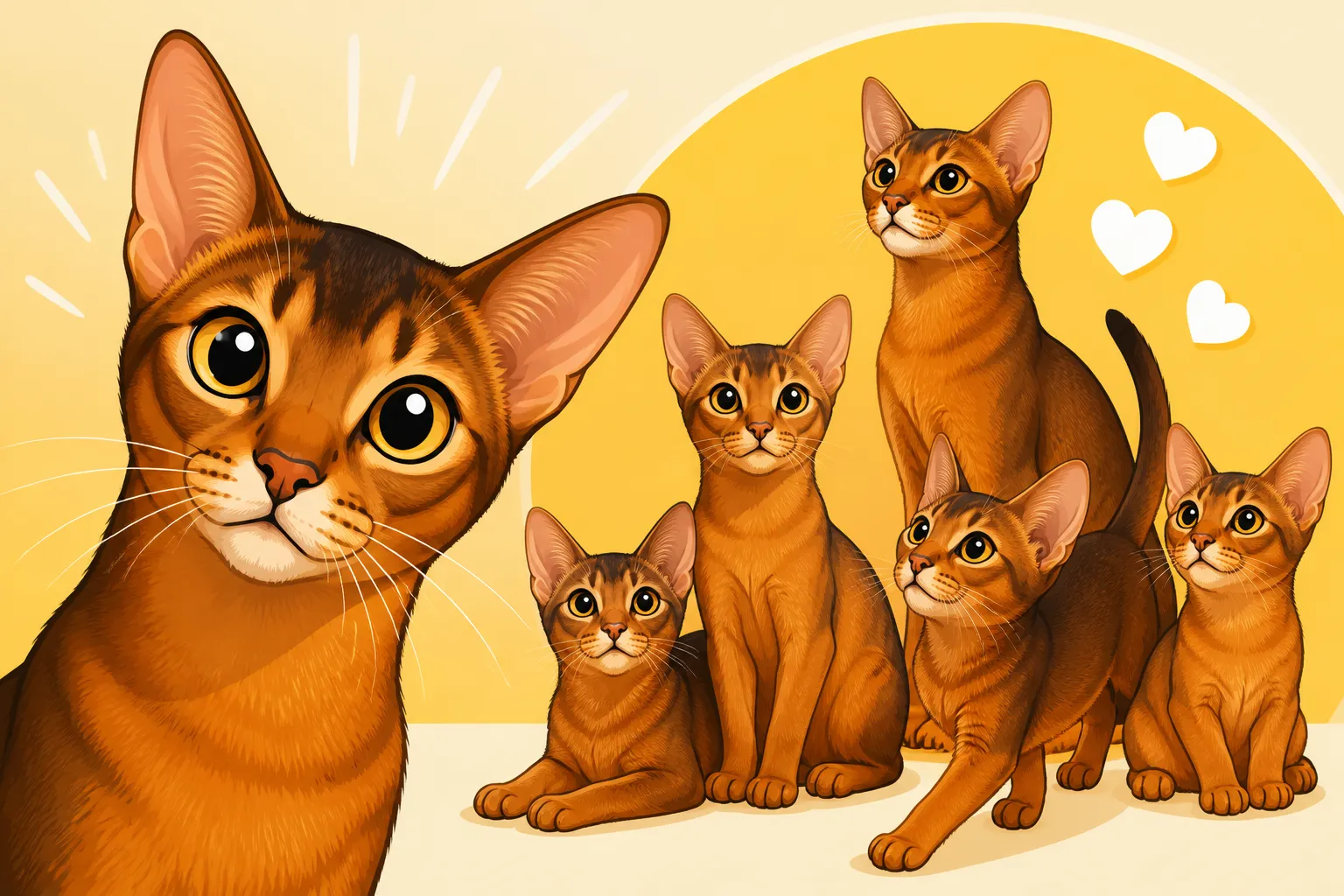
When two cats are compatible, their relationship can be rewarding to watch. They may groom each other, sleep nearby, or invent games that neither would play alone. A well-matched companion can also give an active Abyssinian another outlet for social energy, especially if both cats enjoy the same kind of play.
Compatibility is not just about choosing another lively cat. Consider age, confidence, play style, and experience with other animals. A confident young cat who barrels into every interaction could overwhelm a shy adult. A calm older cat might appreciate a respectful companion but dislike being pounced on repeatedly. Two cats with similar energy can have fun together, but they may also amplify each other’s mischief.
Breed can be one consideration, but it should not be the deciding factor. Individual personality matters more than a label. Which Cat Breeds Match an Abyssinian's Energy can help you think about broad temperamental differences, but meeting a prospective cat and learning their history is more useful than assuming every cat of a particular breed will be a fit.
| Household situation | A second cat may help when | Think carefully when |
|---|---|---|
| Your Abyssinian is playful | They have shown friendly interest in other cats | They respond to other cats with persistent fear or aggression |
| You are away during the day | You can still provide daily interaction and enrichment | You expect the new cat to occupy the first cat without your involvement |
| Your current cat is older | They have a history of enjoying feline company | A high-energy newcomer may disrupt rest or routines |
| Your home has limited space | You can create separate resting, feeding, and litter areas | Cats would have no way to avoid one another |
| You want two cats | You can afford routine and unexpected care for both | The decision depends on the cats sharing every resource |
A second cat does not automatically cure boredom
It’s tempting to think, “If my cat has a friend, I won’t need to play as much.” In practice, most cats still benefit from interaction with their people. Two cats may play together, but they may also ignore each other for long stretches, compete for attention, or develop different routines. Even friendly companions need appropriate toys, climbing space, quiet resting spots, and individual care.
A new cat can also create more work. There are two feeding routines to monitor, two sets of veterinary needs, and two personalities to understand. If one cat needs a special diet or medication, the household may need extra planning. You’ll also need to manage introductions carefully and watch for subtle signs of tension, such as one cat blocking a hallway or keeping the other away from a preferred resting place.
For a single Abyssinian who spends long days at home alone, consider the whole picture before adopting. A second cat may be part of the answer, but so can a reliable play routine before and after work, a window perch, or food-based enrichment. A puzzle feeder from a retailer such as Chewy may be useful for some cats, but it works best as one part of a varied routine rather than a replacement for social contact.
How to decide whether two cats suit your home
Assess your cat, your schedule, and your space
Start with your current cat’s history. If your Abyssinian previously lived peacefully with another cat, that may be encouraging. If they have always been the only pet, it doesn’t rule out a companion, but it does mean you should be especially patient and realistic. A cat who seems curious through a window may react very differently when another cat is inside their territory.
Then look honestly at your schedule. Can you spend time supervising the introduction? Can you keep the cats separated at first, even if that means setting up a spare bedroom or another quiet area? If you travel often, who will care for both cats and maintain their routines? These practical questions matter just as much as whether you like the idea of having two cats.
Space matters even in a large home. Cats need ways to move around each other without being forced into close contact. A narrow hallway with a single food station can become a bottleneck. Provide separate feeding spots, multiple water locations, comfortable resting places, scratching surfaces, and litter areas. Vertical space can help, but it should not be the only way for one cat to get away from the other.
Also work out whether you can manage the additional costs and care. Two cats do not always cost exactly twice as much, but each has their own food, veterinary care, and potential emergencies. For a realistic picture of the demands of an active breed, Why an Abyssinian Should Not Be Left Alone All Day discusses the ways routine and company can affect an Abyssinian’s home life.
Choose for temperament, then introduce slowly
If you decide to adopt, ask about the potential companion’s behavior around other cats. A rescue or breeder may be able to describe whether the cat has shared a home, how they respond to unfamiliar animals, and what kind of play they enjoy. Be candid about your Abyssinian too. It is better to pause or choose a different match than to rush into an adoption that leaves both cats stressed.
Plan for a gradual introduction rather than placing the new cat in the living room and hoping they sort things out. Begin with separate spaces and separate resources. Let each cat settle before expecting interaction. Scent exchange—such as swapping bedding—can help them get used to one another’s smell without a face-to-face encounter. Later, brief visual contact through a secure barrier may be appropriate if both cats seem calm.
Move forward according to the cats’ behavior, not a calendar. Hissing, retreating, or refusing to approach can mean they need more space and time. Don’t punish a cat for reacting; punishment can make the other cat’s presence feel even more stressful. If tension remains severe or either cat’s eating, toileting, or wellbeing changes, consult a veterinarian or qualified feline behavior professional.
A useful guide to the practical process is How to Introduce a Second Cat to an Abyssinian. Keep each cat’s routine as steady as possible during the transition. Familiar meals, play sessions, resting spots, and gentle attention help make a major household change feel less overwhelming.
Making life with two Abyssinians work
Give each cat choice and access to resources
A successful multi-cat home is not one where the cats must share everything. It’s one where each can choose when to interact and where to retreat. Set up more than one comfortable resting spot and avoid arranging essential resources in a way that forces one cat to pass the other. Separate feeding locations can reduce pressure, particularly if one cat eats quickly or tries to take the other’s food.
Provide play that suits each cat. Two Abyssinians might enjoy chasing a wand toy together, but one may prefer a quieter game or need individual attention. Watch body language: relaxed movement, voluntary approaches, and taking turns are encouraging. Stiff posture, persistent chasing, or one cat regularly hiding can signal that the arrangement needs adjustment.
Keep enrichment varied. Rotate toys, offer safe climbing routes, and use puzzle feeders or foraging games when appropriate. Chewy carries a range of pet supplies, but a purchased toy is not automatically engaging; some cats prefer a simple cardboard box or a toy that moves unpredictably. Try different options, supervise new items, and remove anything damaged or unsafe.
Measure success by comfort, not constant cuddling
Not every pair becomes inseparable. Some cats are close companions; others live peacefully with a little distance between them. Sharing a home without frequent conflict can be a good outcome, even if they never curl up together. The important thing is that both cats can eat, rest, play, and use the litter area without feeling persistently threatened or excluded.
Give the relationship time to develop. Cats may need weeks or longer to become comfortable, and their dynamic can shift as the newcomer settles in. Keep offering attention to your original Abyssinian so they do not lose familiar routines and positive interaction with you. A second cat is a new member of the household, not a replacement for the bond you already have.
For some owners, two cats bring more play, more company, and a home that feels wonderfully alive. For others, one well-supported Abyssinian is the right fit. If you are unsure, talk with a rescue or breeder about the cat’s history and ask a veterinarian for guidance if health or behavior concerns are involved. Chewy may be a convenient place to find enrichment supplies, but the most important tools are observation, patience, and a setup that gives both cats room to choose.
Disclaimer
This article is for general informational purposes only and does not constitute professional advice. Laws, prices and regulations vary by location and change over time. Consult a qualified professional for guidance on your specific situation.