Why an Abyssinian Advertised as Rare Is a Warning
It's incredibly exciting to welcome a new Abyssinian into your life, but it can also be a minefield when you're navigating advertisements and trying to find a healthy, well-adjusted kitten. One of the biggest red flags many prospective owners encounter is the phrase "rare Abyssinian," which can often lead to inflated prices, hidden health issues, and heartbreaking disappointments down the line. This guide will help you understand why this advertising tactic is so problematic and what truly defines a healthy, well-bred Abyssinian.
Understanding "Rare" in the Abyssinian World
When you see an Abyssinian advertised as "rare," your alarm bells should immediately start ringing. The Abyssinian breed, while not as ubiquitous as a domestic shorthair, is a well-established and recognized breed with specific standards. There aren't hidden, super-secret "rare" types that suddenly pop up for sale. Reputable breeders work within these established standards to maintain the health and integrity of the breed.
The Established Abyssinian Colors
The Abyssinian breed, as recognized by major cat registries like the Cat Fanciers' Association (CFA), comes in a select few, beautiful colors. These are Ruddy (often called Usual in some parts of the world), Sorrel (sometimes called Red), Blue, and Fawn. Each of these colors has its own unique charm, and they are all equally "Abyssinian." There isn't one that is inherently more valuable or harder to find to the point of being labeled "rare" in a deceptive advertising sense. For example, a fawn Abyssinian might be less common than a ruddy one in certain regions or catteries, but it's still a recognized, standard color, not a mystical rarity that justifies an exorbitant price tag.
Thinking about the accepted variations, it's helpful to understand The Four Colors an Abyssinian Comes In. These are the true variations you'll find, and while some may have a longer waitlist due to demand, they are never "rare" in a way that implies exclusivity or a unique genetic miracle. A breeder who focuses on "rare" colors might be implying that they have something special that others don't, when in reality, they might just be working with a less common but still standard genetic combination.
The Misconception of "Unique" Markings
Sometimes, a breeder might try to sell an Abyssinian as "rare" because of some perceived unique marking or variation in its ticking. However, the hallmark of the Abyssinian coat is its beautiful, even ticking, where each individual hair has bands of color. Ideally, this ticking should be free of bars, stripes, or blotches. In fact, such patterns, often referred to as "barring" or "necklace markings," are actually considered faults in the show ring.
So, if someone is advertising an Abyssinian as "rare" because it has unusual stripes or blotches, they're often trying to spin a breed fault into a selling point. This is a clear indicator that they might not be breeding to standard or are simply trying to capitalize on a buyer's lack of knowledge. A truly well-bred Abyssinian will have a shimmering, clear ticked coat, not one with distracting patterns.
Unrecognized Colors and Patterns: The Real Story
Beyond the standard four colors, you might encounter Abyssinians advertised with "rare" colors that simply aren't recognized by breed standards. This is where things get particularly tricky and can lead to significant issues.
"Chocolate" or "Lilac" Abyssinians
Occasionally, you'll see listings for "chocolate" or "lilac" Abyssinians, touting them as incredibly rare and unique. While these colors exist in other cat breeds, they are not recognized colors for the Abyssinian breed. If a cat is being sold as a "chocolate Abyssinian," it likely means one of two things: either it's not a purebred Abyssinian, having been crossed with another breed that carries these colors, or it's a genetic variant that falls outside the accepted breed standard, often due to improper or unrecorded outcrosses in its ancestry.
A reputable Abyssinian breeder adheres to the breed standard to preserve the distinct characteristics, health, and lineage of the cats. Deliberately breeding for or marketing unrecognised colors often indicates a lack of commitment to these standards, which can have wider implications for the cat's health and temperament, even if the "rare" color itself isn't harmful. This is a situation where the desire for something "different" can lead you down a path away from responsible breeding practices.
Longhaired Abyssinians (Somalis)
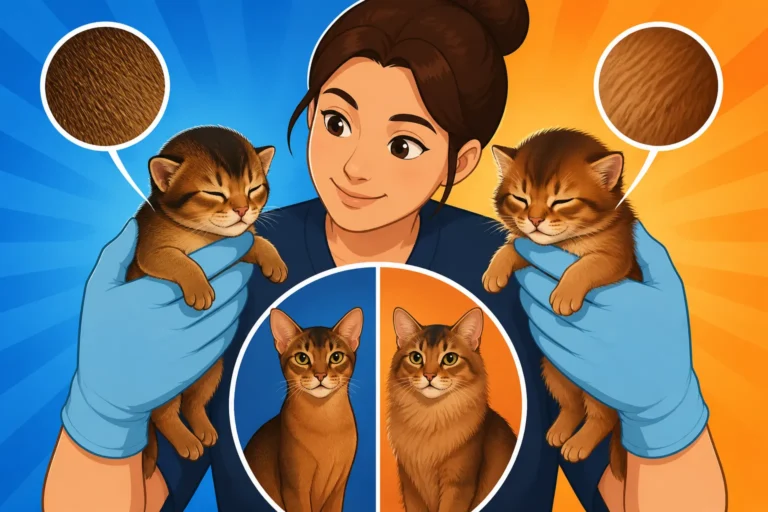
Another scenario that often gets confused is the longhaired variant of the Abyssinian, known as the Somali. Somalis are indeed stunning cats with all the vibrant personality of an Abyssinian, but with a magnificent medium-long coat. Historically, the longhaired gene was present in Abyssinian lines all along, occasionally popping up in litters. Over time, dedicated breeders cultivated these longhaired kittens into a separate, recognized breed – the Somali.
So, if a breeder tries to sell a longhaired kitten from an Abyssinian litter as a "rare Abyssinian," they are technically correct that it carries the longhair gene from its Abyssinian ancestry, but they are misrepresenting it. It's not a "rare Abyssinian"; it's a Somali, which is its own distinct breed, albeit closely related. They might be trying to charge a premium simply because it's an unexpected variation in an otherwise shorthaired litter. Understanding How a Somali Turns Up in an Abyssinian Litter can help clarify this genetic relationship and why it shouldn't be a mark of "rarity" that inflates price unfairly.
The Perils of "Rare" Pricing and Untested Lines
The biggest danger of an Abyssinian advertised as "rare" is that it's almost always a tactic to justify an inflated price. When a breeder labels something as "rare," they're tapping into a buyer's desire for exclusivity, leading them to believe they're getting something truly special and worth paying extra for.
Inflated Costs and Hidden Agendas
A reputable Abyssinian breeder sets their prices based on several factors: the quality of their breeding program, health testing of parent cats, veterinary care for kittens, registration fees, and the overall time and effort invested in raising healthy, well-socialized animals. You can get a sense of what a typical, healthy kitten costs by looking into What a Pet Quality Abyssinian Sells For. These prices reflect ethical breeding practices.
When you see a "rare" Abyssinian priced significantly higher than the going rate for a pedigreed kitten, it's often a red flag. These breeders might be operating outside of ethical guidelines, cutting corners on essential care, or, most critically, skipping vital health screenings. They might not be able to sell their kittens at a standard price due to known issues or lack of proper documentation, so they create a narrative of "rarity" to demand more.
Lack of Health Testing and Guarantees
This is arguably the most critical concern. Responsible Abyssinian breeders perform rigorous health testing on their breeding cats to screen for hereditary diseases common in the breed. The Abyssinian has known genetic predispositions, such as Pyruvate Kinase Deficiency (PKD) and Progressive Retinal Atrophy (PRA-rdAc). There are DNA tests available for these conditions, and a good breeder will happily provide you with the results for both parents. You should always insist on The Test Results an Abyssinian Breeder Owes You.
A breeder advertising "rare" cats might be doing so precisely because they haven't invested in these crucial health screenings. Without genetic testing, you have no way of knowing if your "rare" kitten carries genes for serious, debilitating, and expensive health conditions. The money you save (or even overpay) on an untested kitten could quickly be dwarfed by vet bills down the line. Imagine bringing home a kitten you thought was unique, only to find out it has a painful hereditary condition that could have been avoided with proper screening. This is why How to Spot an Abyssinian Breeder Who Does Not Test is such a vital piece of knowledge.
| Characteristic | Reputable Breeder | "Rare" Breeder (Red Flag) |
|---|---|---|
| Color/Pattern | Adheres to recognized breed standards (Ruddy, Sorrel, Blue, Fawn). | Advertises "unique," "chocolate," "lilac," or unusual patterns. |
| Price | Transparent, reflects breeding costs, vet care, testing. | Inflated, often justified by "rarity." |
| Health Testing | Provides DNA results for PK Deficiency & PRA-rdAc for parents. | Often vague or refuses to provide test results. |
| Pedigree/Papers | Offers registration papers and clear lineage. | May lack proper papers or claim "no papers for pet homes." |
| Kitten Age | Kittens leave at 12-16 weeks, fully vaccinated and socialized. | May release kittens too young to maximize profit. |
| Contract/Guarantee | Comprehensive contract with health guarantee. | Minimal or no contract, limited or no health guarantee. |
No Proper Pedigree or Registration
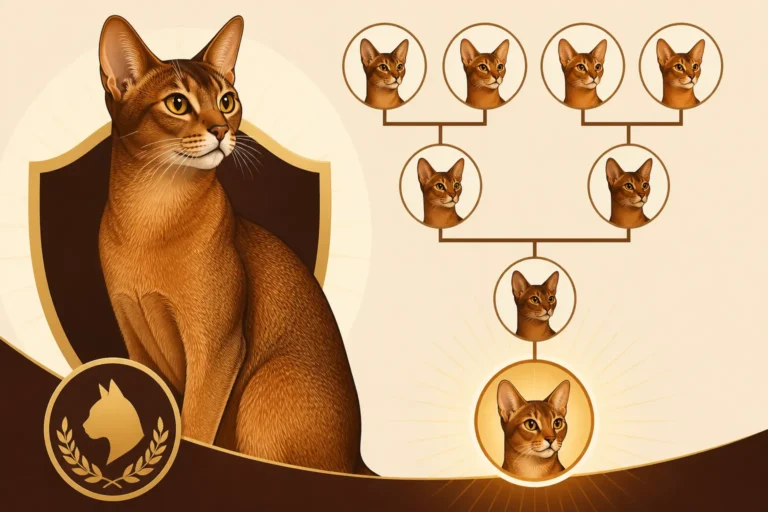
Part of being a pedigreed Abyssinian means having a verifiable lineage registered with a reputable cat association. This pedigree tracks the cat's ancestors, confirming its purebred status and helping breeders avoid issues like inbreeding. Breeders who focus on "rare" often skirt these registration requirements. They might tell you that "papers aren't important for a pet," or that "registration costs extra."
However, legitimate registration is a hallmark of a responsible breeding program. It demonstrates that the breeder cares about the integrity of the breed and maintains accurate records. If a "rare" Abyssinian comes without proper registration, you have no real proof of its breed, age, or parentage, making any health claims impossible to verify. If a breeder refuses to show you the lineage or registration details, consider it a serious warning.
Finding a Reputable Abyssinian Breeder
Instead of getting drawn in by the allure of "rare" claims, your focus should always be on finding a reputable Abyssinian breeder. These breeders prioritize health, temperament, and adherence to the breed standard above all else.
Research and Questions Are Key
Start by researching breed clubs and reputable registries. These organizations often have lists of member breeders who adhere to their codes of ethics. When you contact a breeder, don't be afraid to ask lots of questions. A good breeder wants you to be informed and will welcome your inquiries. Ask about their breeding philosophy, the parents' health test results (specifically for PK Deficiency and PRA-rdAc), and what kind of socialization the kittens receive.
You'll also want to ask about their contract terms, including any health guarantees. Knowing What an Abyssinian Breeder Contract Restricts can give you an idea of the professionalism and commitment of the breeder. For example, many contracts will require you to spay or neuter your pet-quality kitten. This is a sign of a responsible breeder protecting their lines and preventing accidental litters.
Visit the Cattery (If Possible)
If geographically feasible, try to visit the cattery in person. Observe the living conditions of the cats, how they interact with the breeder, and their overall demeanor. Are they clean, outgoing, and healthy-looking? Do the kittens seem well-socialized and confident? A reputable breeder will be proud to show off their animals and their environment.
If an in-person visit isn't possible, ask for video calls or extensive photos. Be wary of breeders who only offer to meet you in a neutral location or who are hesitant to show you where the cats are raised. This can sometimes be a sign of a high-volume operation or poor living conditions, neither of which bodes well for the health and well-being of the kittens.
Prioritizing Health and Temperament
Ultimately, what you want in an Abyssinian is a healthy, happy, and well-adjusted companion. These traits are far more valuable than any perceived "rarity." A kitten from a reputable breeder, even if it's one of the more common ruddy or sorrel colors, will be a joy to live with. They'll have been screened for genetic diseases, received proper veterinary care, and been socialized to ensure they become loving members of your family.
Consider what happens if you bypass a reputable breeder for a "rare" kitten that later develops significant health problems. The emotional and financial toll can be immense. For instance, if you end up with a cat facing chronic issues, pet insurance providers like Healthy Paws might help manage the costs, but prevention through careful breeding is always the first and best line of defense. Investing in a properly bred Abyssinian from the start is an investment in a long, happy, and healthy life together.
When preparing for your new Abyssinian, think about what they truly need. High-quality food will fuel their active lifestyle and support their health. Remember, a thriving Abyssinian isn't defined by a “rare” label, but by its vitality and loving personality, which come from responsible breeding and care. If you encounter a breeder who balks at sharing test results or pedigree information, remember that What to Do If an Abyssinian Breeder Refuses Test Results is to walk away, no matter how tempting the “rare” claim might sound.
Disclaimer
This article is for general informational purposes only and does not constitute professional advice. Laws, prices and regulations vary by location and change over time. Consult a qualified professional for guidance on your specific situation.