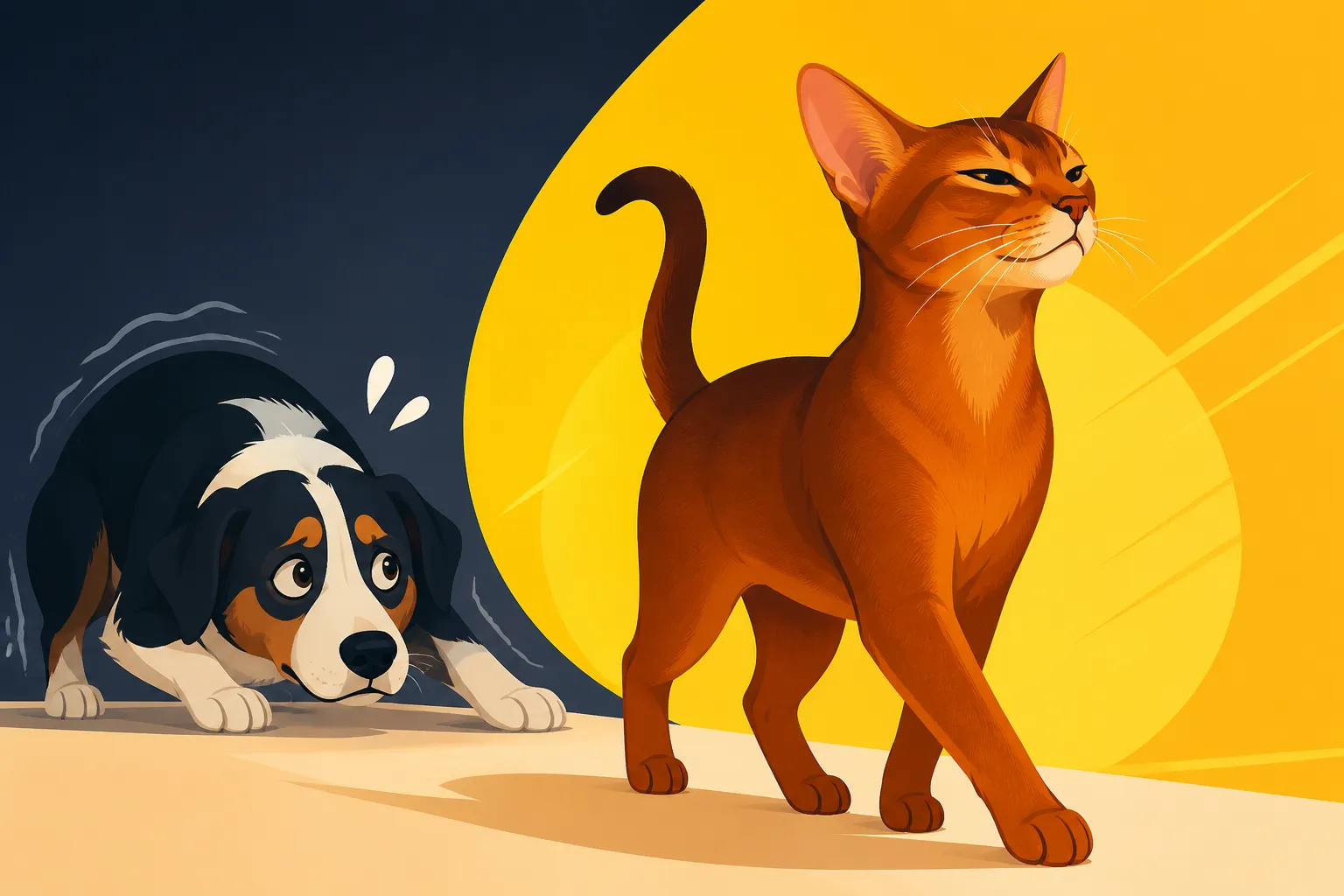
Why an Abyssinian Ignores a Nervous Dog
It can be incredibly puzzling, and honestly, a little disheartening, when you bring a new dog, especially a nervous one, into a home with an active, confident Abyssinian. You expect some sort of interaction, a chase, maybe even a standoff, but instead, your Abyssinian acts as if the dog is entirely invisible. This guide is here to unravel why your Abyssinian might seem to ignore a nervous dog, what that behavior really means, and how you can gently encourage a more positive, if not always playful, relationship between them.
Understanding the Abyssinian's Unique Social Dynamics
Abyssinians are famously extroverted and engaged with their environment and their people. They're not shrinking violets. So when they seem to give a nervous new dog the cold shoulder, it's easy to assume they're being aloof or even rude. But the reality is often far more nuanced and deeply rooted in their intrinsic personality traits.
The Abyssinian's Natural Confidence and Self-Assurance
Your Abyssinian's apparent disinterest isn't a sign of indifference as much as it is a manifestation of their inherent confidence. These cats are not easily rattled. They carry themselves with an air of self-possession, often acting as if the entire household revolves around their energetic orbits. This isn't to say they're arrogant, but rather that they have a very strong sense of self and their place in their territory. They don't typically feel the need to react defensively or aggressively to something that doesn't present an immediate threat or an interesting challenge.
Think about it this way: a less confident cat might feel intimidated by a new, nervous dog, even if the dog is cowering. That cat might hiss, hide, or try to assert dominance through aggression born of fear. An Abyssinian, on the other hand, often assesses the situation with a cooler, more calculating eye. They process the dog's jitters, its averted gaze, its lowered posture, and often conclude, "This isn't a threat to me, nor is it offering an exciting game." So, they simply… don't engage. Their high self-esteem means they don't feel compelled to acknowledge something that isn't directly demanding their attention in a way they understand or appreciate.
Reading the Abyssinian's "Ignoring" Behavior
What looks like "ignoring" to us is often, for an Abyssinian, a sophisticated form of observation and processing. They're not truly ignoring; they're monitoring. An Abyssinian will typically observe a new animal from a safe vantage point, perhaps a high cat tree or a bookshelf, without making direct eye contact or overt gestures. This allows them to gather information without committing to an interaction. They're taking stock of the dog's movements, its sounds, its scent, and its overall demeanor.
A nervous dog, by its very nature, might not offer the kind of clear, assertive signals that would prompt an Abyssinian to engage. Instead of a playful bark or a wagging tail that might pique an Abyssinian's curiosity for a chase, a nervous dog might be retreating, whining softly, or trembling. These signals don't translate into anything interesting for an Abyssinian, who thrives on dynamic interaction. The Abyssinian might interpret the dog's withdrawn state as a lack of interest in their typical playful antics, or simply as a non-event. It's less about disliking the dog and more about filing it under "low priority engagement."
Why a Nervous Dog Doesn't Engage the Abyssinian's Play Drive
Abyssinians are renowned for their boundless energy and their distinct way of playing. This often creates a mismatch with a nervous dog, whose natural instincts are to avoid confrontation and seek comfort rather than participate in boisterous games.
The High-Energy Play Style of an Abyssinian
If you've ever owned an Abyssinian, you know their play isn't for the faint of heart. These are cats that love to run, jump, climb, and stalk. They engage in simulated hunts with incredible intensity, often involving aerial acrobatics and lightning-fast sprints. They're looking for an interactive partner who can keep up, who will chase them back, and who enjoys a good game of "tag, you're it." This kind of play is stimulating for them, mentally and physically.
A nervous dog, however, is likely the exact opposite of an ideal playmate for an Abyssinian. Its natural inclination is to avoid sudden movements, loud noises, and direct engagement, all of which are hallmarks of an Abyssinian's play. When your Aby attempts a playful pounce or a quick dart-and-hide maneuver, a nervous dog might flinch, retreat further, or even whine in fear. The Abyssinian picks up on this lack of enthusiastic participation very quickly. They learn that this particular creature isn't a play partner, and so they divert their energy elsewhere. It's not a personal snub; it's a pragmatic assessment that the dog isn't going to provide the kind of stimulating interaction they crave. You might find that Which Dog Breeds Cope With an Abyssinian's Pace offers insight into more suitable companions for your active cat.
The Disconnect in Communication Signals
One of the biggest hurdles in inter-species relationships is the vast difference in communication. Dogs and cats have entirely different body language repertoires, and these can easily be misinterpreted, especially when one animal is already feeling vulnerable. A nervous dog will often display a range of appeasement gestures: a lowered head, averted eyes, lip licking, yawning, tucking its tail, or even rolling onto its back. These are clear signals in the canine world that say, "I mean no harm, please don't hurt me."
An Abyssinian, on the other hand, doesn't speak "dog." They might interpret a direct, prolonged stare as a challenge, but a constantly averted gaze or a dog rolling over might not register as anything particularly significant. In fact, the Abyssinian's own confident, direct gaze and upright posture, which they use to assess their environment, could inadvertently escalate the dog's anxiety. The Aby isn't trying to be mean; they're just being themselves. But their self-assured demeanor, coupled with the dog's fear-based communication, creates a gap that leads to the "ignoring" behavior. The Abyssinian sees no clear invitation for play or meaningful interaction, and so they simply move on. For more on how these two species navigate their space, check out How an Abyssinian and a Dog Work Out Their Ranking.
Strategies for Fostering a More Interactive (Yet Safe) Relationship
While it's unrealistic to expect a nervous dog and an Abyssinian to become best friends overnight, you can absolutely foster an environment where they co-exist peacefully and perhaps even develop a low-key bond. The key is patience, consistency, and understanding their individual needs.
Gradual Introduction and Supervised Interactions
Even if your Abyssinian seems to ignore the nervous dog, never assume they'll just "sort it out." A slow, deliberate introduction process is crucial for preventing negative associations and ensuring safety. Start by keeping them completely separate, allowing them to acclimate to each other's scents first. Swap bedding or toys between their spaces. Once they seem calm with each other's scent, move to brief, supervised visual introductions. Keep the nervous dog on a leash and muzzle, if necessary, and ensure your Abyssinian has an easy escape route.
These initial meetings should be short and positive. Offer high-value treats to both animals separately while they are in sight of each other. The goal here isn't direct interaction but simply building a positive association with each other's presence. As they become more comfortable, you can gradually increase the duration and frequency of these supervised sessions. Never force interaction, and always end on a positive note, even if it's just a few minutes of calm presence. This methodical approach minimizes stress for both animals and helps them learn that the other's presence isn't something to fear or ignore out of caution. The principles outlined in How to Introduce a Second Cat to an Abyssinian can be adapted for dog-cat introductions, focusing on scent, sight, and slow integration.
Creating Safe Spaces for Both Animals
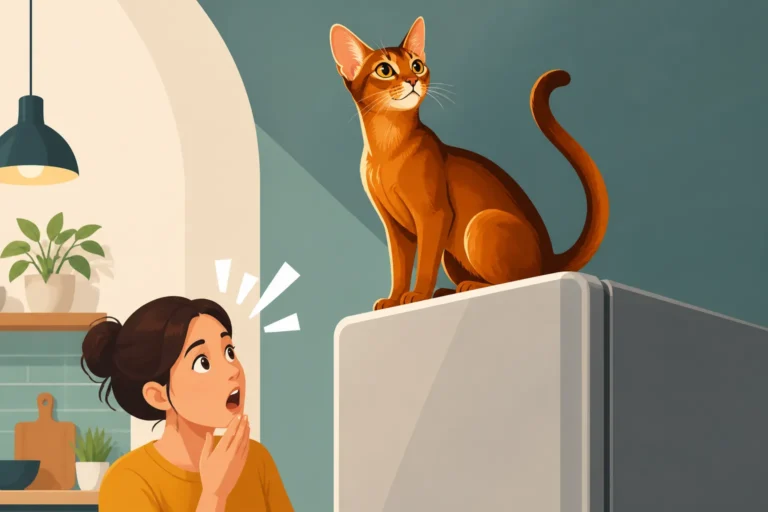
One of the most effective ways to reduce tension and encourage peaceful co-existence is to provide designated safe spaces for both your Abyssinian and your nervous dog. For your Abyssinian, this means ample vertical territory. Abyssinians love to climb and observe from on high. Investing in tall, sturdy cat trees, wall-mounted shelves, or even just clearing off the tops of bookcases can provide your Aby with a sense of security and control. From these elevated perches, they can watch the dog without feeling threatened, and they can easily retreat if they feel overwhelmed. You can find excellent multi-level cat trees and wall shelves on Amazon that cater to an Abyssinian's love for height. An Abyssinian Needs Height More Than It Needs Floor and Which Cat Tree Height Suits an Abyssinian both highlight the importance of vertical space for this breed.
For the nervous dog, a safe space might be a cozy crate, a designated room, or a comfortable bed in a quiet corner where it won't be disturbed. This gives the dog a sanctuary where it can relax and feel protected. Having these retreats helps prevent stressful encounters and allows both animals to decompress, reducing the overall pressure to interact. Knowing they can escape to safety reduces the dog's anxiety, which in turn might make the Abyssinian less inclined to "ignore" out of necessity and more open to casual observation.
Encouraging Positive Associations Through Shared Experiences
Even if they're not playing together, you can help your Abyssinian and nervous dog associate each other with positive experiences. One excellent method is parallel feeding. Set up their food bowls in the same room, but far enough apart that neither feels threatened. As they get more comfortable, you can gradually move the bowls closer together, always ensuring they can eat without stress. This teaches them that the other's presence means good things (food!). For budgeting, consider What an Abyssinian Costs to Feed Each Month.
Another approach is to engage your Abyssinian in interactive play while the dog is calmly present in the room, perhaps crated or on a leash. Use a wand toy from Amazon to get your Aby jumping and chasing, demonstrating that exciting things happen even when the dog is around. Occasionally, toss a high-value treat to the dog during these sessions. The idea is to build a relaxed atmosphere where both animals learn to associate each other's presence with positive, non-threatening events. Over time, this can chip away at the dog's nervousness and transform the Abyssinian's "ignoring" into a comfortable, peaceful co-existence. How an Abyssinian Behaves With Children and Dogs and Which Treats an Abyssinian Will Actually Work For offer further insights into fostering good relationships and motivation.
When "Ignoring" Becomes a Problem or a Sign
While an Abyssinian "ignoring" a nervous dog can be a temporary stage, it's crucial to understand that it can also mask underlying issues or signal a need for intervention. It's your job as their human to constantly monitor their interactions and well-being.
Monitoring for Subtle Signs of Stress or Conflict
Even if there are no overt fights, "ignoring" can sometimes be a fragile truce. You need to become a detective of subtle body language. For your Abyssinian, look for signs that aren't typical for their confident personality. This might include excessive grooming, flattened ears, a tail swishing low and rapidly, or a stiff body posture when the dog is near. Are they constantly choosing high perches that remove them from the dog's presence entirely, even when you might expect them to be on your lap? These could be indicators of chronic stress, even if they never directly engage with the dog. How an Abyssinian Shows It Is Overstimulated can help you recognize subtle behavioral shifts.
For the dog, continued or escalating nervousness is a major red flag. Is the dog refusing to eat, hiding more than usual, showing signs of stomach upset, or engaging in compulsive behaviors like excessive licking? A nervous dog that is constantly retreating or tense is living in a state of chronic stress, which is detrimental to its health and well-being. An Abyssinian's continued "ignoring" might be their way of saying, "I'm staying out of this, but it's making me uncomfortable."
Seeking Professional Help for Persistent Issues
If you find that despite your best efforts at gradual introductions and creating safe spaces, the dynamic isn't improving, or if either animal shows persistent signs of stress, it's time to call in the professionals. A certified animal behaviorist, or a dog trainer with experience in inter-species dynamics, can be an invaluable resource. They can observe your animals in their environment, decode their nuanced body language, and offer tailored strategies that go beyond general advice.
Sometimes, the "ignoring" behavior might be rooted in a more complex behavioral issue for either the cat or the dog, or a specific trigger that you haven't identified. A professional can help identify these underlying factors and develop a comprehensive plan to mitigate stress, build confidence in the nervous dog, and potentially encourage more positive, though still respectful, interaction from your Abyssinian. Don't wait for a full-blown conflict before seeking help. Early intervention can prevent escalation and significantly improve the quality of life for both your beloved pets. If you notice any sudden, concerning changes in your Abyssinian's usual energy or demeanor, particularly if they become unusually still or withdrawn, remember that Why a Suddenly Still Abyssinian Needs a Vet might offer crucial insights.
It's a process, and sometimes the best outcome is simply a peaceful co-existence where both animals feel safe and respected in their shared home.
Here's a quick comparison of common body language signals and how they might be interpreted:
| Signal | Dog Interpretation (Nervous Dog) | Abyssinian Interpretation (Typical Response) | Potential Misinterpretation |
|---|---|---|---|
| Averted Gaze/Head Turn | Appeasement, "I mean no harm." | Disinterest, lack of challenge, non-threat. | Abyssinian may ignore as not a play invitation. |
| Lowered Body/Cowering | Fear, submission, seeking safety. | Non-threat, not an engaging playmate. | Abyssinian may not react, further isolating dog. |
| Tail Wag (low & slow) | Uncertainty, appeasement, nervousness. | Not a clear threat or play invitation. | Abyssinian may continue to ignore or observe. |
| Lip Licking/Yawning | Stress, calming signal, appeasement. | No direct meaning, typically ignored. | Abyssinian sees no reason to engage. |
| Abyssinian Direct Gaze | Intense, potentially threatening (can heighten fear). | Assessment, observation, typical confident posture. | Dog feels more threatened, retreats further. |
| Abyssinian Elevated Perch | "Safe zone," non-engagement, aloofness. | Security, observation, dominance (without aggression). | Dog perceives distance, continues nervousness. |
Disclaimer
This article is for general informational purposes only and does not constitute professional advice. Laws, prices and regulations vary by location and change over time. Consult a qualified professional for guidance on your specific situation.