Where the Abyssinian Ranks Among CFA Breeds
Abyssinian cat rankings in the Cat Fanciers Association reflect new registrations and breeding activity trends annually.
Is this the right one for you?
Origins and temperament, size and coat, what living with one is actually like, and how it compares to the breeds people weigh against it.
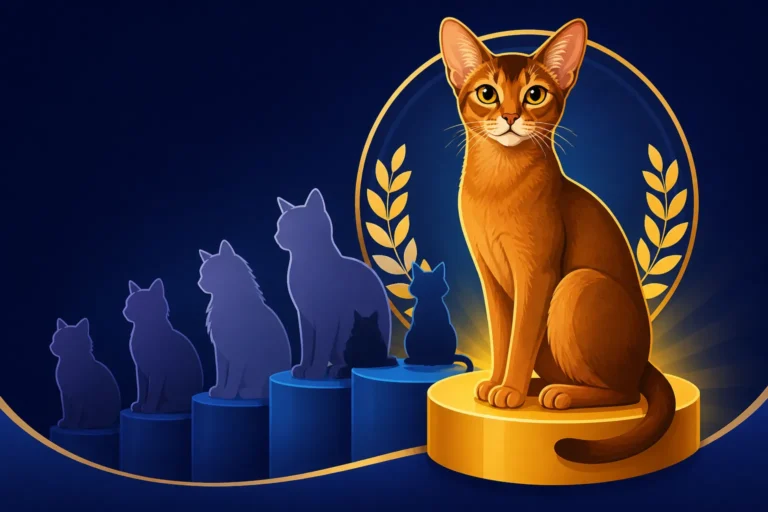
Abyssinian cat rankings in the Cat Fanciers Association reflect new registrations and breeding activity trends annually.
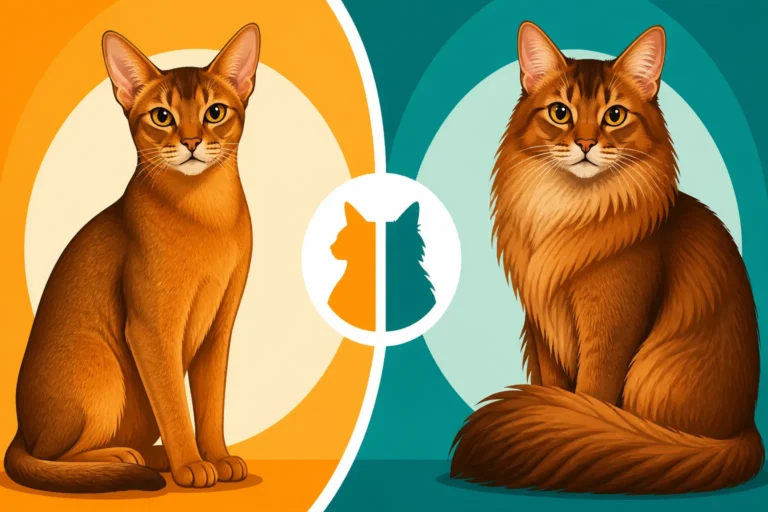
Abyssinian and Somali cat breeds share genetic roots, with the Somali originating from a recessive long-hair gene.
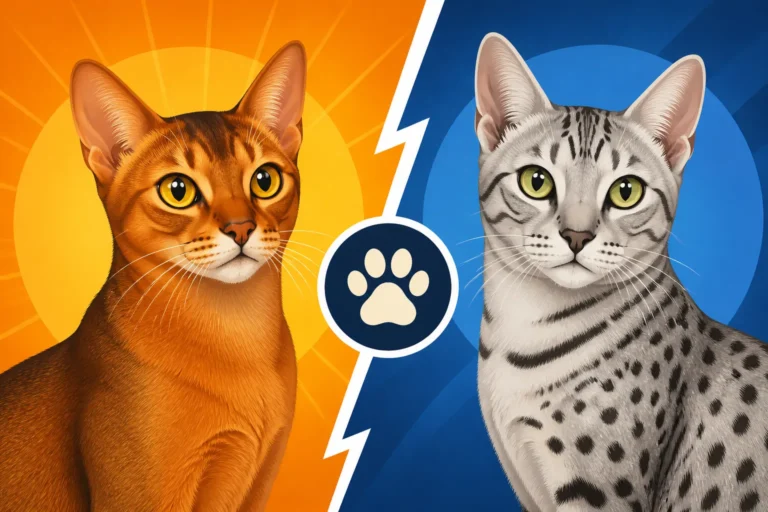
Abyssinian and Egyptian Mau coat patterns, featuring ticked agouti hair and natural spots, distinguish the two distinct cat breeds.
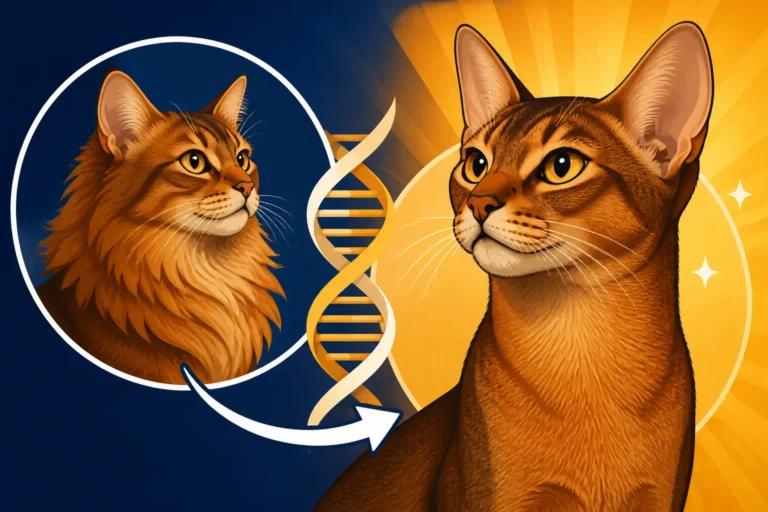
The recessive long hair gene in Abyssinian cats persists through generations, causing fluffy kittens via Mendelian inheritance.
The history of the Somali cat breed explains how recessive genes created longhaired kittens in Abyssinian litters.
Recessive long hair genes in Abyssinian litters created fluffy kittens that became the foundation of the Somali cat breed.
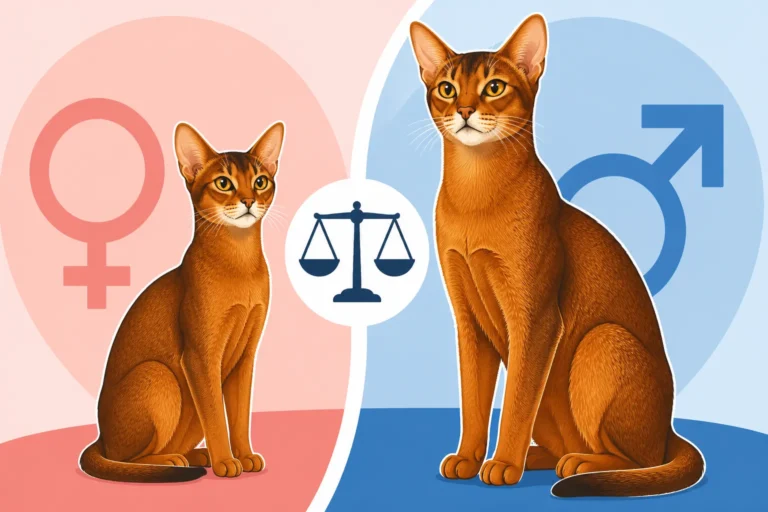
Male and female Abyssinian size differences include typical weight ranges and lithe, muscular builds for both sexes.
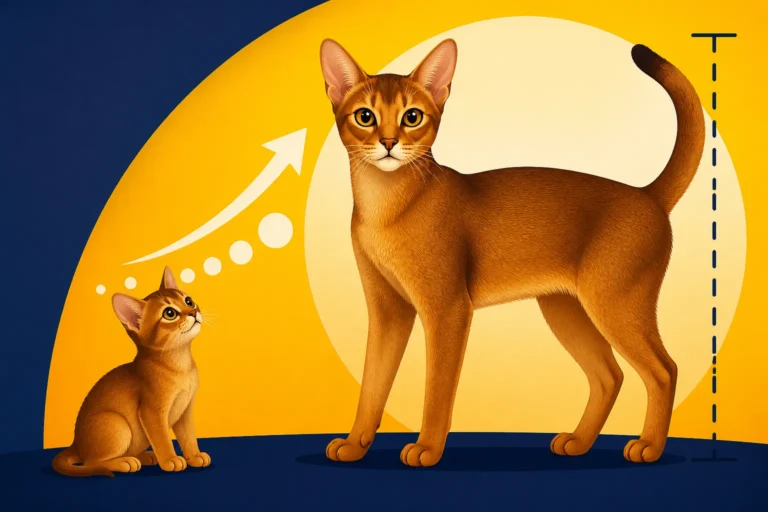
Adult Abyssinian cat size, including weight ranges and body frame details, explains how this medium athletic breed grows.
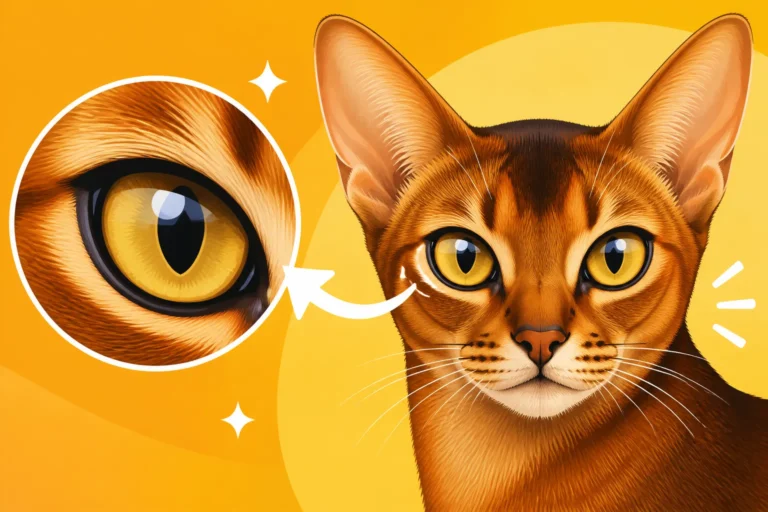
Genetics and concentrated melanin create the distinct dark eye rim outline that defines the Abyssinian breed standard.
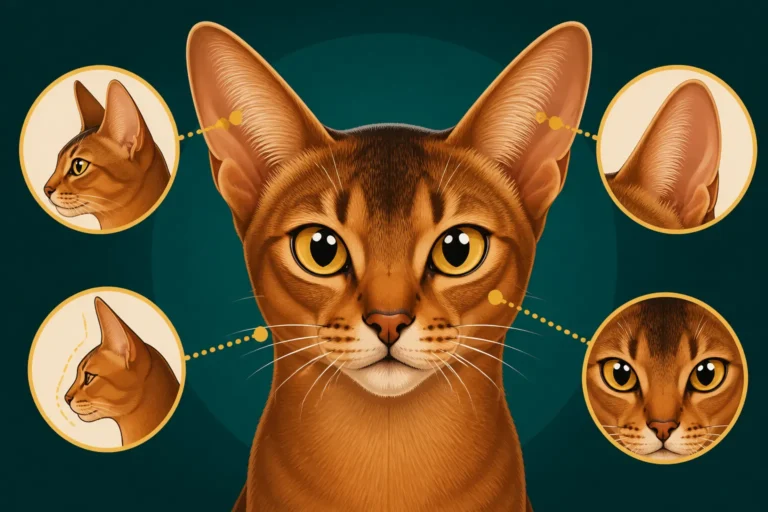
Abyssinian head shape and ear standards explained through a modified wedge, smooth contours, and gentle profile transitions.