What Harrison Weir Wrote About the Abyssinian
When you delve into the fascinating history of the Abyssinian cat, you often encounter a frustrating lack of definitive records, especially when trying to trace its earliest days. Many breed enthusiasts grapple with fragmented information, old anecdotes, and a longing for clear historical accounts. This guide aims to pull back the curtain on one of the foundational voices in the early cat fancy, Harrison Weir, and what his influential writings reveal about the Abyssinian at a time when the breed was just beginning to capture public attention.
The Architect of Cat Fancy: Harrison Weir and His Landmark Work
Harrison Weir is often hailed as the "father of the cat fancy," and for good reason. His passion for animals and his meticulous approach to documentation laid much of the groundwork for how we appreciate and categorize pedigree cats today. Understanding his role is key to appreciating his early insights into the Abyssinian.
Who Was Harrison Weir?
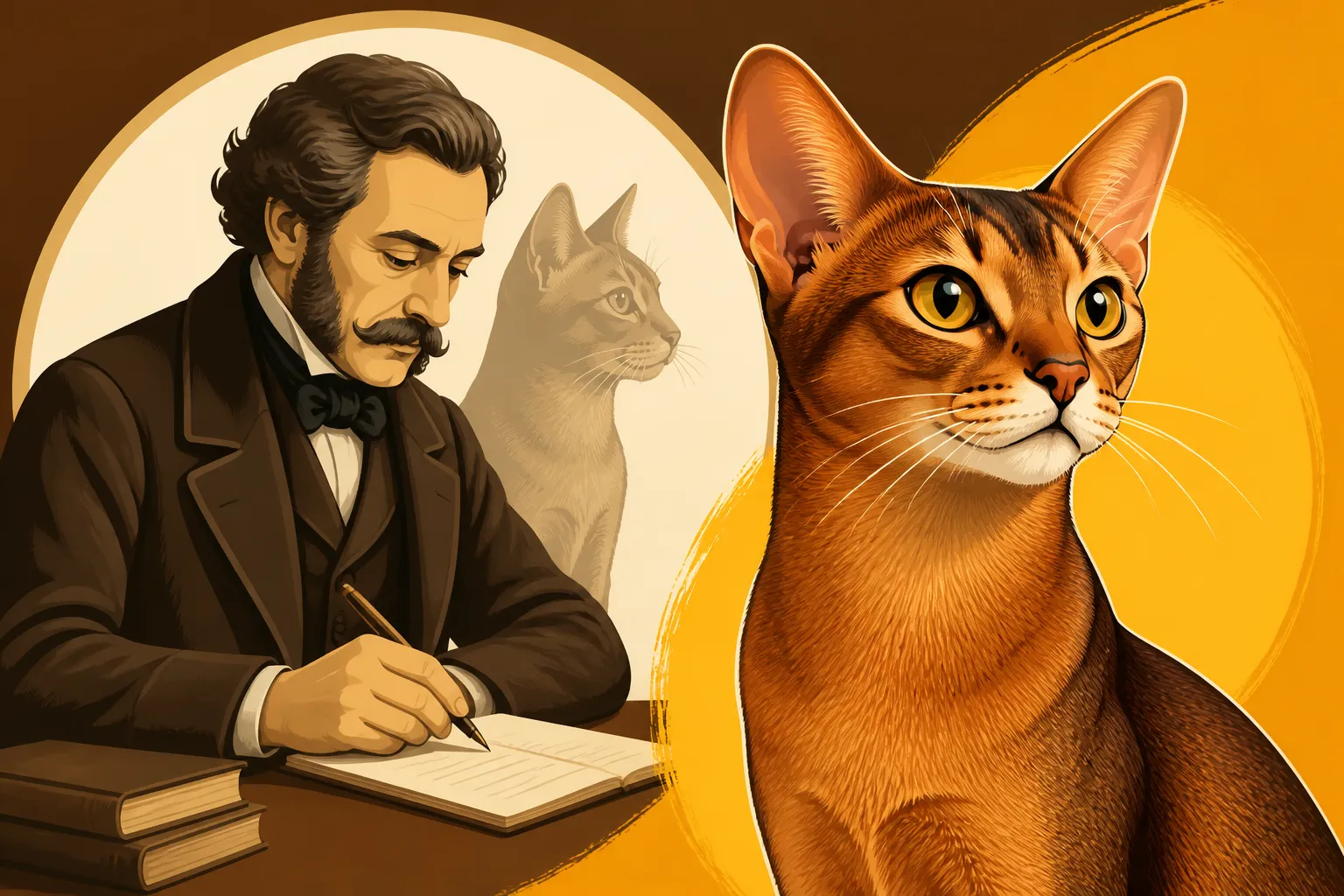
Born in England in 1824, Harrison William Weir was a truly remarkable figure—an artist, an illustrator, and an avid animal fancier. While he's perhaps most famously associated with creating the world's first organized cat show at the Crystal Palace in 1871, his influence extended far beyond that single event. Weir spent decades advocating for the humane treatment and systematic breeding of domestic animals. He believed that all creatures, including cats, deserved proper recognition and care, and he applied his keen eye for detail to both their artistic depiction and their classification. His vision was to elevate the common house cat to a revered companion, much like dogs had been for centuries. This foundational work meant that when he wrote about a particular breed, it carried significant weight and shaped public perception for generations.
The Importance of "Our Cats and All About Them"
In 1889, Weir published his magnum opus, "Our Cats and All About Them: Their Varieties, Habits, and for Love, Amateur, and Exhibition, Full Training and Management." This book was nothing short of a revelation at the time. It wasn't just a collection of pretty pictures; it was the first comprehensive guide to domestic cats, covering everything from their history and genetics to care, showing, and the then-emerging concept of distinct breeds. Before this book, information on cats was scattered, anecdotal, and often based on superstition rather than scientific observation. Weir's book sought to standardize descriptions, encourage ethical breeding practices, and provide practical advice to cat owners. It became the essential reference for anyone interested in cats, setting the precedent for all future breed standards and cat care guides. Many modern breed enthusiasts still refer to Weir's insights, seeing them as a window into the nascent stages of feline appreciation and organized cat breeding.
Weir's Perspective on Early Cat Breeds
Weir approached the categorization of cat breeds with the enthusiasm of a true pioneer. He sought to identify consistent traits and establish criteria for what constituted a "breed," a concept still in its infancy for cats. He was particularly interested in distinguishing between long-haired and short-haired varieties, and then within those categories, noting differences in color, coat pattern, and body type. His descriptions, while sometimes less precise than modern genetic definitions, were based on careful observation of cats presented at shows and those he encountered in his extensive research. He often included illustrations, many of them his own, which helped solidify the visual representation of these early breeds. His work was about creating order out of what was then a rather chaotic landscape of feline diversity, attempting to give each distinct type its due recognition and a path for controlled breeding. It’s this meticulous approach that makes his notes on the Abyssinian so invaluable.
Weir's Description of the Abyssinian Cat
When Harrison Weir turned his attention to the Abyssinian, he was describing a cat that was still very much a rarity in England, shrouded in a fascinating, if somewhat mythical, origin story. His observations offer a snapshot of what was known and believed about these cats in the late 19th century.
The "Abyssinian" or "Ticked Cat"
In "Our Cats and All About Them," Weir refers to the Abyssinian primarily as the "Abyssinian or Ticked Cat." This dual naming is significant, as it highlights both the exotic, rumored origin (from Abyssinia, modern-day Ethiopia) and its most striking physical characteristic: the ticked coat. At this point, the precise history of the breed was still largely a matter of speculation. The famous story of Zula, brought back from the Abyssinian War in 1868, was certainly circulating, and Weir likely included it in his broader understanding, even if he couldn't definitively link it to the cats he observed.
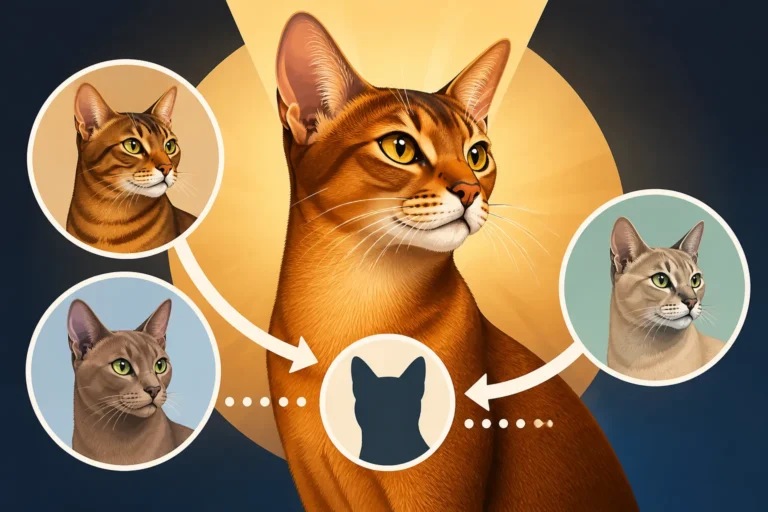
What's clear is that the ticking was the defining feature. Weir was fascinated by this unique pattern, where each individual hair has bands of color, giving the coat a shimmering, iridescent quality without distinct stripes or spots. He saw it as a hallmark of the breed, a trait that clearly set it apart from the more common tabby patterns. The name "Ticked Cat" really emphasized this visual distinction, making it accessible even to those unfamiliar with the breed's purported exotic origins. It's a testament to the coat's distinctiveness that it earned such a direct descriptive moniker from the very founder of the cat fancy. You can learn more about why the breed was once called Why the Abyssinian Was Once Called the Ticked Cat.
Physical Characteristics as Noted by Weir
Weir's descriptions of the Abyssinian's physical traits, especially concerning its coat and color, are quite detailed for his time. He meticulously recorded what he saw, trying to capture the essence of this unusual cat.
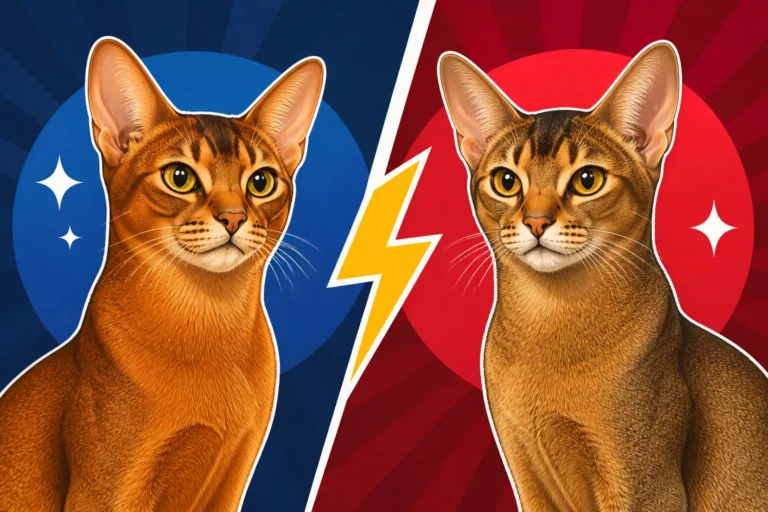
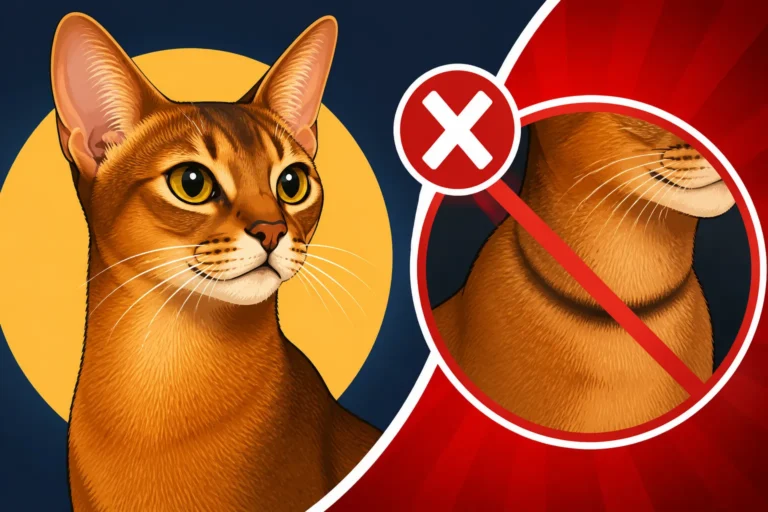
He described the "Abyssinian" as a medium-sized cat with a distinct, short, close-lying coat. The primary color he noted was what we now call Ruddy or Usual: a warm, golden-brown ticked with black. He was particularly impressed by the way the ticking created a vibrant, almost wild appearance, reminiscent of a rabbit or a wild hare. He emphasized the absence of bars, stripes, or spots on the body, which was crucial for distinguishing it from other tabby patterns. He noted the distinctive dark bands on each hair shaft, culminating in a darker tip, giving the coat a rich depth of color.
Beyond the coat, Weir mentioned their overall elegant and graceful build, with a lithe body and long, slender legs that made them appear poised and active. While his descriptions weren't as prescriptive as modern breed standards which outline precise head shapes, ear sets, and eye colors, he certainly appreciated the breed's general conformation. He observed their expressive, almond-shaped eyes, often described as green or gold, with a dark rim that enhanced their intensity. He saw the Abyssinian as a cat of considerable beauty and charm, a view that continues to resonate with owners today. For a deeper dive into the breed's official appearance, check out What an Abyssinian Looks Like Against the Show Standard.
Early Temperament Observations
While Weir's book focused heavily on physical characteristics for breed identification, he didn't ignore the Abyssinian's temperament, though his notes are less extensive than modern behavioral profiles. He described these cats as intelligent, active, and playful. He noted their lively nature and quick movements, implying a cat that was always on the go, exploring its surroundings with boundless curiosity. This aligns remarkably well with what we know about the Abyssinian today—they are indeed often called the "clowns of the cat world" for their ceaseless energy and inquisitive personalities.
Weir also hinted at their affectionate, yet not overly "lap cat," tendencies. They were admired for their companionship and engaging demeanor, rather than being simply decorative pets. This early recognition of their dynamic personality suggests that even in the 19th century, Abyssinian owners were captivated by their spirited character, which was a refreshing change from the more sedate feline companions of the era. The very essence of the Abyssinian as a highly interactive and engaging companion seems to have been evident from its earliest days in the organized cat fancy.
Challenges and Limitations of Weir's Account
While Harrison Weir’s contribution to the early understanding of the Abyssinian is immense, it's also important to view his writings through a historical lens. His accounts, while pioneering, came with certain limitations inherent to the scientific and genetic knowledge of his time.
The Missing Link to Zula
One of the most enduring and romanticized stories in Abyssinian lore is that of Zula, a cat reputedly brought back to England from Abyssinia by Captain Barrett-Lennard at the end of the Abyssinian War in 1868. This tale often places Zula as the direct ancestor of the modern Abyssinian. Harrison Weir himself, in "Our Cats and All About Them," references a cat "captured at the close of the Abyssinian war" as the progenitor of the breed.
However, modern historical and genetic research has largely debunked this direct lineage. While Zula almost certainly existed and may have been one of the first ticked cats exhibited in England, there is no verifiable pedigree that connects her to the Abyssinians being bred just a few decades later. Records from the 1870s and 1880s are notoriously sparse and often contradictory, making it impossible to establish a clear line of descent. Weir's belief in this origin story was based on the popular narratives of his day and the desire to give the breed a dramatic, exotic beginning, which was common for many emerging breeds. It’s a testament to the power of a good story, even if the strict genetic proof is absent. To truly understand this fascinating disconnect, it's worth exploring Why the Link Between Zula and Modern Abyssinians Is Broken.
Speculations on Origin vs. Genetic Reality
Weir, like many of his contemporaries, relied heavily on visual similarities and anecdotal evidence to speculate on the origins of cat breeds. His suggestion that the Abyssinian hailed directly from Abyssinia was a logical leap given the breed's name and the Zula story. He also noted their resemblance to ancient Egyptian cat depictions, which further fueled theories of an ancient, noble lineage, as covered in Why the Abyssinian Resembles Ancient Egyptian Art.
However, modern genetic studies paint a different picture entirely. Instead of a direct African origin, DNA research strongly suggests that the Abyssinian, like many domestic cat breeds, has its genetic roots closer to the coast of the Indian Ocean and Southeast Asia. The ticked pattern, while striking, is not unique to a single geographic region. It appears in various landrace cat populations across Asia. Weir's speculations were the best he could do with the tools available, but they highlight the vast difference between early theories based on phenotype and later scientific conclusions driven by genetic analysis. For the full story, check out What Genetic Studies Say About the Abyssinian's Origin.
The Impact of Weir's Work on Later Breed Standards
Despite the limitations, Harrison Weir's writings were undeniably foundational. His detailed descriptions of the Abyssinian's ticked coat and general conformation became the initial touchstones for what breeders and judges looked for. Even if he couldn't trace their exact ancestry, he recognized and articulated the key characteristics that defined the breed.
His work directly influenced the earliest written breed standards, providing a framework for what was considered desirable and what constituted a fault. When the first official breed standards were drafted, they often echoed Weir's observations about the importance of the clear, ticked coat, the lack of barring, and the overall elegant appearance. While these standards evolved over time with greater genetic understanding and breeder consensus, Weir's initial efforts provided the crucial starting point. His book acted as a historical anchor, allowing later generations to understand the breed's development and see how traits were valued from its very inception.
Here's a simplified comparison of some of Weir's observations versus modern breed standard elements:
| Characteristic | Harrison Weir's Observation (circa 1889) | Modern Breed Standard Element (General) |
|---|---|---|
| Coat Pattern | "Ticked, without stripes or spots." Emphasized individual hair banding. | Agouti ticking, clear body, no barring/stripes on legs or tail, dark tail tip. |
| Primary Color | Noted a "reddish-brown" or "golden brown" (Ruddy/Usual). | Ruddy (Usual), Sorrel (Red), Blue, Fawn. Silver variants also recognized in some associations. |
| Body Type | Elegant, graceful, lithe, medium-sized, active. | Medium build, lithe, muscular, well-balanced, "foreign" type (graceful, not cobby), long legs. |
| Head Shape | Generally described as wedge-shaped, large ears. | Modified wedge, slightly rounded contours, medium large ears, broad at base. |
| Eyes | Expressive, almond-shaped, often green or gold, with dark rim. | Almond-shaped, large, brilliant, expressive; gold or green, darker rim preferred. |
| Origin | Believed to be from Abyssinia, linked to Zula and ancient Egyptian cats. | Genetic evidence points to Southeast Asia/Indian Ocean, not Abyssinia. |
The Legacy of Weir's Words for Abyssinian Enthusiasts Today
Reading Harrison Weir's work today isn't just a dry historical exercise; it's a way to connect with the very roots of the Abyssinian breed and the cat fancy itself. His words resonate with a passion that continues to inspire.
Appreciating Historical Records
For anyone deeply involved with Abyssinians, or indeed any pedigree cat breed, delving into historical records like Weir's is incredibly enriching. It provides context, illustrating how our understanding of breeds has evolved and how certain characteristics have been valued over time. It helps us see past the immediate present and appreciate the journey these cats have taken to become the beloved companions they are today.
Moreover, these records offer a unique perspective on the historical perception of cats in society. Weir wasn't just describing a cat; he was championing its worth, advocating for its recognition and proper care at a time when cats were often dismissed as mere mousers. Reading his passionate prose can reignite our own appreciation for the beauty and intelligence of our feline friends. It's a reminder that even the most established breeds have humble, often debated, beginnings. You can always gain a better understanding of these early days by looking at posts like The Abyssinian Is Probably Not From Abyssinia.
Bridging the Past and Present
Harrison Weir's descriptions, despite their historical context and occasional inaccuracies by modern standards, serve as a crucial bridge between the Abyssinian's past and its present. When we look at a modern Abyssinian, with its striking ticked coat and athletic build, we can still see echoes of the "Ticked Cat" that so captivated Weir over a century ago. The core essence—the unique coat, the intelligent eyes, the active demeanor—has endured.
His writings help us appreciate the meticulous work of generations of breeders who have refined and preserved these traits. While breeders today use advanced genetic tests, like those found through resources from trusted partners like Chewy, to ensure healthy lines (e.g., for Pyruvate Kinase Deficiency Is the Abyssinian's Best Known Test or PRA-rdAc Takes an Abyssinian's Sight by Five), they are still building upon the foundations laid by early pioneers like Weir. We can trace the continuity of certain ideals, even as scientific understanding and breeding practices have become vastly more sophisticated. This continuity is a testament to the enduring appeal of the Abyssinian and the vision of those who first recognized its special place in the feline world.
It's truly remarkable how much of what Weir noted still holds true for the Abyssinian cat we know and love today. While his resources were limited, his dedication set a precedent for detailed observation that continues to guide responsible breeding and appreciation of this dynamic breed.
Disclaimer
This article is for general informational purposes only and does not constitute professional advice. Laws, prices and regulations vary by location and change over time. Consult a qualified professional for guidance on your specific situation.