Which Cats the First Abyssinians Were Crossed With
It's incredibly frustrating when you're trying to trace the roots of your beloved Abyssinian, only to hit a wall of conflicting stories and hazy historical records. Understanding the very earliest days of the Abyssinian breed, especially which cats were involved in their initial development, can feel like piecing together a faded photograph. This guide aims to clear up some of that historical fog, exploring the theories and evidence surrounding the foundational crosses that shaped the Abyssinian we know and adore today.
The Murky Waters of Early Abyssinian History
When you delve into the origins of many cat breeds, especially those reaching back into the 19th century, you quickly realize that detailed, verifiable records are a luxury we rarely have. The Abyssinian is no exception; its history is a charming blend of myth, speculation, and fragmented evidence. Unlike modern breeding programs with meticulous DNA tracking and studbook entries from birth, early cat fancy was far more informal, driven by enthusiasts often without scientific rigor. This lack of precise documentation is a huge hurdle when trying to identify the exact cats involved in the breed's genesis.
Why Documenting Early Breeds Was So Hard
Imagine a world before widespread photography, genetic testing, or even standardized breed registries. That was the landscape of cat breeding in the mid-1800s. People were simply appreciating beautiful or unusual cats, and then, slowly, a desire to reproduce those traits led to selective breeding. However, "selective breeding" then might mean little more than breeding a pretty cat with another pretty cat that shared a similar look. There was no understanding of dominant or recessive genes, no concept of carrier status, and certainly no thought of preserving specific bloodlines in a way we recognize today. Records were often personal notes, newspaper clippings, or word-of-mouth stories, making concrete proof nearly impossible to come by. For a thorough exploration of this period, check out The Abyssinian Is Probably Not From Abyssinia.
Furthermore, cat breeding was not seen as a serious scientific endeavor. It was a hobby, a fancy, and often a social pastime for the affluent. The focus was on outward appearance and general temperament, not on genetic purity or detailed ancestral charts. So, when someone acquired a cat from a far-off land that had an exotic look, like the unique ticked coat of the nascent Abyssinian, they were more concerned with its beauty and novelty than with documenting its exact parentage or the specific breeds it might have mixed with. This informal approach meant that many early crosses were simply not recorded, or if they were, the records have been lost to time.
The Problem with the "Zula" Narrative
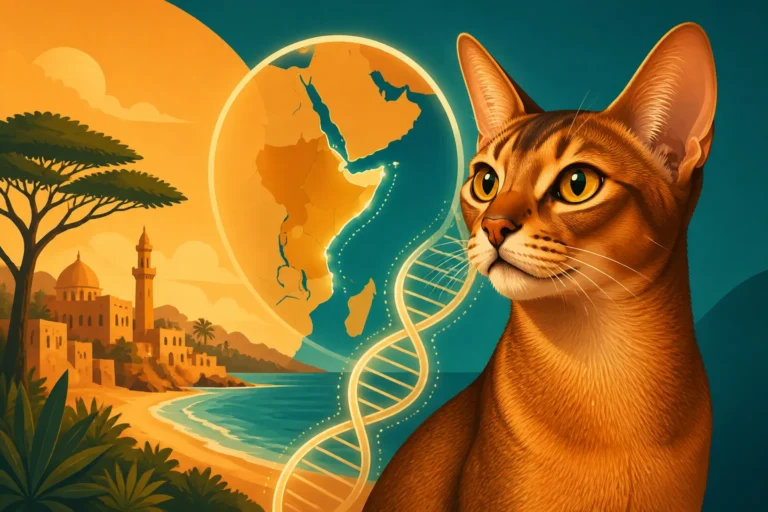
One of the most enduring stories in Abyssinian lore revolves around a cat named Zula, purportedly brought back from Abyssinia (modern-day Ethiopia) in 1868 by a British soldier. This tale has been repeated so often that it's practically canon in some circles, suggesting Zula was the direct ancestor of all modern Abyssinians. It’s a romantic notion, painting a picture of an exotic feline whisked away from ancient lands. However, as compelling as the Zula story is, it's largely considered to be more legend than fact when it comes to being the sole progenitor. You can dive deeper into this myth with Zula and the 1868 Story Everyone Repeats.
The biggest issue with the Zula narrative is the complete lack of a traceable pedigree connecting this specific cat to the foundational breeding stock that established the Abyssinian breed in the late 19th century. There are no definitive records of Zula breeding or passing on her specific traits to documented lines. While a cat like Zula might have existed and might have been an early example of the ticked coat type, the idea that she single-handedly launched the entire breed is not supported by historical evidence or later genetic studies. It's more likely that the "Abyssinian" label was applied to any cat exhibiting the distinctive ticked coat, regardless of its exact geographic origin or parentage, and that Zula became a convenient, exotic face for this emerging type.
Unraveling the Genetic Tapestry: Suspected Early Crosses
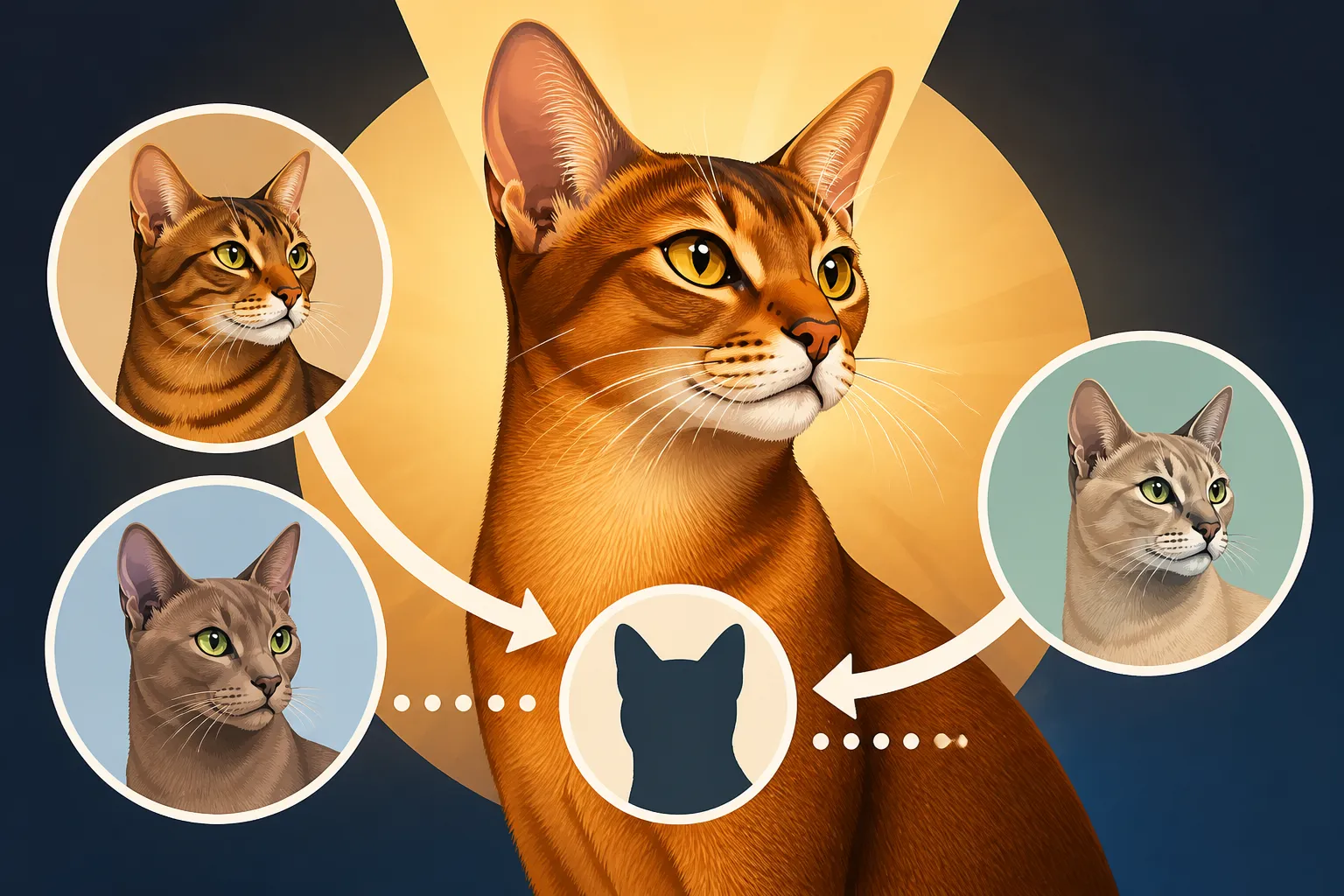
So, if Zula wasn't the sole answer, then what were the first Abyssinians crossed with? The answer is less romantic but far more grounded in reality: a mix of local domestic cats and other breeds that were also in their formative stages. The unique ticked pattern, rather than being exclusive to one ancient lineage, likely emerged from a broader gene pool and was then selectively bred for.
The Role of Domestic Shorthairs and Local Tabbies
When breeders in Victorian Britain first started noticing and appreciating the distinct ticked coat pattern, they didn't have a large, established pool of "Abyssinians" to work with. The most readily available genetic material would have come from the general domestic cat population. This means that common domestic shorthairs, often carrying a variety of tabby patterns, were almost certainly integral to the early development of the Abyssinian. Imagine a keen cat fancier seeing a domestic cat with a slightly blurred tabby pattern, or an absence of distinct stripes, and thinking, "There's something unique here." They would then seek out other cats with similar traits.
These early domestic shorthairs would have provided the genetic diversity needed to establish a viable breeding population. Over time, through careful selection, the breeders would have favored kittens that showed a more pronounced ticking and fewer, if any, tabby markings like stripes or necklaces. This process of selecting for a specific trait from a varied gene pool is how many breeds began. The ancestors of these cats would have been hardy, adaptable, and genetically robust, qualities that benefited the emerging Abyssinian breed. You can learn more about the scientific perspective in What Genetic Studies Say About the Abyssinian's Origin.
Influences from Other Developing Breeds
Beyond the ubiquitous domestic shorthair, it's also highly probable that other pedigree breeds, which were themselves in their nascent stages of development, played a role. Breeds like the British Shorthair, and even certain Oriental-type cats, could have contributed to the Abyssinian's early gene pool. These crosses wouldn't have been random; rather, they would have been made with specific goals in mind: to refine the body type, enhance coat quality, or stabilize desired traits.
For instance, early British Shorthairs would have lent their sturdy build and rounder head shape, contributing to the "foreign shorthair" body type that became associated with the Abyssinian. Some theories also suggest that cats with Siamese ancestry might have been introduced, albeit subtly, to contribute to the lean, athletic physique and perhaps even the striking eye color. These were not always direct, documented crosses in the modern sense but rather instances where cats of a certain type were introduced to enhance desired features. This is how many breeds gained their initial genetic foundations before becoming truly distinct. The long hair gene, which eventually led to the Somali breed, is a clear example of a trait that was carried forward from early crosses; you can find more information on this in Why the Long Hair Gene Was in Abyssinians All Along.
The Impact of Early Crosses on the Modern Abyssinian Look
The decisions made by those early breeders, through their choices of crosses and selective breeding, profoundly shaped the Abyssinian into the elegant, active cat we recognize today. The goal was always to enhance and stabilize that unique ticked coat, while also developing a graceful, athletic body and an alert, intelligent expression.
How Ticking Became Dominant
The ticked pattern, often called "agouti," is what truly defines the Abyssinian. Each individual hair has multiple bands of color, giving the coat a shimmering, almost iridescent quality without visible stripes or spots on the body. This is a crucial distinction, as early cats often had faint tabby markings, which breeders diligently worked to eliminate. The selection process involved identifying kittens with the clearest, most evenly distributed ticking and breeding them together. This intensive selection over generations made the ticking pattern a dominant and consistent feature of the breed. For insight into the coat development, see Why the Abyssinian Was Once Called the Ticked Cat.
Imagine a breeder in the late 1800s carefully examining a litter of kittens. They would be looking for the ones that showed the least amount of "barring" (stripes) on their legs or "necklaces" (stripes) around their neck. The kittens with the most uniform, sparkling coat, where each hair seemed to tell its own story of color, would be chosen for the next generation. This painstaking process, even without the scientific understanding we have now, was remarkably effective. The breeders understood what they liked, and they relentlessly pursued it, shaping the genetic destiny of the Abyssinian. These are the cats who might have eventually enjoyed high-quality food from a place like Chewy, if only it existed back then!
The Persistence of "Outcross" Traits
Even with generations of selective breeding, some traits from those early, less-documented crosses occasionally surface. One of the most famous examples is the long-haired variant, which became the Somali breed. For a long time, these long-haired kittens, born to Abyssinian parents, were considered "throwbacks" or undesirable. They were proof that the long-hair gene, likely introduced from some early domestic shorthair or other long-haired ancestor, persisted silently in the Abyssinian gene pool. Rather than being discarded, eventually, these beautiful long-haired Abyssinians were given their own recognition as the Somali. Find out more in The Somali Is an Abyssinian With Long Hair.
Other subtle traits, like variations in head shape, ear set, or even bone structure, might also hint at those early crosses. While the modern Abyssinian has a clear breed standard, there’s always a degree of genetic variation. This is not a flaw, but a testament to the diverse and somewhat mysterious origins of the breed. It reminds us that even highly refined breeds carry the echoes of their ancestors, a mix of the intentional and the accidental crosses from long ago. When you buy cat supplies from Chewy today, you're supporting a cat whose ancestors were shaped by this fascinating history.
Rebuilding the Breed: Post-War Efforts and Continued Influence
The Abyssinian breed, like many others, faced immense challenges throughout the 20th century. The two World Wars, in particular, decimated breeding populations in Europe, forcing breeders to undertake significant efforts to save the breed from extinction. These periods required further strategic outcrossing, which, while necessary, again broadened the genetic base and introduced new influences.
The Necessity of Outcrossing to Save the Breed
The World Wars were catastrophic for many pedigree animal populations. Breeding programs were disrupted, catteries were destroyed, and food and resources became scarce. In Britain, particularly, the Abyssinian numbers dwindled to perilously low levels. Faced with the very real threat of the breed disappearing entirely, breeders had to make difficult choices. This often involved careful "outcrossing" – breeding the few remaining Abyssinians with other suitable domestic shorthairs or even other pedigree breeds that could contribute to genetic health and diversity without fundamentally altering the Abyssinian type.
These were not casual choices; they were strategic decisions made by dedicated breeders determined to preserve the breed. The goal was to re-establish a healthy breeding pool, improve vigor, and reduce inbreeding depression. While the exact breeds used for these post-war outcrosses are often not explicitly detailed, they would have been chosen for their general health, good temperament, and a physical resemblance that wouldn't introduce undesirable traits. These efforts were successful, but they also mean that the modern Abyssinian carries genetic contributions from a wider range of cats than its initial, vague beginnings. This is a stark reminder of the breed's resilience. For context on these challenges, refer to The Abyssinian Nearly Disappeared From Britain Twice.
The Long-Term Genetic Legacy
The legacy of these early and later outcrosses is visible in the Abyssinian today. It's a breed known for its robust health (when responsibly bred and tested for specific genetic conditions), its lively temperament, and its distinctive appearance. The variety of genes introduced throughout its history has given it a broader genetic foundation than some more intensely inbred breeds. Modern DNA studies are continually shedding more light on the deep ancestry of cat breeds, including the Abyssinian. These studies often confirm a diverse heritage, pointing to genetic markers from various geographic regions and cat populations. If you’re interested in a deeper dive, check out What Modern DNA Studies Found About Abyssinian Ancestry.
For example, genetic markers have suggested connections to cats from Southeast Asia, possibly brought to the West via ancient trade routes. This paints a picture of a truly international cat, whose ancestors traveled the globe long before "breed standards" were even a concept.
Here's a simplified look at the suspected contributions:
| Ancestral Group/Influence | Probable Contribution to Early Abyssinians | Impact on Modern Abyssinian |
|---|---|---|
| Local Domestic Shorthairs | Genetic diversity, initial ticked pattern emergence, hardy constitution. | Health, vigor, foundational body type, ticked coat refinement. |
| Oriental-Type Cats | Leaner body structure, elegant features, striking eye color. | Athletic build, refined head, large ears. |
| European Domestic Cats | Additional genetic robustness, broader gene pool. | Resilience, adaptability. |
| Specific Tabby Variants | Underlying agouti gene that allowed for ticking selection. | The ticked coat, absence of stripes on body. |
Understanding these complex origins helps us appreciate the Abyssinian not as a static, ancient breed, but as a dynamic, evolving lineage shaped by human preference, historical events, and the natural adaptability of cats themselves. Whether you're choosing the perfect cat food on Chewy or researching their lineage, you're connecting with a rich and fascinating history.
Disclaimer
This article is for general informational purposes only and does not constitute professional advice. Laws, prices and regulations vary by location and change over time. Consult a qualified professional for guidance on your specific situation.