Why Sorrel Is Called Red in Some Registries
A sorrel Abyssinian can be called “red” in one registry and “sorrel” in another, even though the cat itself has not changed. That difference can make pedigree records, breeder descriptions, and color guides seem contradictory. This guide explains what the names mean, why registries choose different terms, and how to identify the warm, coppery coat they describe.
Why sorrel and red can mean the same Abyssinian color
The color is familiar, but the name depends on the registry
Abyssinian color names are not always universal. Some registries and breed communities use sorrel, while others use red for the corresponding recognized color. The difference is usually one of terminology rather than a disagreement about what the cat looks like.
That can be confusing when you compare a breeder’s description with a registry’s color list. A breeder may describe a kitten as sorrel because that is the familiar name in their country or cattery. A registry in another system may record a similar cat as red. Neither label necessarily means that the cat has been misidentified.
The distinction matters most when you are reading official paperwork, comparing pedigrees, or checking which colors a particular registry recognizes. For a broader look at how naming differs between organizations, see Which Abyssinian Colors Other Registries Allow and How an Abyssinian's Coat Color Is Registered.
“Red” does not always mean bright orange
In everyday language, red can suggest a vivid, solid orange-red coat. That is not the best way to picture a red or sorrel Abyssinian. Abyssinians have a ticked coat: individual hairs contain alternating bands of color, creating a warm, subtly shaded appearance rather than a single flat color.
A sorrel Abyssinian is commonly described as coppery, cinnamon-toned, or warm reddish-brown, with darker ticking and darker coloring toward the tail tip. The overall effect can look golden or russet in bright light, and more muted brown-red in shade. Lighting, coat condition, and the individual cat all affect how strongly the warmth shows.
So if you see “red” on a registry list, do not assume it describes a solid red coat. The word is part of that registry’s color vocabulary. For the visual details, What Sorrel Means on an Abyssinian and What a Sorrel Abyssinian Looks Like are useful companion reads.
What makes a sorrel Abyssinian look different
Ticking creates the warm, shifting coat
The most recognizable feature of an Abyssinian coat is its ticking. Instead of broad stripes across the body, each hair has bands of color. When many ticked hairs lie together, they create an even, softly patterned coat that seems to shimmer as the cat moves.
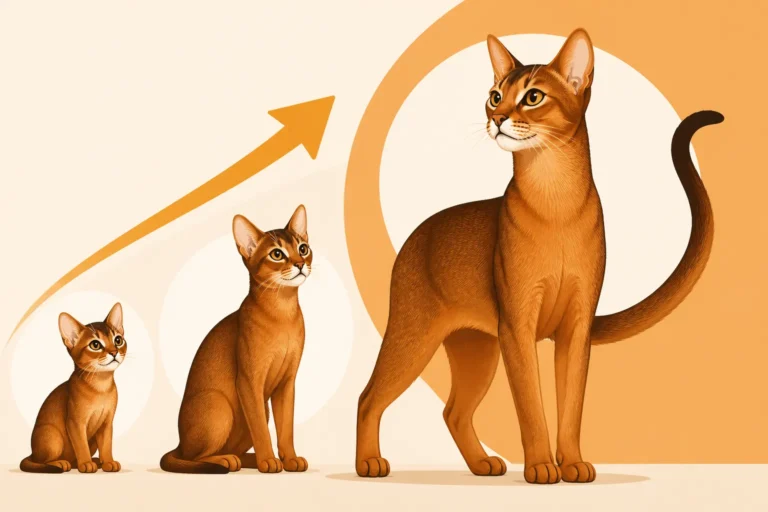
On a sorrel cat, the lighter base and warmer reddish tones combine with darker bands to make the coat look rich rather than uniformly red. You may notice darker shading along the back or a darker tail tip, while the chest and inner legs appear lighter. The exact balance varies from cat to cat, and a kitten’s coat may change as its adult ticking develops.
This is one reason color names can feel imprecise when you are looking at photographs. A phone camera may exaggerate orange tones, flatten the darker bands, or shift the color under indoor lighting. A written label helps identify the recognized color category, but it cannot capture every shade in a living coat.
Sorrel is not the same as ruddy
Sorrel and ruddy are separate Abyssinian color names, even though both can appear warm-toned. Sorrel usually has a more cinnamon or copper-red impression, while ruddy is typically described as richer brown with darker ticking. Comparing them side by side is often more helpful than trying to judge from a single photo.
| Feature | Sorrel or red | Ruddy |
|---|---|---|
| Overall impression | Warm copper, cinnamon, or reddish-brown | Rich brown with a deeper, darker appearance |
| Ticking | Darker bands over a warm reddish ground color | Dark brown or near-black bands over a warm brown ground color |
| Common source of confusion | “Red” sounds brighter or more orange than the coat may look | Can look red-brown in warm lighting |
| Best way to compare | View the cat in natural light and check its registry terminology | Compare the coat and pedigree with the relevant registry standard |
These descriptions are helpful starting points, not a substitute for an individual cat’s registration information. If you are comparing the two colors, What Ruddy Means on an Abyssinian gives the other common reference point. Breed standards also describe the preferred appearance, so What the Abyssinian Show Standard Asks For can help explain why a color label is more than a casual color description.
Why registries choose different color names
Breed communities develop their own vocabulary
Cat registries maintain their own standards and conventions. Over time, different organizations may settle on different names for colors that are closely related or understood as equivalent within the breed. A term that feels standard in one country may sound unusual to someone reading a pedigree elsewhere.
This is not unique to sorrel. Breed terminology can vary across registries in how it names colors, describes coat patterns, or lists accepted varieties. A breeder may use the term most familiar to their local community, while a registration certificate follows the exact wording used by the organization that issued it.
That is why it is useful to check the registry named on the pedigree instead of relying on a general color chart. Which Abyssinian Colors CFA Recognizes explains one registry’s naming approach, while Which Abyssinian Colors Other Registries Allow helps put those labels in a wider context.
Records should be read in their own system
If a pedigree says “red” and a breeder’s notes say “sorrel,” first check whether both descriptions refer to the same registry context and color category. Look at the issuing organization, the full registration details, and any supporting breeder records. Avoid treating the wording difference alone as proof that the paperwork is wrong.
For example, imagine you are looking at a kitten whose breeder calls it sorrel, then find a registry color list that uses red. The sensible next step is to ask the breeder which registry is used and how the kitten’s color is recorded there. A clear answer should connect the everyday description to the official record.
If you are researching a kitten online, remember that retail and product labels are not breed-registration terminology. A red collar listed on Chewy describes an accessory color, not the cat’s coat classification. Likewise, searching Chewy for red-themed cat items will not tell you whether an Abyssinian is registered as sorrel or red. For that, use the breeder’s paperwork and the relevant registry’s own color list.
How to identify and describe a sorrel Abyssinian
Use the paperwork alongside the coat
A coat photo can help you understand the general appearance, but it is not the most reliable way to confirm a registered color. Photos vary with sunlight, indoor bulbs, camera settings, and editing. A warm filter can make a ruddy cat look more coppery; cool lighting can make a sorrel coat look darker or less red.
When checking a cat’s color, gather a few pieces of information together:
- Read the pedigree or registration record. Note the registry and the exact color wording.
- Ask the breeder what name they use. They can explain whether “sorrel” is the common local term or whether it appears on the official documents.
- Compare the coat in natural light. Look at the body, legs, and tail rather than relying on one close-up.
- Check the breed standard for that registry. This clarifies what the organization means by its color category.
- Keep the terms linked in your notes. If the record says red and the breeder says sorrel, record both with their source rather than silently replacing one with the other.
This is especially useful if you are building a family history or comparing cats from different countries. Consistent notes prevent a naming variation from looking like a real difference in the cat’s color.
Describe what you see without overclaiming
In casual conversation, it is perfectly reasonable to say that a cat is sorrel or red according to the terminology you are using. If the registry wording matters, name the registry too. For example: “The breeder calls this color sorrel, and the registration record lists it as red.” That is clearer than insisting one label must be wrong.
You may also describe the appearance in plain language: “a warm coppery ticked coat” or “a reddish-brown Abyssinian with dark ticking.” Those descriptions help people picture the cat without implying that every registry uses the same label.
This distinction is useful beyond pedigrees. If you see an online listing for a red cat bed or a red harness on Chewy, the product’s color name has no bearing on breed color classification. When explaining an Abyssinian’s coat to someone who is unfamiliar with the terminology, focus on the ticked pattern and warm tone, then clarify whether your registry calls it sorrel or red.
Disclaimer
This article is for general informational purposes only and does not constitute professional advice. Laws, prices and regulations vary by location and change over time. Consult a qualified professional for guidance on your specific situation.