What an Abyssinian’s Coat Should Feel Like in the Ring
An Abyssinian’s coat should feel fine, close-lying, and silky rather than woolly or coarse. In the show ring, that texture matters alongside the breed’s distinctive ticking, coat condition, and overall presentation. If you’re trying to understand what judges look for—or whether your own cat’s coat feels typical—this guide explains what to notice and how everyday care can help preserve it.
The feel of a typical Abyssinian coat
Fine, soft, and close to the body
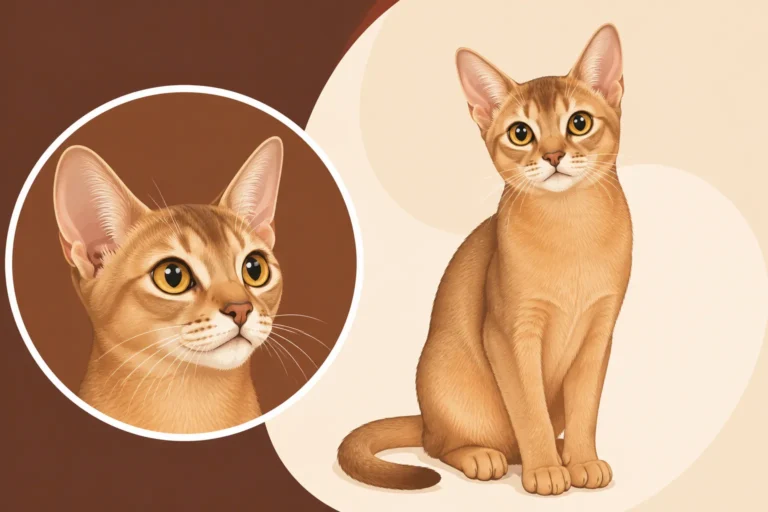
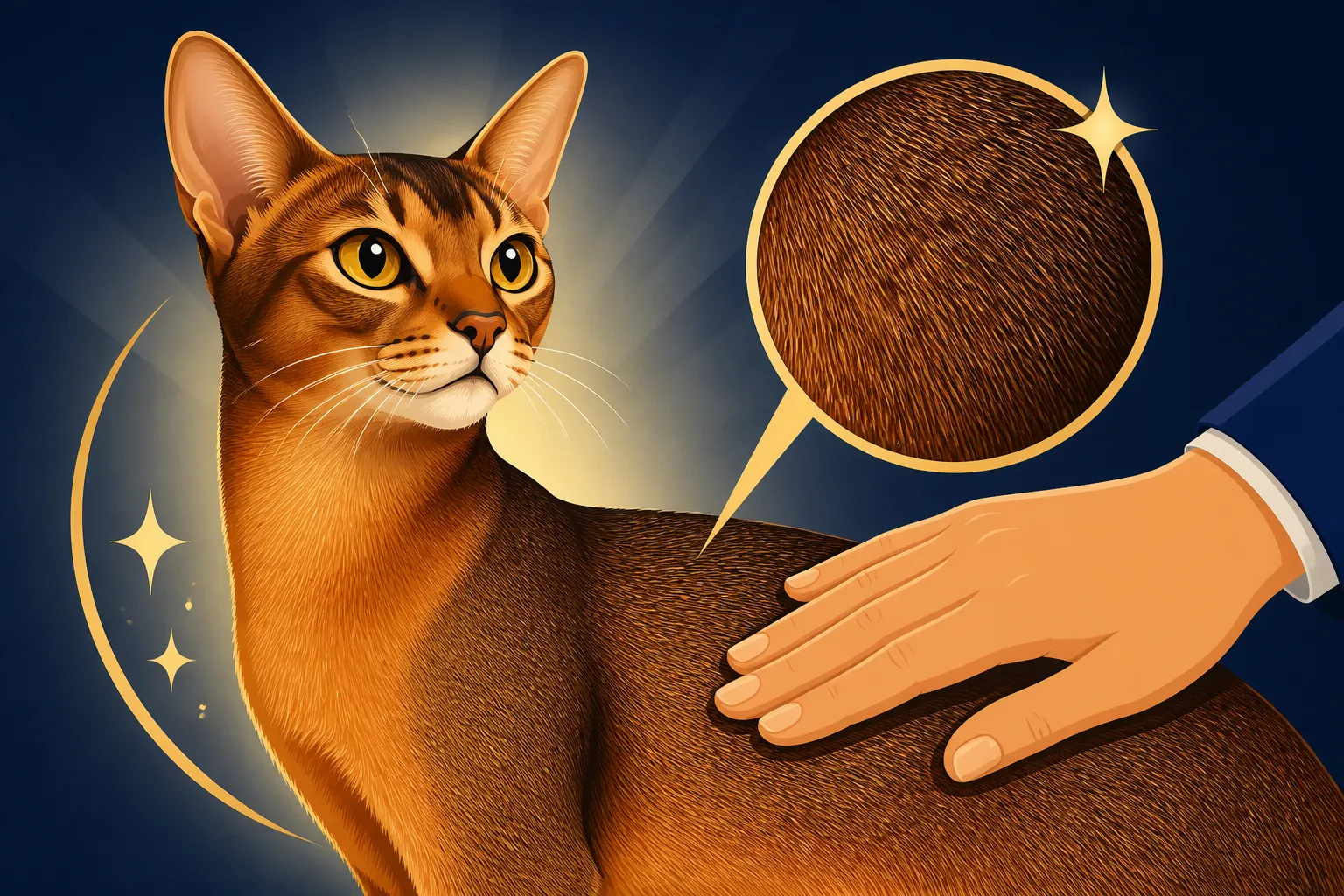
An Abyssinian’s coat is short and lies close to the body. To the touch, it should feel fine and smooth, with a soft, silky quality rather than a harsh or bristly one. The hair should not feel long, fluffy, or densely padded. A neat, close coat lets the cat’s outline and athletic build show clearly.
That does not mean the coat should feel flimsy or sparse. The individual hairs are fine, but the coat should still have a healthy, even appearance across the body. Think of the difference between a soft, smooth surface and one that feels rough or uneven: the first is closer to the desired impression, though individual cats naturally vary.
The coat’s texture is only one part of the picture. A judge also considers how the coat looks, its color and ticking, and the cat’s condition overall. A silky texture cannot compensate for an unhealthy-looking coat, just as attractive color alone does not tell you whether the coat has the right feel.
For more on the physical quality of the hair, see How Fine an Abyssinian's Coat Feels and Why an Abyssinian's Coat Lies Close to the Body.
A springy, healthy finish without a woolly feel
A healthy coat should feel smooth and supple, not dry, brittle, or greasy. It should settle naturally against the body rather than sticking out in tufts. When you stroke it gently in the direction it lies, the coat should feel consistent—not noticeably coarse in one area and soft in another.
Abyssinians have relatively little undercoat compared with many cats. That helps the short coat keep its sleek look, but it also means the coat may feel different from a plush, thick-coated breed. If you are used to petting a dense-coated cat, an Abyssinian can seem lighter and finer under your hand. That difference is normal; it is not automatically a sign of poor coat condition.
A cat’s health, age, season, and recent grooming can affect how the coat feels. A kitten’s coat may not yet have the same finished texture or color as an adult’s, while seasonal changes can make the coat look or feel somewhat different. If you notice a sudden change—such as persistent roughness, thinning, excessive shedding, or a greasy appearance—look beyond show presentation and ask your veterinarian whether there may be an underlying cause.
What judges assess in the show ring
Texture is considered with ticking and coat condition
The Abyssinian’s signature appearance comes from agouti ticking: individual hairs have alternating bands of color rather than simple solid-color shafts or clear tabby stripes. That pattern creates a rich, even impression across the coat. Judges assess the coat’s color and ticking as well as its texture, length, condition, and how it contributes to the cat’s overall appearance.
The desired texture supports the visual effect. A fine, close-lying coat allows the ticking to be seen clearly and keeps the cat’s outline sleek. If the coat is fluffy, untidy, or uneven, it can obscure the pattern and change the overall impression, even when the underlying color is attractive.
The coat is not judged in isolation. A judge considers the whole cat according to the relevant registry’s standard, including body type, head, ears, eyes, and presentation. The exact wording and emphasis can vary between organizations, so exhibitors should read the standard used at the show they plan to enter. A coat that feels pleasing to the hand is helpful, but it is one element of a larger assessment.
To understand why the coat has its distinctive appearance, explore What Makes an Abyssinian's Coat Ticked Rather Than Striped and How Many Bands an Abyssinian Hair Carries.
Why over-preparing can work against you
It is tempting to assume that more brushing, more products, or a last-minute bath will make a cat more show-ready. With a short, fine coat, excessive grooming can do the opposite. Repeated or forceful brushing may disturb the coat’s natural lay, irritate the skin, or leave the hair looking less smooth. A harsh tool can also be too much for a coat that does not need heavy de-shedding.
A show coat should look clean and cared for, not coated in product. Heavy conditioners, powders, or sprays can alter the coat’s natural feel and leave residue. If a cat genuinely needs a bath, use a product suitable for cats and make sure the coat is fully rinsed and dried according to the product instructions. For a specific skin or coat concern, get veterinary advice rather than trying to cover it with styling products.
Small, steady care is usually more sensible than a dramatic grooming session the night before a show. If you are considering a grooming mitt or other basic supplies, compare the tool’s material and intended use before buying; general pet-supply retailers such as Chewy may carry a range of grooming items, but the gentlest appropriate tool is more important than the label on the package.
How to check your Abyssinian’s coat at home
Use your hands and eyes, not a rough brush
To check texture, choose a calm moment and stroke your cat gently from the shoulders toward the back. Avoid rubbing against the coat repeatedly or pulling at individual hairs. Notice whether the coat feels smooth and fine, lies close to the body, and seems fairly even from one area to another. Then look at the coat in good light to check for debris, flakes, patchiness, or changes in shine.
Your cat’s comfort matters more than getting a perfect inspection. Some Abyssinians would rather be investigating a cabinet than standing still for a coat check. Keep the session brief and calm, and stop if your cat becomes uncomfortable. A quick check during a cuddle or quiet grooming routine is more useful than turning coat care into a wrestling match.
If you are shopping for a simple grooming mitt, a retailer such as Chewy can be one place to compare options, but choose a gentle tool and introduce it gradually. Some cats accept a soft mitt more readily than a comb; others prefer a hand-only check. The goal is to remove loose hair and keep the coat tidy without scraping or flattening it.
Know what routine care can—and cannot—change
A light weekly grooming routine is generally enough for many Abyssinians. Use gentle strokes and avoid tools designed to strip out large amounts of undercoat. A quick pass can lift loose hair while preserving the coat’s natural appearance. For practical guidance, see Why Weekly Is Enough for an Abyssinian and How a Weekly Comb Preserves an Abyssinian's Banding.
Grooming can help remove loose hairs and surface debris, but it cannot change the coat’s natural texture, color, or pattern. If the coat is genetically coarser than a show ideal, brushing will not make it silky. Likewise, if the coat looks dull because of a health issue, brushing alone will not address the cause. Good nutrition, routine preventive care, and prompt attention to unusual changes all contribute to general coat condition.
If your cat resists grooming, keep the sessions short and pair them with a calm, positive experience. Start by letting the cat sniff the tool, then try one or two gentle strokes and stop before it gets annoyed. You can gradually build up the routine as your cat gets comfortable. For more ideas, read How to Groom an Abyssinian That Will Not Stay Still and Why a Slicker Brush Is Wrong for an Abyssinian.
Common coat-feel questions
Is a slightly different texture automatically a problem?
No. Individual cats vary, and texture can be influenced by age, season, grooming, and general condition. A coat that feels a little different from another Abyssinian’s does not necessarily indicate a health problem or make a cat unsuitable as a companion. Show judges compare the cat with the relevant standard, but pet owners do not need to treat every small difference as a fault.
Pay more attention to changes than to comparisons. If your cat’s coat has always felt a certain way and remains healthy-looking, that may simply be its natural texture. If it suddenly becomes coarse, brittle, greasy, patchy, or unusually thin, note when the change began and whether anything else has changed, such as appetite, energy, or grooming habits. A veterinarian can help determine whether the coat change warrants investigation.
Lighting can also affect what you think you see. Abyssinian ticking may appear warmer, darker, or more pronounced depending on the light and viewing angle. That visual shift does not necessarily mean the coat itself has changed. Why an Abyssinian's Coat Looks Different in Every Light explains why the same coat can seem different from one setting to another.
Should an Abyssinian’s coat feel the same everywhere?
It should look and feel generally consistent, but you may notice small differences across the body. The coat on the back, sides, and other areas may catch light differently, and the hair’s direction can affect how it feels beneath your hand. A single stroke is not enough to judge coat condition; look at the overall pattern and whether any area seems persistently rough, sparse, or irritated.
Take care around sensitive spots and do not tug at tangles or scabs. If you find a bald patch, a sore area, heavy flaking, or a change your cat reacts to, avoid experimenting with grooming products and contact your veterinarian. A show-ring standard describes appearance; it is not a substitute for checking the skin and coat for health concerns.
| What you notice | What it may mean | A sensible next step |
|---|---|---|
| Fine, smooth coat that lies close to the body | Typical short-coat texture | Continue gentle routine care |
| Coat looks different in warm or cool light | Ticking and color can appear to shift visually | Check it in consistent, natural light |
| Roughness or dullness that develops suddenly | Possible coat or skin change | Observe for other symptoms and ask a veterinarian |
| Flakes, patchiness, or persistent greasy areas | May need more than routine grooming | Seek veterinary advice rather than adding products |
| Cat resists brushing | The tool, pressure, or session may be uncomfortable | Use brief, gentle sessions or try hand-only checks |
The ring ideal is a useful reference, but the goal at home is not to groom your Abyssinian into a different cat. A healthy, clean coat that lies naturally and feels soft and fine is a good sign. Keep care gentle, notice meaningful changes, and let a veterinarian assess anything that seems unusual.
Disclaimer
This article is for general informational purposes only and does not constitute professional advice. Laws, prices and regulations vary by location and change over time. Consult a qualified professional for guidance on your specific situation.