Why an Abyssinian With Barring Is Penalized
An Abyssinian’s coat is meant to look evenly ticked, so visible bars or stripes can stand out in a show ring. That can be frustrating when your cat is healthy and beautifully cared for. Here’s what judges usually mean by barring, why it is penalized, how it differs from normal kitten markings, and what grooming can—and cannot—change.
What barring means on an Abyssinian
The coat is ticked, not striped
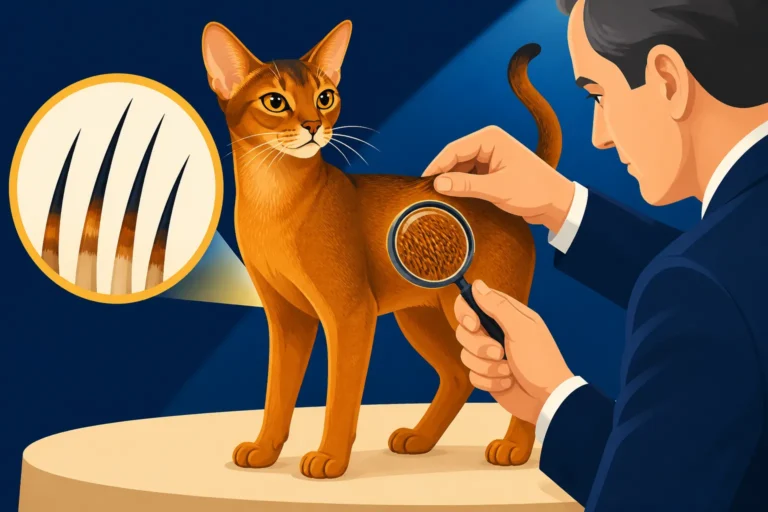
An Abyssinian’s distinctive coat comes from agouti banding: individual hairs carry alternating bands of color. Together, those hairs create a warm, finely speckled appearance rather than the clear stripes or swirls seen on many tabby cats. The ideal effect is an even, luminous coat, with color distributed across the body instead of gathered into obvious lines.
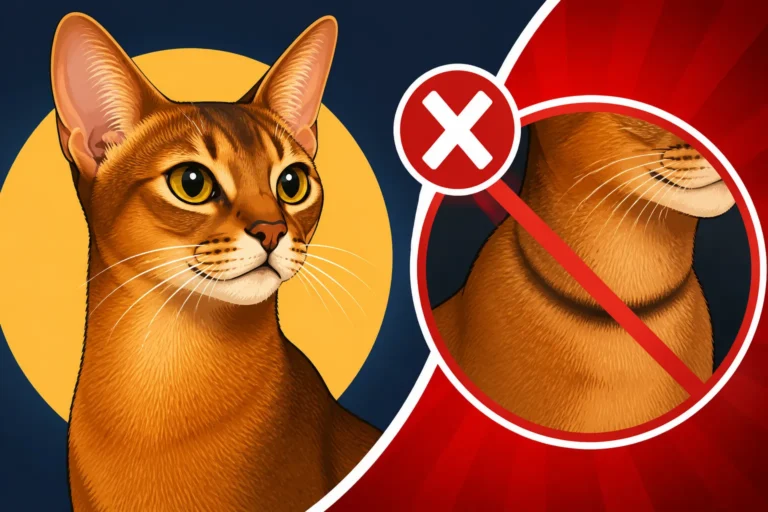
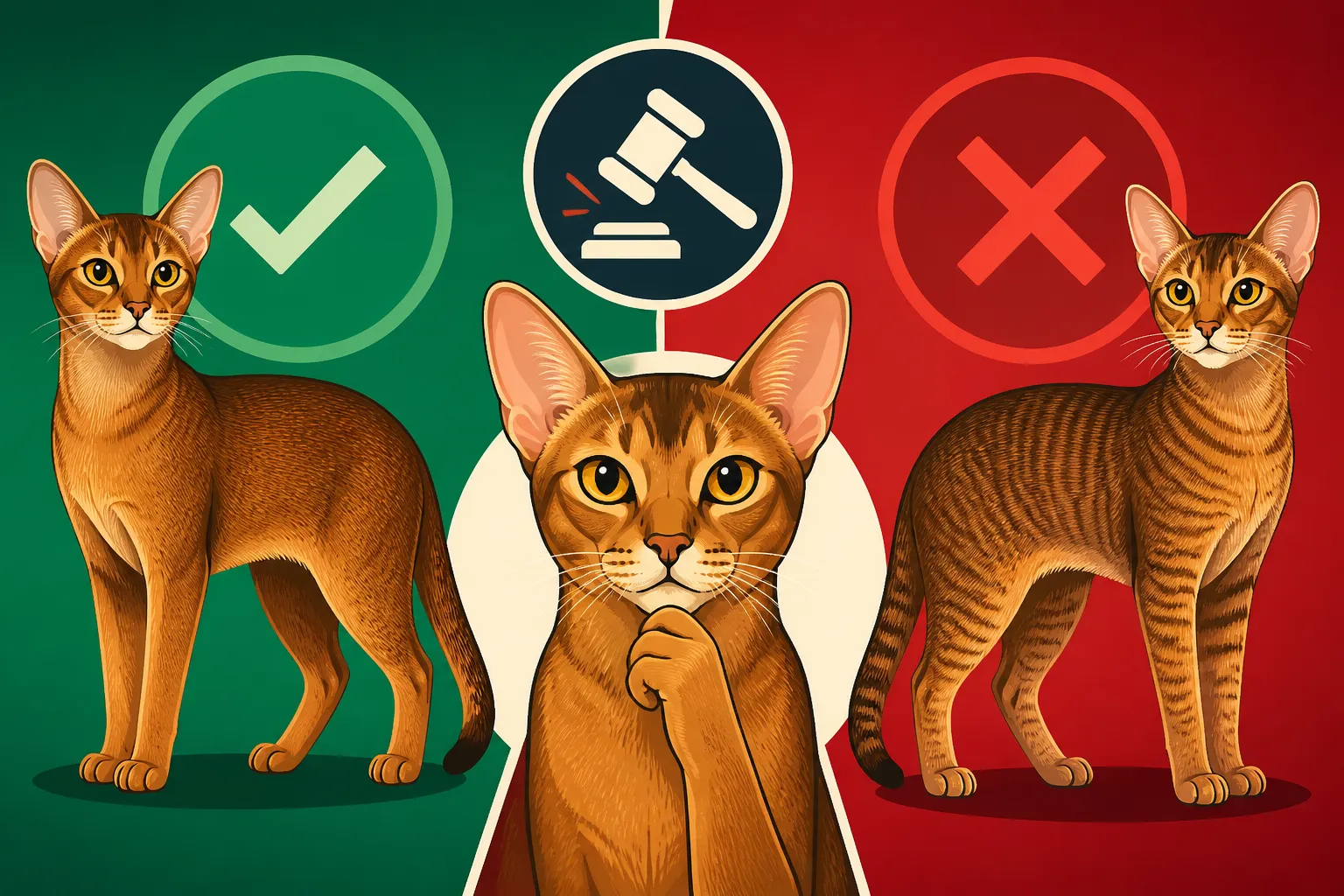
Barring is a visible striping or band-like marking in the coat. It may show as bars on the legs, markings on the body, or areas where the coat appears less evenly ticked. The exact wording and emphasis can differ between registries and show standards, so it’s sensible to check the rules for the organization hosting the show. In general, though, conspicuous tabby-style markings are at odds with the Abyssinian’s characteristic coat pattern.
The difference is easier to picture than to describe: an evenly ticked coat looks finely blended, while a barred area forms a distinct line or stripe that catches the eye. For a closer look at the underlying coat pattern, see What Makes an Abyssinian's Coat Ticked Rather Than Striped and Why an Abyssinian Has No Tabby Stripes.
Why judges penalize visible bars
In the show ring, judges assess how closely a cat matches the breed standard. For an Abyssinian, the coat’s clear ticking is a defining feature. Obvious barring can interrupt that overall impression, making the coat look less uniform than the standard calls for. It is penalized as a departure from the desired appearance—not as evidence that the cat is unhealthy or poorly cared for.
That distinction matters. A pet Abyssinian with visible bars can be every bit as lively, affectionate, and well loved as one whose coat appears more evenly ticked. A show penalty is about comparison with a written ideal, not a verdict on the cat’s worth or welfare. Even among cats of the same breed, small differences in coat pattern and clarity are normal.
A penalty also doesn’t mean every faint line will be treated the same way. Judges consider how visible the marking is and how it affects the coat’s overall appearance. The standard and judging context matter, so a marking that catches your eye at home may not have the same impact under show conditions. For broader context, What an Abyssinian Show Standard Asks For explains the features judges assess, while How an Abyssinian's Ticking Is Judged in the Ring focuses on the coat itself.
Why barring can appear
Kitten coats and changing color
Abyssinian kittens do not always look like finished adults. Their coats can appear uneven, muted, or blotchy while their adult ticking develops. Temporary markings may be more noticeable during this transition, which can worry owners who expect the sleek, defined coat they have seen in photographs of mature cats.
Age and development are useful context, but they don’t guarantee that every marking will disappear. Some markings become less noticeable as the coat changes; others remain apparent. If you’re evaluating a kitten for a show prospect, ask the breeder what they see in the kitten’s current coat and what they have observed in related cats. That conversation is more helpful than relying on a single photo taken in unusual lighting.
Lighting can make a difference, too. Sunlight, indoor bulbs, and a phone camera may emphasize or soften lines in the coat. A pattern that looks prominent in one picture may be harder to see in person, or vice versa. It’s worth looking at the cat in natural light and asking an experienced breeder or judge to explain what they’re seeing. For more on coat development, see Why an Abyssinian Kitten Looks Blotchy at First and When an Abyssinian Kitten's Adult Ticking Arrives.
Inherited coat pattern and natural variation
Coat pattern is influenced by genetics, so visible barring may reflect how a particular cat’s coat develops. It is not something an owner can reliably train away, and it doesn’t mean you have failed to groom your cat correctly. Two Abyssinians can both be healthy and well bred while differing in how clear or uniform their coats appear.
A breeder may be able to discuss coat traits in the kitten’s family, but appearance alone doesn’t tell the whole story. Coat color, age, lighting, and the individual cat’s development all affect what you see. If you are choosing a kitten mainly as a companion, it’s worth keeping show standards in perspective: coat markings are one part of appearance, not a measure of temperament or the quality of your bond.
If you’re considering showing a cat, ask the breeder which standard they follow and whether they consider the coat a strong match for that standard. A candid conversation can prevent disappointment later. The goal isn’t to find a cat that looks flawless in every photo; it’s to understand what the marking is, whether it is likely to be noticeable in the ring, and what the judge’s criteria actually say.
What grooming can and cannot do
Grooming supports coat condition, not pattern correction
Gentle grooming can help remove loose hair and keep the coat comfortable and tidy, but it cannot erase inherited barring or turn a striped area into clear ticking. Trying to “correct” a marking with aggressive brushing, shaving, dye, or other coat-altering methods risks harming the coat or stressing the cat without changing the underlying pattern.
A soft grooming mitt or gentle comb is usually more appropriate for routine coat care than a harsh deshedding tool. If you’re shopping for basic supplies, Chewy is one retailer owners may compare for grooming essentials; choose tools suited to a short, close-lying coat rather than assuming a stronger tool will improve the pattern. For advice on grooming without pulling or flattening the coat, see How to Groom an Abyssinian That Will Not Stay Still.
It’s also wise to be cautious about claims that a particular product can remove stripes or dramatically change coat color. Ordinary grooming products can help with loose hair and cleanliness, but they don’t rewrite a cat’s natural pattern. A Chewy listing—or any retailer’s listing—should be treated as a source of supplies, not proof that a tool can alter a genetic feature. Why a Deshedding Tool Ruins an Abyssinian's Ticking explains why stronger grooming isn’t automatically better for this breed.
Sensible preparation for a show
If your Abyssinian is going to a show, focus on comfort and neat presentation rather than trying to hide a marking. Keep the coat clean, handle your cat gently, and follow the show organization’s grooming rules. If you’re unsure whether a product or treatment is allowed, ask the show organizer or an experienced exhibitor before using it.
A basic preparation routine might include:
- Check the relevant show standard and rules before the event.
- Look over the coat in natural light so you can distinguish visible markings from shadows or camera effects.
- Use gentle, familiar grooming tools rather than introducing a new brush right before the show.
- Keep the cat calm and stop if grooming becomes uncomfortable or stressful.
- Ask a breeder, mentor, or judge for an honest opinion about how noticeable the barring is.
For everyday care supplies, Chewy may be one place to compare grooming mitts and combs, but the right choice depends on your cat’s coat and tolerance. You don’t need a complicated routine to prepare a short-haired Abyssinian. If the cat dislikes handling, work in brief sessions and reward calm behavior rather than trying to finish everything at once.
How to think about barring as an owner
A show fault is not a health problem
It’s understandable to feel disappointed if someone points out a feature you hadn’t noticed—or if a judge penalizes a cat you adore. Try to separate the show result from the relationship you have with your cat. A visible bar is an appearance issue in the context of a breed standard. By itself, it does not indicate poor health, poor care, or a flaw in your cat’s character.
For a companion, the more useful questions are whether your cat is eating, playing, moving comfortably, and behaving normally. If the coat changes suddenly, becomes patchy, or comes with itching or skin irritation, that’s a different matter and is worth discussing with a veterinarian. A stable marking that has always been part of your cat’s coat is not the same as a new skin or coat problem.
Abyssinians are individuals, and a show ring rewards specific features. Your cat does not need to meet every show ideal to be a wonderful companion. If you enjoy showing, use the feedback to learn how the standard is applied; if you don’t, there’s no need to treat a cosmetic marking as a problem that must be fixed.
Questions to ask a breeder or judge
If you’re unsure what you’re seeing, ask someone familiar with the breed to identify the marking and explain how it relates to the applicable standard. Rather than asking only, “Is this bad?”, try questions that lead to a clearer answer: Is the marking typical for this age? Is it likely to be visible in the ring? Does the standard describe it as a fault, and how much does it affect the overall coat?
If you are choosing a kitten for showing, ask how the breeder assesses coat clarity and whether they can explain the kitten’s family coat traits. A responsible answer may include uncertainty, especially when a young kitten’s adult coat has not fully developed. Be wary of anyone promising that grooming will remove natural barring or guaranteeing a show result based on appearance alone.
If your cat is already an adult, you can still ask a judge or experienced exhibitor for an educational opinion without treating that opinion as a final measure of your cat. Coat evaluation can be nuanced, and the applicable show rules matter. Chewy can help with ordinary grooming supplies, but questions about show standards are better directed to a breeder, mentor, or show organization.
| What you notice | What it may mean | A sensible next step |
|---|---|---|
| Even, fine color across the coat | The ticking appears relatively uniform | Maintain gentle routine grooming |
| Distinct lines or bars | Visible barring may be present | Ask a knowledgeable breeder or judge how the relevant standard treats it |
| Blotchy markings on a kitten | The adult coat may still be developing | Reassess as the coat matures and seek informed guidance |
| A sudden change with itching or patchiness | This may be a skin or health issue, not a show-pattern question | Contact a veterinarian |
| A marking that remains stable over time | It may be a natural coat feature | Don’t try to remove it with harsh grooming or coat-altering products |
Disclaimer
This article is for general informational purposes only and does not constitute professional advice. Laws, prices and regulations vary by location and change over time. Consult a qualified professional for guidance on your specific situation.