How a Luxating Kneecap Shows in a Climbing Abyssinian
It’s truly disheartening to see your normally high-flying Abyssinian, who usually scales furniture like a tiny mountaineer, suddenly hesitate or show discomfort when jumping. This change in behavior, especially in a breed known for its boundless energy and love for heights, can be a worrying sign of underlying joint issues, and one common culprit is a luxating patella. This guide will meticulously walk you through understanding what a luxating patella is, how to spot its subtle and overt signs in your active Abyssinian, and what steps you can take with your veterinarian to manage and treat this condition effectively.
Understanding Luxating Patella in Active Abyssinians
The Abyssinian cat is a dynamo, a four-legged blur of motion, perpetually seeking the highest perch or the most challenging jump. Their athletic build and inherent desire to explore vertical spaces make them truly unique companions. However, this very athleticism can sometimes put them at risk for certain musculoskeletal conditions, one of which is patellar luxation.
What Exactly is a Luxating Patella?
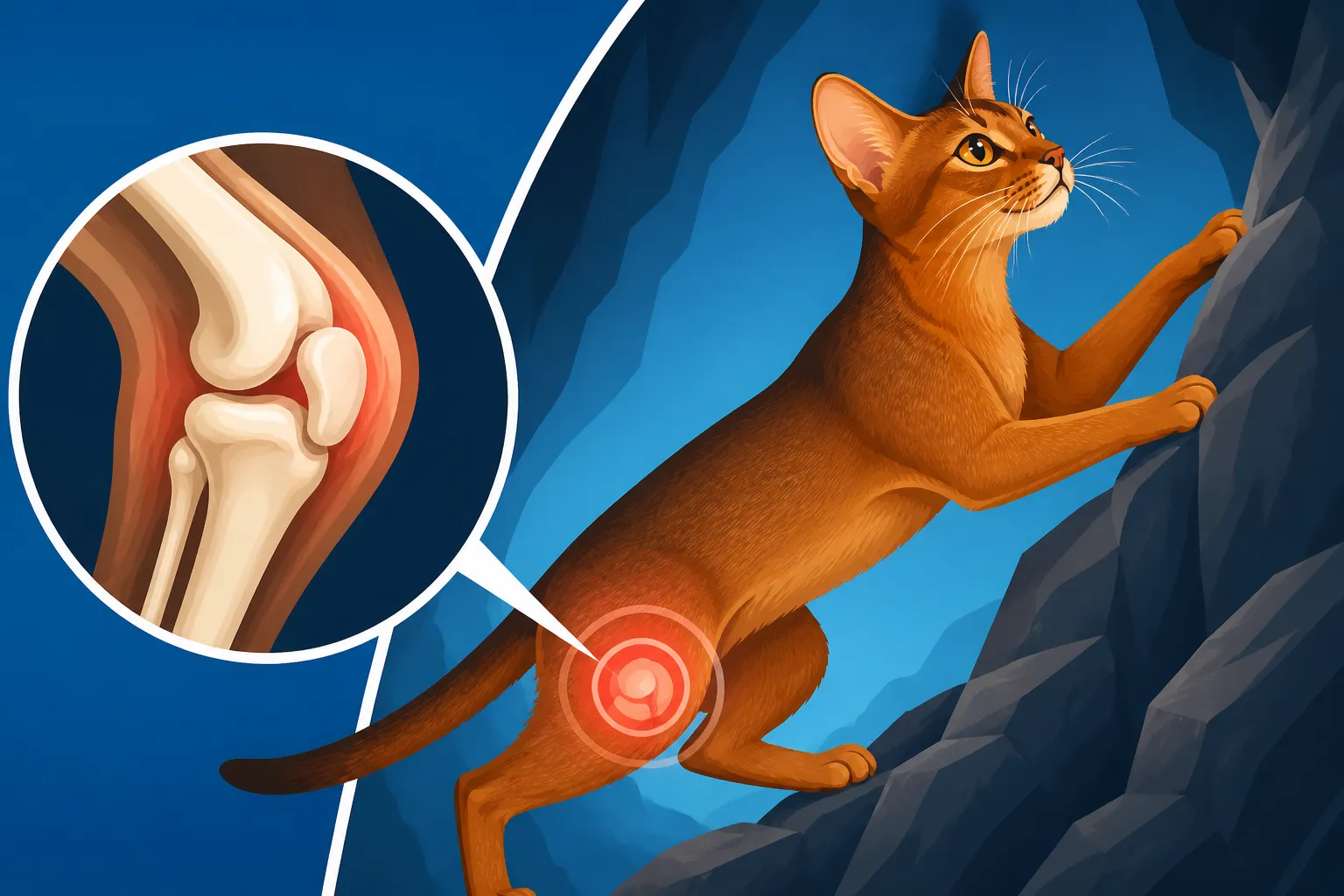
Let's break down what this mouthful of a term actually means. "Patella" is simply the medical term for the kneecap, and "luxating" means dislocating or slipping out of place. So, a luxating patella is a kneecap that, instead of staying securely in its groove, slides out of position. Imagine a train running on a track; if the track isn't deep enough or is misshapen, the train might jump the rails. The kneecap operates similarly, meant to glide smoothly within a groove called the trochlear groove, located at the end of the femur (thigh bone).
When an Abyssinian’s kneecap luxates, it typically slips either to the inside of the leg (medial luxation) or to the outside (lateral luxation). Medial luxation is far more common in cats. This slippage causes a temporary interruption in the smooth function of the knee joint, which can range from a momentary skip to full-blown lameness. Given that Abyssinians are constantly on the move, jumping, climbing, and darting, this constant stress on a potentially unstable kneecap can lead to chronic irritation, pain, and eventually, degenerative joint disease if left unaddressed. It’s particularly frustrating to witness in a cat so driven by its physical capabilities.
How Common is It in the Breed?
While patellar luxation is more frequently discussed in certain dog breeds, it certainly affects cats, and Abyssinians, with their active lifestyles and somewhat finer bone structure, are among the breeds where it can be observed. It’s not as universally prevalent as, say, kidney issues in the breed, but it’s definitely something responsible breeders and owners should be aware of. The condition is often inherited, meaning that affected cats or carriers can pass on genes that lead to a shallow trochlear groove or other anatomical abnormalities that predispose them to the issue.
Veterinarians classify patellar luxation into different grades, from Grade I to Grade IV, to describe the severity:
| Grade | Description | Symptoms (Typical) |
|---|---|---|
| Grade I | The patella can be manually luxated but immediately returns to its normal position when released. The trochlear groove is almost normal. | Often asymptomatic; occasionally a brief skip or 'pop' when the cat changes gait or jumps. Your Abyssinian might just shake a leg for a second and then carry on as if nothing happened. |
| Grade II | The patella luxates spontaneously and remains luxated for a short period or until the limb is extended and rotated, allowing it to pop back into place. The trochlear groove is often shallow. | Intermittent lameness, a characteristic "skipping" gait, holding the leg up for several steps. This is where you might truly notice Why an Abyssinian Skips a Step on the Stairs during play. |
| Grade III | The patella is permanently luxated, though it can still be manually reduced with difficulty. The trochlear groove is very shallow or absent, and the tibia may be rotated. | Persistent lameness, crouching gait, significant discomfort. The leg often appears bowed or twisted. The cat avoids putting weight on the affected limb. |
| Grade IV | The patella is permanently luxated and cannot be manually reduced. The trochlear groove is entirely absent or even convex, and there are significant deformities of the femur and tibia. | Severe, chronic lameness, significant pain, and difficulty extending the knee. The cat may walk with a severely abnormal gait, or even struggle to walk at all. |
Even a mild Grade I luxation in an Abyssinian can be concerning, not just because of potential future pain, but because their high activity levels mean they are constantly putting stress on that joint. Early detection and management are key to maintaining their quality of life.
Recognizing the Signs in Your Climbing Companion
Abyssinians are masters of disguise when it comes to pain. Their high prey drive and energetic nature mean they often try to push through discomfort, making it challenging for owners to spot subtle signs of illness or injury. However, with a keen eye for their unique movements and habits, you can often pick up on the early indicators of a luxating patella.
Subtle Clues in Their Movement
Initially, the signs of a luxating patella can be incredibly subtle, easily mistaken for a clumsy moment or just a quirk of your cat's movement. You might see your Abyssinian do a little hop or skip mid-run, almost as if they're trying to reset their leg. This is a classic sign of the kneecap slipping out and then back into place. They might be chasing a toy or zooming across the living room, and then suddenly, one back leg comes up for a fraction of a second, almost imperceptibly, before they're back to full speed. This is often the first, fleeting indication that something isn't quite right.
Another common, yet subtle, sign, especially for our climbing enthusiasts, is a slight hesitation before jumping. You know your Abyssinian loves that top shelf or the highest point on the cat tree. But if you start noticing them pause, assess the jump longer than usual, or perhaps even try a lower jump before attempting a higher one, it could indicate discomfort. They might also appear to be stiff after a nap, taking a moment to "stretch out" a back leg before moving normally. Sometimes, during play, they might momentarily hold up a back leg, giving it a little shake, as if shaking off water, before continuing the game. These are all subtle ways your cat might be coping with an intermittent luxation.
When Pain and Discomfort Become Obvious
As the condition progresses, or if your Abyssinian has a higher grade of luxation, the signs will become much more apparent. Instead of a quick skip, you might see noticeable limping, especially after an intense play session or a series of jumps. The lameness might come and go, or it could be more persistent, leading your cat to favor one leg. They might start avoiding their favorite high spots, preferring to stay on lower surfaces. This is a critical indicator; for an Abyssinian, not wanting to climb is a significant deviation from their normal behavior, and a good reason to remember Why an Abyssinian That Stops Climbing Needs a Vet.
You might also notice a "bunny hopping" gait, where both back legs move together as they run, trying to stabilize the unstable joint. Sometimes, touching the affected knee might elicit a yelp or a quick withdrawal, indicating pain. If you're observant, you might even see some localized swelling around the knee joint. In severe cases, where the patella is constantly out of place (Grade III or IV), your Abyssinian might walk with a crouched stance, or their leg could appear visibly bowed or twisted. They might become less active overall, seeming more lethargic, or showing reduced interest in play, which is highly unusual for this vivacious breed. Any of these more pronounced signs warrant immediate veterinary attention.
Diagnosing and Managing Luxating Patella
Discovering your active Abyssinian might have a luxating patella can be daunting, but the good news is that veterinary medicine has effective ways to diagnose and manage this condition. The key is to act promptly once you notice those subtle (or not-so-subtle) signs.
What to Expect at the Vet
When you bring your Abyssinian to the vet with concerns about their leg, the first thing your veterinarian will do is a thorough physical examination. They’ll carefully palpate (feel) your cat’s knees, gently manipulating the patella to see if it slips out of its groove. This manipulation helps them determine if a luxation is present, and if so, whether it’s medial or lateral, and what grade it is. This hands-on assessment is crucial for understanding Which Patella Grade an Abyssinian Can Live With and guiding initial treatment recommendations.
In many cases, your vet will also recommend X-rays. While X-rays don’t directly show the kneecap luxating, they are invaluable for assessing the overall bone structure of the knee, including the depth of the trochlear groove, the alignment of the femur and tibia, and for ruling out other potential causes of lameness like fractures, arthritis, or other developmental abnormalities. Sometimes, they might even need to be done under light sedation to get the best diagnostic images, ensuring your Abyssinian is comfortable and still.
Treatment Options for Your Energetic Abyssinian
Treatment for luxating patella depends heavily on its grade, the severity of symptoms, and your Abyssinian's age and overall health.
For milder cases (Grade I or even some Grade II), conservative management is often the first approach. This involves:
- Weight Management: Keeping your Abyssinian at a healthy, lean weight is paramount. Excess weight puts immense additional stress on all joints, especially compromised ones. This ties into the general advice of Why a Lean Abyssinian Puts Less Load on Its Joints and can significantly reduce symptoms. You can learn How to Feel an Abyssinian's Ribs Under a Ticked Coat to gauge their condition.
- Joint Supplements: Glucosamine and chondroitin, often combined with MSM or Omega-3 fatty acids, can help support cartilage health and reduce inflammation. These aren't a cure, but they can improve comfort.
- Controlled Exercise: While your Abyssinian needs to move, high-impact activities might need to be modified. Your vet can guide you on appropriate exercise routines that strengthen the surrounding muscles without overstressing the joint.
- Anti-inflammatory Medications: During flare-ups of pain or discomfort, your vet might prescribe non-steroidal anti-inflammatory drugs (NSAIDs) or other pain relievers to manage symptoms.
For more severe cases (Grade II with persistent lameness, Grade III, or Grade IV), surgical intervention is often the most effective solution. The goal of surgery is to anatomically correct the issues that cause the patella to luxate, allowing it to remain within its groove. Common surgical techniques include:
- Trochlear Wedge or Block Recession: This involves deepening the trochlear groove so the patella has a more secure track to glide in.
- Tibial Tuberosity Transposition: The bony prominence where the patellar ligament attaches to the tibia is moved and reattached to realign the kneecap.
- Lateral Imbrication: Tightening the joint capsule on the side opposite the luxation to help hold the kneecap in place.
Surgery can seem daunting, but it often provides excellent long-term outcomes, allowing your Abyssinian to return to a more active, pain-free life. Post-operative care is critical and will involve strict rest, pain management, and often physical therapy. Remember that these surgical procedures and extensive follow-up care can be costly, making robust pet insurance, like a plan from Healthy Paws, an invaluable investment. Many owners find that considering Whether an Abyssinian Wellness Plan Pays for Itself for general care, while having comprehensive coverage for unexpected issues like surgery, brings immense peace of mind.
Supporting Your Abyssinian at Home
Managing a luxating patella, whether conservatively or post-surgically, requires commitment at home. Creating a safer and more comfortable environment is paramount for your athletic Abyssinian.
Firstly, consider your cat's vertical world. While Abyssinians love to climb, sudden impacts from high jumps can exacerbate a luxating patella. Provide ramps or sturdy, carpeted steps leading to their favorite perches, window seats, and beds. This allows them to access their preferred high spots without the jarring impact of a leap. Regularly inspecting their climbing routes for stability and making sure they have good traction on landings is also crucial.
Maintaining that lean body weight cannot be stressed enough. Work with your vet to establish a precise feeding plan, focusing on high-quality, protein-rich wet food, and carefully measured kibble if you use it. Every extra ounce puts more strain on those delicate joints. You'll want to ensure they're staying active enough to keep their muscles strong, but not overdoing it in ways that irritate the knee. Short, supervised play sessions with wand toys that encourage horizontal chasing rather than excessive vertical jumping can be beneficial.
Regular, gentle massage around the affected knee, as advised by your vet or a certified veterinary physical therapist, can also help maintain muscle flexibility and reduce stiffness. Keep an eye on their litter box habits; if they’re struggling to get in or out, a lower-sided box might be necessary to ease discomfort. These thoughtful adjustments at home can make a world of difference in your Abyssinian's comfort and quality of life.
Long-Term Outlook and Prevention
Understanding what to expect in the long run and how to minimize the risk of luxating patella can empower you as an Abyssinian owner. This isn't just about treating the immediate problem, but about fostering a lifetime of health and happiness for your feline friend.
Prognosis After Diagnosis and Treatment
The prognosis for an Abyssinian with a luxating patella varies greatly depending on the grade, the chosen treatment method, and how early the condition was addressed. For Grade I and many Grade II cases managed conservatively, many Abyssinians can live a full, active life with careful monitoring and management. You might still observe occasional skips, but with appropriate care and supplements, discomfort can be minimized. It's often about finding a balance between keeping them active enough to maintain muscle tone, and preventing activities that cause flare-ups.
When surgery is performed for higher-grade luxations, the success rate is generally very high. Most cats experience a significant reduction in pain and a return to normal or near-normal function. However, even with successful surgery, there's always a risk of arthritis developing in the joint later in life. This is where conditions like How Arthritis Shows in an Abyssinian That Used to Climb come into play, requiring ongoing management of their comfort. Regular vet check-ups, appropriate joint supplements, and continued weight management become even more crucial as they age. Your vet might discuss What Pain Relief an Arthritic Abyssinian Can Take if discomfort persists. While a luxating patella can be a serious issue, with dedicated care, many Abyssinians continue to enjoy their characteristic zest for life.
Breeding Considerations and Genetic Responsibility
Since patellar luxation can have a strong genetic component, responsible breeding practices are the most effective form of prevention. Reputable Abyssinian breeders understand the importance of screening their breeding cats for orthopedic issues, even if a formal DNA test isn't available for this specific condition in cats (unlike some other breed-specific genetic health issues). They should have their breeding adults evaluated by a veterinarian who can perform an orthopedic examination and grade their patellas. Breeders should be transparent about the joint health history of their breeding lines, including parents, grandparents, and any siblings.
If you're considering bringing an Abyssinian kitten into your home, don't hesitate to ask the breeder about their health screening protocols. Inquire about the joint health of the kitten's parents and any known history of luxating patella in their lines. A good breeder will be open and honest, prioritizing the health and well-being of their cats above all else. Avoid breeders who cannot provide this information or who seem dismissive of health concerns. This proactive approach helps ensure you're bringing home the healthiest possible companion and contributes to the overall health of the Abyssinian breed. While the purchase price of an Abyssinian can be high, remember Why an Abyssinian Is Not Cheaper to Own due to potential long-term health investments. Investing in a kitten from health-tested parents can save you significant heartache and veterinary bills down the line.
Disclaimer
This article is for general informational purposes only and does not constitute professional advice. Laws, prices and regulations vary by location and change over time. Consult a qualified professional for guidance on your specific situation.