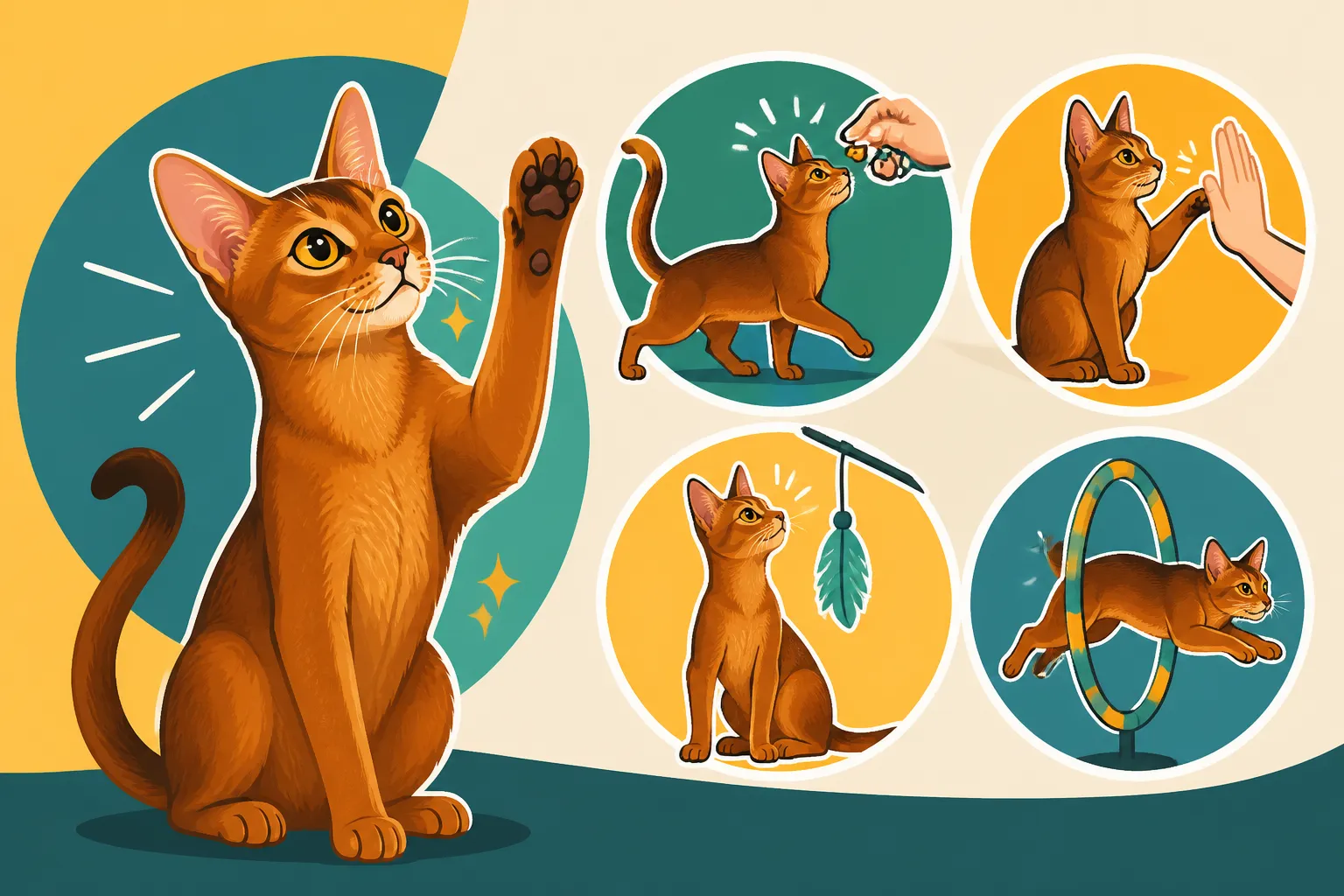
Which Tricks an Abyssinian Learns Fastest
It's incredibly frustrating when you have an Abyssinian, a cat brimming with intelligence and boundless energy, and you want to engage their brilliant minds, but you're not sure where to start with training. You see videos of other cats doing amazing things and wonder if your own Aby can ever reach that potential. This guide is here to walk you through the most effective ways to teach your Abyssinian tricks, leveraging their natural aptitudes and turning training into a joyful, bonding experience for both of you.
Understanding the Abyssinian Mindset for Training
Before we even dive into specific tricks, it's crucial to understand what makes an Abyssinian tick. These aren't your average couch potatoes; they're the canine-wannabes of the feline world, full of curiosity, agility, and a profound desire to be involved in whatever you're doing. This isn't just a cute quirk; it's the foundation of their trainability. They genuinely enjoy interaction and mental stimulation, often preferring it over a quiet nap in a sunbeam.
The traditional image of a cat as aloof and untrainable simply doesn't apply to an Abyssinian. They thrive on challenges and routine, and their high intelligence means they can quickly grasp concepts, sometimes even before you've fully explained them. However, this also means they get bored easily if not properly engaged, leading to them finding their own entertainment, which often involves things like opening cabinets or exploring places you'd rather they didn't. Tapping into their natural drive is the key to successful trick training.
It's also important to remember their physical capabilities. Abyssinians are lean, muscular, and incredibly athletic. They love to climb, jump, and run, so incorporating movement into your training sessions will be far more engaging for them than asking them to sit still for long periods. Think of training as a game that involves their whole body and mind, rather than just a series of commands. Their high energy also means shorter, more frequent training sessions are usually more effective than one long, drawn-out one, especially when they are younger. How Many Hours a Day an Abyssinian Stays Active might give you an idea of just how much energy you're dealing with.
Leveraging Their Natural Curiosity and Energy
One of the biggest advantages you have when training an Abyssinian is their insatiable curiosity. They want to investigate everything, know what you're doing, and be part of the action. You can use this to your advantage by making training an extension of their daily exploration. Instead of forcing them to do something, present it as a new, exciting challenge or a puzzle to solve. For instance, if you want them to touch a target stick, don't push the stick into their face; instead, let them approach it out of curiosity, then reward the first tentative sniff.
Their energy also means they love to move. Stationary tricks are fine, but tricks that involve movement – jumping, running, navigating obstacles – will be much more rewarding for an Abyssinian. Think about how you can incorporate their natural agility into the tricks you teach. This also means you'll need to be active during training. Sitting on the couch and expecting them to perform might not get the results you're hoping for. Get down on their level, move around, and make it a dynamic interaction.
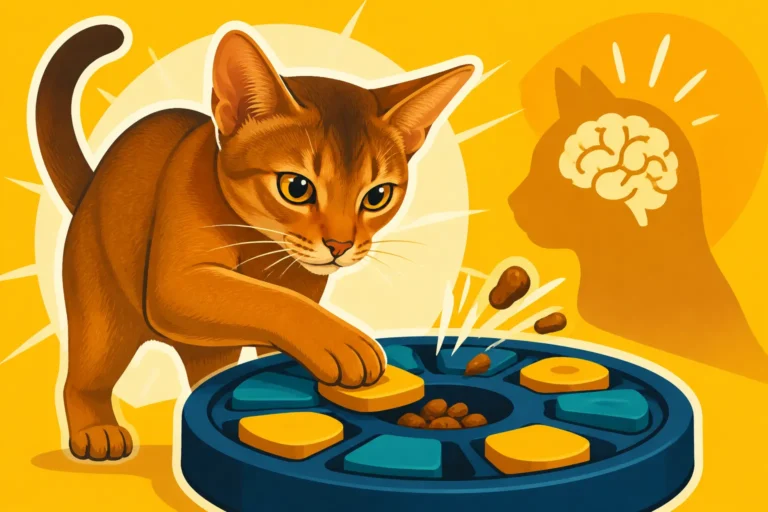
Beyond the physical, Abyssinians are known for their mental agility. They are problem-solvers. This means they often enjoy puzzle toys and enrichment activities. You can apply this same principle to trick training. Frame the trick as a problem they need to solve to get a reward. This intellectual engagement is just as important as the physical exertion for keeping an Aby happy and mentally sharp. Why Foraging Suits an Abyssinian's Mind delves deeper into how their intellect plays into their daily activities.
The Power of Positive Reinforcement
With an Abyssinian, positive reinforcement isn't just a nice-to-have; it's absolutely essential. These cats respond incredibly well to rewards and praise, and they thrive on knowing they've done something to please you (and earn a tasty treat, of course!). Punishment or harsh corrections will only lead to a confused, distrustful, and potentially withdrawn cat, which is the opposite of what you want from an eager-to-please Aby.
A high-value treat is your best friend in Abyssinian trick training. This isn't just any old kibble; it's something special, something they really love. Small pieces of cooked chicken, freeze-dried salmon, or a lickable treat paste often work wonders. Experiment to find what truly motivates your individual cat. Beyond treats, enthusiastic verbal praise ("Good job, smart kitty!") and a quick, satisfying pet can also serve as powerful reinforcers, especially once the cat understands the association between the action, the treat, and your approval.
Clicker training is an incredibly effective tool for Abyssinians because it provides an immediate, clear marker of the exact moment they performed the desired behavior. The click acts like a tiny camera shutter, perfectly capturing the right action, which helps your smart Aby understand what they're being rewarded for. Pairing the click with a treat reinforces the association. Many owners find a simple clicker from places like Amazon to be invaluable. Why Clicker Training Works on an Abyssinian explains the science and practicality behind this method in more detail.
Foundation Tricks: The Easiest to Master
When starting any training journey with your Abyssinian, it's wise to begin with a few foundational tricks. These are not only easy for them to grasp due to their natural behaviors but also build confidence and create a positive association with the training process. Think of these as the building blocks for more complex feats later on. Starting simple ensures early success, which keeps both you and your Abyssinian motivated.
These basic tricks often rely on an Abyssinian's inherent movements and curiosity, meaning you're guiding them to formalize something they might already do spontaneously. This makes the learning curve much gentler and faster. Plus, mastering these initial steps helps refine your own timing with the clicker and treats, which is crucial for effective communication during training sessions.
Remember, consistency is key, even with the easiest tricks. Short, frequent sessions (5-10 minutes a few times a day) are far more productive than one long, overwhelming session. Always end on a positive note, even if it means asking for an already mastered trick at the end, so your Aby feels successful and looks forward to the next session.
Sit
Teaching "sit" is often one of the first tricks people teach any pet, and it's surprisingly quick for an Abyssinian to pick up. Their natural posture often involves sitting, so you're not asking for anything unnatural. The key is to capture the moment they perform the action or lure them into it.
To teach "sit," hold a high-value treat near your Aby's nose. Slowly move the treat upwards and slightly back over their head. As their nose follows the treat, their rear end will naturally lower to the ground. The instant their bottom touches the floor, click (if using a clicker) and immediately give them the treat. Repeat this a few times. Once they consistently sit when lured, you can start adding the verbal cue "sit" just as their rear is descending. Eventually, they'll associate the word with the action. It might sound simple, but the precision of your reward timing is what makes it click for an Abyssinian. How to Teach an Abyssinian to Sit offers a more granular breakdown of this process.
It’s truly rewarding to see how quickly an Abyssinian connects the dots. They're so eager to understand what you want. If your cat isn't food motivated, consider using a favorite toy or a gentle head scratch as a reward. The important thing is that the reward is something they genuinely value. You'll find that even a few successful repetitions in a day can cement this behavior surprisingly fast, and a cat that sits on command is a surprisingly helpful thing in daily life!
Come
"Come" is not just a trick; it's an essential life skill, especially for a curious and adventurous Abyssinian. Imagine being able to call your cat away from a precarious perch or safely into their carrier! Abyssinians, being highly people-oriented, often pick up on this command very quickly, especially if you make it a rewarding experience.
Start by standing a short distance from your Aby. Say their name followed by "come!" in an excited, happy tone. The moment they take a step towards you, click and offer a fantastic treat. Gradually increase the distance, or try calling them from another room. Always make coming to you the most wonderful thing they can do, associating it with treats, praise, and perhaps even a favorite playtime. Avoid calling them only for unpleasant things like vet visits or baths, as this can create a negative association.
For Abyssinians, who are always on the go, making "come" a game can be incredibly effective. Call them, then gently toss a treat a short distance away once they arrive, encouraging them to chase it, then call them back again. This builds both speed and enthusiasm. You can find excellent clickers and high-quality treats suitable for training on Amazon, which makes stocking up easy. This trick works wonders when you need to gather your Abyssinian for something, or just want them close for a cuddle after a long day. How to Recall Train an Abyssinian provides additional tips for solidifying this crucial command.
Intermediate Challenges: Building on Basics
Once your Abyssinian has mastered the foundational tricks, it's time to elevate their game! These intermediate tricks build upon their understanding of positive reinforcement and start to challenge their coordination, problem-solving abilities, and physical prowess. Abyssinians thrive on these kinds of mental and physical puzzles, so don't be afraid to introduce more complex behaviors.
The beauty of teaching intermediate tricks to an Abyssinian is that their intelligence often means they can generalize concepts. For example, if they've learned to touch a target stick, they can quickly apply that understanding to touching other objects or performing more intricate movements. This makes the progression feel natural and keeps them engaged, always eager for the next challenge.
Remember to keep sessions short and sweet, and always review previously learned tricks to keep them sharp. Just like humans learning a new skill, repeated success builds confidence and makes them more willing to tackle something new. Your Abyssinian's keen focus and agile mind will truly shine as you delve into these more involved tricks.
Fetch
Yes, cats can fetch, and the Abyssinian is one of the breeds most likely to excel at it! This isn't just a party trick; it's a fantastic way to burn off some of that legendary Aby energy and engage their predatory instincts in a constructive way. Many Abyssinians take to fetching naturally, almost like a dog.
To teach fetch, start with a toy your Abyssinian absolutely adores – often a lightweight, crinkly ball or a small soft toy. Toss it a short distance. If your Aby goes after it, reward them with a click and a treat when they pick it up. The next step is encouraging them to bring it back. If they drop it nearby, reward that. Gradually, start only rewarding when they bring it closer and closer to you. You can try sitting on the floor, making yourself "smaller" and more approachable, or even gently coaxing them with another toy.
Persistence is key here. Some Abyssinians will bring it right back from the start, while others need more encouragement. If they're struggling, try making the "return" part of the game by moving away slightly as they approach, then rewarding them as they follow you with the toy. It's truly a delight to watch an Abyssinian trot back proudly with their "kill." How to Teach an Abyssinian to Fetch dives into this rewarding trick with more detail on how to refine the return.
High Five / Paw Shake
This trick is adorable, impressive, and a great way to reinforce the bond between you and your Abyssinian. It builds on their natural paw movements and requires a bit more intentionality than a simple sit. Plus, who doesn't love a cat that can high-five?
Start by asking your Abyssinian to "sit." Hold a treat in your closed fist. Present your fist to them. Most Abyssinians, being curious and food-motivated, will try to get the treat. The moment they lift a paw to bat at your hand, click and reward them with the treat from your other hand. Repeat this several times. Once they consistently lift their paw, you can introduce the verbal cue "paw" or "high five" and present your open palm (without a treat inside) for them to touch.
As they become proficient, you can withhold the treat until their paw is firmly in your hand. The goal is a gentle, intentional paw touch, not a frantic swat. This trick is great for teaching impulse control and patience, as they learn to perform a specific action rather than just trying to get the treat immediately. Don't be surprised if they start offering paw shakes spontaneously for attention once they've mastered it! How to Teach an Abyssinian to High Five offers additional insights.
Advanced Feats: Pushing the Abyssinian's Capabilities
For the truly dedicated Abyssinian and owner duo, advanced tricks offer a fantastic opportunity to showcase their exceptional intelligence, agility, and the deep bond you've formed. These aren't just about showing off; they're about providing intense mental and physical enrichment that an active Aby genuinely needs to thrive. These tricks often combine multiple learned behaviors or require a sequence of actions.
Tackling advanced tricks requires patience, consistent practice, and a willingness to break down complex actions into tiny, achievable steps. Your Abyssinian's problem-solving skills will be put to the test, and you'll likely be amazed at what they're capable of. The satisfaction of mastering these complex behaviors is immense for both of you.
Remember, every Abyssinian is an individual. Some might love jumping through hoops, while others prefer intricate puzzle-solving. Pay attention to what your cat enjoys most and tailor your advanced training accordingly. The goal is always engagement and enjoyment, not perfection.
Jumping Through a Hoop
This trick is a classic for a reason – it looks spectacular and perfectly highlights an Abyssinian's incredible athleticism and love for jumping. It combines targeting with a physical challenge, making it a truly engaging trick for an Aby.
You'll need a lightweight hoop (a child's hula hoop or even a simple embroidery hoop works well). Start by holding the hoop very low, just above the ground. Lure your Aby through it with a treat on the other side. The moment they step through, click and reward. Gradually raise the hoop a tiny bit each time, only rewarding when they jump through. Keep the sessions short to prevent frustration. As they get comfortable with jumping through, you can introduce the verbal cue "hoop" or "jump" before you lure them.
The key here is gradual progression. Never force your Abyssinian through the hoop. Make it an invitation to jump for a reward. You can even use a target stick on the other side of the hoop to guide them through. You can find affordable hoops and sturdy target sticks on Amazon to aid your training. This trick is a wonderful way to channel their climbing and jumping instincts into a structured activity.
Leash Training and Outdoor Adventures
While not a "trick" in the traditional sense, leash training is an incredible feat for an Abyssinian, opening up a whole new world of safe exploration. Given their adventurous spirit and desire to explore, teaching them to walk on a leash can be immensely rewarding.
The process of How to Harness Train an Abyssinian Without a Fight starts indoors. First, get your Abyssinian used to wearing a harness without the leash. Choose a lightweight, comfortable harness designed for cats (many good options are available on Amazon). Put it on for very short periods, especially during meal times or play, then take it off. Gradually increase the time they wear it. Once they're comfortable, attach the leash and let them drag it around indoors under supervision. Then, start practicing walking with you in a quiet, safe indoor space.
Only once they are completely comfortable and confidently walking with you indoors should you introduce them to the outdoors. Start with very short excursions in a quiet, safe area, like your backyard, or during off-peak hours in a park. Let them lead, explore, and sniff. Don't expect a dog-like heel; let them enjoy the new smells and sights. This is about enriching their lives, not forcing them into a strict walking routine. The experience can be incredibly stimulating for their curious minds.
Troubleshooting Common Training Hurdles
Even with the smartest and most eager Abyssinian, you're bound to hit a few bumps in the road during trick training. It's totally normal, so don't get discouraged! The important thing is to understand why your Aby might be struggling and how you can adapt your approach. Abyssinians are intelligent, but they also have their own ideas about how things should go, and sometimes their high energy can work against them.
One of the biggest frustrations owners face is when their cat suddenly "forgets" a trick or becomes uninterested. This often isn't a true forgetting, but rather a sign that something in the training environment or your approach needs adjustment. Maybe they're bored, distracted, or the reward isn't motivating enough at that moment. Identifying these issues is half the battle, and once you do, you can get back on track.
Remember, every training session is a learning experience for both of you. Be patient, be observant, and be flexible. Your Abyssinian is trying to communicate something, and it's up to you to decode it.
Distraction and Boredom
Abyssinians are incredibly smart, which is a double-edged sword. While it means they learn quickly, it also means they get bored quickly. A bored Aby is a distracted Aby, and a distracted Aby won't be learning any new tricks. If your cat is constantly looking away, swatting at imaginary flies, or wandering off during a session, boredom or distraction is likely the culprit.
To combat distraction, try to train in a quiet environment with minimal outside stimuli. Turn off the TV, put away your phone, and make sure there are no other pets or people creating noise. Keep sessions extremely short, perhaps just 2-5 minutes, especially when introducing a new concept. For boredom, rotate the tricks you're working on, introduce new challenges, or use different types of high-value treats. Sometimes, simply taking a break and coming back later can reset their focus. How Much Play an Abyssinian Needs Each Day is a reminder that constant engagement is important for this breed.
Another trick is to end on a high note. If your Aby is getting bored with a new trick, switch to a trick they already know perfectly, have them do it successfully, give a big reward, and then end the session. This leaves them feeling accomplished and excited for the next time. Also, consider the time of day: Abyssinians often have bursts of energy in the morning and evening, which might be prime training times.
Lack of Motivation
Sometimes, your Abyssinian might seem entirely uninterested in training, no matter how exciting you try to make it. This can be incredibly disheartening, but it rarely means your cat isn't trainable; it usually means you haven't found their "currency." What truly motivates them? For most Abyssinians, it's food, but not just any food.
If treats aren't working, re-evaluate your treat choice. Is it high-value enough? Small pieces of cooked meat, fish, or specialized cat treats tend to be far more motivating than regular kibble. Some Abyssinians are more toy-motivated, so a favorite wand toy or a feather on a string might be a better reward than food. Others crave attention and praise. Observe your cat: what do they really want? Use that. Why an Abyssinian Learns Faster When It Is Hungry also hints that a slightly hungry cat is often more food-motivated.
Beyond the reward itself, ensure you're not over-saturating them. If your Abyssinian has access to treats all day, they might not value them as highly during training. Consider offering specific training treats only during sessions. It's also worth checking in with your vet to rule out any underlying health issues that might be affecting their energy or appetite. A cat feeling unwell won't be keen on learning new tricks.
Making Training a Lifestyle, Not Just a Task
For an Abyssinian, training isn't just about teaching a few cute tricks; it's an essential part of their overall well-being. Their intelligent, active nature means they crave mental and physical engagement, and structured training provides a fantastic outlet for both. When you integrate training into your daily routine, it stops feeling like a chore and becomes a natural extension of your bond with your cat.
Think of it as ongoing enrichment, a way to keep their sharp minds challenged and their agile bodies moving. This can significantly reduce boredom-induced destructive behaviors, create a more harmonious household, and deepen the unique connection you share. An Abyssinian that's regularly engaged in training is often a happier, more contented cat.
The goal isn't to turn your Abyssinian into a circus performer, but to use training as a tool for communication, exercise, and companionship. It’s about building a language between you, fostering trust, and celebrating their incredible capabilities.
Incorporating Training Into Daily Play
Abyssinians are renowned for their playful nature, and one of the best ways to keep them engaged in training is to weave it directly into their playtime. Instead of separating "playtime" from "training time," blend them! This makes learning feel less like work and more like fun, which is exactly what an Abyssinian thrives on.
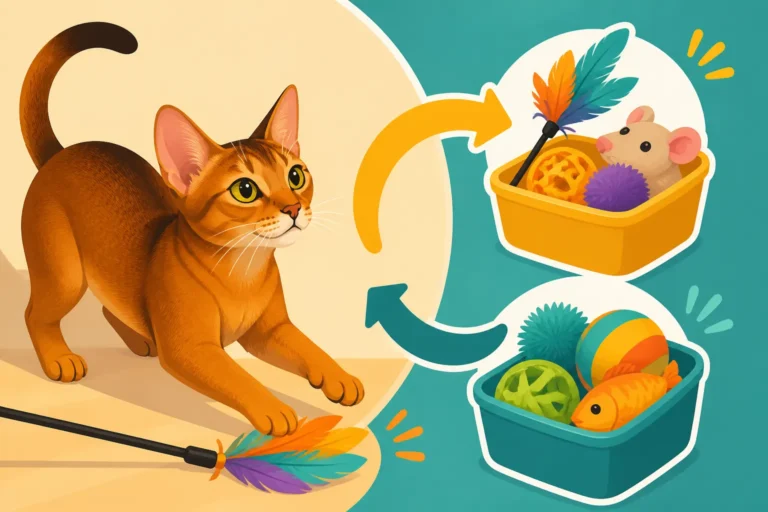
For example, during a wand toy session, you can incorporate "sit" or "come" commands. Ask them to "sit" before you launch the toy, or call them to "come" before giving them a final pounce on the feather. If your Aby fetches, that's already a perfect blend of play and training. You can also hide treats around the house, turning mealtime into a foraging game, which is great mental exercise. Which Puzzle Feeders Hold an Abyssinian's Attention can give you ideas for toys that blend learning and play. Even simple things like asking them to "paw" for a favorite toy can transform a regular interaction into a mini-training session.
This approach ensures that training doesn't become a rigid, scheduled event that your Abyssinian might resist. Instead, it becomes an enjoyable, unpredictable part of their day, something they look forward to. It also helps reinforce behaviors in various contexts, making your Aby's understanding of commands more robust.
The Importance of Consistency and Patience
If there are two pillars of successful Abyssinian trick training, they are consistency and patience. These cats are smart, but they're still cats! They won't learn something perfectly in one session, and they might have days when they're less receptive than others. Your ability to remain consistent and patient will be the most significant factor in your long-term success.
Consistency means always using the same verbal cues, hand signals, and reward system. If you ask for "sit" one day and "down" the next for the same action, your Aby will get confused. It also means regular practice, even if it's just a few minutes each day. Short, consistent bursts of training are far more effective than sporadic, marathon sessions. Think about incorporating one or two known tricks into your morning routine, and another two in the evening.
Patience is equally vital. There will be plateaus, regressions, and moments where you feel like you're getting nowhere. During these times, take a deep breath, end the session on an easy success, and try again later. Never get angry or frustrated with your Abyssinian; they pick up on your emotions. Celebrate every tiny step forward, and remember that the journey of teaching tricks is just as enriching as the final outcome. The bond you build through this shared activity is truly priceless. What Twenty Minutes a Day Does for an Abyssinian truly underlines the power of consistent, short training sessions.
Table: Abyssinian Trick Learning Speed and Complexity
To give you a clearer picture of what to expect, here's a table categorizing some common tricks by their typical learning speed and relative complexity for an Abyssinian. Keep in mind that individual cats will vary!
| Trick | Typical Learning Speed (for an Aby) | Complexity Level | Notes |
|---|---|---|---|
| Sit | Very Fast (days) | Beginner | Often learned by luring. Highly useful for impulse control and polite greetings. |
| Come | Fast (days to 1-2 weeks) | Beginner | Essential life skill. Abyssinians are often people-oriented and eager to approach for rewards. Critical for safety. |
| Target (nose/paw touch) | Fast (days to 1-2 weeks) | Beginner | Foundation for many other tricks. Abyssinians are naturally curious and will investigate a target stick from Amazon quickly. |
| Fetch | Moderate (weeks) | Intermediate | Many Abyssinians have a natural retrieving instinct. Can take time to teach consistent return. Great for energy release. |
| High Five / Paw Shake | Moderate (weeks) | Intermediate | Builds on pawing behavior. Requires precision in timing the reward. Good for mental engagement and bonding. |
| Stay | Moderate to Slow (weeks to months) | Intermediate | Can be challenging for high-energy Abyssinians who prefer movement. Requires patience and building duration slowly. |
| Jump Through Hoop | Moderate to Slow (weeks to months) | Advanced | Leverages natural athleticism. Requires careful luring and gradual raising of the hoop. Highly rewarding visually and physically. |
| Leash Walking | Slow (months) | Advanced | More of a lifestyle skill than a trick. Requires extensive desensitization to harness and leash. Patience is paramount for a positive experience. Abyssinians usually adapt well due to their adventurous nature, and you can find great harnesses on Amazon. |
| Spin / Twirl | Moderate (weeks) | Intermediate | Often taught by luring with a treat. Abyssinians' agility makes this a relatively quick learn once they understand the concept. |
| Speak (meow on command) | Moderate to Slow (weeks to months) | Intermediate | Abyssinians are vocal, but teaching "on command" can take time as it's less natural to perform a sound on cue. Capture natural meows then add cue. What an Abyssinian's Chirp Means might inspire you to teach other vocalizations. |
Disclaimer
This article is for general informational purposes only and does not constitute professional advice. Laws, prices and regulations vary by location and change over time. Consult a qualified professional for guidance on your specific situation.