How to Leash Train an Abyssinian
It's a common dream for Abyssinian owners: sharing the great outdoors with your adventurous, curious cat. However, the reality of strapping a harness onto a creature renowned for its boundless energy and independent spirit can feel less like a picturesque stroll and more like trying to leash a wild squirrel. Many of us have faced the struggle of a cat freezing, flopping, or simply becoming a furry, wriggling escape artist. This comprehensive guide is here to walk you through the process, from choosing the right gear to safely exploring the world with your Abyssinian by your side.
Understanding Your Abyssinian's Natural Instincts for Leash Training
Before we even think about harnesses and leashes, it's crucial to understand the unique personality of your Abyssinian. These aren't your average couch potato cats; they are bundles of intelligence, curiosity, and high-octane energy, often described as the "clowns of the cat world." This inherent nature makes them both excellent candidates for leash training and, paradoxically, quite a challenge.
Why the Abyssinian is a Good Candidate for Leash Training (and its challenges)
Abyssinians are incredibly intelligent and keenly observant. They love to be involved in whatever you're doing, and their curiosity means they're often eager to explore new sights, sounds, and smells. This desire for novelty is a huge advantage when it comes to leash training. They crave mental and physical stimulation, and a supervised outdoor adventure can be an incredible outlet for that energy, far beyond what even the most elaborate indoor setup can provide. The Abyssinian Is the Busiest Cat in the House isn't just a catchy phrase; it's a statement of fact that underscores their need for engagement.
However, their intelligence also comes with a strong sense of independence. Abyssinians aren't typically inclined to follow orders just because you give them. They are masters of their own destiny, and convincing them that wearing a harness is their idea, or at least a highly rewarding one, is key. Their strong prey drive and quick reflexes mean they can bolt at the sight of a bird or a rustling leaf, making a secure harness and attentive handling absolutely non-negotiable. Many owners get frustrated when their Aby initially resists, thinking their cat is simply too stubborn. It's not stubbornness; it's a combination of their innate cautiousness about new sensations and their powerful desire for autonomy. Patience, not force, is the only way forward.
The Importance of Mental Stimulation Before Outdoor Adventures
Think of leash training as an extension of your Abyssinian's overall enrichment program. If your Aby isn't adequately stimulated indoors, they'll be even more prone to anxiety, frustration, or outright refusal when faced with the new experience of a harness and the vastness of the outdoors. A cat that's bored or under-stimulated at home is more likely to view the harness as an irritating restriction rather than a gateway to exciting new experiences. This is why What an Abyssinian Does When It Is Bored often involves things you'd rather they didn't do, like opening cabinets or exploring places they shouldn't.
Engaging their minds and bodies with interactive play, puzzle feeders, and climbing opportunities before starting leash training helps build their confidence and satisfaction. A cat that feels secure and fulfilled in its home environment is much more receptive to learning new skills and accepting new experiences. This also teaches them to associate you with positive, engaging activities, which is vital for building trust during the training process. When their minds are already active and engaged, introducing a new challenge like harness training feels more like a game than a chore.
Gathering the Right Gear: Harnesses, Leashes, and Carriers
Once you're committed to the idea, the next critical step is selecting the proper equipment. This isn't a "one size fits all" situation, especially with the unique build of an Abyssinian.
Choosing the Best Harness for an Abyssinian's Body Type
Abyssinians are sleek, athletic, and notoriously flexible creatures. This means many standard cat harnesses are simply not escape-proof enough for them. You need a harness that fits securely without chafing, allowing for a full range of motion while preventing them from wriggling free. The goal is to make it as comfortable and non-restrictive as possible.
Generally, there are two main types to consider:
- H-style harnesses: These have straps that go around the neck and chest, connected by a strap along the back. They can be good if properly fitted, but Abyssinians can often slip out of poorly designed ones due to their narrow shoulders and flexible spine.
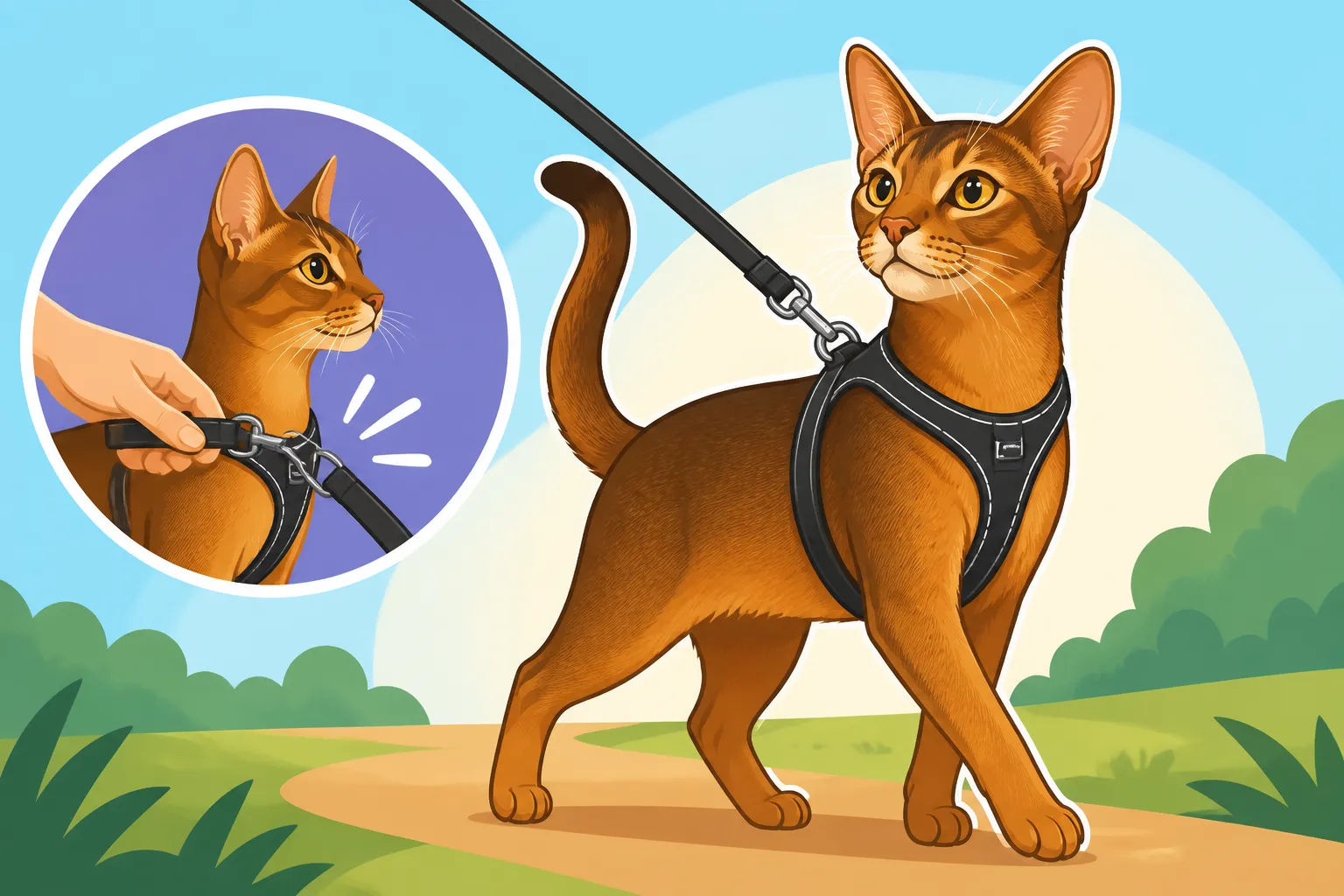
- Vest-style harnesses: These are often a better choice for Abyssinians. They distribute pressure more evenly across the chest and back, are harder to wiggle out of, and often feel more secure to the cat. Look for designs that have both neck and girth adjustments, often with strong hook-and-loop fasteners in addition to buckles. Materials should be lightweight and breathable. When trying one on, ensure you can fit two fingers snugly under all straps, but no more. A well-fitting harness should feel like a second skin, not a straitjacket. Which Harness Fits an Abyssinian's Narrow Chest is a question many owners grapple with, and prioritizing a secure, vest-style option is usually the best bet. You can find a huge variety of styles and sizes on platforms like Amazon, making it easy to compare features and read reviews from other cat owners.
Selecting a Leash and Considering a Carrier for Safety
The leash you choose should complement the harness and your walking style. A lightweight, standard nylon or rope leash, about 4-6 feet long, is usually ideal. Avoid retractable leashes, especially when you're first starting out. They offer less control and can be dangerous if your cat suddenly bolts, potentially causing injury or allowing them to get too far away before you can react. You want a leash that provides a direct, consistent connection to your cat, allowing you to guide and gently stop them if needed.
A secure carrier is also an often-overlooked but essential piece of gear for leash training. It serves multiple purposes:
- Transport: You might need to carry your Aby to a safe, quiet outdoor spot, especially if your immediate surroundings are noisy or have heavy foot traffic.
- Safety Retreat: If your cat becomes overwhelmed or frightened during an outdoor excursion, the carrier can be a familiar, secure haven they can retreat into. This reduces stress and helps them feel more in control.
- Introduction to New Places: Using the carrier as a "base camp" allows your Abyssinian to observe a new environment from a safe vantage point before venturing out on the leash.
Choose a sturdy, well-ventilated carrier that's comfortable for your Aby, perhaps with soft bedding inside. Introducing the carrier positively at home, long before you use it for trips, is also a good idea. Make it a cozy spot they enjoy being in.
The Step-by-Step Process of Introducing the Harness and Leash
This stage requires significant patience and a deep understanding of positive reinforcement. Rushing it is the quickest way to guarantee failure.
Positive Association: Making the Harness a Friend, Not a Foe
The first interaction with the harness should never involve simply forcing it onto your cat. This creates a negative association immediately. Instead, start by making the harness seem like the most wonderful thing in the world.
- Sight and Smell: Place the harness in an area your Abyssinian frequents, like near their feeding spot or a favorite napping area. Let them sniff it, bat at it, and generally explore it on their terms. Don't push it. You can even rub treats or sprinkle catnip on it to make it more appealing.
- Treats and Praise: Whenever your Aby shows any positive interest in the harness (sniffing, touching, even just looking at it without running away), immediately offer a high-value treat and verbal praise. This builds a connection between the harness and good things.
- Brief Touches: After a few days of passive exposure, start gently touching your Abyssinian with the harness, particularly around the areas where it will sit (neck, chest, back). Each touch should be followed by a treat and praise.
- First Wear: When they seem comfortable with touches, try putting the harness on for just a few seconds. Do it quickly, snap the buckles, and immediately distract them with a favorite treat or toy. Then, take it off just as quickly. The key is to keep these first sessions extremely short and positive, ending before they show signs of distress. Don't worry if they act a bit stiff or awkward; that's perfectly normal for a new sensation.
Gradual Wear and Movement: Indoors First, Always
Once your Aby tolerates the harness for a few seconds, it's time to gradually increase the duration and introduce the leash, all within the safety and familiarity of your home.
- Increase Duration: Over several days, slowly increase the amount of time your Abyssinian wears the harness. Start with a minute, then two, then five, and so on. Always supervise them, especially at first, to ensure they don't get tangled or try to chew on it excessively. Keep them engaged with play or feeding during these times so they associate wearing the harness with fun activities.
- Attach the Leash (Dragging): Once they're comfortable wearing the harness for 10-15 minutes, attach the lightweight leash. For the very first few times, let them drag the leash around the house while you supervise closely. This helps them get used to the weight and feel of the leash trailing behind them without the added pressure of you holding it. Again, reward any calm behavior with treats.
- Holding the Leash and Gentle Pressure: After they're used to dragging the leash, pick it up. Allow your Aby to walk around freely with you holding the leash, letting them explore. Only apply very gentle, consistent pressure if they go in a direction you don't want, then immediately release the pressure and reward them when they move in a more desirable direction or towards you. Avoid yanking or pulling; this isn't a dog, and a cat will just learn to resist. This is where Training an Abyssinian Is Easier Than Stopping It really comes into play, as positive reinforcement builds cooperation. Practice calling their name and rewarding them when they look at you or come closer. This will be invaluable for outdoor adventures. Why an Abyssinian Learns Faster When It Is Hungry means those high-value treats are your best friend during these sessions!
Taking the First Steps Outdoors: Safety and Exploration
The moment you've been working towards! Venturing outside for the first time is exciting, but it requires careful planning and a deep understanding of your Abyssinian's comfort levels.
Choosing the Right Environment for Outdoor Introductions
The first outdoor experiences should be as stress-free as possible. This means selecting a calm, controlled environment.
- Your Own Backyard: If you have a securely fenced yard, this is often the ideal starting point. It's a familiar scent environment, and you have control over external stimuli. Let them explore at their own pace, sniffing every blade of grass.
- Quiet Parks or Green Spaces: If a private yard isn't an option, look for very quiet, low-traffic parks or grassy areas. Avoid times when dogs are commonly walked, children are playing loudly, or there's a lot of pedestrian activity. Early mornings or late evenings are often best. The goal is to minimize overwhelming sensory input, which can quickly turn a positive experience into a frightening one. Imagine stepping into a bustling city street as your first outdoor experience; it would be terrifying! Give your cat the same consideration.
- From the Carrier: For the very first few times, you might even consider bringing your Aby out in their carrier to the chosen spot. Let them sit in the carrier with the door open, observing the new smells and sounds from a safe, enclosed space. Only when they show curiosity and a desire to emerge should you let them out on the leash. This step acknowledges and validates any initial nervousness your Abyssinian might feel about such a huge change in their environment.
Supervised Exploration and Reading Your Abyssinian's Cues
When you finally step outside with your Abyssinian on the leash, remember this isn't a "walk" in the traditional dog-walking sense. This is a cat-led exploration.
- Let Them Lead: Allow your Abyssinian to dictate the pace and direction. They will want to sniff everything, rub against new textures, and investigate every rustle. Your role is to follow, providing a gentle anchor and keeping them safe. Don't drag them along or try to force them to walk a specific path. The walk is about their sensory experience, not your destination.
- Keep the Leash Slack: Maintain a loose leash. A tight leash signals tension and control, which can make your Aby feel trapped or anxious. A slack leash allows them to feel independent while still being securely connected to you.
- Observe Body Language: Your Abyssinian will tell you everything you need to know through their body language.
- Confident: Tail held high, ears swiveling, pupils normal, sniffing actively.
- Curious: Tail up, slightly hesitant movements, intense sniffing.
- Anxious/Fearful: Tail tucked, ears flattened, crouching, dilated pupils, trying to hide or bolt. What an Abyssinian's Tail Says can be a huge indicator of their mood.
If you see signs of anxiety, immediately move to a quieter spot, reassure them with a calm voice, or put them back in their carrier for a break. End the session on a positive note, even if it's after just a few minutes. Overwhelming them will only set back your progress. Remember, the goal is to build positive memories and associations with outdoor exploration.
Troubleshooting Common Leash Training Challenges
It's almost guaranteed you'll encounter some bumps in the road. Don't get discouraged! These challenges are normal and can be overcome with patience and consistency.
Dealing with Resistance, Freezing, or Escape Artists
Every Abyssinian is an individual, and some will naturally take to the harness and leash more easily than others. If your cat resists, freezes, or tries to wriggle out, know that you're not alone. This is often the most frustrating part for owners, making them feel like they're doing something wrong.
- The "Floppy Cat" or "Statue Cat": Many cats, when first wearing a harness, will flop to the ground and refuse to move, or freeze completely. This isn't stubbornness; it's often a sign of feeling overwhelmed or restricted. Don't drag them. Instead, try to tempt them with a favorite toy or a highly irresistible treat (like a lickable paste or a small piece of cooked chicken). If they still won't move, gently pick them up, offer praise, remove the harness, and try again later with a shorter session. Sometimes, simply letting them sit in the harness for a few minutes while eating a meal or playing can help them forget they're wearing it.
- The Escape Artist: Abyssinians are notoriously agile, and a poorly fitting harness can turn into a Houdini act. If your cat consistently slips out, the harness is too loose or the wrong style. Revisit Which Harness Fits an Abyssinian's Narrow Chest and consider a different design, like a secure vest. Always check the fit before leaving the house. If they manage to escape, never chase them; this will only make them run further. Instead, entice them back with food, toys, or familiar sounds. The stress of an escape attempt often reinforces the idea that the harness is bad. Why an Abyssinian Escapes a Standard Fence highlights their climbing and wriggling abilities, so assume they can do the same with a harness if it's not perfectly fitted.
Managing Distractions and Maintaining Focus Outdoors
The world outside is a riot of sights, sounds, and smells, and your Abyssinian's keen senses will be in overdrive. Keeping their focus can be tough.
- High-Value Treats are Your Ally: Always carry a stash of their absolute favorite, high-value treats. These are your secret weapon for redirecting attention from potential dangers or temptations. If a dog barks, a child runs by, or a squirrel darts past, immediately offer a treat to draw their focus back to you. This also reinforces the idea that you are the source of good things, even in a distracting environment.
- Practice Recall (Indoors First): Before venturing out, practice calling your Abyssinian's name and rewarding them when they come to you. Start indoors, in quiet environments, and gradually introduce more distractions. Use a distinct, positive tone of voice. This recall practice is essential for safety outdoors, allowing you to regain control if they get too interested in something potentially dangerous. How to Recall Train an Abyssinian details this process.
- Short, Controlled Exposures: Don't expect long, serene walks initially. Short bursts of outdoor time in gradually more stimulating environments are key. If they become overly fixated on something, gently guide them away, offering a treat as a reward for moving. The goal is to teach them to cope with distractions, not to eliminate them entirely, which is impossible.
- Stay Calm Yourself: Your Abyssinian will pick up on your emotions. If you're anxious or stressed, they're more likely to be anxious themselves. Breathe, relax, and project a calm, confident demeanor.
Beyond the Walk: Enriching Your Abyssinian's Leashed Adventures
Leash training isn't just about walks; it's about opening up a whole new world of enrichment for your dynamic Abyssinian.
Exploring Different Environments and Extending Durations
Once your Abyssinian is confident and comfortable with walks in familiar, quiet areas, you can slowly start to expand their horizons.
- Varying Locations: Introduce them to new, slightly different environments. Perhaps a different, slightly busier park during a quieter time, or a friend's fenced yard. Each new place offers a fresh array of scents and textures to explore, keeping their minds sharp and engaged. Think of it as a field trip for your cat! Always ensure the new environment is safe, free from hazards like aggressive dogs, busy roads, or toxic plants.
- Gradual Increase in Duration: As their confidence grows, you'll find your Abyssinian can handle longer sessions outdoors. What started as 5-minute excursions might become 20 or 30 minutes. Pay close attention to their stamina and interest levels. End the session while they're still enjoying themselves, leaving them wanting more. This prevents burnout and maintains the positive association with outdoor time. This extended exploration is a fantastic way to provide the intensive How Many Hours a Day an Abyssinian Stays Active that these cats truly need.
Integrating Leash Training with Other Enrichment Activities
Leash training can be just one part of a rich tapestry of activities that keep your Abyssinian happy and stimulated.
- Observation Stations: If you have a window perch or a catio, your Aby can still enjoy the outdoors even when not on a leash. A catio, especially, provides a safe, enclosed outdoor space where they can soak up the sun, watch birds, and get fresh air without the need for constant supervision. How an Abyssinian Uses a Catio can be a great complement to leash walks.
- "Adventure" Training: Consider teaching your Abyssinian other tricks or commands that can be used during your outdoor excursions. For example, teaching them to "sit" on command can be useful for managing sudden distractions, or "come" can be a lifesaver. How to Teach an Abyssinian to Fetch shows just how capable these cats are of learning. You can even hide treats around your walking route for them to "forage" for, tapping into their natural hunting instincts.
- Socialization (Cautiously): For some highly confident Abyssinians, supervised, controlled interactions with other calm, cat-friendly dogs or people can be a positive experience. However, this should always be approached with extreme caution and only if your cat shows clear signs of enjoying such interactions. Never force it. The primary goal of leash training for an Abyssinian should be exploration and enrichment, not necessarily socialization. Remember, Why an Abyssinian Should Not Roam Outdoors is a critical safety consideration, and leash training allows them to experience the world safely under your watchful eye.
Leash training an Abyssinian is a marathon, not a sprint. It requires dedication, consistency, and above all, an understanding of your cat's unique personality. But the rewards – a more enriched, happier cat and the joy of sharing new adventures – are well worth the effort.
Disclaimer
This article is for general informational purposes only and does not constitute professional advice. Laws, prices and regulations vary by location and change over time. Consult a qualified professional for guidance on your specific situation.