How Much More an Abyssinian Sheds in Spring
Many Abyssinian owners find themselves a little surprised when spring rolls around. You've been told (and probably experienced!) that your Aby is a relatively low-shedding breed, a real boon for those who dread constant vacuuming. But then the days get longer, the sun feels warmer, and suddenly, you're noticing more of those beautiful, fine hairs around the house. It's easy to wonder if something is wrong or if your usually fastidious feline is suddenly turning into a shedding machine. This guide will explore exactly why your Abyssinian might shed more in the spring, what's considered normal for this time of year, and how you can help manage the extra fluff without turning your life into a never-ending grooming session.
The Abyssinian Coat: A Marvel of Minimal Shedding
Before we dive into spring shedding, it's crucial to understand what makes an Abyssinian's coat so unique in the first place. This understanding will help frame why their "increased" shedding in spring is still quite different from many other cat breeds.
The Magic of the Ticked Coat and Its Structure
The defining feature of the Abyssinian is its ticked, agouti coat. Unlike many cats with distinct stripes or solid colors, each individual hair on an Abyssinian's body is banded with two or three, sometimes even four, different colors. This gives them that magnificent, shimmering appearance that shifts as they move, almost like a wild rabbit or a deer. It's truly a sight to behold and one of the reasons they're so captivating. Why Each Abyssinian Hair Carries Three or Four Bands explains this in more detail.
What's really important for shedding, however, is what the ticked coat doesn't have much of: a dense undercoat. Many cat breeds, especially those originating from colder climates, have a thick, insulating layer of soft, downy hair beneath their coarser guard hairs. This undercoat is often the primary culprit for heavy shedding, as it comes out in clumps. Abyssinians, by contrast, have a very minimal, almost non-existent undercoat. Why the Ticked Coat Leaves an Abyssinian Almost No Undercoat is a deep dive into this characteristic. This lack of a thick undercoat is precisely why your Abyssinian is generally considered a low-shedding cat, and why their shed hairs tend to be individual, fine strands rather than big tufts.
The Baseline: Year-Round, Barely Noticeable Shedding
Even with their unique coat, no cat is truly "non-shedding." All cats, including Abyssinians, undergo a continuous cycle of hair growth, rest, and shedding. Old hairs fall out to make way for new ones. For most of the year, your Abyssinian's shedding is likely so subtle that you barely notice it. You might find a few stray hairs on your clothes or furniture, or a small collection in their favorite sleeping spots, but it's rarely overwhelming. This is part of the appeal for many Aby owners – a beautiful, active cat without a house full of fur tumbleweeds. Why an Abyssinian's Single Ticked Coat Barely Sheds discusses this year-round minimal shedding.
Decoding the Spring Shed Cycle
So, if Abyssinians are generally low-shedding, why does spring feel different? It all comes down to natural biological responses to environmental cues, combined with the realities of living indoors.
The Primal Role of Light and Temperature
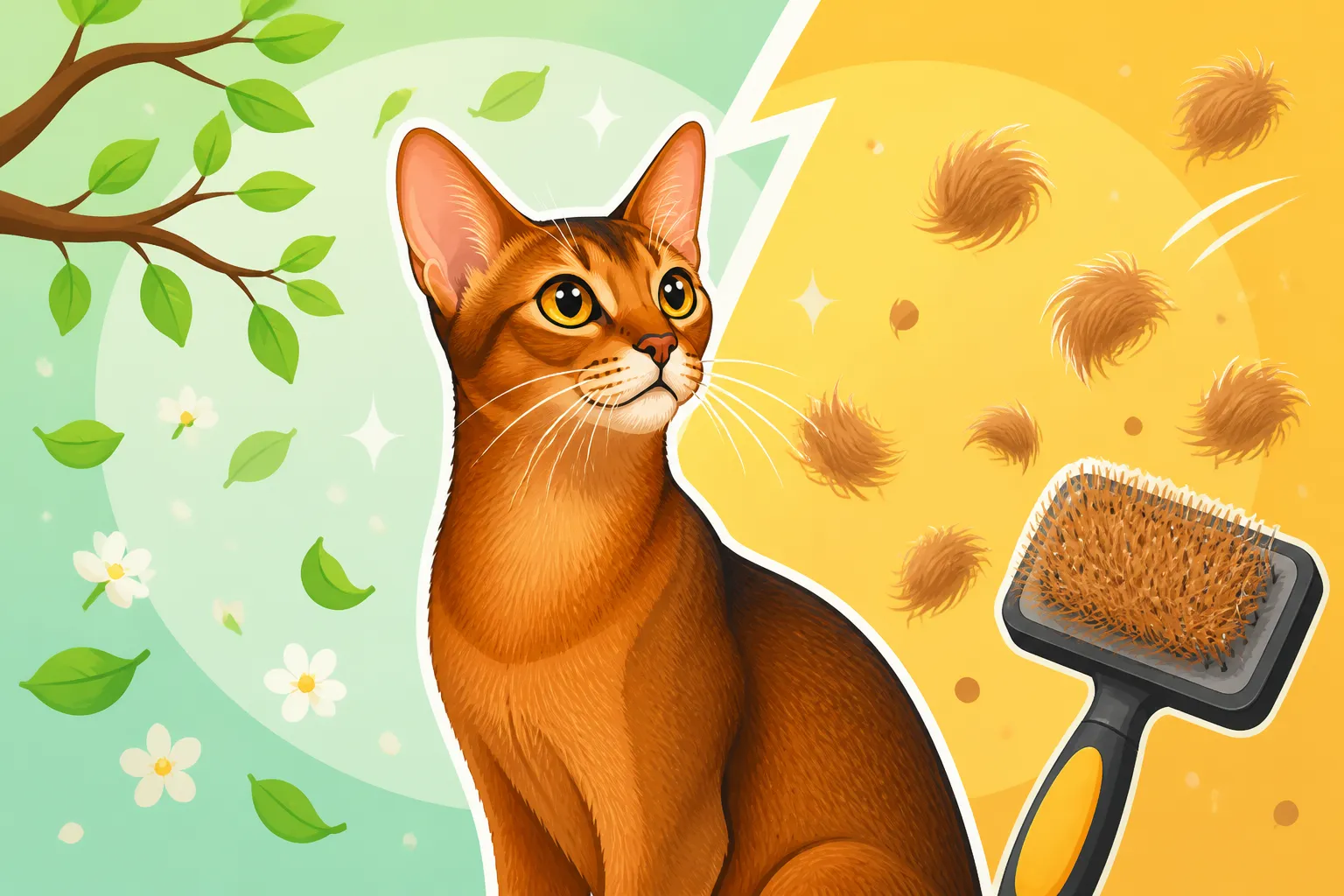
Cats, like many mammals, are incredibly attuned to changes in their environment. The primary drivers for seasonal shedding are photoperiod (the length of daylight) and, to a lesser extent, temperature fluctuations. As winter gives way to spring, the days progressively lengthen, and the intensity of natural light increases. These signals tell your cat's body that it's time to lighten up, literally. The denser, warmer coat that served them well through the cooler months is no longer needed, and the body initiates a process to shed those older, thicker hairs to make way for a lighter, thinner summer coat. How an Abyssinian's Coat Thickens in Winter goes into the inverse of this process.
While Abyssinians don't grow a heavy, dense "winter coat" in the same way a Maine Coon or a Siberian might, their fur still adapts. The individual hairs can become slightly coarser or more numerous to provide a bit more insulation. Spring is simply the natural time for these slightly more robust winter hairs to be replaced by the finer, sleeker hairs suited for warmer weather. It's a subtle change, but enough to result in a noticeable increase in loose hair around your home.
What "More" Really Looks Like for an Abyssinian
When we talk about an Abyssinian shedding "more" in spring, it's important to keep perspective. We're not talking about the kind of fur avalanche you might experience with a long-haired breed like a Persian or even a medium-haired domestic cat. For an Abyssinian, "more" typically means:
- More frequent finding of individual hairs: Instead of just a few, you might see small clusters of fine hairs in their bedding, on your dark clothing, or floating across hard floors.
- Faster accumulation: While grooming them, you'll likely pull out a greater volume of loose hair than in other seasons.
- The feeling of a slightly thinner coat: You might even notice their coat feels marginally lighter to the touch as the denser hairs shed out.
It's still generally manageable. The hairs are fine and don't clump excessively, which means they're often easier to clean up than the fluffy undercoat of other breeds. You won't typically find large "dust bunnies" of Aby fur, but rather a greater dispersal of individual strands. If you start seeing bald patches, intense itching, or a dramatic change in coat texture, then it's time to consider other causes, which we'll discuss later.
The Indoor Heating Dilemma: Keeping Shedding Continuous
Our modern homes, with their consistent indoor temperatures and artificial lighting, can sometimes confuse a cat's natural cycles. When a cat lives predominantly indoors, especially in climates where heating is used extensively in winter, the dramatic seasonal shifts that trigger shedding in outdoor animals are somewhat muted.
For an indoor Abyssinian, the body might not get the strong, clear signal to grow a thick winter coat, nor a clear signal to shed it all at once in spring. Instead, the shedding process can become more drawn-out or less pronounced, sometimes leading to a more continuous, year-round moderate shed rather than distinct seasonal bursts. However, even with stable indoor environments, the subtle increase in natural daylight hours as spring approaches can still be enough to kickstart a slightly heavier shedding period for most Abyssinians. Whether Indoor Heating Keeps an Abyssinian Shedding explores this concept in more detail.
Practical Strategies for Managing Spring Shedding
Even a "low-shedding" cat means some shedding, and in spring, that amount increases. Thankfully, there are several simple yet effective strategies you can employ to minimize the impact of spring shedding on your home and keep your Abyssinian comfortable.
Upping Your Grooming Game: Frequency and Tools
The most direct way to manage shedding is through regular grooming. During the spring months, you'll want to increase your grooming frequency slightly. While An Abyssinian Needs Brushing Once a Week and No More is a good guideline for most of the year, a couple of times a week, or even every other day during peak shedding, can make a significant difference.
When it comes to tools, remember that the Abyssinian's coat is fine and has little undercoat, so harsh deshedding tools designed for double-coated breeds are generally unnecessary and can even damage their delicate ticking. Instead, opt for gentle tools:
- Rubber Curry Brush or Grooming Mitt: These are fantastic for an Abyssinian. The rubber nubs gently massage the skin, stimulating circulation, and effectively grab loose hairs without pulling or damaging the coat. Many Abyssinians actually enjoy the sensation. You can find excellent options on Chewy or Amazon. Which Grooming Mitt Suits an Abyssinian offers specific recommendations.
- Fine-toothed Comb: A fine metal comb can also be useful for catching those last stray hairs and ensuring the coat lies flat and shiny. Use it gently, especially around sensitive areas.
- Damp Cloth or Chamois: After brushing, a quick wipe-down with a slightly damp cloth (or a specialized chamois, as discussed in How a Chamois Brings Up an Abyssinian's Shine) can pick up any remaining loose hairs and add a lovely sheen to their coat.
Remember, make grooming a positive experience. Keep sessions short, offer treats, and praise your cat. If they're resistant, try a different time of day or a different tool.
Nutritional Support for a Glorious Coat
A healthy coat starts from within. What your Abyssinian eats plays a huge role in the quality of their fur and can indirectly influence shedding. A cat on a high-quality, balanced diet will typically have a healthier coat that sheds less excessively and grows back more robustly.
Look for cat foods that are:
- High in animal-based protein: This is crucial for muscle maintenance and coat health. Abyssinians are active cats, so their dietary needs reflect that high energy level. What to Feed an Abyssinian That Never Stops Moving delves into their caloric and protein requirements.
- Rich in Omega-3 and Omega-6 fatty acids: These essential fatty acids, often derived from fish oils (like salmon oil), are vital for skin health and a shiny coat. They can help reduce dryness and irritation, which can sometimes contribute to shedding. Many premium cat foods incorporate these.
- Moisture-rich: A diet with plenty of wet food contributes to overall hydration, which is essential for healthy skin and fur. How Much Water an Abyssinian's Amyloid Risk Demands highlights the critical role of water intake for this breed, especially given their predisposition to certain kidney issues.
If your cat's food doesn't seem to be cutting it, or you want to give an extra boost, consider adding a vet-approved omega fatty acid supplement to their diet. Always consult your veterinarian before adding any supplements, especially if your cat has existing health conditions. Also, make sure their food contains adequate taurine, which is essential for feline health, including cardiac and eye function, but also contributes to overall vitality that reflects in coat health. Why Taurine Matters in an Abyssinian's Food explains its importance.
Environmental Management: Beyond the Cat Itself
Your home environment can also play a role in how noticeable shedding becomes. A few adjustments can help keep things cleaner:
- Regular Vacuuming: This might seem obvious, but a consistent vacuuming schedule, especially during spring, will significantly reduce the accumulation of loose hairs. Invest in a vacuum cleaner that's effective on pet hair across different surfaces.
- Wash Pet Bedding Frequently: Your Abyssinian's favorite sleeping spots are likely hair magnets. Washing their beds, blankets, and any soft surfaces they frequent on a regular basis will remove accumulated fur.
- Air Purifiers: While they won't stop shedding, air purifiers with HEPA filters can help capture airborne pet dander and fine hairs, improving indoor air quality and reducing allergens. You can find various models on Amazon.
- Choose Pet-Friendly Fabrics: If possible, opt for furniture and rug fabrics that are easier to clean and don't trap hair excessively. Smooth, tightly woven fabrics often fare better than textured or loose weaves.
When to Worry: Abnormal Shedding and Health Concerns
While some increased shedding in spring is entirely normal for an Abyssinian, there are instances where shedding can signal an underlying health issue. It's crucial to be observant and know when to seek professional veterinary advice.
Recognizing Signs of Trouble
Normal seasonal shedding is usually diffuse, meaning the hair loss is spread evenly across the body. It should also be accompanied by new hair growth, so your cat's coat density remains consistent, just perhaps a little lighter.
However, if you notice any of the following, it might indicate a problem beyond simple seasonal shedding:
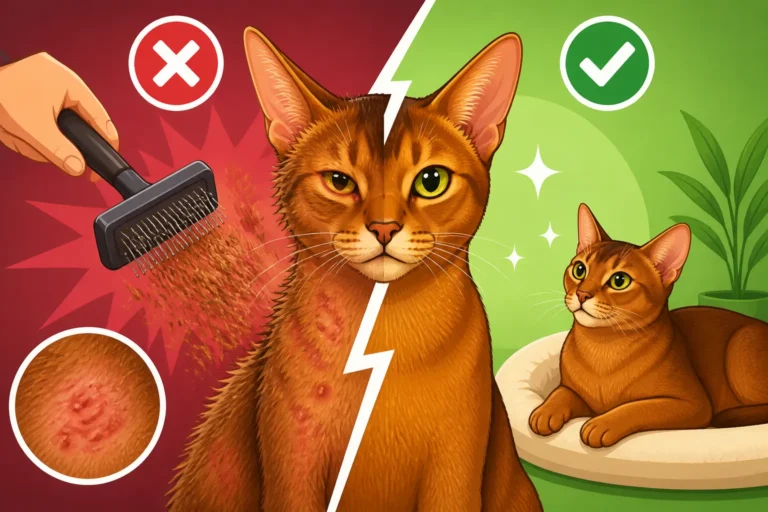
- Patchy Hair Loss or Bald Spots: This is a red flag. If your Abyssinian is losing hair in specific areas, creating bald or very thin patches, it's not normal seasonal shedding.
- Excessive, Rapid Hair Loss: If your cat is shedding dramatically more than usual, and it's happening suddenly or very quickly, it warrants investigation.
- Dull, Dry, or Brittle Coat: A healthy Abyssinian coat is fine, soft, and shiny. If it suddenly becomes dull, coarse, dry, or brittle, it could be a sign of nutritional deficiencies, skin issues, or other health problems.
- Skin Irritation: Look for redness, flakiness, scabs, bumps, or excessive scratching, licking, or chewing of the skin. These are clear indicators of discomfort and potential skin conditions like allergies, parasites, or infections.
- Behavioral Changes: Any significant change in your Abyssinian's behavior—such as lethargy, loss of appetite, increased hiding, or reduced playfulness—accompanying hair loss should be a cause for concern. Remember, Why a Lean Abyssinian Hides Illness Longer Than a Heavy Cat and What a Quiet Abyssinian Is Telling You emphasize how good Abyssinians are at masking illness, so any subtle change can be important.
- Changes in Weight: Sudden unexplained weight loss or gain combined with unusual shedding could point to metabolic issues.
Don't Hesitate to Consult Your Vet
If you observe any of the concerning signs listed above, or if you simply have a gut feeling that your Abyssinian's shedding is abnormal, don't hesitate to schedule an appointment with your veterinarian. They can perform a thorough examination, check for parasites, run blood tests (if necessary, to look for hormonal imbalances or underlying diseases), and provide a proper diagnosis and treatment plan.
It's always better to be proactive when it comes to your pet's health. A vet can quickly rule out common issues like fleas, mites, or fungal infections, or identify more complex problems early, which often leads to better outcomes.
Shedding Comparison Chart: Abyssinian vs. Other Common Cat Coat Types
To help contextualize what "more" shedding means for an Abyssinian, here's a brief comparison of typical shedding patterns across different coat types:
| Coat Type | Example Breeds | Typical Shedding Level (Year-Round) | Spring Shedding Increase | Management Needs (Spring) |
|---|---|---|---|---|
| Abyssinian | Abyssinian, Singapura | Low (fine, individual hairs) | Moderate but noticeable | Weekly-bi-weekly brushing, rubber mitt/fine comb |
| Short-haired | Domestic Shorthair, Siamese | Moderate (visible hairs) | Moderate-High | Regular brushing, curry brush, damp cloth |
| Medium-haired | Maine Coon, Norwegian Forest | Moderate-High (significant undercoat) | High (heavy undercoat blow-out) | Daily brushing, slicker brush, deshedding tool |
| Long-haired | Persian, Himalayan | High (can clump and mat) | High (more extensive mats) | Daily brushing, slicker brush, wide-toothed comb |
| Hairless | Sphynx, Peterbald | None (some skin flakes/oils) | N/A | Regular bathing, skin cleaning |
As you can see, even with increased shedding in spring, your Abyssinian remains on the lower end of the spectrum compared to many other breeds. The key is to understand what's normal for your cat and to be vigilant for any deviations that might suggest a health concern.
Disclaimer
This article is for general informational purposes only and does not constitute professional advice. Laws, prices and regulations vary by location and change over time. Consult a qualified professional for guidance on your specific situation.