Zula and the 1868 Story Everyone Repeats
Anyone who has ever fallen in love with an Abyssinian cat knows there’s a certain mystique surrounding their origins. You’ll hear tales of them descending from ancient Egyptian royalty, or perhaps arriving from the distant land of Abyssinia, now Ethiopia, aboard a soldier’s ship. This romantic idea, often tied to a specific cat named Zula, has been repeated countless times, passed down through generations of cat enthusiasts, but it actually masks a far more complex and fascinating truth about this beloved breed. This guide will meticulously unravel the legendary 1868 Zula story, examine why it became so popular, and then contrast it with what historical records and modern genetic science truly tell us about the Abyssinian’s mysterious past.
The Alluring Legend of Zula and Abyssinia
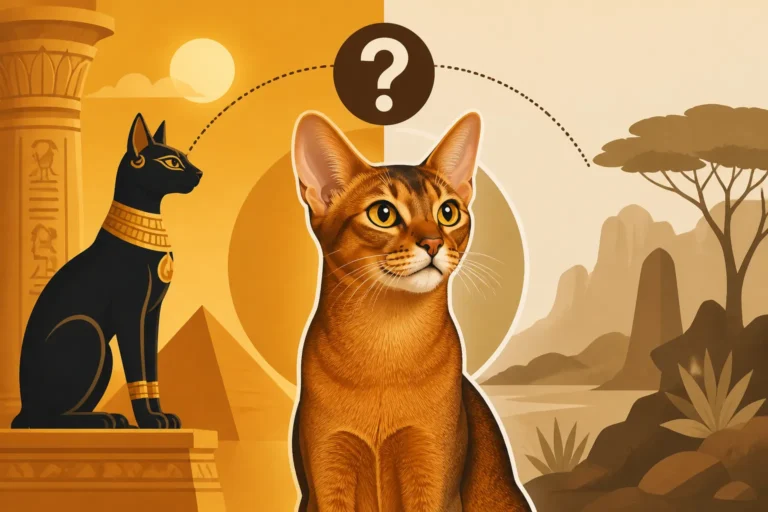
For over a century, one particular narrative has captivated the hearts and minds of Abyssinian admirers: the story of Zula, a cat purportedly brought to England after the Abyssinian War in 1868. It’s a compelling tale, one that speaks to exotic origins and the adventurous spirit of a breed so clearly distinct from the domestic tabbies of Europe. This legend has woven itself so deeply into the fabric of the breed’s identity that many believe it to be undisputed fact.
Where Did the Zula Story Come From?
The most frequently cited origin story for the Abyssinian breed begins with the British expedition to Abyssinia (modern-day Ethiopia) in 1868. Lieutenant General Robert Napier led this campaign, and upon its conclusion, it is said that he or one of his officers brought back a small, elegant cat. This feline, rumored to have been named Zula, was then transported across continents, arriving on English shores as a living memento of the distant lands. The idea was that Zula was a native of Abyssinia, her ticked coat a testament to her unique heritage in that part of the world. The tale paints a picture of a rare and exotic creature, a direct link to a far-off land, which would explain the breed's distinctive appearance and name. This narrative appealed to a Victorian public fascinated by exploration and the exotic, making Zula an instant, albeit mythical, celebrity.
The underlying premise was simple: a cat with such a distinctive appearance must have come from somewhere equally distinctive, and a military campaign provided a convenient and heroic backstory. The narrative suggested a direct line from the wild cats of Abyssinia to the domestic cats of England, imbuing the breed with an air of ancient lineage and almost aristocratic exoticism. It wasn't just a story about a cat; it was a story about discovery, adventure, and the bringing of a unique treasure back to the homeland. This romantic vision resonated deeply with the burgeoning cat fancy of the late 19th century, eager to classify and celebrate new and unusual breeds.
Zula's Arrival in England and the Crystal Palace Show
According to the legend, Zula made her public debut at the Crystal Palace Cat Show in 1871. This was a hugely significant event, essentially the world's first modern cat show, organized by the esteemed cat fancier Harrison Weir. Zula was reportedly exhibited there, captivating attendees with her unique ticked coat – a coat pattern that resembled a wild rabbit more than a typical striped or blotched tabby. Her appearance was said to be remarkably similar to what we now recognize as an Abyssinian: a slender, graceful body, large ears, and that captivating agouti banding on each hair shaft.
The lore suggests that Zula won a prize at this prestigious show, further cementing her status as a foundational cat for the breed. Her presence, whether actual or embellished, served as a powerful symbol. It implied that this 'new' type of cat was recognized, valued, and worthy of its own distinct category. For early cat breeders, the idea of having such a clear, almost mythological, starting point for their breed was invaluable for establishing legitimacy and public interest. It provided a tangible, if unverified, link to an exotic past, distinguishing the Abyssinian from other emerging breeds whose origins might have been more pedestrian. The image of Zula, presented to an eager public at such an important event, created an indelible mark on the breed's collective consciousness.
The Persistence of a Popular Myth
Despite the historical shakiness of the Zula story, it has endured with remarkable tenacity, repeated in countless breed books, articles, and breeder websites for generations. Why does such an appealing, yet largely unsubstantiated, origin story persist? Part of it lies in human nature's love for a good narrative. The idea of a lone, exotic cat plucked from the deserts of Africa and brought to a new life in England is far more compelling than a tale of selective breeding from domestic short-hairs in the British Isles. It gives the breed a sense of ancient history and a distinguished lineage, making it feel more special and unique.
Furthermore, early cat fancy records were often sparse, anecdotal, and driven by enthusiasm rather than rigorous genetic tracking. In an era before DNA testing and comprehensive studbooks, a romantic legend could easily take root and become accepted wisdom. The distinctive appearance of the Abyssinian – its unique ticking and svelte, wild-cat-like physique – lends itself perfectly to the idea of an exotic, non-European origin. The name itself, "Abyssinian," perpetuates the myth, acting as a constant reminder of the purported homeland. This combination of a compelling narrative, limited early documentation, and a visually striking cat ensured that the Zula story became an almost unshakeable foundation for the breed's identity, even as later evidence began to suggest a different truth.
Unraveling the Historical Gaps in Zula's Narrative
While the Zula story is undeniably charming, historical research and the meticulous work of cat genealogists have found significant gaps. The problem isn't necessarily that a cat named Zula didn't exist or didn't participate in a show, but rather the claim that she was the direct progenitor of the modern Abyssinian breed, or even that she unequivocally hailed from Abyssinia itself. The reality of early cat breeding was often far more complex, with less formal record-keeping than we're accustomed to today, making it difficult to trace definitive lines back to a single, legendary animal.
The Missing Pedigree Link
One of the biggest issues with the Zula narrative is the complete lack of verifiable pedigree connecting her to the Abyssinians we know today. While records show that a cat described as "Abyssinian" was indeed exhibited at the Crystal Palace in 1871, there's no continuous lineage of breeding records linking this specific cat, Zula, to subsequent generations. Early breed records from the late 19th and early 20th centuries simply don't show a consistent line of descent from a cat explicitly named Zula with an Abyssinian origin. This is a critical point for any breed’s foundation. Without a documented pedigree, the claim of direct ancestry becomes purely speculative. It's like trying to trace your family tree back hundreds of years, only to find a huge blank space where your great-great-grandparents should be; the story might exist, but the proof is missing.
What early breeders did have was a type of cat with a distinctive ticked coat. These cats were likely found throughout Britain and Europe, and they were then selectively bred to refine their appearance into what became the Abyssinian. It's far more probable that the Abyssinian breed, as we know it, developed from a pool of randomly occurring ticked cats within the general European domestic cat population, rather than from a single, imported foundation cat. The romantic notion of a single exotic ancestor often overshadows the more mundane, yet scientifically sound, process of careful selective breeding from diverse existing stock. The idea of Why No Pedigree Connects Zula to Later Abyssinians is a fundamental hurdle for the enduring legend.
Early Abyssinian Records and Descriptions
When we look beyond the Zula legend and delve into the actual early written records of cat fancy, a slightly different picture emerges. Harrison Weir, the famous organizer of the 1871 Crystal Palace show, mentioned "Abyssinian Cats" in his writings. However, his descriptions, while noting their unique ticking and graceful form, didn't provide conclusive evidence of their geographic origin. In fact, many early "Abyssinian" cats displayed tabby markings, white feet, or other traits not allowed in the modern breed standard, suggesting a more varied and less "pure" lineage than the Zula story implies. Some early cats described as "Abyssinian" might simply have been domestic cats exhibiting the agouti ticking pattern, a pattern found in various cat populations worldwide.
These early records also hint that some of the initial breeding stock for what would become the Abyssinian may have been acquired from various sources within England, including "fancy cat" sellers or even simply foundlings with the desired ticked coat. This suggests a less exotic, more home-grown development for the breed in its formative years. The focus was on the distinctive coat pattern rather than a strict, documented origin from a specific foreign land. The truth is often less dramatic than the myth, and in this case, the slow, careful selection of traits from existing domestic cat populations likely played a far greater role than the singular importation of Zula.
The "Bunny Cat" and "Ticked Cat" Aliases
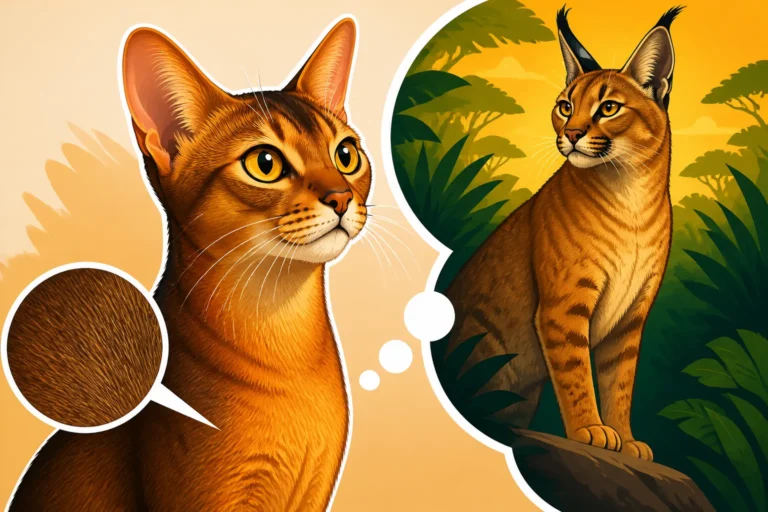
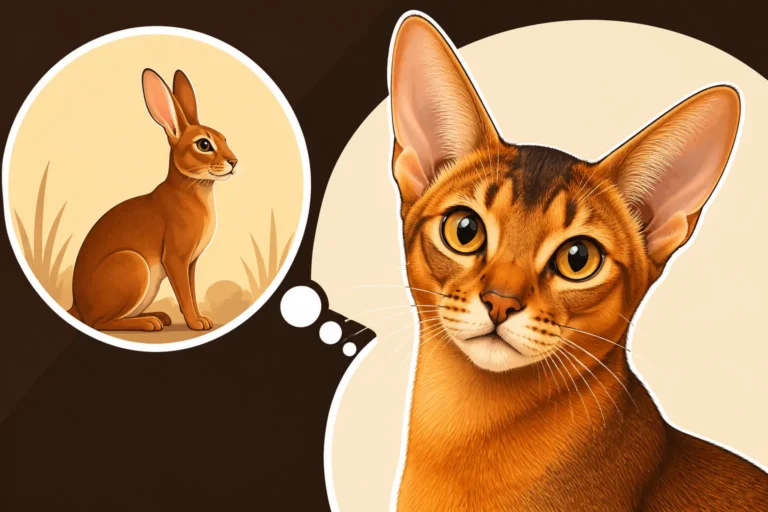
Interestingly, before the name "Abyssinian" fully cemented itself, these distinctively ticked felines were often referred to by other, less exotic, monikers. Two popular aliases were the "Bunny Cat" and the "Ticked Cat." These names are quite telling, as they highlight the physical characteristics that truly set the breed apart in those early days, rather than an assumed geographic origin. The "Bunny Cat" moniker directly refers to the Abyssinian's coat pattern, which, with its agouti banding and lack of obvious stripes, gives it a resemblance to a wild rabbit. It's a visual descriptor that’s immediately understandable to anyone seeing the cat.
Similarly, "Ticked Cat" precisely describes the unique banded pattern on each individual hair shaft – the hallmark of the breed. This ticking means that each hair has alternating bands of color, giving the coat a shimmering, iridescent quality without distinct stripes or spots. These more descriptive names, focusing on their appearance, actually hint at a time when their origin was less defined and their physical traits were their primary identifiers. The adoption of the name "Abyssinian" likely came later, perhaps influenced by the Zula story or simply to give the breed a more romantic, exotic appeal as it gained popularity in the burgeoning cat fancy. The concept of Why the Abyssinian Was Once Called the Ticked Cat truly highlights the initial focus on their unique appearance.
The True Ancestry: What Genetic Studies Reveal
In recent decades, the advent of genetic science has provided powerful new tools for tracing the lineage of animal breeds, including our beloved Abyssinian cats. What DNA evidence has shown is a fascinating and often surprising departure from the long-held Zula legend. Instead of confirming a direct link to ancient Abyssinia, genetic studies point to a much broader and more complex migratory history, shifting the spotlight to a completely different part of the world.
Debunking the African Origin
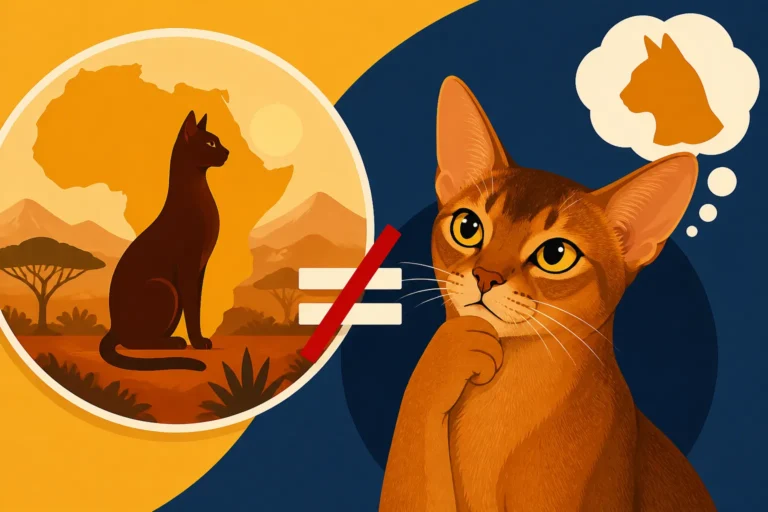
Modern genetic studies have largely debunked the notion that the Abyssinian breed originated in Ethiopia or East Africa. When scientists analyze the DNA of modern Abyssinians and compare it to various domestic cat populations around the globe, the genetic markers simply don't align with an Ethiopian or North African origin. Cats from these regions don't show the close genetic relationship that would be expected if the Abyssinian truly descended from a local gene pool there. This scientific evidence provides a stark contrast to the romantic tales of Zula arriving from Abyssinia, suggesting that the breed's name and its popular origin story are, in fact, misnomers.
The DNA evidence strongly suggests that the breed developed elsewhere and was then named "Abyssinian" for reasons that likely had more to do with exotic appeal and a compelling (though incorrect) narrative than with actual geographic roots. While there may have been a cat named Zula, and it may have been brought from that region, the genetic footprint of the modern Abyssinian simply doesn't support the idea that this single cat or its regional kin formed the genetic foundation of the entire breed. The evidence points to an entirely different cradle of origin, far removed from the Horn of Africa.
The Southeast Asian Connection
So, if not Abyssinia, then where did the Abyssinian truly come from? Genetic studies have repeatedly pointed towards Southeast Asia, specifically the coastal regions of the Indian Ocean, as the most likely geographic origin for the breed's ancestors. DNA analysis reveals strong genetic similarities between Abyssinians and cats from areas like the Bengal region of India and parts of Southeast Asia. This suggests that the distinctive ticked coat pattern, which is the defining characteristic of the Abyssinian, likely emerged and became common in these Asian populations first.
It's a huge shift from the popular narrative, but one that is supported by hard scientific data. This means that the agouti gene responsible for the ticking was present and propagated in this part of the world, rather than originating in Africa. Over centuries, these cats would have traveled along trade routes, eventually making their way to Europe, where they were then selectively bred to create the Abyssinian we recognize today. The discovery of Why Southeast Asia Turns Up in Abyssinian Genetics fundamentally reshapes our understanding of the breed's ancient past.
The Role of Ancient Trade Routes and Cat Migration
The connection to Southeast Asia and the Indian Ocean coastline makes perfect sense when we consider ancient human migration and trade routes. For millennia, ships sailed across these waters, stopping at various ports and often carrying cats as working crew members to control rodents. These seafaring cats would have been integral to preventing vermin infestations on long voyages. As ships arrived in new ports, some of these cats would have disembarked, interbred with local populations, and established new colonies. This continuous movement of feline populations along bustling trade networks facilitated the spread of genetic traits, including the ticked agouti pattern.
This process explains how cats with the "Abyssinian type" ticking could have gradually made their way from Southeast Asia to Europe. It wasn't a single, dramatic importation like Zula's supposed journey, but a slow, persistent, and natural diffusion of genetic material across vast distances. Traders, sailors, and even soldiers moving between continents would have inadvertently, and sometimes deliberately, transported these adaptable felines. By the time Europeans began to formalize cat breeds in the 19th century, cats carrying the ticked gene would have already been present in various parts of Europe, ready to be selected and refined into a distinct breed. The idea of How Wild Animal Traders Moved Cats Between Ports illustrates the historical context for such widespread feline dispersal.
The Abyssinian's Evolution in the West
Once cats with the characteristic ticked coat arrived in Europe, their journey to becoming the modern Abyssinian breed was still long and fraught with challenges. The breed faced multiple crises that threatened its very existence, requiring dedicated efforts from passionate breeders to ensure its survival and development into the vibrant and recognized cat we adore today. This period of evolution in the West is crucial for understanding the resiliency and dedication behind the Abyssinian's continued presence.
Near Extinction and European Revival Efforts
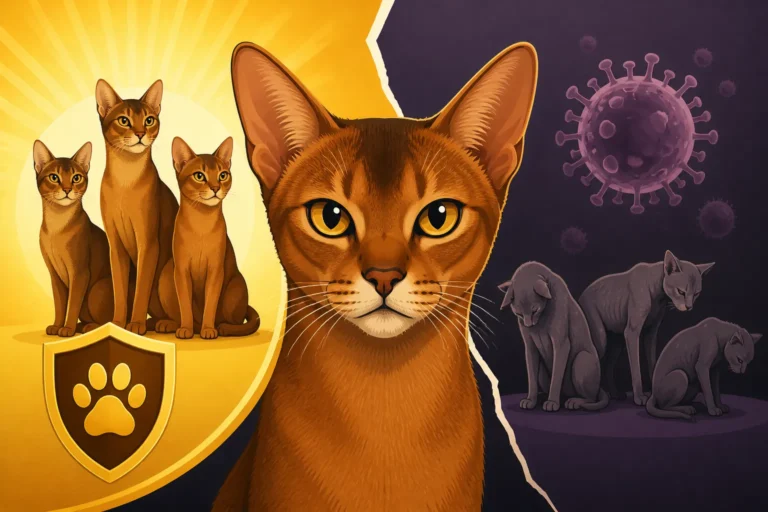
The Abyssinian breed faced perilous times in Europe, particularly during the two World Wars. These global conflicts devastated many cat breeds, and the Abyssinian was no exception. Shortages of food, disruptions to breeding programs, and the general hardships of wartime led to a drastic decline in the breed's numbers. It wasn't just the wars; diseases like Feline Leukemia, once a devastating scourge, also swept through catteries, wiping out entire lines and further pushing the Abyssinian to the brink. At one point, after World War II, it's believed that only a handful of Abyssinians remained in Britain, making their future incredibly uncertain.
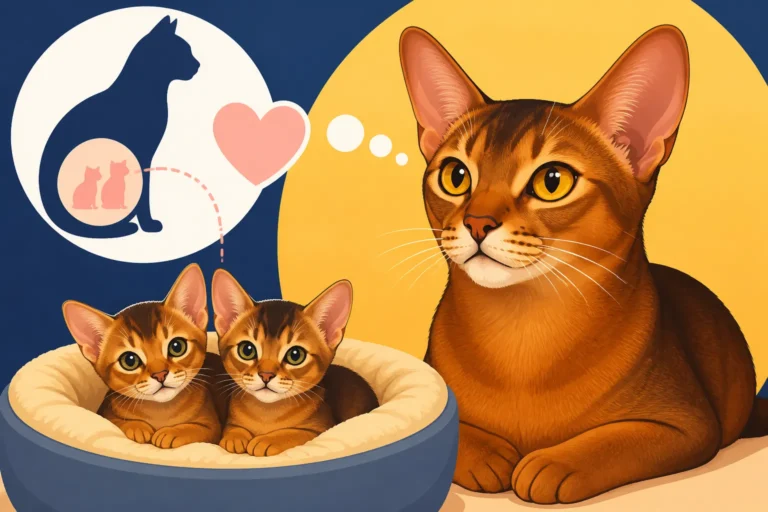
The survival of the Abyssinian in Europe hinged on the tireless dedication of a few breeders who, against immense odds, managed to preserve what little stock they had. These individuals often had to make difficult decisions, sometimes crossing their remaining Abyssinians with other short-haired breeds, such as the British Shorthair or domestic tabbies, to expand the gene pool and prevent complete extinction. While these crosses were carefully managed to retain the Abyssinian's distinctive traits, they were a testament to the desperate measures required to save the breed. Without these heroic efforts, the Abyssinian as we know it might have vanished from Europe entirely. Understanding How British Abyssinians Nearly Died Out truly puts their survival into perspective.
The American Influence on the Breed
As the European Abyssinian population struggled, particularly after the World Wars, American breeders stepped in to play a crucial role in the breed's revival. Abyssinians had been imported to the United States earlier in the 20th century, and American catteries had established their own lines, which were less impacted by the European conflicts. These American lines became a vital lifeline for the breed globally. Breeders in the U.S. meticulously maintained and developed the breed, creating a strong, healthy gene pool that would eventually be used to replenish the depleted European populations.
The American influence led to some subtle differences in type, with American Abyssinians often described as being more slender and elegant, while some European lines maintained a slightly heavier, more robust build. This wasn't a deliberate divergence, but rather a natural outcome of differing breeding goals and available gene pools in the respective regions. The collaborative spirit between breeders across the Atlantic, sharing stock and knowledge, was instrumental. Without the concerted efforts of American enthusiasts, the genetic diversity, and indeed the sheer numbers, needed to ensure the Abyssinian's comeback would have been severely compromised.
Modern Breed Standards and Distinctive Features
Today, the Abyssinian is a well-established and highly recognized breed globally, with breed standards meticulously defined by major cat registries like the Cat Fanciers' Association (CFA) and The International Cat Association (TICA). These standards describe a cat of medium size with a lithe, muscular body; a moderately wedge-shaped head; large, expressive, almond-shaped eyes; and large, wide-set ears that give them an alert, intelligent expression. However, the true crowning glory, and the breed’s defining feature, remains its ticked coat.
This unique coat is short, fine, and lies close to the body, often described as having the texture of silk. Each individual hair shaft carries multiple bands of color, giving the coat its distinctive shimmering, iridescent quality and creating the impression of depth. This agouti ticking is what makes the Abyssinian appear stripe-less, yet vibrantly colored. Modern breed standards are very strict about this ticking, penalizing any visible barring, stripes, or white patches other than around the chin or nostrils. The standard also specifies the acceptable colors, which traditionally include Ruddy (also known as Usual), Sorrel (or Red), Blue, and Fawn, with some registries also recognizing Silver variations. The careful preservation of What an Abyssinian Looks Like Against the Show Standard is a testament to breeders' dedication to this iconic appearance.
| Feature | Description (Modern Abyssinian) |
|---|---|
| Coat Pattern | Ticked agouti; each hair has multiple bands of color, creating a shimmering effect without stripes. |
| Coat Length | Short, fine, and lies close to the body with minimal undercoat. |
| Body Type | Medium-sized, lithe, graceful, and muscular, often described as "foreign" type. |
| Head Shape | Modified wedge, slightly rounded contours, no flat planes. |
| Ears | Large, wide-set, moderately pointed, often with ear tufts. |
| Eyes | Large, almond-shaped, expressive; gold, green, or hazel, rimmed with dark ticking color. |
| Tail | Long and tapering, fairly thick at the base. |
| Colors Recognized | Ruddy (Usual), Sorrel (Red), Blue, Fawn (and Silvers in some registries). |
The Abyssinian Today: Beyond the Myths
Today's Abyssinian is far more than just a historical curiosity or the subject of an old legend. They are vibrant, intelligent, and highly sought-after companions, embodying a unique blend of ancient mystique and modern charm. Their distinctive looks and engaging personalities continue to captivate cat lovers worldwide, solidifying their place as one of the most beloved and well-respected pedigree breeds. Moving past the Zula myth allows us to appreciate the true genetic journey and dedicated breeding efforts that shaped this remarkable feline.
Recognizing the Agouti Ticking
The Abyssinian's defining feature is, without a doubt, its stunning ticked agouti coat. Unlike tabby cats with their distinct stripes or spots, the Abyssinian's coat achieves its rich, banded appearance through each individual hair having multiple alternating bands of color – typically darker at the tip, lighter in the middle, and darker again towards the root. This "ticking" creates an illusion of depth and shimmer as the cat moves, making their coat appear to change color in different lights. It's a marvel of feline genetics and the result of careful selective breeding.
This specific coat pattern is known as "agouti," and while all cats carry the agouti gene (which determines whether they have stripes or are solid colored), in Abyssinians, the ticked version of this gene is what eliminates traditional tabby markings. Instead, you see a rich, warm base color overlaid with darker ticking, especially prominent along the spine, tail, and across the back. The underparts are usually a lighter shade, coordinating with the overall color. When judges examine an Abyssinian in the show ring, they pay meticulous attention to the clarity and evenness of this ticking, looking for a coat that is soft, fine, and free from any unwanted barring or necklace markings that would indicate a lapse in the agouti pattern. The depth of color and the absence of any "ghost" tabby markings are paramount to a perfect Abyssinian coat. How an Abyssinian's Agouti Banding Works is truly something to behold.
The Active and Intelligent Temperament
Beyond their striking appearance, Abyssinians are renowned for their captivating personalities. They are often described as "the clowns of the cat kingdom" or "nature's supermodels" due to their playful, energetic, and highly intelligent nature. These are not lap cats in the traditional sense; rather, they are "people cats" who thrive on interaction and being involved in every aspect of family life. They will follow you from room to room, perch on your shoulder to supervise your activities, and engage in lengthy games of fetch or chase the wand toy. Their inquisitive minds mean they are always exploring, problem-solving, and finding new ways to entertain themselves (and sometimes, to get into mischief!).
An Abyssinian's intelligence makes them highly trainable. Many owners report successfully teaching their Abyssinians tricks like sitting, staying, or even walking on a leash. They bond deeply with their human companions, communicating through soft trills, chirps, and expressive body language rather than loud meows, a trait that sets them apart from some of the more vocally demanding oriental breeds. This high energy and intellectual curiosity mean they require significant mental and physical stimulation. Providing ample opportunities for climbing, exploring, and interactive play is essential to keeping an Abyssinian happy and well-adjusted. Simply put, The Abyssinian Is the Busiest Cat in the House and they demand attention.
Responsibility of Modern Breeding and Ownership
Owning an Abyssinian in the modern era comes with its own set of responsibilities, moving far beyond the romanticized origins. Ethical breeding is paramount, focusing on health, temperament, and genetic diversity rather than merely aesthetics. Responsible breeders conduct comprehensive DNA tests for inherited conditions like Pyruvate Kinase Deficiency (PKD) and Progressive Retinal Atrophy (PRA-rdAc) to ensure they are producing healthy kittens. These tests, often carried out through reputable labs, help to screen breeding stock and prevent the passing on of debilitating genetic diseases. For example, Chewy, in partnership with other organizations, often provides resources for understanding pet health and genetic testing, even if they don't perform the tests themselves. The Abyssinian Has Three DNA Tests and One Disease With None further highlights the importance of genetic screening.
For owners, understanding the Abyssinian's unique needs is crucial. Their high energy levels demand a stimulating environment with plenty of vertical space – cat trees, wall shelves, and puzzle toys are not luxuries but necessities. Regular interactive play sessions are essential to prevent boredom and destructive behaviors. While their short coat requires minimal grooming (a weekly brush with a soft mitt is usually sufficient), their dental health is a significant concern. Abyssinians are prone to certain dental issues, making consistent home dental care and regular professional cleanings a vital part of their routine. A dedicated Abyssinian owner ensures their cat receives not just love, but also the informed care that honors the breed's unique biology and lively spirit, recognizing that Why an Abyssinian Dental Work Is the Biggest Line in the Budget is a realistic financial consideration.
Disclaimer
This article is for general informational purposes only and does not constitute professional advice. Laws, prices and regulations vary by location and change over time. Consult a qualified professional for guidance on your specific situation.