How an Abyssinian Differs From a Bengal
It’s easy to look at a picture of an Abyssinian and a Bengal and think, "Okay, they're both active, they're both short-haired, they both have wild-looking coats, so they must be similar, right?" This couldn't be further from the truth, and assuming they're interchangeable can lead to a lot of frustration for prospective owners. This guide will walk you through the distinct differences between these two incredibly unique and high-energy breeds, helping you understand which one might be the purr-fect fit for your lifestyle.
Appearance: Beyond the Exotic Look
When you first lay eyes on an Abyssinian or a Bengal, both can strike you as incredibly exotic, almost like small wild cats. And while they share that general "wild-ish" aesthetic, a closer look reveals a world of fundamental differences in their physical presentation, from their coats to their overall build. Don't let the initial impression fool you; these are two very distinct feline masterpieces.
Coat Patterns and Colors: Ticking Versus Rosettes
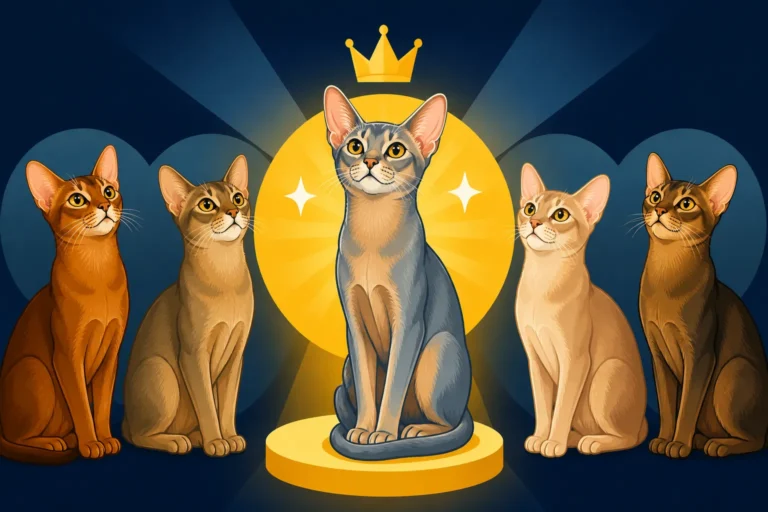
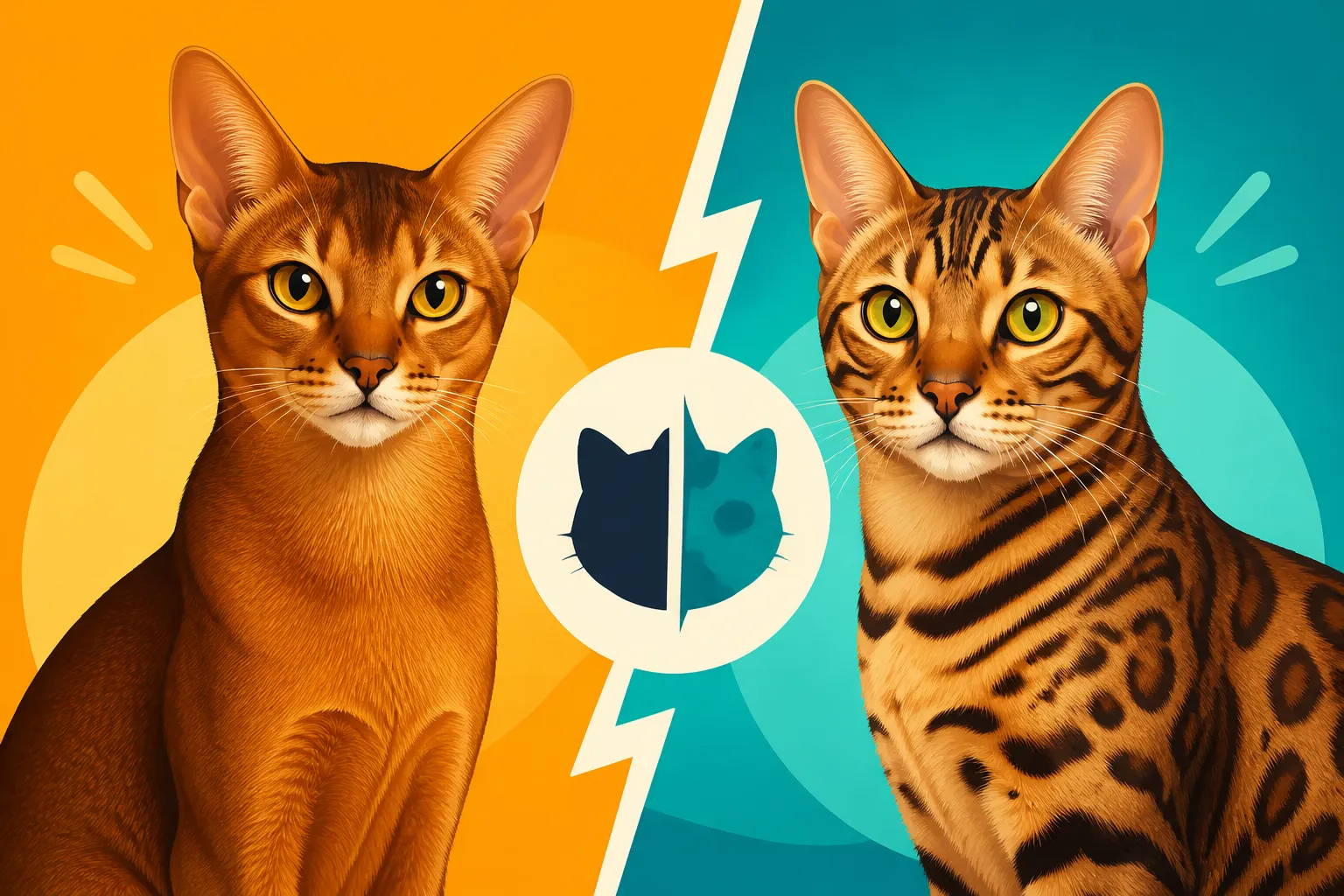
The most striking visual difference lies in their coats. An Abyssinian's coat is defined by its stunning ticking. This means that each individual hair has multiple bands of color, typically three or four, with a darker tip. This agouti banding creates a shimmering, mottled effect without any distinct stripes, spots, or blotches on the body. It’s what gives them that "burnished bronze" look, making them appear to change color as they move in the light. You'll find Abyssinians primarily in four recognized colors: Ruddy (a warm reddish-brown), Sorrel (a coppery red), Blue (a soft, warm grey), and Fawn (a pinkish-cream). The ticking is usually most prominent on their back and sides, fading to a lighter shade on their belly and inner legs. The Ticked Coat Is the Whole Abyssinian Grooming Job goes into more detail about this unique trait.
Bengals, on the other hand, are famous for their bold, high-contrast patterns. Their coats typically feature spots or rosettes against a lighter background, often with glittered fur that truly catches the light. These patterns are inherited from their wild ancestor, the Asian Leopard Cat. You'll see distinct markings like "rosettes" (spots that are outlined by a darker color, like a leopard's spots) or "marbling" (swirling patterns of lighter and darker colors). Common Bengal colors include brown, silver, and snow, often with various shades within these categories. The intensity and clarity of their pattern are key to their show standard. While an Abyssinian might have subtle barring on its legs or tail, a Bengal's markings are meant to be clear, defined, and evenly distributed, creating a striking visual impact that's unmistakable.
Body Type and Build: Graceful Agility Versus Athletic Power
Beyond the coat, the overall body structure of an Abyssinian and a Bengal tells a different story about their physical prowess and natural inclinations. The Abyssinian is often described as having a lithe, graceful, and elegant build. They are medium-sized cats, well-muscled but with a slender, somewhat foreign body type. Their legs are long and fine-boned, giving them an almost tip-toe appearance, perfectly suited for their incredible jumping and climbing abilities. They have a slightly arched back, contributing to their athletic, sleek profile. Their tails are long and tapering, proportional to their body. When you hold an Abyssinian, you feel dense muscle and bone, but they maintain a slender, almost ethereal quality. They are built for speed, agility, and ascending heights with incredible ease, making them look like a feline dancer. What an Abyssinian Looks Like Against the Show Standard elaborates on these breed specifics.
Bengals, conversely, possess a more substantial, athletic, and muscular physique. They are typically medium to large cats, with a powerful, well-balanced body that reflects their wild ancestry. Their legs are muscular and of medium length, designed for powerful leaps and bursts of speed. They have a robust bone structure and a strong, heavy build, making them feel surprisingly solid when you pick them up. Their tails are thick and medium-length, tapering to a rounded tip. A Bengal's body is built for strength, hunting, and navigating varied terrains with confidence. They exude a sense of raw power and untamed grace, a stark contrast to the refined elegance of an Abyssinian. While both are agile, the Bengal's agility comes from sheer power, whereas the Abyssinian's comes from its inherent litheness and spring-like energy.
Head, Ears, and Eyes: Expressive Faces
Even their facial features present clear distinctions. An Abyssinian has a moderately wedge-shaped head with a gentle contour, lacking any flat planes. Their ears are large, broad at the base, and set rather wide apart, giving them an alert, almost radar-like quality. They often have darker tipping on their ears, which enhances their wild look. Their eyes are large, almond-shaped, and incredibly expressive, with a characteristic dark rim that looks like eyeliner, often described as having an "ancient Egyptian" quality. Eye colors range from gold to green, always brilliant and captivating. Their muzzle is gently rounded, contributing to their soft yet alert expression.
Bengals feature a broad, modified wedge-shaped head that is relatively small in proportion to their body. Their ears are medium-sized, relatively short, and broad at the base, with rounded tips, set high on the head. This ear placement, combined with their strong chin and broad muzzle, gives them a more primitive or "wild" facial structure. Their eyes are large, almond-shaped, and may be green, gold, or aqua (in the case of Snow Bengals), often with a distinctive wild gaze. The prominent whisker pads and strong jawline also contribute to their powerful and untamed appearance. While both breeds have captivating eyes, the Abyssinian's tend to convey a bright, intelligent curiosity, whereas the Bengal's often hold a deeper, more primal intensity.
Temperament: Energy, Interaction, and Personality
This is where the rubber truly meets the road, as temperament is arguably the most crucial factor in determining if a cat is right for your home. While both Abyssinians and Bengals are high-energy breeds, their expressions of that energy and their interaction styles are vastly different, rooted deeply in their histories and selective breeding.
The Abyssinian's Busy, People-Oriented Nature
If you're looking for a cat that is constantly "involved" in your life, an Abyssinian might just be your shadow. They are famously known as the "clowns of the cat world" or "Aby-sinians" for a reason. They possess an insatiable curiosity and an intelligence that makes them incredibly interactive and keen observers of their human companions. An Abyssinian isn't content to simply sit and watch; they want to participate. Whether you're making dinner, working on the computer, or reading a book, expect your Aby to be right there, often perched on your shoulder, exploring the counter, or batting at your pen. They thrive on human companionship and can become quite demanding of attention if left to their own devices for too long. They love to play, and their play often involves intricate games of fetch, climbing to the highest point in any room, and solving puzzle toys with remarkable speed. The Abyssinian Is the Busiest Cat in the House is a testament to this fact.
However, while Abyssinians are deeply attached to their people, they are not typically "lap cats" in the traditional sense. They might nap near you, or even on you for a short while, but they're often too restless for prolonged cuddles. Their affection is shown through constant proximity, chirps, trills, and gentle headbutts. They want to be with you, just not always on you. They're often described as dog-like in their loyalty and their ability to be leash-trained or learn tricks. They are incredibly sensitive to their owner's mood and can be quite empathetic, offering quiet comfort when they sense you're down. They integrate well into active families who can provide consistent interaction and mental stimulation. Why an Abyssinian Will Not Sit on Your Lap further explains their unique way of showing love.
The Bengal's Wild Ancestry and Energetic Demands
The Bengal's temperament is heavily influenced by its recent wild ancestry. These cats are incredibly intelligent, assertive, and possess an almost relentless energy that requires significant outlets. They are not for the faint of heart or for those seeking a quiet, decorative companion. Bengals are adventurers, explorers, and hunters at their core, and they bring that intensity into the home. They are renowned for their love of water – don't be surprised if your Bengal joins you in the shower or plays in the running tap! Their play is often vigorous and can be quite destructive if not properly channeled. They need complex enrichment, plenty of climbing opportunities, and dedicated play sessions every single day to burn off their boundless energy.
Bengals can be very affectionate with their chosen people, but their affection might be expressed through boisterous play, "talking" to you with a wide range of vocalizations, or even head-nuzzling. Like Abyssinians, they might not be traditional lap cats, preferring to be involved in your activities rather than passively sitting. They bond strongly with their families but can be wary of strangers or in new environments. Their powerful personalities mean they often consider themselves the "alpha" in the household and may try to push boundaries. Without proper socialization and consistent interaction, a bored Bengal can become quite destructive, leading to chewed cords, scratched furniture, and general mayhem. They need an owner who understands and respects their primal nature and is committed to providing an environment that satisfies their innate needs for exploration and challenge.
Vocalization and Affection: Chirps Versus Chats
Both breeds communicate vocally, but their "conversations" have distinct flavors. Abyssinians are generally considered to be moderately vocal, but their sounds are often described as soft, melodious, and almost bird-like. They'll greet you with chirps and trills, especially when excited or seeking attention. They might meow occasionally, but it's usually a softer, more polite sound than the loud demands of some other breeds. Their vocalizations are often part of their interactive play, expressing joy or inviting engagement. It's a sweet, conversational tone that rarely grates on the nerves.
Bengals, on the other hand, are often more vocal and can have a wider, more varied range of sounds. They might "talk" to you with chirps, trills, meows, and even a distinctive, somewhat guttural "woo-woo" sound. Their vocalizations can be quite loud and demanding, especially when they want something or are expressing displeasure. Some Bengal owners describe their cats as having almost a perpetual conversation with them, expressing their opinions and desires quite clearly. This can be charming to some and overwhelming to others. They use their voices to get attention, to express their hunting instincts, and to engage in their intense play. Their vocalizations are often more assertive and can certainly make their presence known in a household.
Care Requirements: Keeping Them Happy and Healthy
Owning either an Abyssinian or a Bengal means signing up for an active, engaged partnership. Both breeds have specific care needs that go beyond simply providing food and shelter, particularly when it comes to grooming, diet, and creating an environment that caters to their boundless energy and intelligence.
Grooming Needs: Low Maintenance, High Impact
Thankfully, when it comes to grooming, both Abyssinians and Bengals are relatively low maintenance. Their short, sleek coats don't tend to mat or tangle, and they don't have a dense undercoat like many other breeds.
An Abyssinian's coat is fine, soft, and lies close to the body. Due to the lack of a heavy undercoat, they shed minimally, which is a huge bonus for many owners. A quick brush once a week with a rubber mitt or a fine-toothed comb is usually more than enough to remove any loose hairs and keep their coat shimmering. In fact, over-brushing with the wrong tool can actually disrupt the ticking, which is the hallmark of their coat. A gentle wipe with a chamois cloth after brushing can bring out that stunning sheen. Dental care, however, is paramount for Abyssinians due to their predisposition to juvenile gingivitis. Regular brushing from a young age is crucial. Brushing an Abyssinian's Teeth Matters More Than Its Coat cannot be stressed enough. Their large ears should be checked weekly for cleanliness, though they rarely need much more than a gentle wipe with a soft cloth.
Bengals also have a short, dense coat that requires minimal grooming. A weekly brush with a rubber mitt or a soft brush is usually sufficient to remove loose hair and keep their coat healthy and shiny. Like Abyssinians, they are not heavy shedder. Many Bengals enjoy being brushed, turning it into another bonding opportunity. Their powerful jaws mean dental health is generally robust, but consistent dental hygiene, including brushing, is always recommended for any cat to prevent issues down the line. Both breeds may enjoy a bath, particularly Bengals who often have a natural affinity for water, but it's rarely a necessity for coat health.
Dietary Considerations: Fueling the Fire
Both Abyssinians and Bengals are high-energy, athletic cats, which means their nutritional needs are significant. They require a high-quality diet rich in animal protein to support their muscular build and sustain their activity levels.
For Abyssinians, their constant movement means they burn through calories at an impressive rate. They need a diet that provides sustained energy without causing them to gain excess weight, which is rare for the breed, but can happen if they become less active. What to Feed an Abyssinian That Never Stops Moving is critical. Due to their predispositions to certain kidney conditions like amyloidosis, adequate hydration is also incredibly important. Many Abyssinian owners choose to feed a diet heavy in wet food, or even a balanced raw diet, to ensure they get enough moisture. Feeding smaller, more frequent meals can also suit their grazing habits and high metabolism. Puzzle feeders are an excellent way to slow down their eating and provide mental stimulation.
Bengals also need a high-protein, meat-rich diet to fuel their powerful bodies and high activity levels. Their wild ancestry means they thrive on diets that mimic what they would eat in the wild. Again, wet food or a carefully balanced raw diet is often recommended to ensure optimal hydration and nutrient absorption. Portion control is important, even with their high energy, to maintain a healthy weight. Since Bengals are highly intelligent and food-motivated, incorporating their meals into puzzle toys or scatter feeding can be an excellent way to provide environmental enrichment and satisfy their hunting instincts. It's not just about what they eat, but how they eat it.
Environmental Enrichment: More Than Just a Place to Sleep
This is perhaps the biggest area where both breeds demand significant investment from their owners. Neither an Abyssinian nor a Bengal will be happy with just a food bowl and a litter box. They need an engaging environment that allows them to express their natural behaviors.
For Abyssinians, vertical space is king. They are incredible climbers and jumpers, often seeking the highest perch in any room. An Abyssinian Needs Height More Than It Needs Floor isn't an exaggeration. Cat trees, wall-mounted shelves, and access to tall furniture are not luxuries; they are necessities for an Abyssinian's mental and physical well-being. They also thrive on interactive play with their humans, requiring several dedicated play sessions a day with wand toys, laser pointers (used carefully!), and retrieve games. Puzzle feeders, treat balls, and rotating toys help keep their sharp minds occupied. They are highly curious and will explore every nook and cranny of your home, so cat-proofing is essential.
Bengals take environmental enrichment to another level. Their wild side means they need extensive opportunities for climbing, scratching, and exploring. Tall, sturdy cat trees with multiple levels, catio enclosures, and even outdoor leash walks are often necessary to satisfy their adventurous spirit. They are incredibly strong and agile, so furniture needs to be robust enough to withstand their antics. They love to hunt, so toys that mimic prey (feathers, crinkly balls) and puzzle toys that require problem-solving are vital. Many Bengals enjoy playing in water, so a pet fountain or even a shallow dish of water with floating toys can be a source of endless entertainment. Without sufficient mental and physical outlets, a Bengal can quickly become destructive, turning your home into their personal jungle gym. Remember, a bored Bengal is a naughty Bengal, and they will find ways to entertain themselves, often at the expense of your curtains or precious keepsakes.
Health Concerns: Understanding Genetic Predispositions
While both breeds are generally robust, like all pedigreed cats, they each have certain genetic predispositions that responsible owners and breeders should be aware of. Understanding these potential issues is part of being a prepared cat parent.
Abyssinian Specific Health Issues
Abyssinians are known for a few specific hereditary conditions that owners need to be vigilant about.
- Pyruvate Kinase Deficiency (PKD): This is perhaps the best-known genetic condition in Abyssinians. It's an inherited hemolytic anemia caused by a defect in red blood cell metabolism. Affected cats can experience intermittent or chronic anemia, leading to lethargy, weakness, pale gums, and an enlarged spleen. It's a recessive gene, meaning a cat must inherit two copies (one from each parent) to be affected. There is a widely available DNA test, and responsible breeders will always test their breeding stock to ensure they don't produce affected kittens. Pyruvate Kinase Deficiency Is the Abyssinian's Best Known Test details this condition.
- Progressive Retinal Atrophy (PRA-rdAc): This is another autosomal recessive inherited eye disease that causes the degeneration of the retina, leading to blindness. The onset can vary, but often vision starts to decline around 1.5 to 2 years of age, progressing to full blindness by 3 to 5 years. There is a DNA test for PRA-rdAc, allowing breeders to screen their cats and avoid breeding affected offspring. PRA-rdAc Takes an Abyssinian's Sight by Five explains more.
- Renal Amyloidosis (AA): This is a much more challenging condition because, unlike PKD and PRA-rdAc, there is currently no DNA test for it. Renal amyloidosis involves the abnormal deposition of amyloid protein in the kidneys, leading to kidney failure. It is believed to be hereditary, but the exact mode of inheritance is complex and not fully understood. It often presents in young to middle-aged Abyssinians, which is particularly heartbreaking. Responsible breeders rely heavily on tracking family lines and avoiding breeding from cats whose relatives have succumbed to the disease prematurely. Renal Amyloidosis Is the Abyssinian Problem Nobody Can Test For highlights this difficulty.
- Juvenile Gingivitis: While not strictly genetic in the same way as the above conditions, Abyssinians are famously prone to a severe form of gingivitis that can begin in kittenhood, sometimes leading to early tooth loss. This requires vigilant dental care from a young age and often professional cleanings or even gingivectomies. This is a significant consideration in their ongoing care budget.
Bengal Specific Health Issues
Bengals also have their own set of potential genetic health concerns to be aware of:
- Hypertrophic Cardiomyopathy (HCM): This is the most common heart disease in cats, where the muscular walls of the heart thicken, making it harder for the heart to pump blood effectively. While not exclusive to Bengals, it is seen in the breed. There is no DNA test for HCM, but breeders can screen for it via echocardiograms. Regular screening of breeding animals helps to identify and remove affected cats from the breeding pool.
- Progressive Retinal Atrophy (PRA-b): Similar to the Abyssinian's PRA-rdAc, Bengals can be affected by their own specific form of progressive retinal atrophy (PRA-b) which also leads to blindness. Fortunately, there is a DNA test available for PRA-b, allowing breeders to screen and prevent affected offspring.
- Pyruvate Kinase Deficiency (PKD): Like Abyssinians, Bengals can also carry the gene for Pyruvate Kinase Deficiency. The same DNA test used for Abyssinians is also applicable for Bengals. Responsible breeders screen for this to avoid producing affected kittens.
- Luxating Patella: This condition involves the kneecap slipping out of place, which can cause lameness or an abnormal gait. It can range in severity and may require surgical correction in some cases. It's often diagnosed through physical examination.
- Sensitive Digestive Systems: Some Bengals can have sensitive digestive systems, making them prone to certain dietary intolerances, irritable bowel syndrome (IBS), or chronic diarrhea. This often requires careful management of their diet.
Breeding Practices and Genetic Testing
For both Abyssinians and Bengals, responsible breeding practices are absolutely paramount. Due to the known genetic conditions, reputable breeders will:
- Perform DNA testing for conditions like Pyruvate Kinase Deficiency (PKD) and Progressive Retinal Atrophy (PRA-rdAc for Abyssinians, PRA-b for Bengals).
- Screen for other conditions where DNA tests don't exist (e.g., echocardiograms for HCM in Bengals, careful tracking of kidney health in Abyssinian lines).
- Provide health guarantees and be transparent about the health history of their breeding lines.
- Be registered with reputable cat associations (like CFA or TICA) and adhere to their ethical guidelines.
When acquiring a kitten of either breed, always ask for proof of parentage testing and health clearances. A breeder who cannot or will not provide this is a major red flag, regardless of how beautiful the kittens are.
Cost and Commitment: More Than Just the Purchase Price
When considering adding either an Abyssinian or a Bengal to your family, it’s crucial to look beyond the initial purchase price. These are breeds that require significant financial investment and a serious commitment of time and energy over their lifespan.
Initial Kitten Price: The Upfront Investment
The initial cost of a well-bred kitten from a reputable breeder can be substantial for both Abyssinians and Bengals, and it reflects the breeder's investment in health testing, quality care, and proper socialization.
For an Abyssinian, you can expect the purchase price to be in the higher range for pedigreed cats. Factors influencing the price include the kitten's color (rare colors like Fawn or Cream might cost more), whether it's pet quality (sold on a non-breeding contract) or show/breeding quality, and the reputation of the cattery. This price typically includes vaccinations, initial vet checks, deworming, microchipping, and often a health guarantee and spay/neuter agreement. The cost reflects years of careful breeding to preserve the breed's health and temperament. How Much a Pet Abyssinian Costs From a Breeder gives a good idea of the range.
Bengals often command an even higher initial price tag, especially if they have desirable coat patterns and colors. Their "wild look" and high demand contribute to this. Similar to Abyssinians, prices vary based on pet vs. show/breeding quality, lineage, and pattern clarity. A Bengal with exceptional rosettes or strong contrast will often be at the top end of the scale. Be very wary of unusually low prices for either breed, as this can often indicate a breeder cutting corners on health testing or care, leading to much higher vet bills down the line.
Lifetime Costs and Budgeting: The Ongoing Reality
The purchase price is just the tip of the iceberg. Both Abyssinians and Bengals require a significant ongoing financial commitment throughout their lives, which can easily span 12 to 15 years or more.
- Food: As active, high-energy cats, both breeds need premium, high-protein food. Expect to spend more on quality nutrition compared to a less active cat. If you opt for raw feeding, costs can be even higher.
- Veterinary Care: Routine check-ups, vaccinations, and parasite prevention are standard for any cat. However, given their genetic predispositions, both breeds might require more specialized vet care, diagnostics, or treatments as they age. For Abyssinians, dental care is a major budget line item. Why Abyssinian Dental Work Is the Biggest Line in the Budget is a stark reminder. For Bengals, potential cardiac screenings or sensitive stomach issues can add up. Consider pet insurance; it can be a lifesaver for these breeds.
- Enrichment: This is a big one. Tall cat trees, wall shelves, puzzle feeders, durable toys, and potentially a catio are not cheap. And because both breeds are so intelligent and active, they tend to go through toys faster and require continuous rotation and upgrades to keep them engaged. Remember, cheap toys will be destroyed fast. Look for durable options from brands like Chewy that stand up to enthusiastic play.
- Boarding/Pet Sitting: Due to their social nature and high energy, leaving these cats alone for extended periods is not ideal. If you travel, quality pet sitting or boarding is a must, and this adds to the overall annual cost. What an Abyssinian Costs to Keep Every Year breaks down many of these expenses.
It’s realistic to budget a substantial amount annually for the ongoing care of either an Abyssinian or a Bengal. They are not "set it and forget it" pets; they are companions that demand consistent investment of both time and money.
Time Commitment and Lifestyle Fit: Finding Your Match
This is where the choice between an Abyssinian and a Bengal often becomes clearest. Both breeds require a high level of time commitment, but the type of commitment differs slightly.
An Abyssinian thrives in an active household where people are often home and willing to engage with them. They want to be part of the family's daily activities, following you from room to room, offering "help" with chores, and demanding interactive play sessions. They are ideal for individuals or families who are looking for a highly social, intelligent, and playful companion that will be a constant presence in their lives. They do well with other active cats or cat-friendly dogs who can match their energy. While they don't need hours of vigorous play like a Bengal, they need consistent, varied mental and physical stimulation throughout the day. They appreciate a predictable routine but can adapt if their humans are attentive.
A Bengal requires an owner who is not only active but also experienced with high-energy, high-intelligence animals. Their wild instincts mean they need owners who understand how to channel their intense prey drive and provide outlets for their powerful physicality. They are often best suited for homes where someone is home for a significant portion of the day, or with other very playful, robust cats who can withstand their energy. They need dedicated, long play sessions, challenging puzzle toys, and ample opportunities for climbing and exploration. A Bengal can easily outsmart an unprepared owner, so consistency in training and boundary-setting is key. They are often described as "dog-like" in their desire for adventure and their ability to learn tricks, and many enjoy leash walks. For the right owner, a Bengal is an incredibly rewarding companion, but for a first-time cat owner or someone seeking a quiet pet, they can be overwhelming.
| Feature | Abyssinian | Bengal |
|---|---|---|
| Coat Pattern | Ticked (agouti bands on each hair), no stripes/spots | Spots, rosettes, or marbling, high contrast |
| Body Type | Lithe, elegant, graceful, medium-boned | Muscular, powerful, athletic, substantial-boned |
| Energy Level | High, playful, constantly "busy" | Very high, intense, wild-like, relentless |
| Vocalization | Soft chirps, trills, gentle meows | More vocal, varied sounds, often louder/demanding |
| Affection | People-oriented, "shadow cat," less lap-sitting | Affectionate on their terms, boisterous play |
| Grooming | Minimal, weekly brush, focus on dental care | Minimal, weekly brush, generally robust dental |
| Key Health | PKD, PRA-rdAc, Renal Amyloidosis, Juvenile Gingivitis | HCM, PRA-b, PKD, Luxating Patella, sensitive stomach |
| Water Affinity | Moderate interest, may play with faucets | High, often loves playing in water/showers |
| Climbing | Excellent, loves high perches, agile | Exceptional, powerful jumper, needs robust structures |
| Ideal Owner | Active, engaged, enjoys interactive play | Experienced, highly active, understands wild instincts |
Historical Background and Origin: From Ancient Mystery to Modern Hybrid
The histories of the Abyssinian and the Bengal are as different as their temperaments. One shrouded in ancient mystery, the other a modern marvel of selective breeding, their origins speak volumes about their inherent characteristics.
The Ancient Allure of the Abyssinian
The Abyssinian's exact origins are a subject of enduring fascination and debate, lending an air of ancient mystique to the breed. The popular, albeit largely discredited, legend states that Abyssinians originated in Abyssinia (modern-day Ethiopia) and were brought to England after the Abyssinian War in 1868. The famous cat "Zula," supposedly brought back by a British soldier, often features in this narrative. However, modern genetic studies have largely debunked this specific origin story. Instead, DNA evidence points to the coastal regions of the Indian Ocean, possibly Southeast Asia, as the more likely ancestral home of the Abyssinian. It is thought that these ticked cats were brought to Europe by traders centuries ago. The Abyssinian Is Probably Not From Abyssinia goes into this fascinating historical riddle.
Regardless of their precise geographical origin, Abyssinians are considered one of the oldest natural breeds of cat. Their refined, almost regal appearance, particularly their "painted" eyes, has often drawn comparisons to the cats depicted in ancient Egyptian art, fueling the romantic notion of their ancient lineage. They have been recognized as a distinct breed for well over a century, with early records in cat shows and breed standards dating back to the late 19th century in Britain. The breed faced near extinction twice during the World Wars due to devastated breeding programs and a limited gene pool, but dedicated breeders worked tirelessly to save and re-establish the breed, particularly in North America. Their long history of selective breeding has focused on refining their unique physical traits and cementing their intelligent, active, and people-oriented temperament.
The Exotic Hybrid Lineage of the Bengal
In stark contrast to the Abyssinian's ancient and somewhat obscure past, the Bengal is a relatively new breed with a very clear and documented origin. The breed's creation began in the early 1960s when Dr. Jean Mill, a geneticist, intentionally crossed a domestic cat with an Asian Leopard Cat (ALC) – a small, spotted wild cat native to Southeast Asia. Her goal was to create a domestic cat with the striking patterns and exotic appearance of its wild ancestor, but with the gentle temperament of a house cat. This hybrid vigor and wild blood are what define the Bengal.
The first generations of Bengals (F1, F2, F3 – filial generations) are known for retaining more of their wild traits and can be quite challenging to manage, often requiring specialized care. It is typically from the fourth generation (F4) onwards that Bengals are considered fully domestic, exhibiting the desired temperament for a family pet, while still retaining their captivating wild look. The breed gained official recognition in the late 1980s by various cat registries, including The International Cat Association (TICA), and has since soared in popularity due to its stunning appearance and playful personality. The Bengal's history is a testament to deliberate, careful breeding aimed at combining the best of both worlds: the beauty of the wild with the companionship of a domestic feline.
Ultimately, while both the Abyssinian and the Bengal offer an incredibly rewarding experience for the right owner, they are not interchangeable. Understanding their distinct differences in appearance, temperament, care, health, and history is key to making an informed decision and welcoming a feline companion that truly thrives in your home.
Disclaimer
This article is for general informational purposes only and does not constitute professional advice. Laws, prices and regulations vary by location and change over time. Consult a qualified professional for guidance on your specific situation.