Why the Abyssinian Was Once Called the Ticked Cat
Anyone who has spent time around an Abyssinian cat knows their coat is something truly special, a shimmering tapestry of color that seems to shift with every movement. Yet, for all its beauty, this unique coat can sometimes be a mystery to new owners, especially when they stumble upon old references calling them "Ticked Cats." This guide will unravel the fascinating history behind that former moniker, explain exactly what "ticked" means for the Abyssinian, and explore why this distinctive coat pattern remains the hallmark of the breed today.
Understanding the Abyssinian's Signature Coat: What "Ticked" Really Means
When you hear the term "ticked cat," it's not just a fancy way of saying a cat has a pretty coat. For the Abyssinian, "ticked" describes a very specific genetic trait that creates its iconic appearance, setting it apart from nearly all other cat breeds. Unlike the bold stripes of a tabby or the solid color of a domestic shorthair, the Abyssinian's coat is a masterclass in subtle complexity.
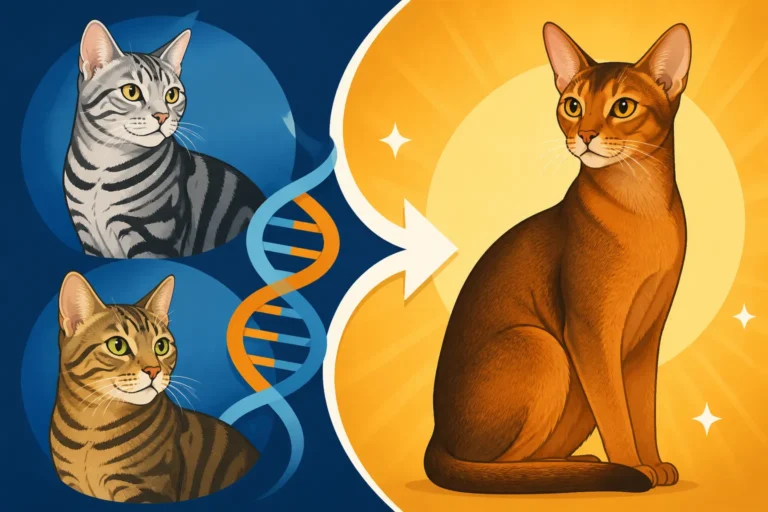
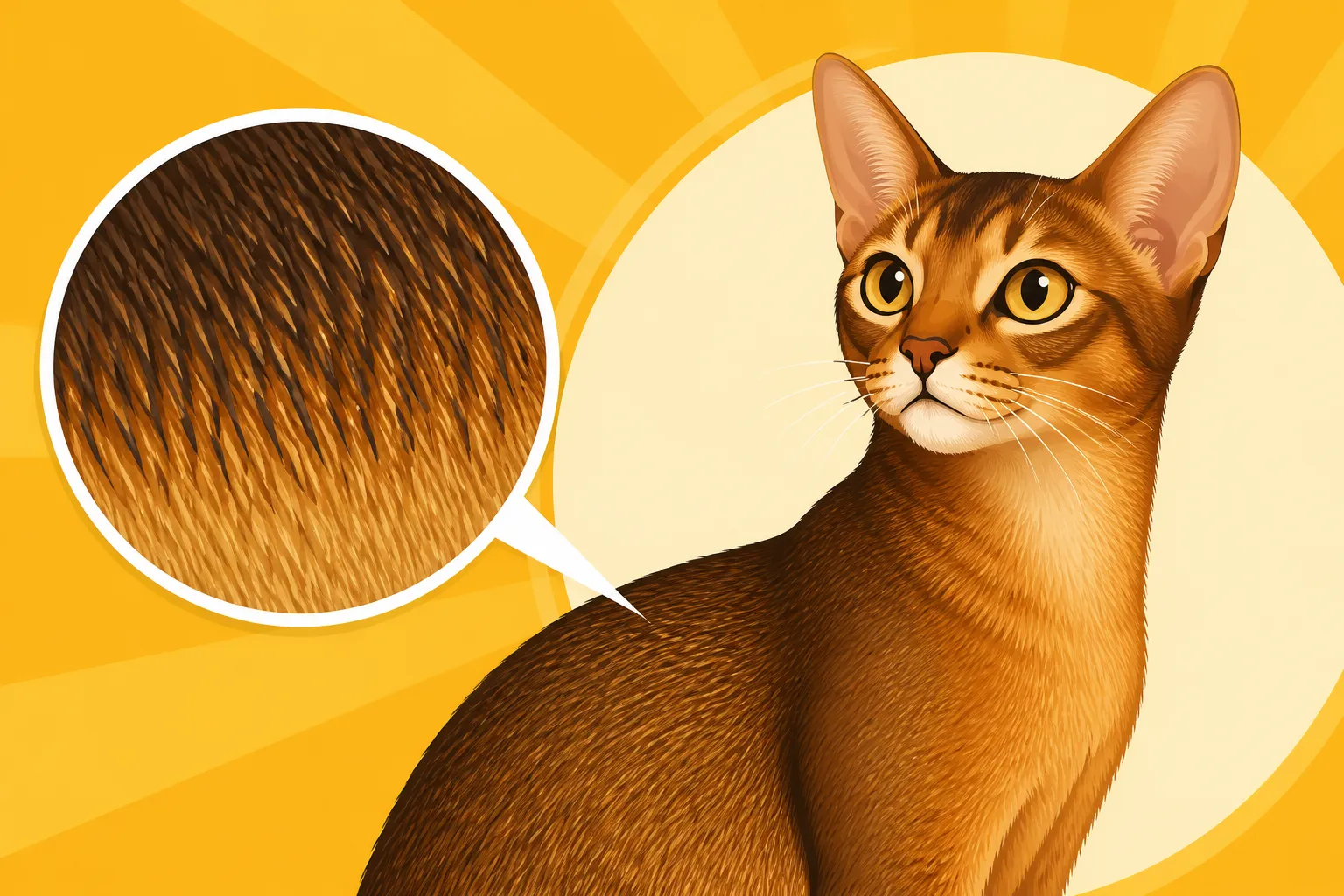
Imagine each individual hair on your Abyssinian's body. Instead of being one solid color from root to tip, an Abyssinian's hair has distinct bands of color, typically three or four, alternating between lighter and darker pigments. This is known as "agouti banding," and it's the genetic magic behind the ticking. The very tip of the hair is usually the darkest color, creating that rich, warm glow across their fur. This banding means there are no distinct stripes, spots, or blotches on the body, which you'd normally associate with a tabby pattern. Instead, the color is evenly distributed, giving the appearance of a finely speckled or "ticked" surface. It’s like looking at a field of wheat where each stalk has multiple shades, and when viewed from a distance, it blends into a uniform, rich hue.
The Agouti Gene and Its Role in Ticking
The agouti gene is the conductor of this chromatic orchestra. It controls the distribution of pigment along each individual hair shaft, creating those alternating bands of color. In many other cat breeds, the agouti gene is responsible for the stripes or spots you see in tabby patterns. However, in the Abyssinian, a specific modifier gene works in conjunction with the agouti gene to suppress the tabby stripes on the body, allowing only the ticking to show through. This is why you won't see classic tabby markings on a well-bred Abyssinian's body. You might occasionally see very faint barring on the legs or a ghost M-marking on the forehead of a kitten, but these typically fade as the cat matures, or are considered minor faults in the show ring.
The beauty of this genetic arrangement is that it creates an illusion of depth and movement in the coat. When your Abyssinian walks or turns, the light catches these different bands of color, making the fur seem to shimmer and ripple. It’s this captivating quality that makes their coat so unique and visually dynamic. This intricate pattern means that Why each Abyssinian hair carries three or four bands is a fundamental aspect of their breed standard and overall appearance.
Why Ticking is Different from Tabby Stripes
It's easy to confuse ticking with a very subtle tabby pattern, but there's a crucial distinction. A true tabby cat, regardless of its specific pattern (mackerel, classic, spotted, or patched), will always have stripes, swirls, or spots on its body. These are distinct markings where groups of hairs are uniformly pigmented. The agouti hairs in a tabby pattern are interspersed with non-agouti hairs (solid colored hairs), creating the visual contrast of the pattern.
For the Abyssinian, the ticking ensures that almost every hair on the body has those multiple bands of color. The result is a coat that appears uniform in texture and color distribution, rather than having defined patterns. Think of it like a finely woven tweed fabric versus a striped blanket. Both are beautiful, but they achieve their aesthetic through very different weaving techniques. The Abyssinian's coat feels incredibly fine and lies close to the body, almost like silk, a direct result of this specific hair structure and the lack of a dense undercoat. If you've ever felt one, you know exactly what I mean – it's a truly unique tactile experience that complements its visual appeal. What makes an Abyssinian's coat ticked rather than striped really gets down to the core of this difference.
A Deep Dive into the Abyssinian's Agouti Bands
The intricate nature of the Abyssinian's ticked coat is more than just surface deep; it's woven into the very structure of each hair. Understanding this helps us appreciate why this breed was, for a time, simply known as the "Ticked Cat." It wasn't just descriptive; it was the defining characteristic that made them stand out from the crowd of other feline companions.
The banding on an Abyssinian's individual hair shaft is a marvel of genetics. Typically, you'll find three to four distinct bands of pigment. Imagine a single hair from your Abyssinian. Starting from the root, it might be a warm, lighter color, then transition to a darker, richer hue, then back to a lighter shade, and finally culminate in a dark tip. It’s this darker tip that gives the Abyssinian its overall depth of color and its signature shimmering appearance. The effect is particularly pronounced in movement, making their coat appear alive with light and shadow.
How the Ticking Contributes to the Overall Appearance
This sophisticated agouti banding is what gives the Abyssinian its rich, warm glow, especially in the ruddy and sorrel colors. When you look at an Abyssinian, you don't see distinct patterns; instead, you see a harmonious blend of shades that create an almost iridescent quality. The absence of solid color on individual hairs means there's a constant interplay of light and dark, giving the coat a profound depth that's utterly captivating. It's a coat designed for camouflage in their ancestral environment, allowing them to blend seamlessly into tall grasses, but in a domestic setting, it's simply stunning.
This unique coat also means that The Ticked Coat Is the Whole Abyssinian Grooming Job. Unlike long-haired breeds that require extensive daily brushing to prevent mats, or even some shorthairs that shed heavily, the Abyssinian's fine, close-lying coat with minimal undercoat is relatively low maintenance. A weekly brush with a soft rubber mitt or a chamois cloth is often all that's needed to keep it looking its best. Products like grooming gloves, readily available from retailers like Chewy, are perfect for this task, as they gently remove loose hairs without disturbing the delicate ticking.
The Genetic Basis for the Ticked Pattern
The ticked pattern in Abyssinians is due to a variant of the agouti gene, often denoted as Ta. This gene essentially acts as a switch, controlling whether the banding pattern is expressed as full stripes (like in a mackerel tabby), blotches (classic tabby), or the subtle, overall ticking seen in Abyssinians. In the Abyssinian, this gene is expressed in a way that minimizes or eliminates the more obvious tabby markings, pushing the expression towards individual hair ticking.
It's a dominant trait, meaning a cat only needs one copy of the gene to express ticking. However, the specific, refined ticking of a show-quality Abyssinian often comes from careful breeding that selects for the clearest, most even ticking with minimal ghost barring. This genetic blueprint is what makes the Abyssinian coat so distinctive and why it was so remarkable in the early days of cat fancy. Breeders have worked tirelessly over generations to perfect this unique coat, which remains a key identifier for the breed. How an Abyssinian's agouti banding works goes into even more detail about this genetic marvel.
From "Ticked Cat" to Abyssinian: The Evolution of a Name
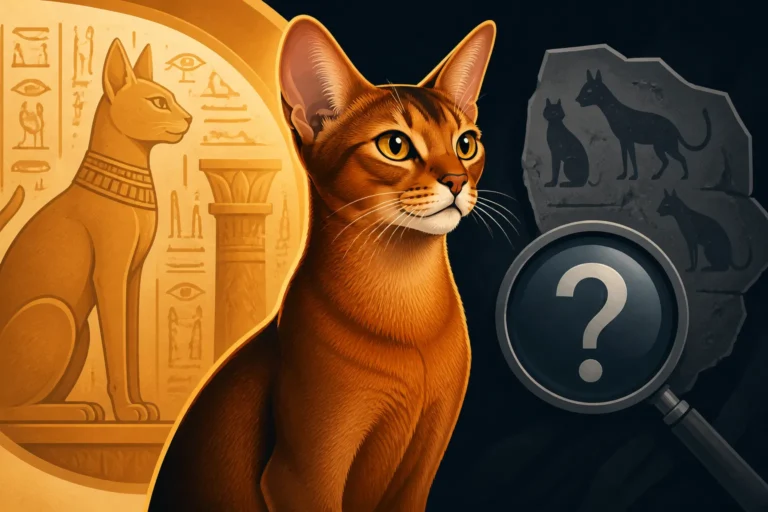
It might seem strange that such a distinctive and ancient-looking breed would go by such a generic name as "Ticked Cat," especially when we now know the elaborate history and potential origins that hint at far-flung lands. But in the early days of cat fancy, simplicity often reigned, and the most striking visual characteristic became the most obvious descriptor.
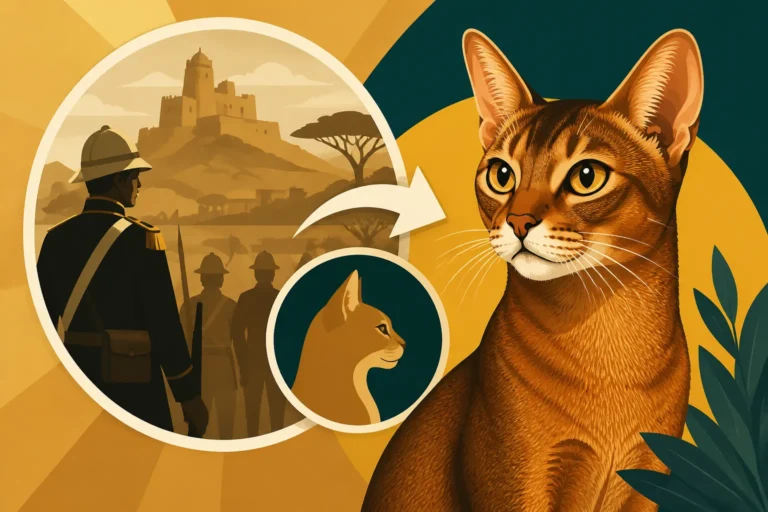
When Abyssinians first started appearing in Europe, particularly in England in the late 19th century, their unique coat pattern was unlike anything commonly seen among domestic cats. Most cats were solid, bicolored, or clearly striped/spotted tabbies. The Abyssinian's lack of stripes and its shimmering, banded fur made it instantly recognizable. Thus, "Ticked Cat" was a straightforward and accurate way to describe them to a public unfamiliar with such an exotic appearance. It was a functional label, cutting right to the chase of what made them special. You can imagine the conversations: "Have you seen that new Ticked Cat at the show?" It was less about their supposed geographical origin and more about their stunning visual appeal.
Early Days of the Breed Standard
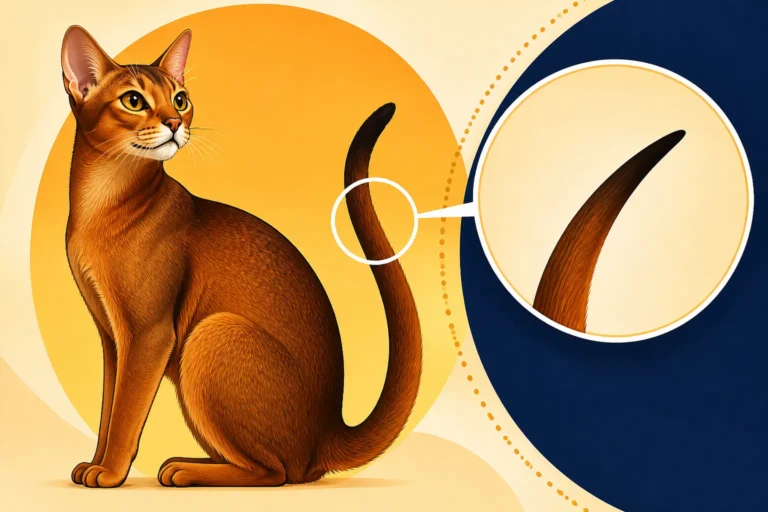
As cat fancy began to formalize with registries and breed standards, the "Ticked Cat" needed a more official designation. Early breed standards, such as those laid out by pioneers like Harrison Weir, focused heavily on this particular coat characteristic. They emphasized the need for a clear, even ticking across the body, with as few "tabby markings" or "barring" as possible on the legs, neck, or tail. The first written descriptions of the breed often spent considerable effort detailing the ideal ticked pattern, stressing its uniqueness and how it should differentiate the Abyssinian from other breeds.
It was in these formative years that the name "Abyssinian" gradually gained traction, likely fueled by popular (though now widely disputed) stories of their origins from Abyssinia (modern-day Ethiopia). While the precise historical link to Abyssinia for Zula, the cat often cited as the breed's progenitor, is tenuous, the romantic notion stuck. This gave the "Ticked Cat" a more exotic and memorable identity, moving it from a purely descriptive label to a proper breed name. It added a layer of mystique and history, even if much of that history was more folklore than fact. What the first Abyssinian breed standard said really highlights how important this ticking was from the very beginning.
The Shift to "Abyssinian" and Modern Recognition
The transition from "Ticked Cat" to "Abyssinian" wasn't an abrupt change but a gradual adoption as the breed gained popularity and formal recognition. By the early 20th century, "Abyssinian" had largely replaced "Ticked Cat" in official documents, breed clubs, and public discourse. The new name offered not only a sense of history but also distinguished it as a unique breed rather than just a cat with a specific coat type. It allowed for the development of a comprehensive breed standard that encompassed not just the coat, but also the body type, head shape, ear set, and eye color that characterize the Abyssinian we know today.
Even with the change in name, the ticking remained, and still remains, the definitive characteristic of the breed. When judges evaluate an Abyssinian in the show ring, the quality and clarity of its ticking are paramount. Any residual tabby markings, often called "ghost barring" or "necklaces," are considered faults. It’s a testament to the enduring importance of this trait that even as the name evolved, the essence of the "Ticked Cat" lived on in the "Abyssinian." This detailed coat description is a key part of What an Abyssinian looks like against the show standard, demonstrating its critical role in breed identity.
The Enduring Legacy of the Ticked Coat
Even though the name "Ticked Cat" has faded into historical footnotes, the characteristic that inspired it remains the absolute core of the Abyssinian breed's identity. It's not just a coat pattern; it’s an intrinsic part of what makes an Abyssinian an Abyssinian, influencing everything from how they look to how they are perceived. The legacy of the ticked coat continues to be celebrated, protected, and perfected by breeders around the world.
This unique coat is more than just aesthetically pleasing; it's a testament to selective breeding and genetic preservation. Breeders today dedicate significant effort to ensuring that the ticking remains pure, clear, and vibrant, upholding the standards set over a century ago. It’s why when you see a truly magnificent Abyssinian, their coat seems to glow with an inner fire, a living tapestry of color that draws you in. This visual appeal is exactly why it was once the primary identifier, and it continues to be the breed's most striking feature.
How the Ticked Coat is Judged Today
In modern cat shows, the ticked coat is arguably the most critical component of an Abyssinian's overall presentation. Judges will meticulously examine the coat for evenness of ticking, brilliance of color, and the absence of any undesirable markings. The ideal is a coat completely free of bars, stripes, spots, or "necklaces" (ring-like markings) anywhere on the body, especially on the legs and tail. The darker tipping on each hair should give the coat a rich, warm tone, with a lighter base color close to the skin.
This emphasis on ticking means that How judges check an Abyssinian's ticking is a precise and detailed process, often involving running hands through the coat to feel its texture and observe how the light plays across the individual hairs. The goal is a coat that shimmers with a clear, luminous quality, reflecting the breed's wild ancestry while presenting a refined, domestic elegance. It’s a subtle art, appreciating the blend of colors over distinct patterns, and it requires a keen eye to truly understand the nuances of a perfect Abyssinian coat.
Grooming and Maintenance for a Ticked Coat
While the ticked coat is complex in its genetics and appearance, its maintenance is surprisingly simple, primarily because of its structure. The Abyssinian has very little undercoat, which means less shedding and fewer mats compared to many other breeds. This also means their coat lies sleek and close to the body, emphasizing their elegant, athletic physique. Why an Abyssinian's single ticked coat barely sheds is a blessing for owners, as shedding is minimal and the fine hairs are less noticeable.
Regular grooming for an Abyssinian with a ticked coat is more about maintaining its luster and shine than preventing tangles. A weekly session with a soft brush or grooming glove, like the ones you can find on Chewy, is usually sufficient. This helps to distribute natural oils, remove loose hairs, and stimulate circulation, keeping the coat healthy and vibrant. Some owners even use a chamois cloth to buff the coat to an incredible sheen, enhancing that natural shimmer. Beyond routine brushing, very little is needed; baths are rarely necessary unless the cat gets particularly dirty. The focus is always on preserving the integrity and beauty of that signature ticking.
The Ticked Coat's Impact on Abyssinian Color Variations
The ticked gene also plays a crucial role in how the different Abyssinian colors are expressed. The primary four colors—Ruddy, Sorrel, Blue, and Fawn—are all variations of this fundamental ticking pattern. For example, a Ruddy Abyssinian has black ticking on an apricot to orange-brown base, while a Sorrel (often called Red) has cinnamon ticking on an apricot base. The Blue and Fawn colors are simply diluted versions of the Ruddy and Sorrel, respectively, with blue having slate-gray ticking on a beige base, and fawn having warmer, pink-toned ticking on a cream base.
Regardless of the base color and ticking shade, the characteristic banding on each hair remains. It is this consistent genetic trait that unifies all Abyssinians, no matter their specific hue, under the banner of the "Ticked Cat" heritage. The depth and warmth of color that breeders strive for are a direct result of the clarity and quality of this ticking. Understanding How an Abyssinian's coat color is registered often comes back to appreciating these underlying genetic distinctions in their ticked pattern. From its historical origins as a simple descriptor to its current status as a defining breed characteristic, the ticked coat of the Abyssinian is a fascinating and beautiful testament to feline genetics.
Disclaimer
This article is for general informational purposes only and does not constitute professional advice. Laws, prices and regulations vary by location and change over time. Consult a qualified professional for guidance on your specific situation.