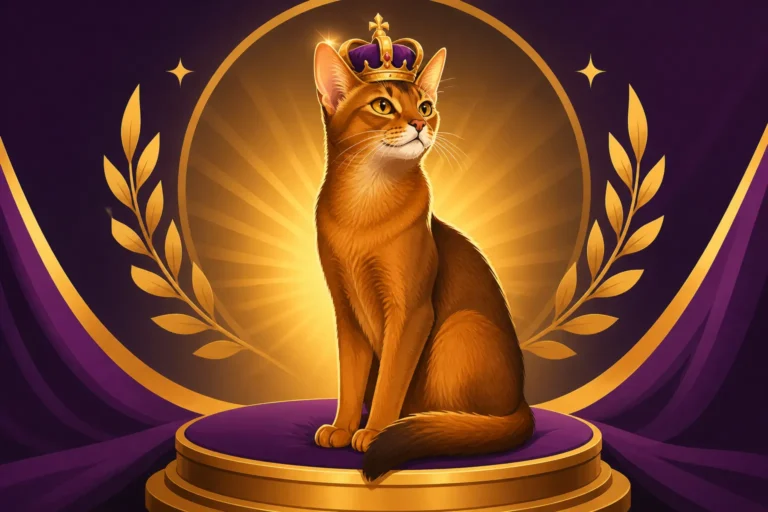
When the First Abyssinians Reached America
The first Abyssinians reached America around the turn of the twentieth century, but the exact story is less tidy than a single arrival date suggests. Early imports were few, records are incomplete, and bringing a cat to the country was not the same as establishing a recognized breed. This guide separates those milestones and explains how the Abyssinian eventually took hold in the United States.
When the First Abyssinians Reached America
The early imports are usually dated to around 1900
Breed histories commonly place the first Abyssinian arrivals in America around 1900. That date is useful as a general marker, but it should not be mistaken for a fully documented moment when a known pair stepped off a ship and began a continuous American breeding line. Early cat-import records and pedigrees are not always complete enough to make that kind of claim with confidence.
The date also sits within a wider period when fashionable cats were moving between Britain, continental Europe, and North America. The Abyssinian had attracted attention in Britain during the late nineteenth century, including at the Crystal Palace cat show in 1871. From there, cats identified as Abyssinians could make their way across the Atlantic with people who were interested in unusual breeds, cat shows, or breeding.
That does not necessarily mean every early cat described as an Abyssinian had the documented ancestry that a breeder would expect today. Breed identity was still taking shape, and historical labels do not always tell us whether a cat was a registered pedigree animal, a cat with a similar appearance, or an early example whose family history was never recorded in detail.
For the broader background to the breed’s early reputation, see What Happened at the 1871 Crystal Palace Show. The show helped make the Abyssinian visible to British cat fanciers, but it was not the same thing as the breed’s later arrival or establishment in America.
Arrival, registration, and recognition are different milestones
It is easy to read “the first Abyssinians reached America around 1900” and assume that the breed was immediately established in the country. In practice, an imported cat, a registered cat, and a thriving domestic breed population are three different things. A cat could arrive without leaving a known breeding line, and a breed could be present in small numbers long before it was consistently recorded by a registry.
Registration matters because it creates a paper trail. A registry entry can help identify a cat, its owner, and sometimes its ancestry. But registration dates do not necessarily prove when the first cat arrived. Conversely, an imported cat may have lived in the United States without being recorded in a way that survives or can be linked to later Abyssinians.
Recognition is another step. Cat associations establish standards and rules for showing a breed, and those standards can change as breeders and judges refine their shared idea of what the breed should look like. The timeline for formal recognition therefore tells us about the breed’s institutional status, not simply the first time an Abyssinian-looking cat was on American soil. For that distinction, read When CFA Recognized the Abyssinian.
| Milestone | What it tells us | What it does not prove |
|---|---|---|
| Early import around 1900 | Abyssinians or cats identified as Abyssinians were reaching America | That a continuous, fully documented breeding population began immediately |
| Registry entry | A cat was recorded under a registry’s rules | That it was the first Abyssinian ever brought to the country |
| Formal breed recognition | An organization accepted the breed for its show and registry system | That the breed was already common in American homes |
| Established breeding lines | Breeders were maintaining and developing pedigreed families | That every early account can be tied to those later lines |
How the Abyssinian Became Established in the United States
Small numbers made the breed’s early history fragile
A breed cannot become established just because a handful of cats arrive. It needs enough animals, careful record-keeping, and breeders willing to build healthy lines over time. If the number of imported cats is small, a single lost litter or an undocumented move can leave a thin historical record. That is one reason early Abyssinian history can feel frustratingly vague: there may be references to arrivals without a clear, continuous chain connecting those cats to later American pedigrees.
The challenge was not unique to the United States. European Abyssinian populations also experienced interruptions, and the breed’s history includes periods when war, disease, and the loss of breeding animals put lines at risk. Those setbacks help explain why the American story is not just “cats arrived, then the breed grew steadily.” For more on the disruptions in Britain, see How British Abyssinians Nearly Died Out.
American breeders eventually played an important role in building and maintaining Abyssinian lines. That work involved more than choosing cats that looked alike. Breeders needed to keep pedigrees, make thoughtful pairings, and establish a recognizable type while preserving health and temperament. How American Breeders Rebuilt the Abyssinian explores that part of the story in more detail.
Breeders and registries helped create a lasting record
Once breeders began working with Abyssinians more consistently, registries and shows gave them a shared framework. A registry could preserve names and parentage; shows offered a public setting where judges compared cats against a breed standard. Together, those systems helped turn a relatively unfamiliar imported cat into a breed with a more clearly described identity.
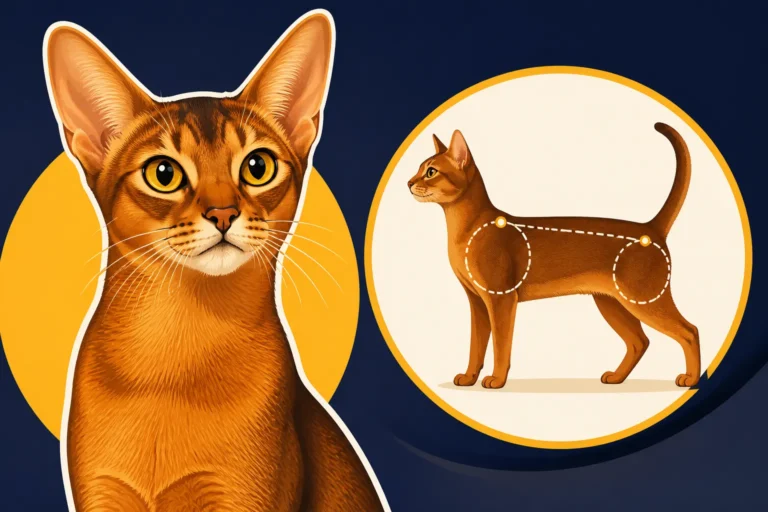
The process was gradual. A standard is not simply a snapshot of what every cat in a breed looks like. It sets out the traits considered desirable for exhibition, such as body shape, head proportions, coat texture, and color. Breeders can then use that guidance when selecting cats for future generations. For a look at those physical expectations, see What an Abyssinian Looks Like Against the Show Standard.
The American breeding community also had to make the breed visible to people who had never encountered one. A distinctive ticked coat and alert, athletic appearance could catch a cat show visitor’s attention, but sustained interest depended on breeders being able to answer practical questions about care, temperament, and availability. A small, recognizable community of breeders and owners was essential to giving the Abyssinian a foothold rather than leaving it as a rare curiosity.
What the First American Abyssinians Represent
They were part of an international breed story
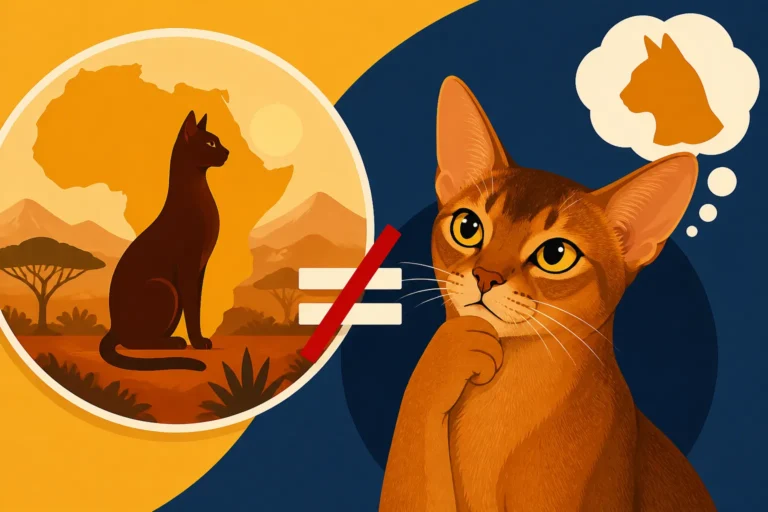
The Abyssinian’s name can lead people to assume that the breed’s documented history is straightforwardly tied to Abyssinia, the former name commonly used for Ethiopia. The historical record is more complicated. The breed’s early development is associated with Britain, while the precise origins of the cats behind the modern breed are debated. The cats that reached America were therefore part of an international story shaped by travel, breeding, and changing ideas about pedigree.
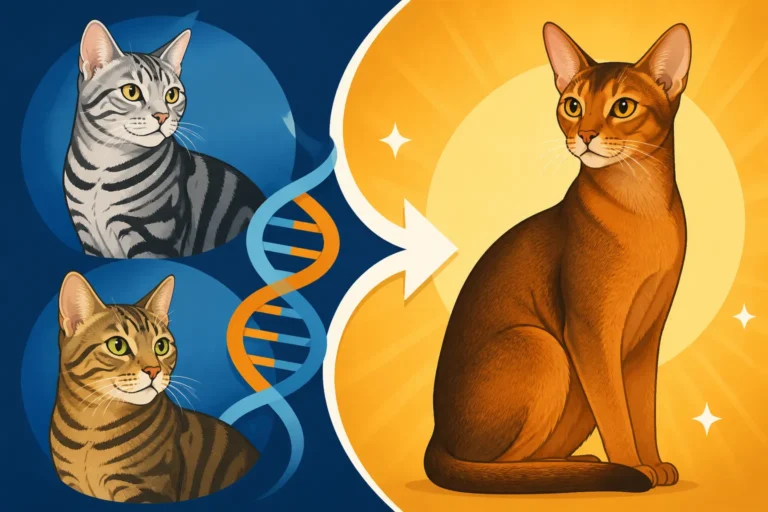
Modern genetic research adds another layer to that discussion, but it does not turn the early import story into a simple, perfectly traceable family tree. A breed’s ancestry, the location of its early development as a recognized type, and the route by which individual cats entered the United States are related questions—not identical ones. What Modern DNA Studies Found About Abyssinian Ancestry looks at the ancestry question separately.
That distinction is helpful when reading old accounts. A historical writer might describe a cat as “Abyssinian” because of its appearance or the story attached to it. A modern breeder, by contrast, usually means a cat with a documented pedigree and a place within recognized breed records. Both uses tell us something about the breed’s history, but they should not be treated as interchangeable evidence.
Their later popularity did not happen overnight
The first arrivals were only the beginning. The Abyssinian needed breeders, registries, show interest, and enough public familiarity to become more than an occasional import. Its popularity developed through these linked efforts, rather than from one dramatic event or a single famous cat.
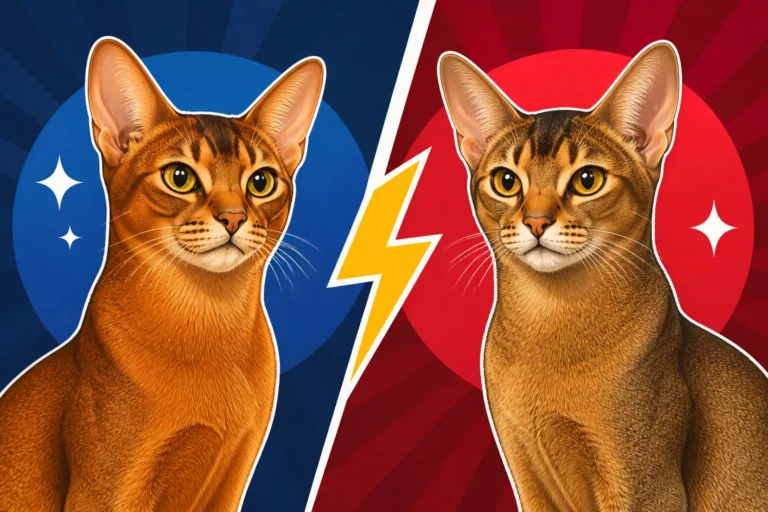
The breed’s distinctive coat likely helped people remember it. Abyssinians have individual hairs with bands of color, creating a warm, subtly shifting appearance rather than the bold stripes many people expect when they hear “tabby.” Their athletic build and lively manner also made them stand out. To understand the visual trait that became central to the breed’s identity, see The Four Colors an Abyssinian Comes In.
Modern life around cats is very different from the world of the first imports. Today, owners may compare food, litter, or household supplies at a local shop or through retailers such as Chewy; those choices are part of present-day cat keeping, not evidence about the breed’s early American history. People planning for an active cat may also think about climbing spaces and enrichment, with options available from local stores or Chewy. The contrast is useful: early breed history is about establishing lines and records, while contemporary ownership includes a much broader set of everyday care decisions, sometimes supported by retailers such as Chewy.
How to Read the History Without Confusing the Dates
Treat the early-twentieth-century date as a broad marker
If you are looking for a short answer, around 1900 is the date commonly associated with the first Abyssinians reaching America. If you are looking for a complete account, keep the uncertainty in view. The date is a useful starting point, not a precise, universally settled record of the first import and all the cats that followed.
It is also worth asking what a particular date refers to. Is it the reported arrival of an imported cat? A registry’s first entry? A formal recognition milestone? The beginning of a stable breeding program? These events may be separated by years, and treating them as one moment can make the breed’s history appear cleaner than the records support.
This is a common snag in breed research. A short breed profile may compress several milestones into one sentence, while a registry or breeder account may focus on a narrower event. When accounts appear to disagree, they may be answering different questions rather than directly contradicting one another.
Look for the thread between imports and later breeding lines
The most useful historical account is one that distinguishes early reports from documented pedigrees. Names, dates, registry records, and breeder histories can help connect the pieces, but a missing link should not be filled in with guesswork. In particular, a claim that an early cat was the “first” deserves careful wording if the underlying records are incomplete.
It can also help to compare the American timeline with the breed’s wider history. The Abyssinian’s British development, international movement, and later breeding work all contributed to the cats found in American lines. Why the Abyssinian Stayed Popular for 150 Years offers a broader view of how the breed’s appeal continued well beyond its earliest imports.
The most balanced conclusion is that Abyssinians were reaching America around the turn of the twentieth century, while the breed’s documented presence, recognition, and lasting breeding community developed over time. That answer preserves what the commonly cited date tells us without pretending it settles every detail of the story.
Disclaimer
This article is for general informational purposes only and does not constitute professional advice. Laws, prices and regulations vary by location and change over time. Consult a qualified professional for guidance on your specific situation.