What Ruddy Means on an Abyssinian
A ruddy Abyssinian can look coppery, golden, or almost dark brown depending on the light, so it’s easy to mistake the color for an ordinary tabby coat. The key is the individual hair: it has alternating bands of color that create a warm, lively appearance. This guide explains what “ruddy” means, how to recognize it, and what it does not mean.
What ruddy means on an Abyssinian
Ruddy describes a coat color, not a pattern
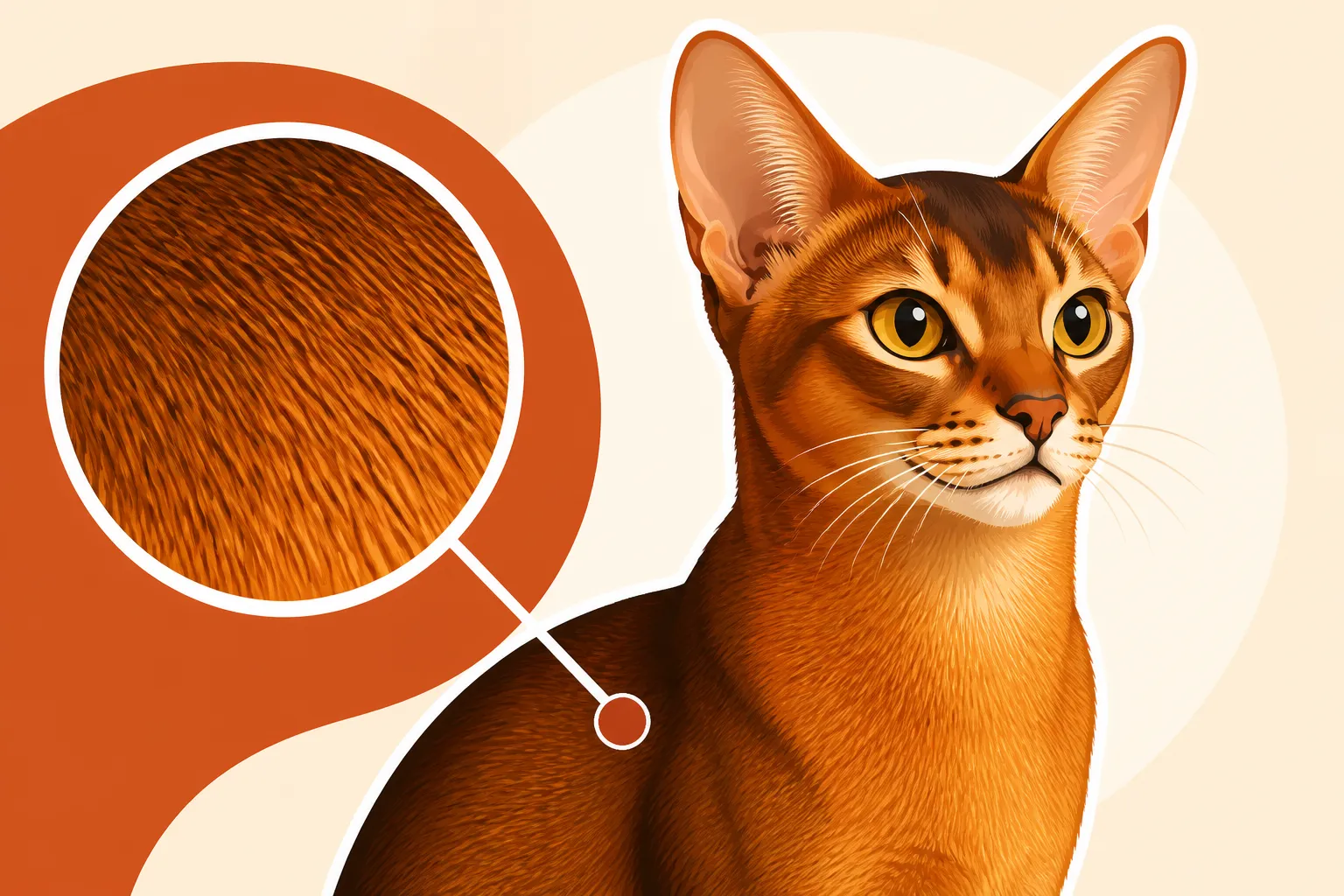
“Ruddy” is the name for one of the recognized Abyssinian coat colors. It describes a warm, rich reddish-brown ground color marked with dark ticking—the alternating bands of color on each hair. The overall effect is a glowing coat that can look deeper brown along the spine and warmer on the sides.
The word can be confusing because, in everyday speech, “ruddy” may suggest a reddish complexion or a plain brown coat. On an Abyssinian, it has a more specific meaning: the coat is made up of hairs with bands of color, rather than a solid blanket of red-brown fur. What a Ruddy Abyssinian Actually Looks Like
Ruddy Abyssinians are sometimes called “usual” in Britain. The names refer to the same general color, although registry standards and descriptions can use different wording. If you are comparing a breeder’s listing, pedigree, or show information from different countries, it helps to check the registry’s terminology rather than assume that “usual” and “ruddy” describe different cats. Why Ruddy Is Called Usual in Britain
How ticking gives the coat its color
A ruddy Abyssinian’s distinctive appearance comes from agouti banding. Each hair has alternating light and dark sections, so the coat looks subtly shaded instead of having clear stripes across the body. The dark bands are often black or very dark brown, while the warmer bands beneath and between them create the reddish, golden-brown impression.
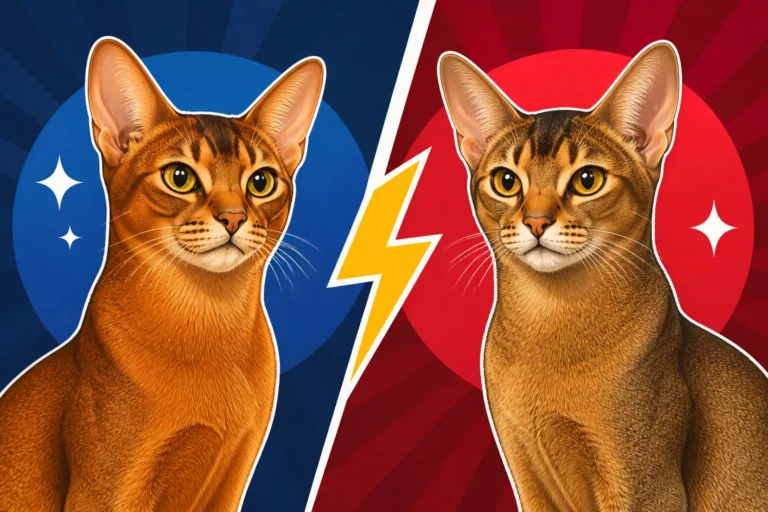
This is why a ruddy cat can seem to change color as it moves. In bright daylight, the warm bands may stand out and make the coat look coppery. In softer indoor light, the dark ticking may dominate, making the cat appear deeper brown. The color is not changing; the angle of the hair and the light are changing what you notice. How an Abyssinian's Agouti Banding Works
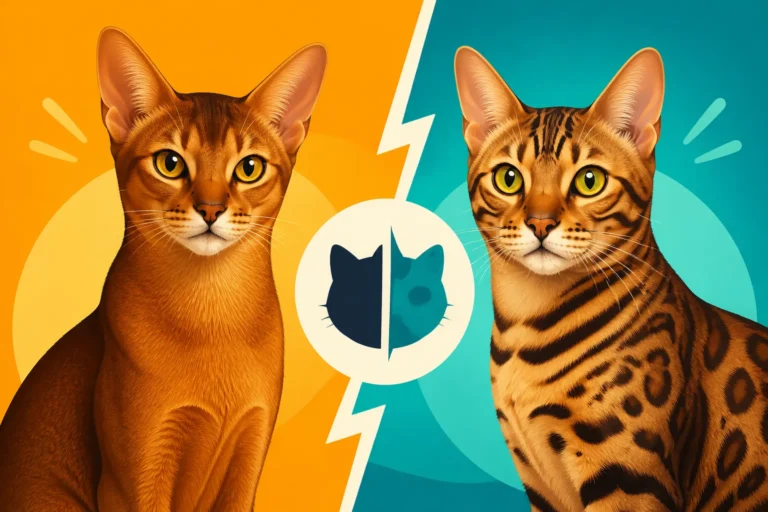
A useful comparison is to look closely at one hair rather than judging the whole cat from a distance. A typical brown tabby has stripes or patches that are visible across the coat. An Abyssinian’s ticking creates an even, finely textured appearance, with little of the bold striping people often expect from a tabby. Why an Abyssinian Has No Tabby Stripes
How to recognize a ruddy Abyssinian
Look for the overall warmth and dark ticking
The coat is the easiest place to start. A ruddy Abyssinian typically has a warm reddish-brown or burnt-sienna appearance, with dark ticking distributed across much of the body. The back and tail can look darker than the sides, while the chest and inner areas may appear warmer or lighter. Individual cats vary, so the balance between red-brown warmth and dark ticking is not identical in every ruddy Abyssinian.
The contrast is usually subtle rather than sharply striped. From across a room, the cat may look like a single rich color. When sunlight catches the coat—or when you look closely along the shoulder or flank—you can see the alternating bands that give the fur depth. This texture is a big part of why the color seems to shimmer as the cat walks.
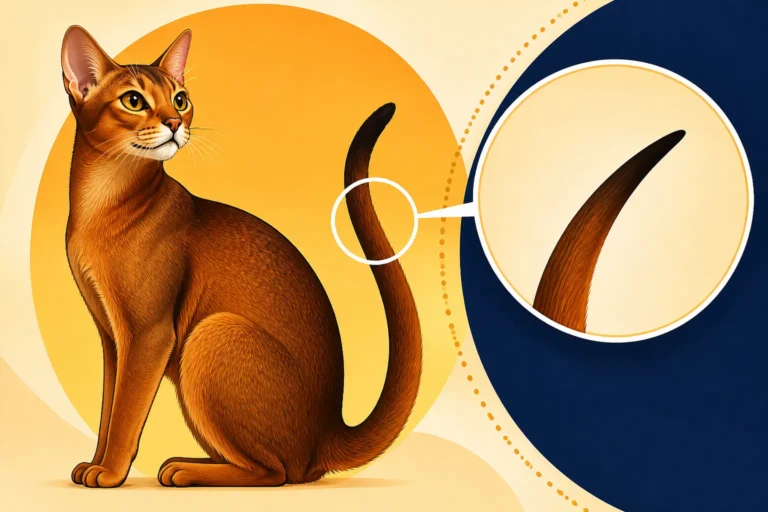
Some markings can be darker than the main body coat. The tail tip is often dark, and the back may show a deeper line of color. These details can help you recognize the breed’s characteristic appearance, but judging color from one feature alone can be misleading. A dark tail tip does not make a cat ruddy by itself; the overall coat color and ticking matter too.
Check the nose, paw pads, and other details
Color descriptions often include more than the body coat. In breed standards, a ruddy Abyssinian may have a warm-toned nose leather with a darker outline, along with dark paw pads. These points can support the overall color picture, but they are best considered alongside the coat rather than used as a stand-alone test.
A quick look at a kitten’s nose or paws is not enough to confirm its adult color. Young kittens can have developing coats and may not yet show the finished ticking or contrast of an adult. If you are trying to identify a kitten’s color for a pedigree or registration, the breeder’s records and the relevant registry’s description are more dependable than a casual visual guess.
Lighting also makes a difference when comparing photographs. Indoor bulbs may make a ruddy coat look more orange or more brown, while direct sun can bring out highlights and make dark ticking seem stronger. A photo taken with a phone can shift the color further. If a listing’s pictures seem inconsistent, ask for a few images in ordinary natural light rather than relying on a heavily edited or unusually warm photograph.
Compare ruddy with the other common colors
The easiest way to understand ruddy is to compare it with other Abyssinian colors. Sorrel is warmer and more red-toned, with a different contrast from ruddy. Blue has a cooler, softer appearance, while fawn is generally the palest of the familiar colors. These are not simply different shades of one brown coat; each has its own overall color impression and pattern of ticking. What Sorrel Means on an Abyssinian
| Color name | Overall impression | What to look for |
|---|---|---|
| Ruddy | Warm reddish-brown | Dark ticking over a rich, warm ground color |
| Sorrel | Redder and more cinnamon-toned | A brighter, warmer appearance than ruddy |
| Blue | Cool, muted, and soft | Blue-gray ticking and a cooler overall tone |
| Fawn | Pale and delicate | Light beige tones with soft contrast |
Color names can vary between registries and countries, so the table is a visual guide rather than a substitute for a formal color description. For example, one registry may use a different label for a color that another recognizes under a familiar name. If the cat is registered, check the paperwork and the registry’s published color list. Which Abyssinian Colors CFA Recognizes
Why ruddy coats can look different
Age and coat development change the impression
A kitten’s coat may not look like the neat, finished coat people picture when they think of a ruddy adult Abyssinian. Young fur can appear soft, uneven, or blotchy, and the ticking may be less distinct as the coat develops. That does not automatically mean the kitten will have the wrong color. A breeder familiar with the line can explain how the kitten’s coat is expected to mature. Why an Abyssinian Kitten Looks Blotchy at First
As the cat grows, the adult coat’s texture and contrast become easier to assess. Even then, coat color is not a perfectly fixed visual experience. Seasonal changes, shedding, coat condition, and the way light falls on the fur can all affect how rich or dark the coat appears. It is more helpful to consider the cat’s overall appearance than to compare a single photograph taken at a different age or in different lighting.
This is one reason not to make a quick decision based on an online image alone. If you are choosing a kitten and color is important to you, ask the breeder how the color is recorded and whether they can explain the kitten’s likely adult appearance. A responsible breeder should be able to discuss coat color without promising that every kitten will look exactly like a particular photo.
Sunlight and indoor lighting affect what you see
Sunlight can bring out the warm bands in a ruddy coat, but prolonged sun exposure may also affect the appearance of the fur. Some cats’ coats can fade or look less rich after spending a great deal of time in strong sunlight. Keeping an Abyssinian indoors or providing a secure, shaded outdoor space protects the cat from many outdoor hazards as well as limiting unnecessary sun exposure. Why Sun Fades an Abyssinian's Coat
Indoor lighting creates its own confusion. A warm-toned bulb can make a coat look more orange, while cool light may make the dark ticking stand out. A quick photograph beside a window, away from direct glare, is usually more useful for comparing coat color than one taken under a bright lamp or with a phone filter.
When grooming, the aim is to keep the coat healthy—not to alter its color. A gentle grooming mitt or soft brush can lift loose hair without aggressively stripping the fine coat. If you are looking for basic grooming supplies, Chewy is one retailer where cat owners may check for grooming mitts and soft brushes; choose a tool that feels gentle and use light pressure. Avoid products designed to remove large amounts of undercoat, since an Abyssinian’s short, close-lying coat does not need the same treatment as a dense double coat.
Choosing and caring for a ruddy Abyssinian
Ask clear questions about color and registration
If you are speaking with a breeder, ask what color the kitten is registered as, how the parents’ colors are recorded, and whether the kitten’s coat is expected to change as it matures. These questions are especially helpful when a listing uses terms such as “brown,” “red,” “usual,” or “ruddy” without explaining what the breeder means. How an Abyssinian's Coat Color Is Registered
You can also ask to see the kitten in natural light and compare its coat with photographs of adult cats from the same line. That does not guarantee an exact match—the kitten’s coat will develop over time—but it gives you a more realistic reference than a studio image. If you are unsure whether a description aligns with the registry’s terminology, ask for the relevant registration details rather than relying on a marketing label.
A breeder should be comfortable discussing color, but coat color is only one small part of choosing a healthy, well-socialized cat. Pay attention to the kitten’s general condition, living environment, veterinary history, and the breeder’s openness about health testing and family history. Color can help you understand what you are looking at; it should not replace careful questions about the cat’s welfare.
Keep grooming simple and protect the coat
Ruddy fur does not need special color treatments. A weekly gentle pass with a suitable grooming mitt or soft brush is usually enough for routine coat care. The goal is to remove loose hairs and help you notice changes in the skin or coat—not to polish or thin the coat until it looks different.
If you need to pick up a grooming tool, Chewy may be a convenient place to compare basic options, but the cat’s comfort matters more than the brand or packaging. Introduce the tool gradually: let the cat sniff it, use a few gentle strokes, and stop if the cat becomes tense. A short, calm session is more useful than trying to finish a full grooming routine while the cat is struggling to get away.
Bathing, clipping, or using strong coat products simply to make a ruddy Abyssinian look redder or darker is unnecessary. These approaches do not create the natural ticking that defines the breed’s coat. If the coat becomes unusually dull, greasy, patchy, or changes noticeably, consider whether there may be a health or nutrition issue and talk with a veterinarian rather than trying to solve it with color-enhancing products.
For everyday supplies, Chewy can be one option for finding a gentle grooming mitt or cat-safe nail clippers, particularly if you are assembling a basic care kit. Check that any product is suitable for cats and use it as directed. The healthiest-looking ruddy coat comes from appropriate care, good nutrition, and a cat who is feeling well—not from trying to change the coat’s natural shade.
Disclaimer
This article is for general informational purposes only and does not constitute professional advice. Laws, prices and regulations vary by location and change over time. Consult a qualified professional for guidance on your specific situation.