Whether Abyssinians Come in a Longhair Version
An Abyssinian with a fluffy coat can prompt a very reasonable question: is there a longhaired Abyssinian variety, or is it a different breed? The answer is usually the Somali, a recognized longhaired breed closely related to the Abyssinian. This guide explains the relationship, what to look for, and why coat length can be confusing in kittens.
Is there a longhaired Abyssinian
The Somali is the longhaired counterpart
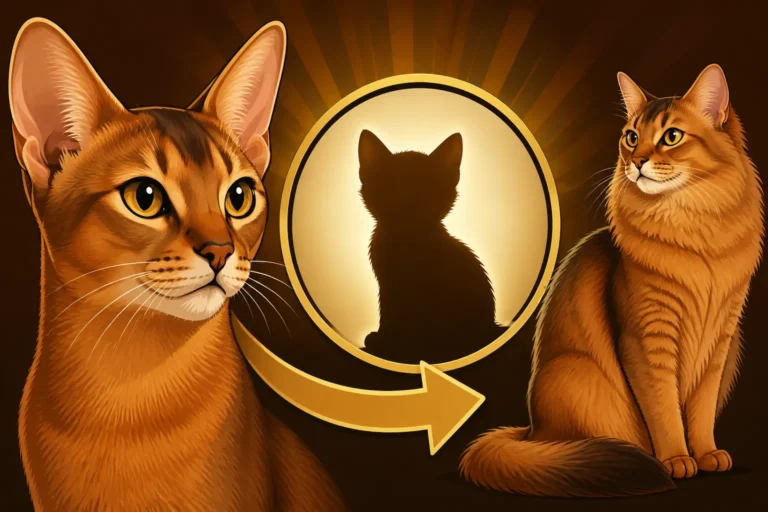
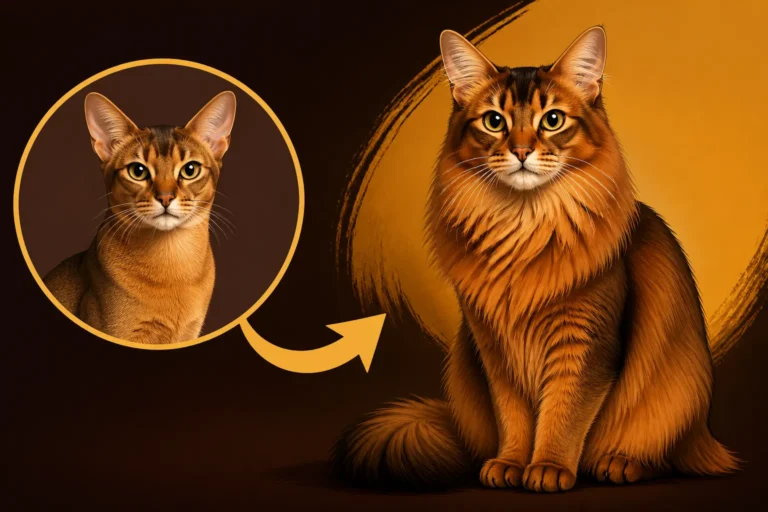
In everyday conversation, people often call the Somali a longhaired Abyssinian. That description makes sense: the breeds share a close history, similar body type, large alert ears, and the distinctive ticked coat pattern that gives each hair several bands of color. But in breed registration and cat-show settings, the Somali is generally treated as a separate breed, not simply an Abyssinian with a longer coat.
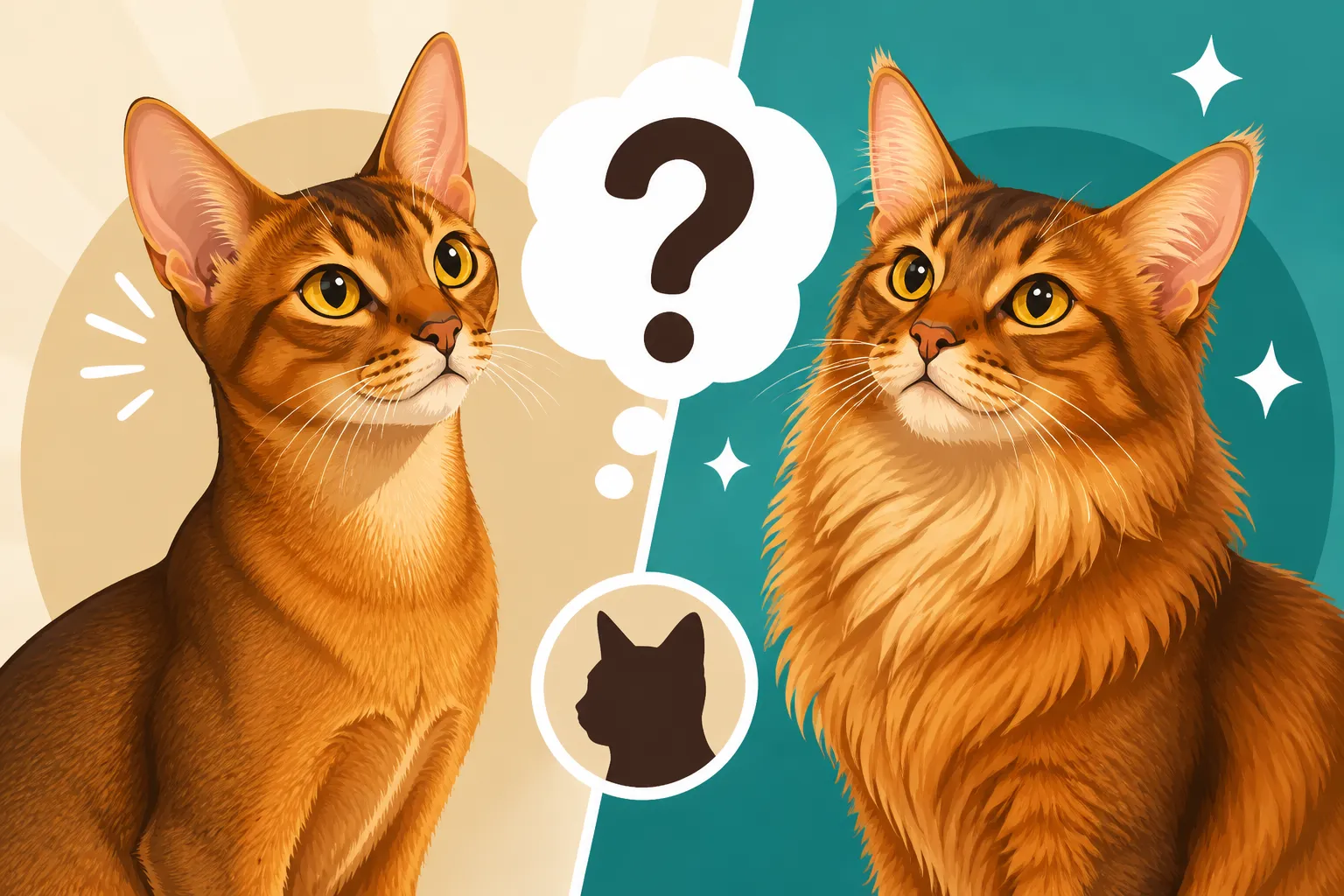
The difference you notice first is coat length. An Abyssinian has a short, close-lying coat. A Somali has a medium-length, soft coat, often with a fuller ruff around the neck, britches on the hind legs, and a plume-like tail. The coat still has the Abyssinian-style ticking rather than ordinary stripes or spots, so a Somali can look like a fluffier version of the same elegant, athletic cat.
If you want the fuller history behind the relationship, The Somali Is an Abyssinian With Long Hair explains how this breed connection developed. For a quick comparison of appearance and breed identity, How an Abyssinian Differs From a Somali is also useful.
Why the two breeds are so closely connected
The longhair trait is recessive. In simple terms, a kitten generally needs to inherit the relevant gene variation from both parents to develop a long coat. A shorthaired Abyssinian can carry that trait without looking longhaired, and a carrier may pass it to kittens. That helps explain why the Somali’s coat type can appear within the broader history of Abyssinian breeding.
This does not mean every Abyssinian is a hidden Somali or that a shorthaired Abyssinian will suddenly grow a long coat later. Coat length is inherited, not switched on by grooming, diet, or the seasons. A kitten’s coat may change as it matures, but a genuinely longhaired coat does not turn into a short Abyssinian coat after a seasonal shed.
The genetics and breed history are explored further in Why the Long Hair Gene Was in Abyssinians All Along. The key distinction for a prospective owner is practical: if you want a cat recognized and registered as a Somali, look for a Somali from a breeder who can explain its pedigree and registration. If you want an Abyssinian, expect the sleek short coat described in the breed standard.
How to tell an Abyssinian from a Somali
Compare coat length and furnishings
A mature Abyssinian’s coat lies close to the body and tends to show off its lean, muscular outline. Its hair is short, fine, and ticked. A Somali has longer hair that creates a softer outline, particularly around the tail, neck, and hindquarters. That extra length does not make the Somali a heavy-coated cat in the way a Persian is; it is generally a moderate, flowing coat rather than a dense, plush one.
When looking at kittens, take care not to judge only by a quick glance. Young cats can have fuzzy or uneven-looking coats while their adult coat develops. A Somali kitten’s coat may take time to fill out, while an Abyssinian kitten may look less sleek than an adult. Asking the breeder about the parents, litter, and registration is more reliable than deciding from one photograph. When an Abyssinian Litter's Coat Length Becomes Obvious offers more detail on how coat length becomes apparent.
The breed standard can help put the difference in context. An Abyssinian’s coat is meant to be short and close, while a Somali’s longer coat is part of its characteristic appearance. If you are comparing a cat to show descriptions, What an Abyssinian Looks Like Against the Show Standard can help clarify the expected Abyssinian look.
Ticking is not the same as coat length
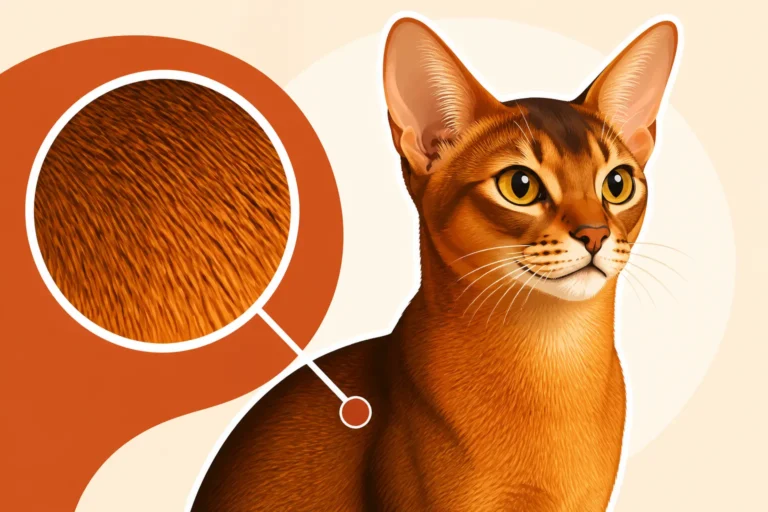
Both breeds are known for ticking: individual hairs carry bands of color, creating a warm, shimmering effect rather than a coat covered in obvious stripes. That shared feature is one reason people mistake a Somali for a longhaired Abyssinian. The coat pattern connects them, but the coat length and breed registration distinguish them.
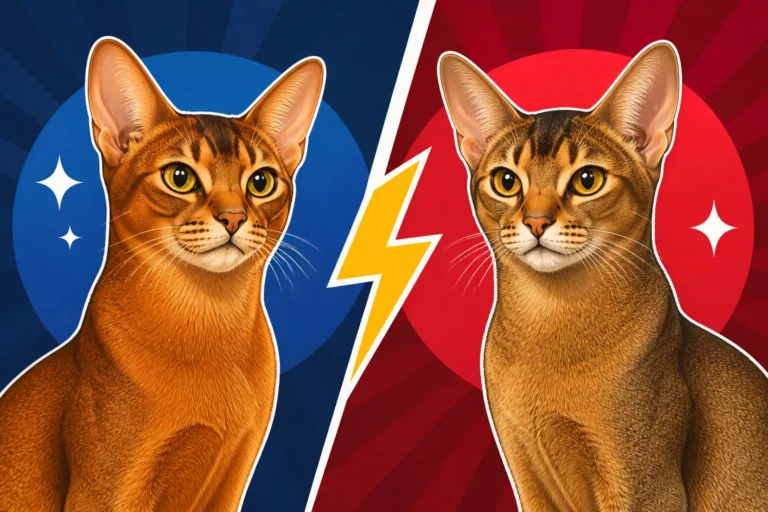
Color can add another layer of confusion. Abyssinians are commonly described in recognized colors such as ruddy, sorrel, blue, and fawn, though accepted colors and terminology can vary among registries. Somalis also have colors tied to their breed standards, but the rules may not be identical everywhere. If color is important to you, check the registry and breeder’s documentation rather than relying on an online listing’s wording. Which Abyssinian Colors CFA Recognizes explains one registry’s color framework.
A cat with a long, fluffy coat and ticked coloring may resemble a Somali, but appearance alone does not establish its registration or pedigree. A breeder should be able to explain whether the kitten is registered as a Somali, an Abyssinian, or another category under the relevant registry. If the explanation is vague, ask for the paperwork before making a decision.
| Feature | Abyssinian | Somali |
|---|---|---|
| Coat length | Short and close-lying | Medium-length and flowing |
| Typical silhouette | Sleek and defined | Softer outline, often with a plume tail |
| Coat pattern | Ticked hairs | Ticked hairs |
| Breed status | Recognized shorthaired breed | Generally recognized as a separate longhaired breed |
| Useful question for a breeder | What registry and pedigree support the kitten’s Abyssinian registration? | What registry and pedigree support the kitten’s Somali registration? |
What to expect from coat length in kittens and adults
A kitten’s coat can be misleading
It is easy to become uncertain when a kitten’s coat looks fluffy, uneven, or less polished than the sleek coat shown in adult breed photos. Kittens change as they grow, and their coat texture and color can develop over time. That normal development does not necessarily mean the kitten is longhaired. Look for the overall pattern across the litter and ask the breeder how the kittens are expected to be registered as adults.
A responsible breeder should be comfortable discussing coat length, parentage, and the possibility of longhair carriers in a breeding line. If a litter includes kittens with different coat lengths, the breeder should explain how each kitten is classified and what documentation will accompany it. A photo can be a useful starting point, but it cannot replace clear information about the kitten’s pedigree and registration.
Be cautious about sellers using terms like “rare longhair Abyssinian” without explaining what they mean. The phrase may be an informal description, but it can also blur the distinction between the Abyssinian and Somali breeds. Ask whether the kitten is being sold and registered as a Somali or an Abyssinian, and ask to see the relevant records. Whether Abyssinians and Somalis Are Still Bred Together provides more background on how the two breeds relate in breeding contexts.
Seasonal changes do not create a longhair coat
An Abyssinian’s short coat can look or feel somewhat different through the year. Shedding, indoor heating, changes in daylight, age, and general health can all affect how full or sleek the coat appears. A winter coat may seem a little thicker, and seasonal shedding can make loose hair more noticeable, but these changes do not transform a shorthaired Abyssinian into a Somali.
If your cat’s coat suddenly looks dull, patchy, unusually thin, or different in texture, think beyond breed identification. Skin irritation, parasites, stress, nutrition, and underlying health problems can affect the coat. A sudden change is worth discussing with a veterinarian, especially if it comes with itching, excessive grooming, weight changes, or low energy. A normal seasonal shift should not be confused with a dramatic change in coat type.
For the everyday changes that can happen in an Abyssinian’s coat, see How an Abyssinian's Coat Changes With the Seasons. It can help you distinguish ordinary shedding from a change that deserves attention.
Choosing the right breed for your home
Decide what you mean by “longhaired Abyssinian”
If you are drawn to the Abyssinian’s personality and look but prefer a longer coat, a Somali may be the breed you are looking for. You can expect a similar general impression—an active, alert cat with a ticked coat—alongside the Somali’s longer furnishings and plume-like tail. Still, individual cats differ, and coat length alone does not predict temperament or care needs.
If your preference is specifically for a short, low-maintenance coat, an Abyssinian may suit you better. Short hair does not mean no grooming at all, but routine coat care is usually straightforward. A Somali’s coat needs regular attention to keep it comfortable and free of tangles, especially in areas where longer hair can catch or mat.
It is sensible to meet adult cats of both breeds, if possible, rather than choosing from kitten photos alone. Ask breeders what grooming their cats tolerate, how they introduce brushing, and what coat care they recommend at different ages. If you are gathering basic supplies, a pet retailer such as Chewy may help you compare grooming mitts, combs, and other cat-care items; choose tools suited to the individual cat’s coat rather than buying a deshedding tool by default.
Ask clear questions before choosing a kitten
Before placing a deposit, ask the breeder to state the kitten’s breed and registration plainly. Request details about the parents’ registration, the kitten’s pedigree, and the expected adult coat. A trustworthy breeder should not pressure you to accept vague labels or treat the difference between the two breeds as unimportant if registration matters to you.
You can also ask what happens if the kitten’s coat develops differently than expected, and whether the sale agreement describes the kitten as a pet or as a show prospect. These questions are not about trying to catch someone out; they help you understand exactly what you are bringing home. If you are considering a Somali, ask about brushing and coat maintenance. If you are considering an Abyssinian, ask how the breeder manages routine coat and dental care.
Once you have brought your cat home, keep grooming simple and positive. Introduce handling in short sessions, reward calm behavior, and use a tool that feels comfortable on the coat. Chewy can be one place to browse basic grooming supplies, but the best choice depends on your cat’s coat and tolerance; a breeder or veterinary team can suggest an appropriate tool if you are unsure. Focus on gentle, regular care rather than trying to make the coat look a certain way.
Disclaimer
This article is for general informational purposes only and does not constitute professional advice. Laws, prices and regulations vary by location and change over time. Consult a qualified professional for guidance on your specific situation.