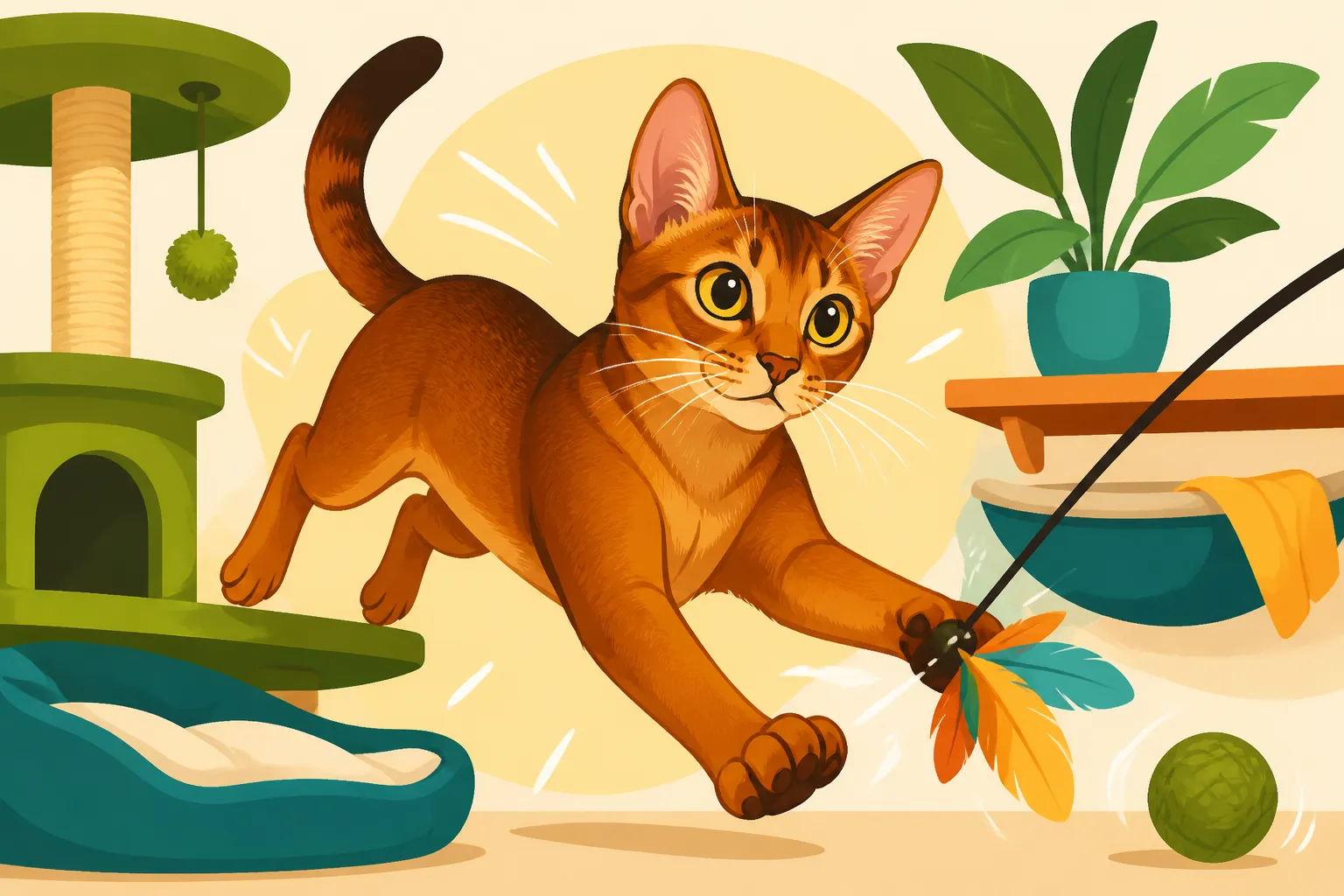
The Abyssinian Is the Busiest Cat in the House
If you've just welcomed an Abyssinian into your home, you might be wondering if you've adopted a cat or a perpetually motion-activated furry missile. This breed is famously energetic, and sometimes it feels like they have an internal battery that never runs out. This comprehensive guide will help you understand the boundless energy of the Abyssinian, offering insights into their unique behaviors and practical tips for channeling their zest for life into positive and enriching experiences for both of you.
Understanding the Abyssinian's Boundless Energy
The Abyssinian isn't just an active cat; they are a whirlwind of elegant athleticism and ceaseless curiosity. Unlike many other breeds that are content to nap for hours on end, an Abyssinian often seems to operate on a different schedule entirely. Their energy isn't just about physical activity; it's deeply intertwined with their keen intelligence and inherent desire to explore and interact with their environment. If you’ve ever felt like your Abyssinian is watching your every move, planning their next adventure, you’re probably right.
The Genetic Predisposition to Activity
When you look at an Abyssinian, with their lean, muscular bodies and alert, expressive eyes, it’s easy to see why they’re often likened to small wildcats. This isn't just an aesthetic comparison; their physical build and temperament suggest a strong link to their ancestral roots, which were likely more active and independent than many modern domestic breeds. They possess an almost boundless stamina, capable of intricate aerial maneuvers and lightning-fast sprints, often with little warning. It’s this innate drive that makes them so engaging, yet also so demanding. They thrive on challenge and engagement, and a lack of it can lead to frustration for both the cat and the owner. This high-octane lifestyle is a defining characteristic, and understanding it is the first step in providing a fulfilling life for your Aby.
Imagine trying to keep up with a tiny, incredibly agile athlete who also happens to be a master strategist. That's living with an Abyssinian. They don't just run; they navigate obstacles, calculate jumps, and analyze their surroundings with an intensity that's truly captivating. This isn't a cat that's going to spend its day curled up in a sunbeam if there's an adventure to be had. Their genetic blueprint dictates a life of movement and mental stimulation, which means as their owner, you're signing up to be part of that dynamic world. How Many Hours a Day an Abyssinian Stays Active might surprise you if you're used to more sedentary breeds.
More Than Just Play: The Intellectual Component of Their Energy
It’s easy to mistake an Abyssinian’s constant motion solely for physical exuberance, but a significant portion of their energy is intellectual. These cats are incredibly smart, problem-solvers who get immense satisfaction from figuring things out. Their minds are always whirring, observing, planning, and reacting. A simple game of chase isn’t enough; they want to strategize, anticipate, and ultimately "win." This mental engagement is just as crucial as physical exercise in keeping them happy and well-adjusted. If their minds aren't adequately stimulated, you'll start to see that energy redirected in less desirable ways, like systematically investigating every cupboard or trying to dismantle household items.
Think of it like having a feline Sherlock Holmes in your home. Every new object, every closed door, every human activity is a puzzle waiting to be solved. They learn incredibly fast, remembering sequences of events, human habits, and how mechanisms work. This means you need to be constantly a step ahead, or at least keep them engaged in appropriate mental challenges. Puzzle feeders are fantastic for this, turning mealtime into a brain game. Even just interacting with them by talking and explaining things can engage their minds, as they seem to genuinely listen and try to understand. Their intelligence truly makes them a partner in your daily life, not just a pet.
The Abyssinian's Unique Way of "Relaxing"
For an Abyssinian, the concept of "relaxing" is often quite different from what we might imagine. You might envision a cat stretched out, purring deeply, completely at ease. While Abyssinians certainly enjoy a good nap after an intense play session, their "downtime" is often an active form of rest, filled with observation and mental processing. True, unmoving stillness can sometimes be a red flag in such an active breed, signaling potential discomfort or illness.
"Active Rest" and Observation
When an Abyssinian appears to be relaxing, they're often not truly "off duty." Instead, they're likely engaged in what can be best described as "active rest." This means they might be perched on a high shelf, observing the entire room with laser focus, or sitting on a windowsill, intently watching birds and squirrels. Their ears will twitch, their eyes will track movements, and their tail might slowly swish. They're processing information, analyzing their surroundings, and mentally preparing for their next burst of activity. They are acutely aware of everything happening in their environment, from the subtle shift of light to the quietest sound.
This constant state of readiness can be both charming and a little bit unsettling. You might think your Aby is finally winding down, only for them to suddenly launch themselves into a full sprint across the house the moment a dust bunny dares to cross their path. They might appear to be napping, but the slightest sound of a cupboard opening or a rustle of a treat bag will have them instantly alert. This active observation is their way of staying engaged with their world, even when they're not physically moving at top speed. It’s an inherent part of their nature, demonstrating their perpetual alertness and engagement with their surroundings.
Why True Stillness is Rare
If you're accustomed to cat breeds that spend most of their day in a state of deep slumber, an Abyssinian will be a significant departure. For an Abyssinian, prolonged stillness is genuinely rare. While they do sleep, it's often in shorter, more intense bursts, punctuated by periods of intense activity and vigilant observation. A truly quiet Abyssinian, one that isn't engaging with its environment or looking for the next thing to do, often warrants a closer look. They're not the type of cat to simply "veg out" for hours on end.
This means owners need to be tuned into their cat's normal activity patterns. A sudden decrease in energy, a reluctance to play, or an unusual amount of time spent hiding or sleeping could indicate a health issue. Given their typically high energy levels, Why a Suddenly Still Abyssinian Needs a Vet is not an overstatement. Their natural state is one of dynamic interaction with the world, and any significant deviation from that warrants attention. They're always ready for action, and if they're not, something might be amiss.
Vertical Space is Paramount for an Abyssinian
One of the most defining characteristics of an Abyssinian is their incredible affinity for height. They are natural climbers, jumpers, and perching enthusiasts. Providing ample vertical space in your home isn't just a suggestion for an Abyssinian; it's an absolute necessity for their physical and mental well-being. Without sufficient opportunities to climb and survey their territory from above, an Abyssinian can become frustrated, stressed, and potentially destructive as they seek out alternative, often inappropriate, climbing surfaces.
The Urge to Climb Higher
Abyssinians are instinctually driven to seek out high vantage points. This behavior harkens back to their wild ancestors, where elevation offered safety from predators, a better view for hunting prey, and a secure place to rest. In a domestic setting, this translates to a desire to be on top of everything: refrigerators, bookshelves, curtain rods, and the highest cat tree you can find. They love to oversee their domain from above, feeling secure and in control. This isn't just about physical exercise; it's about mental enrichment and fulfilling a deep-seated instinct.
If you have an Abyssinian, you'll quickly learn that "eye level" for them is often somewhere near the ceiling. They'll leap onto counters with effortless grace, scale bookshelves like furry mountaineers, and squeeze themselves into the narrowest gaps on top of cabinets. Providing designated climbing structures channels this natural urge into safe and appropriate outlets. Without these, your delicate antique vase on the top shelf might become their next mountain peak, and that's usually not a fun discovery for anyone. Understanding this deep-seated need helps you create a home environment where your Abyssinian feels both safe and stimulated. An Abyssinian Needs Height More Than It Needs Floor truly captures this essential aspect of their care.
Designing a Vertical Playground
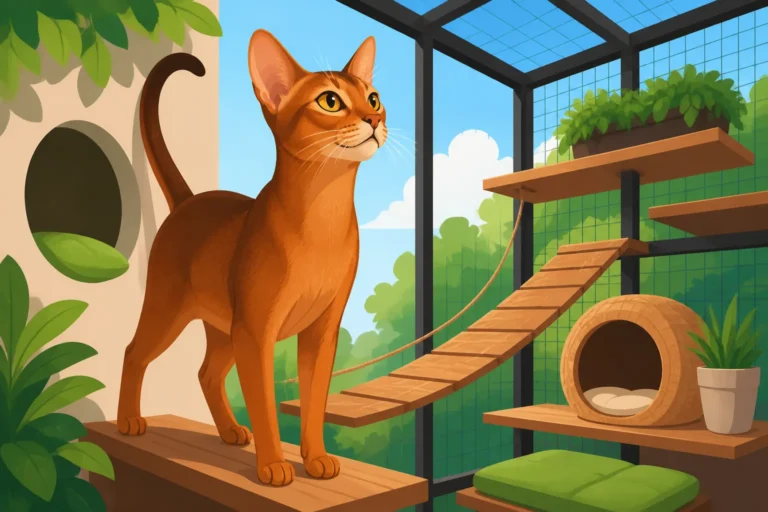
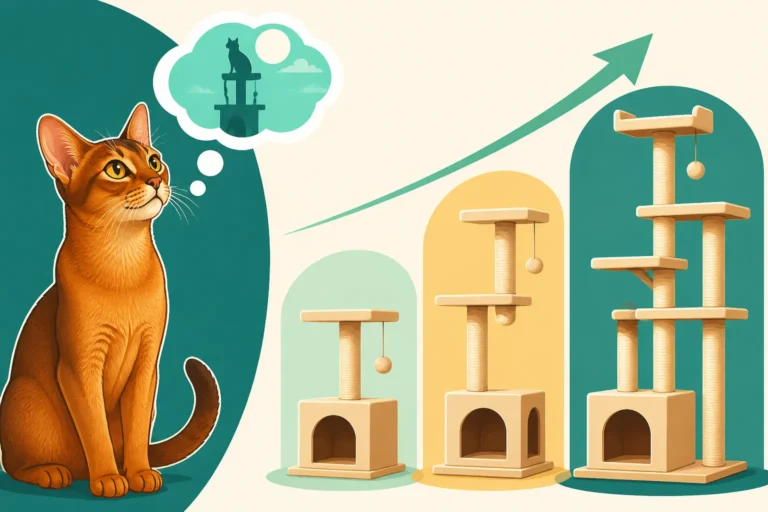
Creating a vertical playground for your Abyssinian doesn't mean turning your home into a jungle gym, though they might appreciate that! It means thoughtfully integrating climbing opportunities into your existing space. Tall, sturdy cat trees are a fantastic starting point, offering multiple levels, scratching surfaces, and cozy perches. Look for ones that are stable and reach as high as possible. Don't be surprised if your Aby quickly outgrows or outsmarts a smaller tree. Wall-mounted shelves and cat walkways are another excellent option, transforming unused vertical space into an engaging pathway for exploration.
When installing wall shelves, consider the Abyssinian's agility and jumping prowess. They need secure, wide platforms that they can easily navigate. Think about creating a circuit that allows them to move from one high point to another without touching the floor. Connecting different pieces of furniture, like a cat tree to a bookshelf, can also provide extended climbing routes. Some owners even invest in specialized cat hammocks or bridges that can be attached to walls or windows, giving their Aby new perspectives and opportunities to relax while still being elevated. You can find a vast array of these climbing solutions on platforms like Amazon, allowing you to tailor your vertical space to your home's aesthetic and your cat's adventurous spirit.
The Investigator: Why Abyssinians Open Doors and Cabinets
If you've ever had an Abyssinian in your home, you know that a closed door or cabinet is less of a barrier and more of a personal challenge. These cats are incredibly intelligent and possess a relentless curiosity, leading them to systematically explore every nook and cranny of their environment. This isn't just mischief; it's a demonstration of their problem-solving skills and their insatiable need to understand how things work.
Curiosity That Knows No Bounds
An Abyssinian's curiosity is truly boundless. They want to know what's behind every door, inside every cupboard, and under every rug. They're driven by an innate desire to understand their world, and they'll apply considerable mental and physical effort to achieve this. This means they will test every latch, every handle, and every possible opening. A simple push-pull door handle is child's play for an Abyssinian; they'll quickly figure out how to depress the handle and pull the door open. Hinged cabinet doors become an exercise in leverage and paw dexterity.
This investigative nature means that few secrets are safe from an Abyssinian. They'll explore the pantry, the linen closet, and even the bathroom vanity. It’s not about causing trouble for them; it’s about discovery. They simply must know what's in there. This can be adorable when they're "helping" you unpack groceries, but less so when they've discovered where you keep the cat treats or, worse, the household cleaning supplies. Their keen senses of smell and hearing also aid their investigations, leading them to interesting sounds or scents hidden behind closed doors.
The Dexterous Paw and Clever Mind
It's not just their curiosity; Abyssinians combine that drive with remarkable dexterity and intelligence. Their paws are incredibly agile, capable of manipulating objects and mechanisms in ways that might surprise you. They learn by observation, watching how you open doors or pull out drawers, and then they'll try to replicate those actions. Their problem-solving skills are top-notch; if one method doesn't work, they'll often try another until they succeed. This persistence, combined with their clever minds, makes them formidable opponents for any simple latch or knob.
Many Abyssinian owners find themselves investing in childproof latches and locks, not for children, but for their feline masterminds. Simple magnetic catches often aren't enough; they need something more robust, perhaps even a spring-loaded or push-button mechanism, to truly secure cabinets. Why Childproof Latches End Up on an Abyssinian's Kitchen is a common refrain among Aby owners. Be sure to secure anything potentially dangerous, such as medications, cleaning products, or human foods that are toxic to cats. Their intelligence is a wonderful trait, but it does require owners to be extra vigilant and creative in keeping them safe and their homes intact.
When Boredom Strikes: What an Abyssinian Does When Understimulated
While the Abyssinian's high energy and intelligence are defining traits, they also come with a significant responsibility for the owner: preventing boredom. An understimulated Abyssinian is not a happy Abyssinian, and their frustration can quickly manifest in behaviors that range from mildly annoying to downright destructive. Ignoring their need for engagement is a recipe for chaos in your home.
Redirected Energy: When Intelligence Turns Destructive
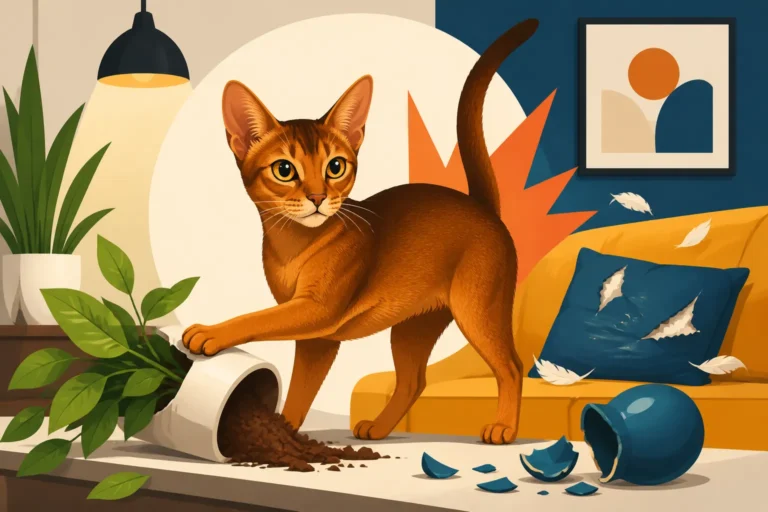
When an Abyssinian isn't given appropriate outlets for their physical and mental energy, that energy doesn't simply disappear; it gets redirected. And often, it's redirected towards things you'd rather they left alone. This isn't out of malice but out of a desperate need for stimulation. They might start climbing curtains, scratching furniture, or systematically knocking items off shelves. They're not trying to be naughty; they're simply trying to entertain themselves with whatever is available, and unfortunately, that often means your prized possessions.
A bored Abyssinian might also engage in excessive vocalization, pacing, or even start to overgroom, leading to skin irritation. They can become stressed and anxious, behaviors that can further exacerbate destructive tendencies. The key is to remember that these actions are a cry for engagement, not an act of defiance. Providing a rich, stimulating environment is crucial to preventing these issues. It's about proactive management rather than reactive punishment, which rarely works with a cat as clever and persistent as an Abyssinian. What Destructive Behavior in an Abyssinian Really Means is often a sign of unmet needs.
The "Abyssinian Redecoration" Service: Common Mischief Born of Boredom
If you own an Abyssinian, you might be familiar with the "Abyssinian Redecoration" service. This often involves finding items mysteriously relocated, strategically knocked to the floor, or artfully rearranged. From emptying the contents of a tissue box across the living room to systematically pushing all the pens off your desk, their creativity knows no bounds when they're bored. They are masters of cause and effect, and they quickly learn which actions get a reaction from you, even if that reaction is a frustrated shout.
One common target for Abyssinian boredom is water. Many Abyssinians are fascinated by running water, and a bored Aby might try to play in the sink, splash water out of their bowl, or even attempt to turn on a faucet. Others might take to chewing on electrical cords (a significant hazard!), houseplants (many of which are toxic), or even shredding toilet paper rolls. These are not signs of a "bad" cat, but rather a cat whose immense intelligence and energy are not being adequately challenged. Providing engaging toys, puzzle feeders (easily found on Amazon), and regular interactive play sessions are essential to keeping your home from becoming their personal demolition project. Why an Abyssinian Plays With Water is just one example of their unique behaviors when seeking stimulation.
Why an Abyssinian Should Not Be Left Alone All Day
Many cat breeds are quite independent and can tolerate long hours alone while their owners are at work. The Abyssinian is not one of them. Their deeply social nature and high intelligence mean they thrive on interaction and companionship. Leaving an Abyssinian alone for extended periods without adequate mental and physical stimulation is a recipe for a stressed, bored, and potentially destructive cat.
The Need for Interaction
Abyssinians are often described as "people cats" for a reason. They form strong bonds with their human companions and genuinely crave interaction. They want to be involved in whatever you're doing, whether it's "helping" you read the newspaper, supervising your cooking, or simply following you from room to room. They're not lap cats in the traditional sense, preferring to be on your shoulder or perched nearby, but they need to be with you, engaging with your activities. This intense social need means they genuinely miss you when you're gone.
A single Abyssinian in a quiet house for eight to ten hours a day, five days a week, is often a recipe for disaster. They can become lonely, leading to anxiety and behavioral issues. They might over-vocalize, become withdrawn, or develop destructive habits out of sheer boredom and lack of companionship. Their minds need to be stimulated, and their bodies need activity, and a solitary existence severely deprives them of both. Understanding How Long an Abyssinian Can Be Left Alone is critical for their well-being.
Considering a Companion: Is Two Abyssinians Better Than One?
For many Abyssinian owners, the solution to their cat's social needs and high energy levels is simple: get another Abyssinian! This breed often thrives in multi-cat households, especially with another Aby or a similarly active, intelligent breed. They can entertain each other, chase each other around, and engage in wrestling matches that burn off excess energy and provide vital social interaction. Having a feline companion can significantly reduce the likelihood of boredom and loneliness-induced behavioral problems.
When considering a companion, look for a cat with a similar play style and energy level. Another Abyssinian is often an ideal match, as they instinctively understand each other's intense play and communication signals. They can chase, stalk, and wrestle to their heart's content, leaving your legs and furniture a bit more intact. While a second cat isn't a guarantee against all mischief, it certainly provides a significant buffer against boredom. Why a Second Cat Suits an Abyssinian is a commonly accepted truth among breeders and experienced owners, and it can truly transform the dynamics of your household for the better.
Giving an Abyssinian a "Job": Engaging Their Minds and Bodies
Given their incredible intelligence and energy, simply providing food, water, and a litter box is not enough for an Abyssinian. They need a "job," something to do that challenges their minds and satisfies their hunting instincts. This proactive approach to enrichment is key to a happy, well-adjusted Abyssinian and a peaceful home.
The Joy of Hunting: Incorporating Foraging and Puzzle Toys
At their core, Abyssinians are natural hunters. Even though they're well-fed housecats, that instinct to stalk, chase, and capture remains incredibly strong. You can tap into this by incorporating foraging and puzzle toys into their daily routine. Instead of just putting food in a bowl, make them work for it. Puzzle feeders, which dispense kibble only after the cat manipulates them in a certain way, are fantastic for mental stimulation. They turn mealtime into a challenging game, engaging their problem-solving skills and slowing down their eating.
Hiding small portions of their daily kibble ration around the house – on shelves, under blankets, or inside designated puzzle toys – encourages natural foraging behavior. This "hunt" for food is incredibly satisfying for an Abyssinian and mimics the activity they would undertake in the wild. You can find many different types of puzzle feeders on Amazon, ranging from simple slow-feeder bowls to complex multi-stage puzzles. Rotate these toys and hiding spots to keep things fresh and challenging, preventing your clever Aby from solving them too quickly and losing interest. Why Foraging Suits an Abyssinian's Mind highlights the importance of this type of enrichment.
Learning Tricks and Commands: Channeling Their Intelligence
Because Abyssinians are so intelligent and eager to interact, they are highly trainable cats. They respond incredibly well to positive reinforcement and clicker training, quickly learning a variety of tricks and commands. Teaching them to sit, stay, come when called, or even fetch is not only a fantastic way to bond with your cat but also provides immense mental stimulation. It gives them a "job" that engages their brains and their desire to please.
Start with simple commands and keep training sessions short, fun, and frequent. Always end on a positive note, even if it means doing an easy trick they already know. Treats are excellent motivators, but praise and affection are just as important. Many Abyssinians naturally enjoy fetching, turning playtime into an interactive game that also builds their retrieving skills. Training an Abyssinian Is Easier Than Stopping It is a common saying, and it's true! Channeling their intelligence into learning new things is far more effective and rewarding than trying to suppress their natural behaviors. You'll be amazed at what your Abyssinian can learn.
Living with an Abyssinian: Adapting Your Home and Lifestyle
Embracing an Abyssinian into your life means making some adjustments, not just for them, but for you. Their dynamic nature requires a certain level of commitment and understanding to ensure both your home life and their well-being are harmonious. It's about proactive planning and a willingness to accept a certain amount of delightful chaos.
Abyssinian-Proofing Your Home: Safety and Prevention
Given their investigative nature and propensity for climbing, Abyssinian-proofing your home is paramount. This goes beyond typical cat-proofing. Secure cabinets with childproof latches, especially those containing cleaning supplies, medications, or human foods that are toxic to cats (like chocolate, onions, or grapes). Electrical cords should be covered or tucked away securely to prevent chewing. Remove any fragile or valuable items from shelves, especially those above an Aby's jumping height – which is surprisingly high!
Consider replacing houseplants with cat-safe varieties or placing them in inaccessible areas, as Abyssinians are notorious chewers. Ensure all windows have sturdy screens, as their curiosity can lead them to push against them. Think vertically: if you don't want them on your kitchen counters or refrigerator, you need to provide more appealing (and allowed) vertical spaces elsewhere. It's an ongoing process, as they'll constantly find new things to explore. Regularly assessing your home from an Abyssinian's perspective can help you anticipate potential hazards and areas of interest.
Embracing the Chaos: Adjusting Expectations for a Busy Cat
Perhaps the most important adjustment for an Abyssinian owner is a shift in expectations. These are not quiet, decorative cats; they are active, vocal, and deeply involved members of the household. Life with an Abyssinian is rarely dull, but it can be a bit chaotic at times. Embrace their playful antics, their chirps and trills, and their insatiable curiosity. Learn to appreciate their intelligent gaze and their constant desire to be where the action is.
Instead of fighting their natural inclinations, work with them. Provide ample enrichment, engage them in play, and shower them with affection. Understand that a busy Abyssinian is a happy Abyssinian. Your home might look a little different with cat trees, wall shelves, and puzzle toys scattered about, but the joy and entertainment they bring are immeasurable. Learning What Abyssinian Owners Wish They Had Known often boils down to understanding and accepting their high energy from the start. They might be the busiest cat in the house, but they are also one of the most rewarding companions you could ever wish for.
Disclaimer
This article is for general informational purposes only and does not constitute professional advice. Laws, prices and regulations vary by location and change over time. Consult a qualified professional for guidance on your specific situation.