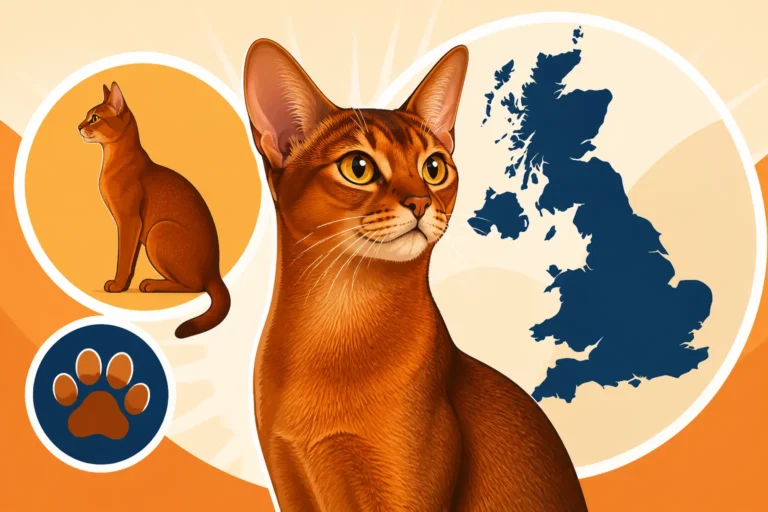
What the Abyssinian Show Standard Asks For
Anyone who has fallen in love with an Abyssinian knows there's something utterly captivating about their regal appearance, their vibrant energy, and that incredible ticked coat. But if you've ever wondered why some Abyssinians look a little different from others, or what makes a "perfect" example of the breed, then diving into the show standard is a fascinating journey. This isn't about judging your beloved pet, but understanding the careful blueprint breeders and judges use to preserve the unique beauty and characteristics that define the Abyssinian cat. This guide will walk you through exactly what those standards entail, from their expressive eyes to their athletic build.
The Purpose of a Show Standard
When we talk about a "show standard," it's easy to imagine something cold and technical, far removed from the loving companionship our cats offer. But really, it’s a living document, a blueprint crafted by dedicated breeders and feline organizations over many decades. Its primary goal is to provide a consistent vision for the breed, ensuring that its defining physical traits and temperament are maintained across generations and catteries worldwide. Think of it as the collective dream of what an Abyssinian should be, a guiding light for responsible breeding practices.
What a Show Standard Represents
A show standard is more than just a checklist; it's a detailed description that encapsulates the ideal Abyssinian. It covers everything from the shape of their head and ears, the length of their legs, to the texture and pattern of their unique ticked coat. Each element is carefully defined, often with specific proportions and nuances, to ensure a unified interpretation globally. For instance, it doesn't just say "pretty eyes"; it specifies the desired almond shape, size, and vibrant color, complete with that characteristic dark rim. It's about preserving the essence of the breed, the look and feel that makes an Abyssinian instantly recognizable, whether it's What a Ruddy Abyssinian Actually Looks Like or a rare Fawn.
Without a standard, breeders might pursue different aesthetic goals, leading to variations that could eventually dilute the breed's distinct characteristics. It acts as a compass, keeping everyone aligned on the path to maintaining breed purity and health. This isn't just for judges in the ring; it's a critical tool for breeders to select their breeding cats and for enthusiasts to appreciate the breed's finer points.
Why it Matters to the Breed
The show standard serves as a cornerstone for breed preservation and health. Beyond aesthetics, many physical traits described in the standard are linked to the cat's overall health and functionality. For example, the specified body type isn't just about looking elegant; it's about maintaining the athletic, agile build that allows an Abyssinian to climb and play with boundless energy. Deviations can sometimes indicate underlying health issues or reduce the cat's quality of life.
Furthermore, the standard helps define the breed's unique "type." When you see an Abyssinian, you expect certain things: a graceful, medium-sized body, large, expressive ears, and that vibrant, shimmering coat. The standard ensures these elements remain consistent, preventing the breed from morphing into something else entirely. It's also a teaching tool for new breeders, helping them understand the nuances of the Abyssinian and how to select for desirable traits while avoiding those that are considered faults. It allows for continuous improvement while holding true to the breed's core identity.
The Difference Between Pet and Show Quality
It's common for potential owners to hear terms like "pet quality" and "show quality" and feel a bit confused, or even a little worried that a "pet quality" kitten is somehow inferior. Let's clear that up right away: a pet-quality Abyssinian is every bit as loving, playful, and wonderful a companion as a show-quality one. The distinction lies purely in how closely a cat adheres to the rigorous aesthetic standards laid out for the show ring.
A show-quality Abyssinian is one that, in the breeder's and often a judge's opinion, embodies the breed standard so perfectly it could compete for titles. This might mean its ear set is just right, its ticking is absolutely flawless, or its body proportions are ideal according to the written standard. A pet-quality Abyssinian, on the other hand, might have a minor imperfection that doesn't affect its health or temperament in the slightest. Perhaps a faint necklace marking that isn't allowed in the ring, or ears that are a touch too small, or a coat pattern that isn't quite uniform enough for competition.
These are purely cosmetic differences, visible only to a highly trained eye, and they certainly don't diminish the cat's inherent value as a beloved family member. In fact, many "pet quality" Abyssinians are stunning cats that bring immense joy to their owners. The primary aim of ethical breeders, whether selling pet or show quality, is always to produce healthy, well-socialized kittens. Many Abyssinians who live fantastic lives as companions might have tiny "faults" that make them unsuitable for the show ring, but they are still 100% Abyssinian in heart and spirit. Chewy, for example, stocks food and toys for all Abyssinians, regardless of their show ring potential!
General Impression and Body Type
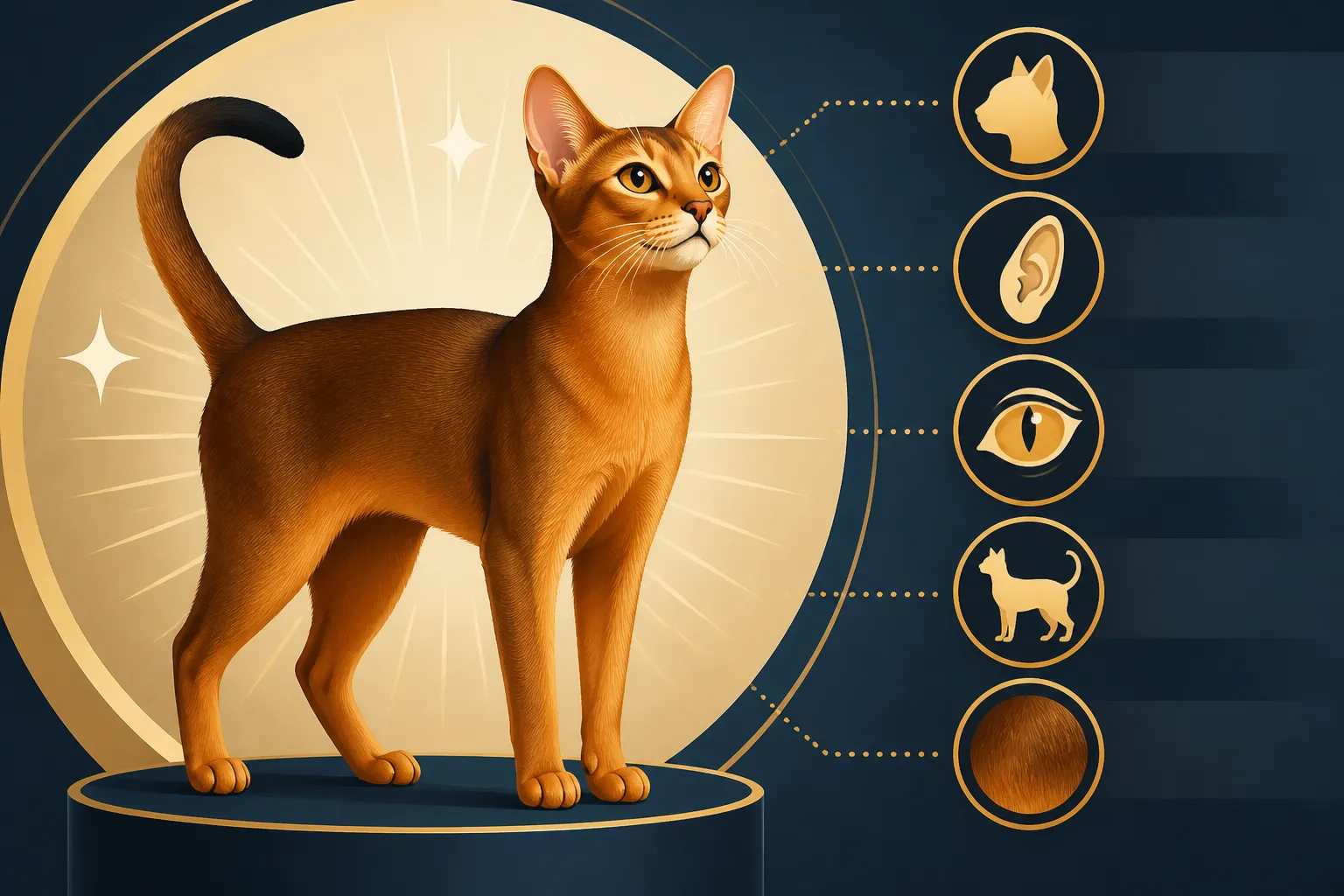
The Abyssinian's overall impression is one of grace, athleticism, and alert intelligence. When you look at an Aby, you should see a perfectly balanced animal, perpetually ready for action, a picture of natural elegance. It's not about being bulky or overly dainty; it's about that harmonious flow from head to tail that speaks to their active nature.
The "Foreign" Body Type
The Abyssinian is classified as having a "foreign" body type, which isn't a comment on their geographical origins but rather a description of their elegant, lithe, and well-muscled build. Unlike cobby or semi-cobby breeds, the Aby is medium in size, with a svelte, hard body that feels surprisingly substantial despite its graceful appearance. It’s a cat that looks and feels like pure muscle and sinew, without any excess fat. You should be able to feel their ribs easily, but not see them protruding. This body type is essential for their incredible agility and endless energy; a heavier, less athletic build would hinder their natural tendencies to climb, leap, and explore every nook and cranny of their environment. When they stretch, their long, lean lines become even more apparent, truly embodying that "foreign" elegance.
The body should be of medium length, firm and well-developed, showcasing the underlying musculature that makes them such powerful jumpers and climbers. There should be no coarseness or a heavy, thick-set look. Instead, think of a dancer – strong, flexible, and effortlessly graceful. This streamlined form is part of what allows an Abyssinian to move with such fluid speed and precision.
Legs, Paws, and Tail: Athletic Proportions
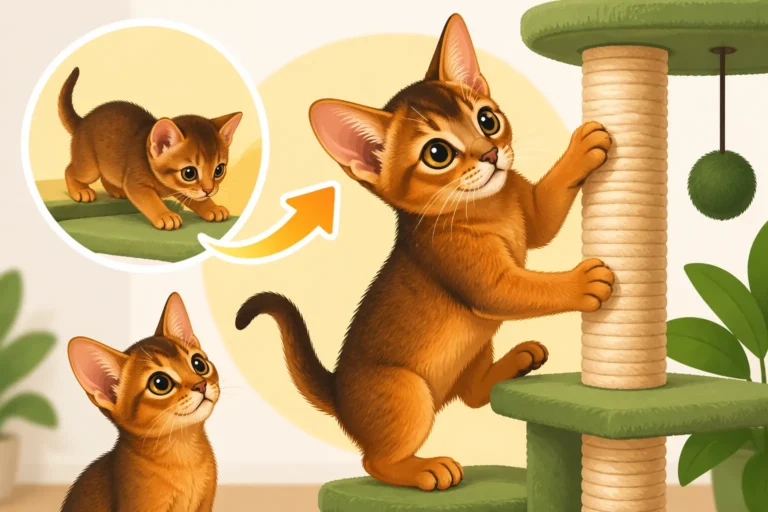
Complementing their foreign body type are their finely proportioned legs, paws, and tail, all designed for agility. Their legs should be long, slender, and well-muscled, ending in neat, oval paws that appear small and compact. They have a distinctive way of standing "on their toes," giving them an almost tiptoeing gait that adds to their elegant, springy movement. This isn't just for show; these long legs give them the leverage needed for their impressive vertical leaps and quick changes in direction as they chase after a favorite Which Wand Toy an Abyssinian Prefers.
The tail is also an important part of their athletic profile. It should be thick at the base, tapering gracefully to a point, and relatively long, in proportion to the body. This is more than just an aesthetic feature; a well-proportioned tail acts as a crucial counter-balance when an Abyssinian is climbing, jumping, or navigating narrow spaces. Imagine an Abyssinian scaling a tall cat tree or walking along a high shelf—that tail is their rudder, helping them maintain their balance with incredible precision. A short or kinked tail would hinder their natural athleticism and is considered a serious fault in the show ring. How Long an Abyssinian's Legs Are Relative to Its Body really influences their overall silhouette.
Overall Balance and Grace
What ties all these elements together into a show-winning Abyssinian is the concept of overall balance and grace. No single feature should stand out disproportionately; instead, every part of the cat should blend seamlessly into a harmonious whole. The head should be well-proportioned to the body, the ears to the head, and the legs and tail to the body. When an Abyssinian moves, it should do so with a flowing, effortless grace that speaks to its athletic build and keen intelligence.
A judge looks for a cat that is lively and alert, whose every movement is indicative of its breed's inherent character. This means a cat that carries itself with confidence, showing off its lean, hard body and vibrant ticking with every twitch and stretch. There should be no awkwardness or clunkiness; the Abyssinian is meant to be a picture of refined, feline athleticism. This balance is what makes an Abyssinian truly striking, embodying the wild beauty that is so often associated with the breed's ancient, mysterious origins.
Head, Ears, and Eyes
The Abyssinian's head is arguably one of its most defining features, immediately conveying its alert, intelligent nature. Every angle, curve, and placement is specified to create that distinctive Aby look.
The Modified Wedge Head and Muzzle
The Abyssinian head is described as a modified, slightly rounded wedge. This means it's not a sharply pointed wedge like some other breeds, but gently rounded, without flat planes. The overall shape should be pleasingly contoured, with a gentle rise from the bridge of the nose to the forehead. There should be no abrupt breaks or extreme features, just a smooth, graceful line. When viewed from the side, a judge looks for a subtle curve to the head, transitioning into the muzzle without a pinch or a harsh stop. What an Abyssinian's Ideal Head Shape Is is all about that gentle, flowing structure.
The muzzle should be neither pointed nor square; it's a medium wedge itself, flowing smoothly into the facial contours. A strong chin is also essential, helping to complete that balanced facial profile. Weak chins can give a less defined look, which isn't desired. It's these subtle, refined details that create the Abyssinian's distinctively intelligent and somewhat wild expression.
Large, Alert Ears
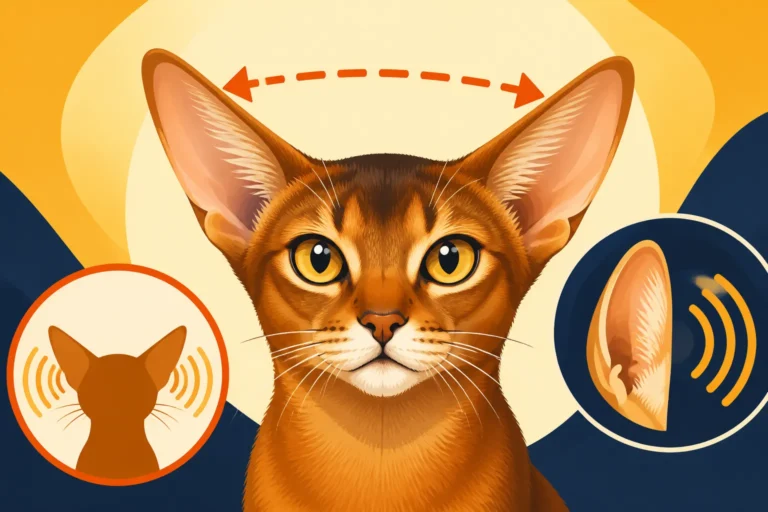
One of the most striking features of an Abyssinian's head is its ears. They are typically large, broad at the base, and moderately pointed, contributing significantly to the cat's alert and attentive appearance. They should be set wide apart, giving the head an open, almost surprised look, and should be tilted slightly forward, as if constantly listening. Why an Abyssinian's Ears Are Set So Wide is crucial for achieving this look.
Often, you'll see small, expressive tufts of hair at the tips, which adds to their wild, lynx-like charm. The insides of the ears should ideally be thinly furnished with hair, or even quite bare, showing off their delicate structure. This large ear size is not just for aesthetics; it enhances their already keen hearing, making them even more attuned to their environment – a trait that any Aby owner knows well!
Expressive Eyes: Color and Shape
The eyes of an Abyssinian are truly windows to their soul – large, luminous, and incredibly expressive. They should be almond-shaped, neither round nor oriental, and set wide apart, giving the cat a keen, intelligent gaze. The desired eye colors are gold or green, and the richer and deeper the color, the better. There should be a distinct dark rim around the eyes, like nature's eyeliner, enhancing their intensity and making them truly pop. Why an Abyssinian's Eye Rim Is Outlined is a specific point in the standard that contributes greatly to their exotic look.
This dark rim and the shape of the eye combine to create that characteristic "Aby look"—a slightly startled, yet deeply engaging expression. The eye color should be clear and brilliant, without any haziness or dullness. These eyes are central to the Abyssinian's communicative nature; they tell you everything from their excitement to their momentary curiosity, and they play a massive role in their overall breed type.
Coat, Color, and Ticking
The Abyssinian's coat is its crowning glory, what truly sets it apart from almost every other breed. It’s not just a color; it’s a living tapestry of bands that creates a shimmering, ever-changing appearance.
The Signature Ticked Coat
The Abyssinian is renowned for its unique "ticked" coat, which is truly a marvel. Unlike most cats with distinct stripes or spots, each individual hair on an Abyssinian's body has bands of color, usually three or four, alternating with lighter bands. This agouti banding is what gives the coat its incredible depth and iridescent quality, causing it to shimmer and change appearance with every movement and shift in light. How an Abyssinian's Agouti Banding Works is fascinating. The darker bands are concentrated at the tip of each hair, creating a rich, overall color, while the lighter bands closer to the skin provide warmth and vibrancy.
This ticking should be uniform across the body, creating a seamless, unbroken appearance without any visible barring, stripes, or blotches on the torso. There should be very little, if any, undercoat, which means the coat lies close to the body and feels incredibly fine and soft to the touch. This absence of a thick undercoat is also why Abyssinians are often perceived as less shed-prone, and why you don't typically need a deshedding tool – a simple grooming mitt from Chewy usually does the trick for weekly care!
Recognized Colors
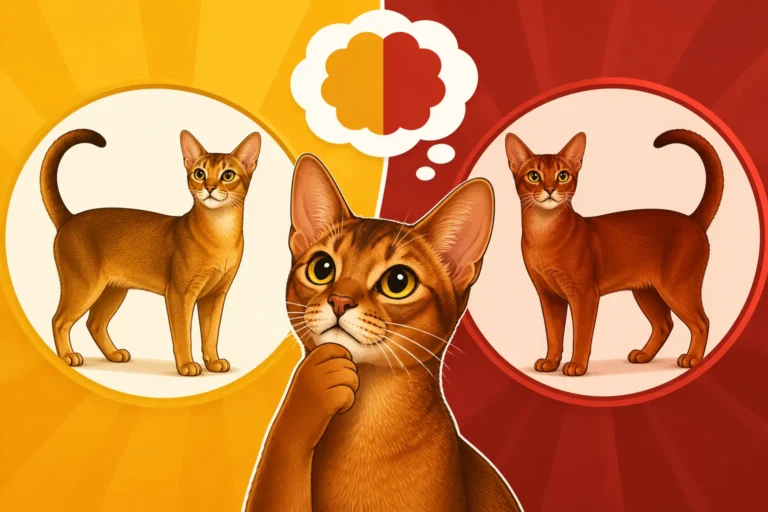
The show standard primarily recognizes four distinct colors, each a variation of the ticked pattern, creating a truly diverse palette within the breed. These colors are not solid; they are all expressed through that intricate agouti ticking.
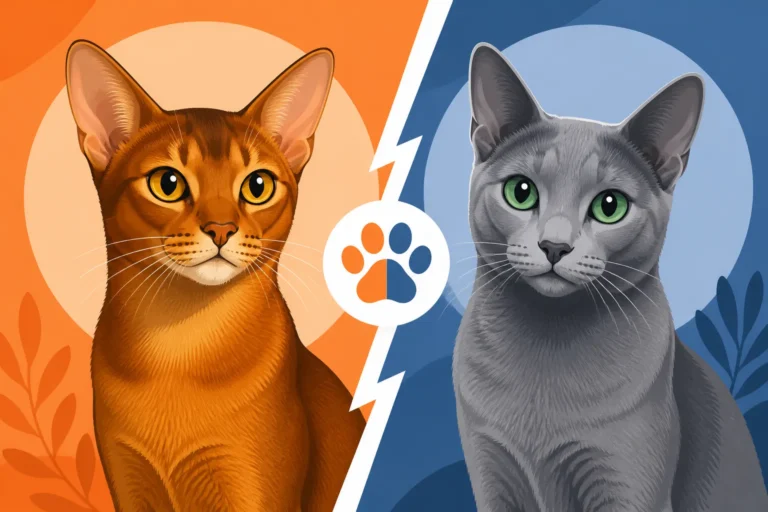
- Ruddy (or Usual): This is the most common and arguably the original Abyssinian color. It features a rich, warm, reddish-brown base color with black or dark brown ticking. The overall effect is that of a warm, burnt sienna. The undercoat is typically a bright apricot or orange. The paw pads are black or dark brown, matching the ticking. What a Ruddy Abyssinian Actually Looks Like is often what people envision when they think of the breed.
- Sorrel (or Red): Sorrel Abyssinians have a stunning copper or cinnamon-red base color, ticked with chocolate brown. This gives them a vibrant, fiery appearance. Their undercoat is a deep apricot, and their paw pads are pink, often with a slight brownish hue. What a Sorrel Abyssinian Looks Like is truly breathtaking.
- Blue: The Blue Abyssinian is a beautiful diluted version of the Ruddy. Their base color is a soft, warm blue-grey, ticked with a deeper slate blue. The effect is strikingly elegant and subtle. Their undercoat is cream or oatmeal, and their paw pads are blue-grey. What a Blue Abyssinian Looks Like has a wonderful frosted quality.
- Fawn: Fawn is the dilute of Sorrel, creating the palest and often most delicate of the recognized colors. They have a warm, rosy cream or pinkish-beige base color, ticked with light cocoa or darker fawn. Their undercoat is cream, and their paw pads are pink. What a Fawn Abyssinian Looks Like is quite rare and exquisite.
It's important to note that while other colors like silver or chocolate may exist, they are generally not recognized by the major cat associations for championship status. The focus remains on these four classic ticked varieties, preserving the breed's historical color palette.
Here's a quick summary of the recognized colors:
| Color | Base Coat Description | Ticking Color | Undercoat Color | Paw Pad Color |
|---|---|---|---|---|
| Ruddy | Warm reddish-brown | Black/Dark brown | Bright apricot/orange | Black/Dark brown |
| Sorrel | Copper/Cinnamon-red | Chocolate brown | Deep apricot | Pink with brownish hue |
| Blue | Soft blue-grey | Deeper slate blue | Cream/Oatmeal | Blue-grey |
| Fawn | Rosy cream/Pinkish-beige | Light cocoa/Darker fawn | Cream | Pink |
Ticking Pattern and Texture
The quality of the ticking is paramount in the show ring. Judges scrutinize the distribution of the bands of color on each hair, looking for clarity and uniformity. The ticking should be even and distinct, without blotchiness or "ghost" tabby markings, particularly on the legs, neck, and tail. Why an Abyssinian Has No Tabby Stripes is a key point—while Abyssinians carry the tabby gene, its expression is suppressed to create the ticked pattern. Barring, especially on the legs or a "necklace" marking around the neck, are considered faults. Why an Abyssinian With Barring Is Penalized is because it breaks the uniform, agouti pattern.
The texture of the coat is equally important. It should be fine, soft, and silky to the touch, lying close to the body. As mentioned, the absence of a heavy undercoat is a hallmark of the breed. This creates that characteristic "shimmer" when the cat moves. A coarse or woolly coat, or one that stands away from the body, would be a deviation from the ideal. The richness and depth of color, combined with this perfect texture and pattern, are what make an Abyssinian's coat so distinctive and beautiful.
Temperament and Overall Condition
Beyond their stunning looks, the Abyssinian's temperament and overall physical condition are equally critical in the show ring. A perfect cat on paper must also be a perfect cat in person.
The Abyssinian Personality in the Ring
Anyone who has lived with an Abyssinian knows they are rarely still. They are a whirlwind of activity, curious, intelligent, and incredibly social. This vibrant personality is a huge part of their breed standard. In the show ring, a judge looks for an Abyssinian that is alert, active, and curious, but also manageable. They should appear self-possessed and confident, not shy or aggressive. While they are known for their playful nature, a cat that is overly flighty, aggressive, or withdrawn would be penalized.
Judges want to see an Abyssinian that engages with its environment, showing that characteristic interest in everything around it, yet remains calm enough to be handled and evaluated. It’s a delicate balance: spirited and energetic, but amenable. They should not hiss, bite, or scratch, but rather allow the judge to examine their physical attributes without excessive fuss. This reflects their generally extroverted and people-oriented nature. An Aby that is too timid would not be a true representation of the breed's typical confident demeanor. The Abyssinian Is the Busiest Cat in the House, so managing that energy in a show environment is a testament to their well-socialized nature.
Physical Condition and Presentation
A show cat must be in peak physical condition. This means being well-muscled, without being overweight or underweight, and having a gleaming, healthy coat. Judges will assess the cat’s weight, muscle tone, and overall vitality. A cat that is too thin might suggest ill health or improper nutrition, while an obese cat would lose the lean, athletic look essential to the breed. The coat, of course, must be clean, free of mats or dirt, and glistening with health. Regular grooming, even for a low-maintenance Abyssinian, is crucial. This helps bring out the natural sheen and ensures the ticking is seen at its best.
Beyond the coat, other aspects of presentation include clean ears, bright, clear eyes, and healthy teeth and gums. Any signs of illness, injury, or neglect would result in immediate penalties. It's about presenting a cat that is not only genetically sound but also meticulously cared for, reflecting the dedication of its owner and breeder. A healthy Abyssinian, nurtured by a good diet (perhaps from Chewy's selection of high-quality cat foods!) and consistent care, naturally exudes the vitality the standard demands.
The Importance of Soundness
"Soundness" in the context of a show standard refers to the cat's overall health, physical integrity, and genetic well-being. This goes beyond superficial appearance and delves into the structural and functional aspects of the cat. A sound Abyssinian should be free from any debilitating health issues, genetic defects that impair its function, or structural problems that would impact its movement or quality of life. For example, conditions like patellar luxation, which can affect a jumping Abyssinian's movement, would be a serious concern.
Judges assess gait, flexibility, and overall robustness. A cat that moves with ease, has strong bone structure, and is visibly vibrant is considered sound. This emphasis on soundness underscores the ethical responsibility of breeders to not only produce beautiful cats but also healthy ones. A cat might be stunning to look at, but if it exhibits signs of ill health or structural weakness, it cannot be considered a truly excellent example of the breed. The show standard implicitly promotes breeding for health and longevity alongside beauty.
Common Faults and Disqualifications
Understanding what is considered a "fault" or a "disqualification" in the show ring is just as important as knowing the ideal traits. These are the characteristics that deviate from the standard and can either lower a cat's score or prevent it from competing entirely.
Undesirable Markings and Patterns
The Abyssinian's hallmark is its uniform ticked coat, so any pattern that breaks this continuity is a fault. The most common undesirable markings include barring (stripes) on the legs, tail, or neck (often called a "necklace" or "collar" marking). These markings harken back to the tabby ancestry that is present in all domestic cats, but which the Abyssinian breed standard strives to suppress. Why a Necklace Marking Faults an Abyssinian is a good example of this.
Other faults can include residual tabby markings (sometimes called "ghost stripes") on the body, which appear as faint bands, or an un-ticked area where the color isn't evenly distributed. White patches anywhere other than the immediate muzzle, chin, or upper throat (which are permitted small areas) are also considered faults. The standard calls for a rich, warm color to the root, so any pale, cold, or excessively grey undercoat can also be penalized if it detracts from the overall color.
Structural Deviations
Structural deviations refer to any physical attributes that do not align with the specified body type, head shape, or other physical characteristics. Examples include:
- Head: A pointed or extremely cobby head, a pinched muzzle, or a weak chin.
- Ears: Ears that are too small, set too close together, or not properly cupped and alert.
- Eyes: Round or oriental-shaped eyes, or eye colors other than green or gold. A dull or watery appearance can also be a fault.
- Body: A cobby or overly long body that loses the foreign, athletic grace. A lack of muscle tone or an excessively heavy build.
- Legs and Paws: Short or thick legs, splayed or overly large paws.
- Tail: A short tail, a tail with kinks, or one that is disproportionate to the body. What an Abyssinian's Tail Says about its proportions is important.
These structural deviations can impact not only the cat's appearance but also its movement and overall health, reinforcing the standard's commitment to both form and function.
Temperament Issues in the Show Hall
Temperament is so crucial to the Abyssinian standard that severe issues can lead to disqualification. A cat that is overtly aggressive, consistently hissing, biting, or trying to scratch the judge or handler, will be disqualified. This is because such behavior indicates a significant deviation from the breed's expected friendly, curious, and outgoing nature. While Abyssinians are energetic, they should not be uncontrollably wild or fearful.
Similarly, extreme shyness, fear, or a complete lack of interest in the surroundings can also be problematic. While a cat might be nervous in a new environment, a complete shutdown or refusal to interact with the judge prevents proper evaluation. Judges look for a cat that embodies the breed's character: alert, engaging, and confident. A disqualifying temperament issue isn't just about the current show; it suggests a fundamental mismatch with the breed's personality profile, which could be passed on to future generations. The well-adjusted Abyssinian is a joy to behold, both in the ring and as a cherished companion.
Disclaimer
This article is for general informational purposes only and does not constitute professional advice. Laws, prices and regulations vary by location and change over time. Consult a qualified professional for guidance on your specific situation.