What Age an Abyssinian Finally Settles
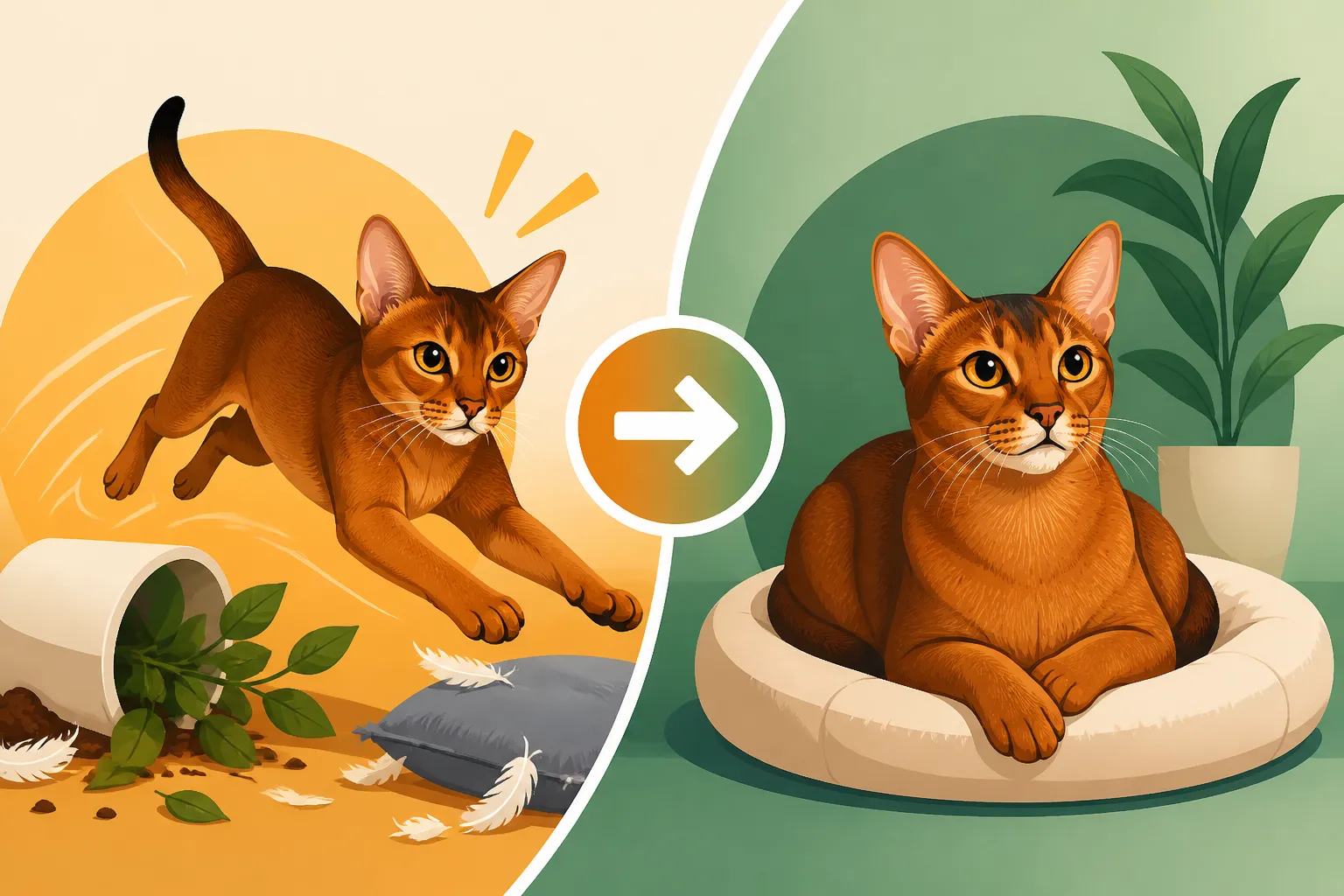
If you're an Abyssinian owner, you know the whirlwind that is their kittenhood and adolescence. Many new owners, and even experienced cat people, often wonder if their Abyssinian will ever settle down into a calm, placid lap cat. The truth is, "settling" for an Abyssinian looks a lot different than it might for other breeds, and understanding these unique energetic shifts can help you set realistic expectations and provide the best life for your busy companion.
The Myth of the "Calm" Abyssinian
Let's be honest, if you got an Abyssinian hoping for a cat that spends its days quietly napping on the sofa, you were likely in for a rude awakening! Abyssinians are famous for their boundless energy, their insatiable curiosity, and their ability to turn even the most mundane household item into a captivating game. This isn't a flaw; it's a fundamental part of their charm and their breed standard.
Understanding Abyssinian Energy Levels
Abyssinians are often affectionately called the "clown of cats" or the "busy cat," and for good reason. Their energy isn't just a phase; it's deeply ingrained in their genetics and their history. They are designed to be active, alert, and engaged with their environment. Unlike some more sedentary breeds that might be content with a few quiet hours by the window, an Abyssinian thrives on interaction and exploration. They approach life with a zest that can be both exhilarating and, let's admit it, a little exhausting for their human companions.
Think of them less like a housecat and more like a miniature, elegant puma, perpetually ready for the next adventure. This inherent drive means that "settling" for an Abyssinian doesn't mean becoming a lazy, unresponsive pet. Instead, it means channeling that incredible energy into constructive, less chaotic activities. Their curiosity is relentless, their need for mental and physical stimulation is constant, and if those needs aren't met, that energy can manifest in ways you might not appreciate, like exploring the tops of your cabinets or redesigning your bookshelf contents. You'll quickly learn that for an Aby, if there's a problem, they'll figure out a solution, and if there isn't a problem, they'll make one.
Why Expecting a Sedate Cat is Unrealistic
It’s a common misconception that all cats, regardless of breed, eventually mature into quiet, independent creatures. While this might be true for some breeds or individual cats, it’s fundamentally unrealistic to expect this transformation in an Abyssinian. Their entire personality is wired for activity, quick movements, and constant engagement. They have that "forever kitten" spirit, an endless well of youthful exuberance that continues long past their actual kitten years.
In fact, if you find your usually boisterous Abyssinian suddenly becoming truly placid, quiet, and uninterested in play, it should be a red flag. A significant drop in their usual energy levels, a marked decrease in their characteristic inquisitiveness, or a sudden disinterest in their surroundings could be an indication of illness or discomfort. Why a Suddenly Still Abyssinian Needs a Vet It's crucial to know your cat's baseline and recognize when their behavior deviates significantly from their norm. For an Abyssinian, being active is being healthy. So, rather than waiting for them to "calm down" entirely, it's far more beneficial to learn how to manage and channel their considerable energy in ways that are safe, enriching, and fun for both of you.
Age-Related Energy Shifts
While a true "settling" into a completely sedate lifestyle isn't in an Abyssinian's nature, their energy levels do evolve as they age. It's not a sudden on/off switch, but rather a gradual refinement of their activity, often driven by physical changes and maturity.
The Kitten and Adolescent Frenzy (0-2 Years)
Ah, the kitten years! If you've just brought home an Abyssinian kitten, you're likely in the midst of what can only be described as a beautiful, high-speed blur. These little bundles of energy are relentless. From the moment their eyes open, they're exploring, pouncing, climbing, and running at full tilt. Their days are a continuous cycle of eat, play, sleep (briefly!), and then repeat with even more vigor.
During this phase, "zoomies" are a daily, sometimes hourly, occurrence. They’ll race through the house, scaling furniture, batting at anything that moves (or doesn't), and generally leaving a trail of happy chaos. Their curiosity knows no bounds, which often leads to hilarious, yet sometimes destructive, antics. This is the age when they are truly learning about their world, testing boundaries, and developing their incredible athleticism. Why an Abyssinian Kitten Is Relentless You might notice that their adult ticking is just starting to come in, giving them a blotchy appearance before their coat finally settles. When an Abyssinian Kitten's Adult Ticking Arrives Providing ample, structured playtime is absolutely critical during these formative years to help them learn appropriate outlets for their energy and to bond deeply with you.
The Active Adult (2-7 Years)
As your Abyssinian moves out of adolescence and into full adulthood, typically around two years of age, you might notice a subtle shift. The frantic, almost haphazard energy of their kittenhood often gives way to a more focused, purposeful activity. The random, wall-bouncing zoomies might become a little less frequent, but they are certainly not gone!
Instead, their play becomes more intentional. They'll still demand multiple play sessions a day, often with their favorite wand toy or a carefully chosen laser pointer, but they might sustain interest for longer periods. They are at their peak for climbing, jumping, and exploring vertical spaces, often finding the highest points in any room. How High an Abyssinian Will Climb This is a period where they've fully mastered their environment and will confidently patrol their territory, engaging in interactive games and seeking out mental challenges like puzzle feeders. While the sheer chaos might slightly diminish, their need for significant physical and mental stimulation remains incredibly high. Don't expect them to morph into a sedentary lap cat; they're simply refining their energy expenditure. They might still follow you everywhere, albeit with a slightly more mature gait, always interested in your activities. Why an Abyssinian Follows You Without Sitting Still
The Maturing Abyssinian (7-10 Years)
Around the seven-year mark, Abyssinians begin to enter their middle age. This is often when owners start to observe a noticeable, albeit still gentle, slowdown. Your Abyssinian might enjoy longer naps in sunbeams or cozy beds, and their bursts of energy might be a bit shorter or less intense than in their younger adult years.
However, "slowdown" is a relative term for an Abyssinian! They will still be very active and eager to play, especially if you initiate it. They might simply choose to conserve their energy a bit more, perhaps opting for a strategic pounce from a lower perch rather than a full-scale assault on the tallest cat tree. You might notice them being a little more selective about when and how they engage in high-impact activities. This is also the age when you should be more attuned to potential physical changes, such as subtle muscle loss that can occur even in lean cats, which could impact their jumping ability or overall energy. Why an Abyssinian's Muscle Loss Shows Before Its Fat Regular vet check-ups become even more important to monitor their health and ensure any age-related issues are caught early, allowing them to continue their active lifestyle comfortably.
The Senior Years (10+ Years)
When an Abyssinian reaches double digits, especially around 12-15 years, you will typically see the most significant shift in their activity levels. This is when their movements become more deliberate, and they genuinely start to slow down. The vertical leaps might be replaced by more careful climbs on ramps or lower steps, and long, deep sleeps become more frequent and cherished.
However, even a senior Abyssinian retains a spark of that youthful spirit. They might not chase the laser dot across the entire house, but they'll still watch it intently and bat at it if it comes close. They'll still enjoy gentle interactive play, perhaps with a wand toy that you manipulate for them, allowing them to engage without too much exertion. Their minds remain sharp, so mental enrichment through puzzle toys or gentle interaction is still crucial. How to Keep an Old Abyssinian Climbing Safely This is also a time when health issues, such as arthritis or kidney problems, might start to impact their mobility and overall energy. Adapting their environment with easier access to high places (like pet stairs) and ensuring they have warm, comfortable resting spots will make a huge difference in their quality of life. Even in their golden years, an Abyssinian's contentment comes from feeling engaged and loved, not from total inactivity.
Enrichment for the Energetic Abyssinian at Any Age
Since the idea of a truly "calm" Abyssinian is mostly a fantasy, the key to a happy home with this breed is providing ample enrichment and channeling their energy positively, regardless of their age.
Sustained Mental and Physical Stimulation
Abyssinians are incredibly intelligent and need their minds and bodies challenged daily. Simply putting out a few static toys won't cut it. You need to become an active participant in their playtime.
- Puzzle Feeders: These are fantastic for engaging their problem-solving skills and slowing down meal times. There's a wide range available on platforms like Amazon, from simple treat balls to complex multi-step puzzles. Start with easier ones and gradually increase the difficulty to keep them engaged. Which Puzzle Feeders Hold an Abyssinian's Attention
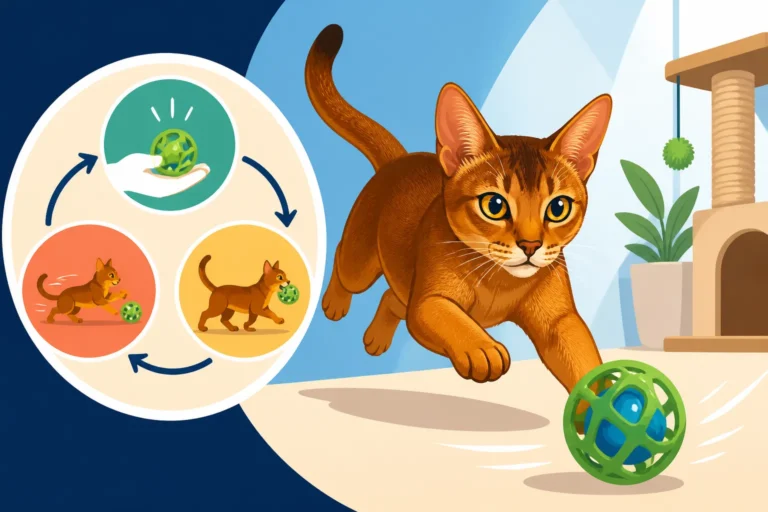
- Interactive Toys: Wand toys with feathers, ribbons, or small soft animals are often a huge hit. Remember, variety is key! Abyssinians can get bored with the same toy quickly, so rotate them regularly. Which Wand Toy an Abyssinian Prefers Laser pointers can be fun for short bursts, but always end a laser session by letting them "catch" a physical toy to avoid frustration.
- Scheduled Playtimes: This is non-negotiable for an Abyssinian. Aim for at least two to three dedicated play sessions a day, each lasting 10-15 minutes, where you actively engage with them. How to Split an Abyssinian's Play Into Sessions This routine helps them burn off energy and strengthens your bond.
- Vertical Space: Abyssinians are climbers and perchers by nature. Provide ample vertical territory with tall cat trees, wall-mounted shelves, and access to high furniture. An Abyssinian Needs Height More Than It Needs Floor This allows them to survey their domain, feel secure, and expend energy climbing.
The Role of a Companion
One of the most effective ways to help an Abyssinian manage its energy and prevent boredom is to provide a companion, especially if you're out of the house for long periods.
- Another Cat: Ideally, another Abyssinian or a similarly active, playful breed makes a wonderful companion. They can chase, wrestle, and groom each other, providing continuous entertainment and exercise. Why a Second Cat Suits an Abyssinian Having a playmate reduces the likelihood of them directing all their abundant energy (and mischief!) solely at you or your belongings.
- Dog Companions: Many Abyssinians do exceptionally well with dog companions, especially those breeds that are playful but not overly aggressive. Their confident nature often allows them to assert themselves, and they can enjoy chasing and interacting with a canine friend. How an Abyssinian Behaves With Children and Dogs Supervision and careful introductions are always key, of course.
Training and Routine
Abyssinians are incredibly smart and thrive on routine and mental challenges. Training isn't just for dogs; it's a fantastic way to engage your Aby's sharp mind and channel their energy productively.
- Clicker Training: Abyssinians respond wonderfully to positive reinforcement and clicker training. They can learn a wide array of tricks, from sitting and staying to high-fiving and even fetching. Which Tricks an Abyssinian Learns Fastest This provides mental stimulation and reinforces good behavior.
- Leash Training: Many Abyssinians enjoy exploring the outdoors safely on a leash and harness. Start slow, introduce the harness gently, and take them to quiet areas initially. You can find comfortable and secure harnesses designed for cats easily on Amazon. This offers a controlled outlet for their exploratory instincts. How to Harness Train an Abyssinian Without a Fight
- Consistent Schedules: Establishing consistent feeding times, playtimes, and even cuddle sessions helps an Abyssinian feel secure and understand the rhythm of their day. This can help to shift their energy bursts to more convenient times, for example, by encouraging play before bed rather than at 5 AM. How to Shift an Abyssinian's Morning Schedule
Here's a quick overview of how an Abyssinian's energy typically evolves:
| Age Range | General Energy Level | Activity Focus | Key Considerations |
|---|---|---|---|
| 0-2 Years | Extremely High | Exploration, rapid bursts, climbing, pouncing, mischief | Needs constant engagement, structured play, kitten-proofing |
| 2-7 Years | High & Focused | Intentional play, skilled climbing, problem-solving | Ample vertical space, interactive toys, mental challenges |
| 7-10 Years | Moderately High | Sustained play, enjoying longer naps, still agile | Monitor for subtle changes, adapt play if needed |
| 10+ Years | Moderate to Lower | Gentle play, increased rest, mindful movement | Provide accessible climbing, comfortable beds, vet check-ups |
What a "Settled" Abyssinian Actually Looks Like
So, if an Abyssinian doesn't truly "settle" into a quiet, sedentary life, what does a mature, contented Abyssinian actually look like? It's all about redefining "calmness" within the context of their unique personality.
Redefining Calmness
For an Abyssinian, "calm" isn't inactivity; it's focused, purposeful activity. A mature Aby isn't going to spend its day napping; it's going to spend its day doing things, just maybe with a bit more grace and less frantic energy than its younger self. They might still be your shadow, following you from room to room, but instead of demanding immediate attention with frantic chirps, they might simply observe you from a nearby perch.
They might engage in longer, more thoughtful play sessions, concentrating on a puzzle feeder for extended periods rather than abandoning it quickly. Their movements, while still agile, might become more deliberate and less prone to clumsykitten-like tumbles. They are still highly intelligent and alert, but their energy is channeled more efficiently. This focused engagement is their version of contentment.
Indicators of Contentment
A truly happy and "settled" Abyssinian, regardless of age, will display certain key indicators that reflect their well-being within their energetic framework:
- Regular, but Not Excessive, Sleep: They will have healthy sleep patterns, including periods of deep sleep, but they won't be lethargic or sleep all day. They'll wake up refreshed and ready for action.
- Healthy Appetite: A contented Abyssinian has a good appetite and maintains a healthy weight. They are rarely overweight due to their high metabolism, but significant changes in appetite should always be noted. Why an Abyssinian Rarely Gets Fat
- Engaged and Responsive: Their bright, expressive eyes will be alert and responsive to your interactions. They will purr readily, engage in gentle head-nuzzles, and communicate their needs and desires clearly, whether through chirps, trills, or body language.
- Absence of Destructive Behaviors: When an Abyssinian is bored or lacks sufficient mental and physical stimulation, they can resort to destructive behaviors like scratching furniture excessively, knocking items off shelves, or getting into cupboards. What Destructive Behavior in an Abyssinian Really Means A truly settled and enriched Abyssinian will generally avoid these behaviors because their needs are being met.
- Confident and Curious: They will continue to explore their environment with confidence, investigating new sights and sounds. They might not be as overtly rebellious as a kitten, but their innate curiosity will always be present, guiding their interactions with the world around them.
In essence, "settling" for an Abyssinian isn't about becoming less of who they are; it's about maturing into a sophisticated, engaged, and well-adjusted version of their naturally active selves. It's a journey of embracing their unique spirit and providing the enrichment they need to thrive at every stage of their fascinating lives.
Disclaimer
This article is for general informational purposes only and does not constitute professional advice. Laws, prices and regulations vary by location and change over time. Consult a qualified professional for guidance on your specific situation.