Why a Full Bowl Turns an Abyssinian Into a Grazer
Many Abyssinian owners find themselves puzzled by their cat's eating habits, especially when a bowl of kibble seems to last forever as their energetic feline picks at it throughout the day. This grazing behavior can be frustrating, leading to wasted food and concerns about whether your active companion is getting adequate nutrition. This comprehensive guide will delve into why a constantly full food bowl often transforms an Abyssinian into a grazer, and how to encourage healthier, more structured eating habits that better suit their unique metabolism and energetic personality.
Understanding the Abyssinian's Natural Eating Instincts
It's easy to forget that despite their regal appearance and sophisticated air, our beloved Abyssinian cats are still very much wired like their wild ancestors. Their behaviors, especially around food, stem from deeply ingrained instincts that a simple bowl of kibble often fails to satisfy. Understanding these roots is the first step to truly understanding why they graze.
The Hunter's Instinct and Small, Frequent Meals
In the wild, a cat is a solitary hunter. They're not taking down a large prey animal every few days and gorging themselves; instead, they're catching small prey – mice, birds, insects – multiple times throughout the day and night. Each successful hunt provides a small, high-protein meal. This isn't about eating until they're stuffed; it's about frequent, modest caloric intake. An Abyssinian, with its sleek, athletic build and keen predatory drive, embodies this perfectly. They are designed for quick bursts of energy, followed by rest, then another hunt.
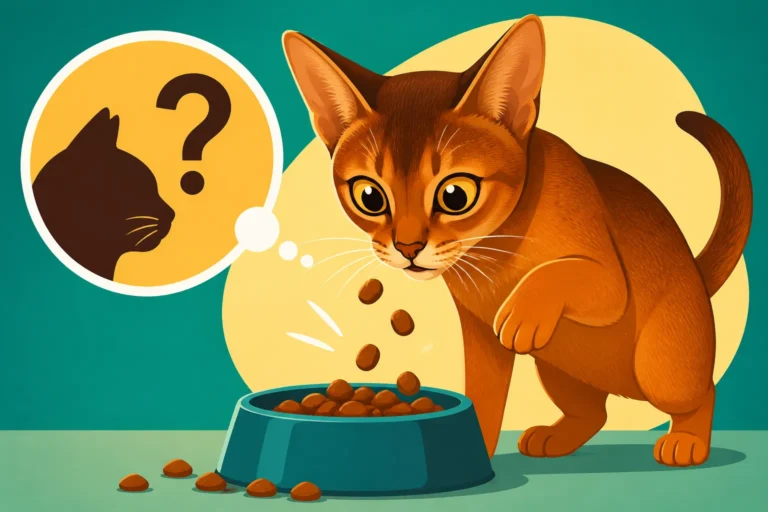
When you present an Abyssinian with a perpetually full bowl, it removes the "hunt" aspect entirely. There's no challenge, no effort, and frankly, no excitement. Imagine if your dinner was simply there, all day, every day – you might pick at it out of boredom or mild hunger, but the urgency and satisfaction of a proper meal would diminish. For an Abyssinian, a full bowl means the resource is infinite and doesn't require their innate hunting skills. This can lead to them only eating just enough to stave off immediate hunger, returning later for another small bite when the mood strikes, rather than consuming a full, satisfying portion.
High Metabolism and Energy Output
Abyssinians are not couch potatoes. They are known for being incredibly active, playful, and curious. They are constantly exploring, climbing, and engaging with their environment. All this activity burns a lot of calories. Seriously, if you've ever watched an Abyssinian for more than five minutes, you know they rarely sit still for long! This high energy level means their metabolism is often running at a higher rate than many other domestic cat breeds. It's why Why an Abyssinian Eats More Than a Bigger Cat is such a common topic among owners.
Because they burn through energy so efficiently, they might feel a slight dip in blood sugar more frequently than a lazier cat. A full bowl allows them to "top up" their energy stores whenever they feel a tiny dip, rather than waiting for a true mealtime. This isn't necessarily a bad thing from a pure energy perspective, but it reinforces the grazing habit. It teaches them that there's no need to eat a substantial amount at once, because the next small top-up is always just a few steps away. They never experience that satisfying "fullness" of a proper meal, constantly in a state of partial satiety.
Environmental Stimulation and Eating Behavior
An Abyssinian's environment plays a huge role in their overall well-being and, by extension, their eating habits. These are intelligent, highly interactive cats that need mental and physical stimulation to thrive. If an Abyssinian is bored, under-stimulated, or feeling anxious, it can manifest in various behaviors, and sometimes, that includes their relationship with food. A full bowl, in some cases, becomes a source of casual amusement or a way to break up monotony. They might walk past, take a few bites, then wander off to find something else to do.
Think about it from their perspective: if there aren't enough engaging toys, climbing opportunities, or interactive play sessions, the food bowl is one consistent, unchanging element in their day. It's a low-effort activity. Without the structure of meal times, and the mental engagement that can come with them (like working for food), eating becomes less of a priority and more of a mindless habit. A cat that's truly engaged in play or exploring its vertical space, perhaps using the Why an Abyssinian Needs More Vertical Furniture Than Most Cats principle, might actually forget to graze, demonstrating how vital a stimulating environment is for regulating all aspects of their behavior, including appetite.
The Impact of a Constantly Available Food Bowl
While free-feeding might seem like the easiest option for busy owners, especially with a high-energy breed like the Abyssinian, it often creates more problems than it solves in the long run. The convenience comes at a cost, both for your cat's health and your sanity.
Diminished Value of Food
When food is always available, it simply loses its appeal. The excitement, the anticipation, the joy of a fresh meal – all of it is gone. For an Abyssinian, a breed that thrives on novelty and engagement, this can be particularly detrimental. Food becomes a mundane, always-present commodity rather than a valuable, earned resource. They don't have to "work" for it, even in the simplest sense of waiting for it.
This diminished value can lead to a cat that isn't truly enthusiastic about eating. You might notice them sniffing the bowl, taking a few desultory bites, and then walking away, only to return a short while later. It's not because they don't like the food; it's because there's no urgency. This can be especially frustrating if you're trying to introduce new foods or need to administer medication in their food. If they're not motivated by hunger, getting them to eat a full portion, or a medicated one, becomes a battle. The "always there" nature makes them less appreciative of the sustenance it provides.
Encouraging the "Graze and Forget" Cycle
The core issue with free-feeding Abyssinians is that it actively encourages and reinforces the "graze and forget" cycle. Instead of eating a substantial meal that satisfies them for several hours, they learn to take tiny portions whenever they feel a minor pang of hunger or simply pass by the bowl. This pattern means their stomach is never truly empty, and therefore, they rarely experience genuine, rumbling hunger.
This constant, low-level intake can be deceptive. You might think your Abyssinian is eating enough because the bowl is always being dipped into. However, they might not be consuming a consistent amount of calories or nutrients. They might eat more when bored and less when distracted, leading to unpredictable intake. Furthermore, if you offer both wet and dry food, the dry food often sits out longer, becoming stale and less appealing, pushing them further into the grazing habit rather than eating a fresh, complete meal. This can sometimes make it hard to tell exactly How Much Wet Food an Abyssinian Gets Through in a day, complicating nutritional assessments.
Dietary Indiscretion and Overeating (or Under-eating)
While Abyssinians are famously energetic and often remain lean, free-feeding can still lead to dietary issues. Some Abyssinians, despite their metabolism, might still overeat out of boredom or habit, especially if the food is highly palatable. While Why an Abyssinian Rarely Gets Fat is generally true, it's not impossible, and even a few extra pounds can put strain on their agile bodies and joints over time.
On the flip side, some Abyssinians might under-eat. Because the food is always there, they don't feel the need to consume enough in one sitting. If they get distracted by a bird outside, a new toy, or just a burst of zoomies, they'll wander off, leaving half-eaten food. This is particularly concerning if you have a multi-cat household where one cat might guard the bowl, or if another cat finishes what your Abyssinian left behind. In these scenarios, monitoring individual intake becomes nearly impossible, making it difficult to spot early signs of illness or dietary deficiencies. The goal is to ensure adequate, consistent nutrition, which grazing often undermines.
The Nutritional Downsides of Grazing
Beyond the behavioral issues, allowing an Abyssinian to graze constantly can have tangible impacts on their physical health and nutritional well-being. What seems like a harmless habit can, over time, contribute to subtle but significant problems that owners might not immediately connect to the feeding method.
Inconsistent Nutrient Intake
One of the most pressing concerns with free-feeding and grazing is the inconsistency of nutrient intake. While a premium cat food is formulated to provide a balanced diet in each serving, a cat that grazes picks at it. They might eat more in the morning, less in the afternoon, and a few bites at night. This means they're not necessarily getting a complete spectrum of vitamins, minerals, and macronutrients in a predictable pattern. For an active breed like the Abyssinian, who has specific dietary needs, this scattered approach can be problematic.
Imagine trying to maintain peak athletic performance on a diet where you just pick at various components of your meals throughout the day. You might miss key nutrients at critical times. A consistent intake of high-quality protein, for example, is crucial for maintaining their lean muscle mass and energy levels, and grazing can make it difficult to ensure they're meeting these daily requirements. This is especially true as they age or if they're recovering from an illness, where precise nutrition becomes even more vital. Which Protein Level Keeps an Abyssinian's Muscle On is a critical question for this breed, and grazing complicates the answer.
Dental Health Concerns
This might sound counterintuitive, but grazing, especially on dry kibble, doesn't actually do much for dental health. Many people believe that dry food "cleans" a cat's teeth. While some specialized dental kibbles exist, the average crunchy kibble shatters upon impact, doing little more than scraping the very tip of the tooth. It's not like brushing. What's worse, the tiny bits of food and carbohydrates can stick around in their mouth, creating a feast for bacteria.
For Abyssinians, who are unfortunately prone to dental issues like juvenile gingivitis and tooth resorption, constant grazing can actually exacerbate problems. Why an Abyssinian's Gums Overgrow Its Teeth is a serious concern, and constant exposure to food particles without a proper cleaning regimen can lead to plaque buildup, tartar, and inflammation. Scheduled meals, followed by a period where the mouth is clear, can be marginally better, but nothing beats regular toothbrushing and professional dental cleanings to maintain good oral hygiene in this breed.
Weight Management Challenges (Yes, Even for Abyssinians)
It’s true that Abyssinians generally have a high metabolism and are often observed to be naturally lean. Their active nature helps them burn off calories. However, assuming an Abyssinian can’t gain weight from free-feeding is a common misconception. While less common than in some other breeds, obesity can occur, especially in a less active individual or as they age. A continuously full bowl provides endless opportunities for "mindless eating," and those extra nibbles throughout the day can add up.
Conversely, free-feeding can mask under-eating. If your Abyssinian is a picky grazer, or if other household pets are eating their share, they might not be getting enough calories. Because the food is always there, it's hard to tell if your cat is truly consuming enough to maintain their ideal body condition. How to Feel an Abyssinian's Waist Under Its Coat is a skill every owner should master, but if you don't know how much they're actually eating, it's hard to correlate their intake with their body condition. Scheduled meals ensure you know exactly how much food is being offered and how much is being consumed, making it far easier to manage and adjust their weight as needed, ensuring they maintain that athletic, healthy physique.
Scheduled Feeding: A Game Changer for Abyssinians
If you've been free-feeding your Abyssinian and are now considering a change, don't worry – it's absolutely doable and often incredibly beneficial for both of you. Transitioning to scheduled feeding can be a game-changer, aligning more closely with their natural instincts and offering numerous health and behavioral advantages.
Mimicking Natural Hunting Cycles
Scheduled feeding works so well for Abyssinians because it cleverly mimics their natural hunting cycle. Instead of an infinite food source, they learn that food appears at specific times, requiring a brief period of "waiting" (the equivalent of a hunt) before the reward. This creates anticipation and makes mealtime a much more engaging and satisfying event. When the food appears, they are truly hungry, not just casually peckish. This heightened hunger makes the meal more valuable and ensures they eat a full, balanced portion.
Think about the mental stimulation this provides. Instead of food being a constant, dull presence, it becomes a predictable highlight of their day. This structure can actually reduce anxiety in some cats, as they know when to expect their next meal, rather than it being a random, unappreciated offering. It taps into their internal clock and their innate drive for routine, even if that routine involves waiting patiently for their food to arrive. This also makes them more receptive to interactive feeding, which we'll discuss later, further enhancing their natural instincts.
Establishing a Routine and Predictability
Cats, including the highly intelligent Abyssinian, thrive on routine. Predictability provides a sense of security and control over their environment. When you implement a scheduled feeding regimen, you're not just controlling their food intake; you're creating a predictable rhythm for their day. This rhythm extends beyond meal times, often influencing their play, rest, and elimination habits.
Imagine your Abyssinian knowing that after their morning play session, breakfast is coming, and after their afternoon nap, dinner will be served. This structure can minimize anxious behaviors, such as incessant meowing for food or destructive behaviors born from boredom. It helps them regulate their internal clock, leading to better digestion and more consistent energy levels throughout the day. Consistency is key here; feeding at roughly the same times each day, even on weekends, will help solidify this positive routine. How to Shift an Abyssinian's Morning Schedule can be made easier with a consistent mealtime.
Portioned Meals for Optimal Health
Perhaps the most significant benefit of scheduled feeding is the ability to precisely portion your Abyssinian's meals. No more guessing how much they're truly eating! With a set amount of food offered at each meal, you can ensure they are receiving their ideal daily caloric intake, which is essential for maintaining their athletic build and overall health. How Many Calories an Adult Abyssinian Burns is quite high, so getting this right is crucial.
This precision allows you to:
- Prevent Over- or Under-feeding: You know exactly how much they're consuming, making it easy to adjust if they start to gain or lose weight.
- Monitor Appetite: A sudden lack of interest in a scheduled meal is a clear red flag that something might be amiss, prompting you to observe them more closely or consult a vet. With free-feeding, a slight dip in appetite might go unnoticed for days.
- Ensure Nutritional Balance: Each meal is a complete, balanced portion, ensuring consistent delivery of essential nutrients.
- Manage Special Diets: If your Abyssinian ever needs a prescription diet for health issues, precise portioning is non-negotiable, and a cat already accustomed to scheduled meals will adapt much more easily.
By portioning meals, you're taking control of your Abyssinian's nutrition, ensuring they get exactly what they need, when they need it, leading to a healthier and happier life.
Choosing the Right Food and Portions for an Active Abyssinian
Once you've decided to switch to scheduled feeding, the next logical step is to re-evaluate what you're feeding your Abyssinian and how much. Their unique energy levels and potential health predispositions mean that not just any cat food will do. It's about fuel for a finely tuned athlete.
High-Quality Protein for Muscle and Energy
Abyssinians are pure muscle, agility, and energy. To maintain this, they require a diet rich in high-quality animal protein. Look for foods where meat, poultry, or fish are listed as the first few ingredients, not grains or vegetable proteins. Real, identifiable protein sources are crucial for supporting their lean muscle mass, providing sustained energy, and satisfying their carnivorous needs. Remember, cats are obligate carnivores, meaning they must get their nutrients from animal sources.
Consider the composition of a mouse, a natural feline prey: it's mostly protein and fat, with very few carbohydrates. Your Abyssinian's diet should reflect this as closely as possible. Avoid foods with excessive fillers, artificial colors, or by-products that offer little nutritional value. When comparing foods, look at the guaranteed analysis on the label for the crude protein percentage. Generally, for an active Abyssinian, you're aiming for something with a higher protein content. This directly impacts their vitality and ability to stay active.
The Importance of Wet Food and Hydration
While dry kibble is convenient, it rarely provides enough moisture for a cat, especially one with potential kidney predispositions like the Abyssinian. Cats naturally have a low thirst drive, evolved from getting most of their hydration from their prey. A diet consisting primarily of dry food often leaves cats in a state of chronic mild dehydration, which can be taxing on their urinary tract and kidneys over time. How Much Water an Abyssinian's Amyloid Risk Demands is a very real concern for this breed.
Incorporating wet food into your Abyssinian's diet is one of the best things you can do for their long-term health. Wet food contains significantly higher moisture content, helping to ensure adequate hydration, support kidney function, and promote urinary tract health. You can feed wet food exclusively or offer it as one of their scheduled meals (e.g., wet food in the morning, dry food in the evening). Many Abyssinians find wet food highly palatable, which can also aid in the transition from grazing to scheduled meals. Make sure to keep plenty of fresh water available in multiple locations, perhaps even a flowing water fountain, but consider wet food your primary hydration strategy.
Calculating Ideal Calorie Intake
Determining the right portion size for your Abyssinian is not a one-size-fits-all equation. It depends on several factors: their age, activity level, whether they are spayed/neutered, and the caloric density of the food you're offering. The feeding guidelines on cat food bags are a good starting point, but they are just that – guidelines.
A good rule of thumb is to start with the recommended amount for their ideal weight and then observe their body condition. How Many Calories a Neutered Abyssinian Needs might differ significantly from an intact cat or a kitten. You want to see a lean, athletic physique where you can easily feel their ribs but not see them prominently. Their waist should be visible from above.
A helpful approach is to divide their total daily caloric needs into 2-3 smaller meals. For instance, How to Portion an Abyssinian Across Three Sittings often works wonderfully, especially for high-energy cats, as it keeps their metabolism humming without long periods of hunger. Use a kitchen scale to measure portions precisely, especially when transitioning. This accuracy ensures consistency and allows you to make informed adjustments based on your cat's response. Remember, your vet can always help you calculate a precise caloric target.
| Age/Activity Level | General Calorie Range (per kg body weight) | Feeding Frequency | Notes |
|---|---|---|---|
| Kitten (up to 1 yr) | 60-80 kcal/kg | 3-4 meals/day | Rapid growth, high energy. Adjust based on growth curve. |
| Adult Active | 40-50 kcal/kg | 2-3 meals/day | Most Abyssinians fall here. Monitor body condition closely. |
| Adult Less Active | 30-40 kcal/kg | 2 meals/day | For older or less energetic Abyssinians. Prevent weight gain. |
| Senior (10+ yrs) | 35-45 kcal/kg | 2-3 meals/day | May need slightly more protein. Monitor kidney values. |
Disclaimer: These are general ranges. Always consult your veterinarian for specific dietary recommendations based on your individual cat's health and needs. Caloric content varies widely by food product.
Enrichment and Mental Stimulation Around Mealtime
For an Abyssinian, eating isn't just about sustenance; it's an opportunity for engagement. Simply putting food in a bowl, even on a schedule, can still feel a bit passive for a cat wired for activity and problem-solving. This is where mealtime enrichment comes in, turning feeding into a stimulating activity that satisfies their hunting instincts.
Incorporating Puzzle Feeders and Foraging
This is perhaps the single most effective way to turn your Abyssinian from a grazer into an engaged eater. Puzzle feeders force your cat to "work" for their food by batting, nudging, or rolling the feeder to release kibble. This mimics the mental and physical effort of hunting and satisfies their innate desire to solve problems. It slows down their eating, prevents scarf-and-barf, and provides invaluable mental stimulation. Brands like Chewy and Amazon offer a wide variety of puzzle feeders, from simple treat balls to complex multi-stage mazes. Which Puzzle Feeders Hold an Abyssinian's Attention can vary, so you might need to try a few.
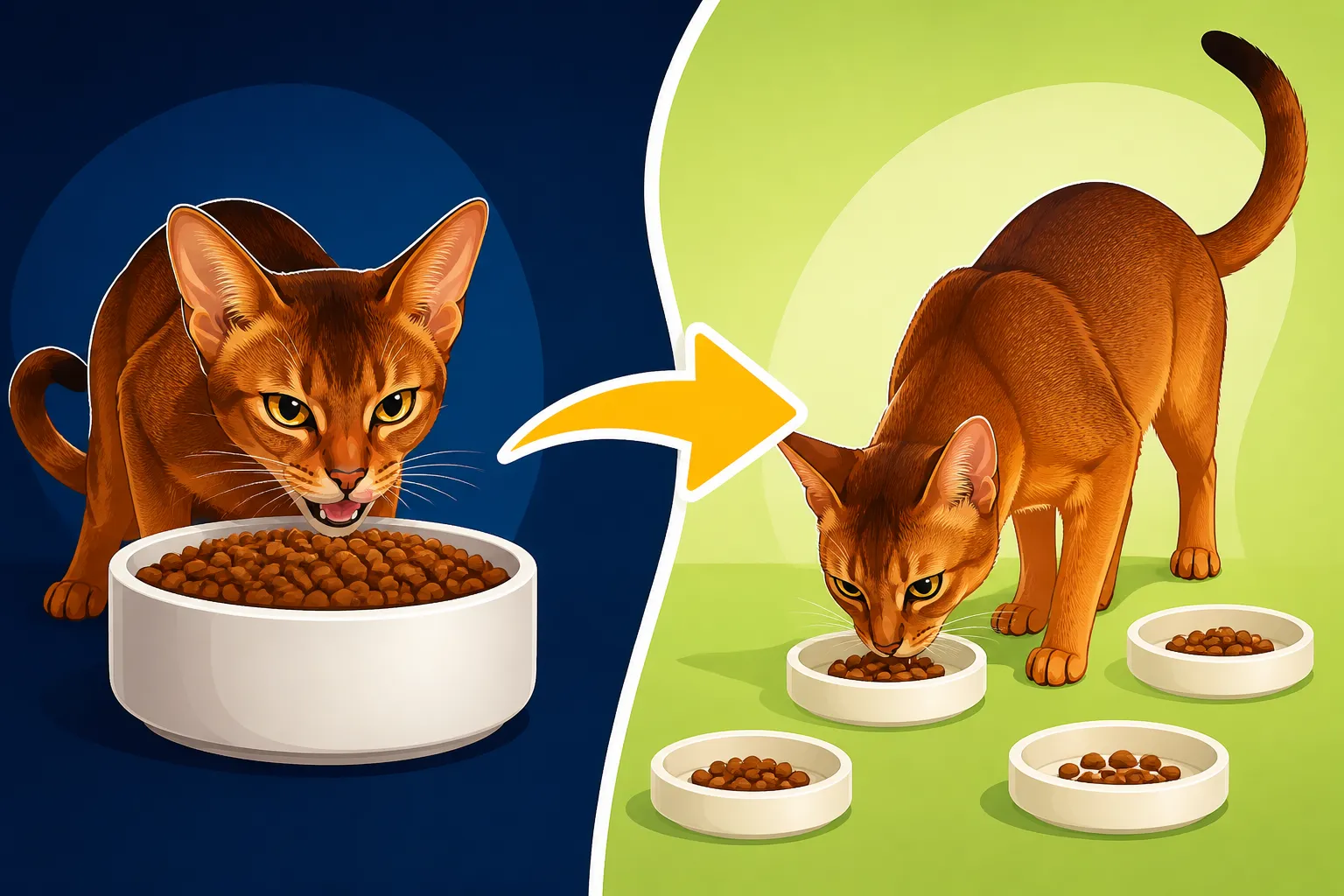
Beyond puzzle feeders, you can implement foraging by hiding portions of their daily kibble ration in various safe spots around the house. Place small amounts in different rooms, on low shelves, or even inside empty toilet paper rolls that they have to bat open. This encourages them to "hunt" for their food throughout the day, providing exercise and mental engagement. It turns eating into a fun, interactive game rather than a passive act. This not only makes mealtime more exciting but also helps burn off some of that boundless Abyssinian energy.
Interactive Play Before Meals
Think like a wild cat. They don't just find prey; they stalk it, chase it, and then catch it. Incorporating a short, vigorous play session before a scheduled meal can tap into this "hunt, catch, eat" sequence. Use a wand toy or a laser pointer to get your Abyssinian running, jumping, and pouncing. Make sure the play session ends with a "catch"—let them capture the toy several times, simulating a successful hunt.
After this simulated hunt, offer their meal. They'll be slightly tired, mentally satisfied from the "catch," and physically ready to refuel. This sequence reinforces the natural rhythm of a predator and can make them more eager to eat a full meal. It also helps to prevent them from becoming restless or destructive between meals, channeling their energy constructively. This method provides a clear transition from activity to nourishment, helping to cement the value of the meal.
Multi-Cat Households and Feeding Dynamics
If you have more than one cat, especially if one is an Abyssinian, feeding can become a complex dance. In multi-cat households, free-feeding can lead to resource guarding, overeating by one cat, and under-eating by another. The energetic Abyssinian might try to eat everyone's food, or a more timid cat might get pushed away.
Scheduled feeding is even more critical in these situations. It allows you to:
- Feed cats separately: If necessary, feed each cat in a different room or a designated space to prevent competition.
- Use microchip feeders: For precise portion control and to ensure each cat only eats their food, consider using microchip-activated feeders. These are great for preventing food theft and managing special diets.
- Monitor individual intake: You can easily see if each cat is finishing their portion, which is vital for tracking health and appetite.
By managing feeding dynamics carefully, you ensure all your feline companions, especially your high-drive Abyssinian, receive proper nutrition without stress or conflict. It ensures that mealtime is a positive experience for every cat in the house.
Addressing Common Challenges with Scheduled Feeding
Making the switch from free-feeding to scheduled meals can come with a few bumps in the road. Your Abyssinian might protest, or you might second-guess yourself. It's totally normal! But with a little patience and consistency, you can navigate these challenges successfully.
The "But They're Always Hungry!" Dilemma
This is perhaps the most common concern for owners transitioning an Abyssinian to scheduled meals. Your cat might vocalize more, follow you around, or generally act as if they are starving, even if it's only an hour after their last meal. This isn't necessarily true hunger; it's often a learned behavior or a cry for attention, reinforced by years of having food on demand. Abyssinians are incredibly smart and will quickly learn what behaviors get them what they want!
The key here is consistency and not giving in. Understand that a healthy Abyssinian will not starve itself. Stick to your scheduled meal times. Ignore the dramatic meows and plaintive stares. Distract them with a short play session, a cuddle, or a new toy. Eventually, they will learn that food appears at your scheduled times, not when they demand it. You might even find Why an Abyssinian Asks for Food It Does Not Need is a huge motivator for their vocalizations. If you're genuinely concerned about their caloric intake, track their weight, but trust the process. Their body will adjust to the new rhythm, and those "hunger pangs" will diminish as their internal clock resets.
Transitioning from Free-Feeding to Scheduled Meals
Going cold turkey from a full bowl to strict meal times can be a shock for some Abyssinians. A gradual transition often works best. Here's a typical approach:
- Phase 1: Limited Access: For the first few days, leave the dry food out for shorter, defined periods throughout the day – perhaps 30 minutes in the morning, 30 minutes at midday, and 30 minutes in the evening. Pick up any uneaten food after these periods. This starts to break the habit of constant access.
- Phase 2: Introduce Wet Food: Once they're used to the limited dry food access, start offering a portion of wet food (if you plan to use it) at one of the scheduled times. Wet food is often more appealing and can help motivate them to eat within the designated window.
- Phase 3: Reduce Frequency: Gradually reduce the feeding windows to two or three fixed times per day, picking up all food between meals. This is where you really start establishing the routine.
- Consistency is Paramount: Stick to your schedule. Cats are creatures of habit, and routine will be your best friend during this transition. It might take a week or two, or even longer for particularly stubborn Abyssinians, but they will adapt.
During this time, ensure your Abyssinian has plenty of other enrichment – toys, climbing structures, scratchers – to keep them occupied and reduce food-seeking behaviors driven by boredom.
Dealing with Finicky Eaters
Some Abyssinians can be quite finicky, turning their nose up at new foods or even their usual fare if they're not truly hungry. This can be extra challenging during a transition period. If your Abyssinian isn't eating their scheduled meal, resist the urge to immediately offer something else. Leave the food down for 15-20 minutes, then pick it up. They will learn that this is their window.
If they consistently refuse food, consider these points:
- Food Quality: Is the food truly high-quality and palatable? Some cats are very particular about taste and texture.
- Freshness: Are you serving fresh food at each meal? Stale dry food or wet food that's been sitting out for too long can be unappetizing.
- Stress: Is there anything new or stressful in their environment that might be impacting their appetite?
- Underlying Health Issues: If finicky eating is a sudden change or is accompanied by other symptoms, a vet visit is always warranted. Why a Lethargic Abyssinian Needs Blood Work Fast isn't just about severe anemia; any sudden change in appetite warrants checking.
Don't panic if your Abyssinian skips a meal or two during the transition. As long as they are otherwise healthy and energetic, a little hunger will only make their next scheduled meal more appealing. Patience and consistency are your greatest allies in overcoming finicky eating habits, fostering a healthier relationship with food.
Monitoring Your Abyssinian's Weight and Health
Successfully transitioning to scheduled feeding is a huge accomplishment, but the journey doesn't end there. Ongoing monitoring of your Abyssinian's weight, body condition, and overall health is crucial to ensure your new feeding regimen is truly benefiting them.
Regular Weight Checks and Body Condition Scoring
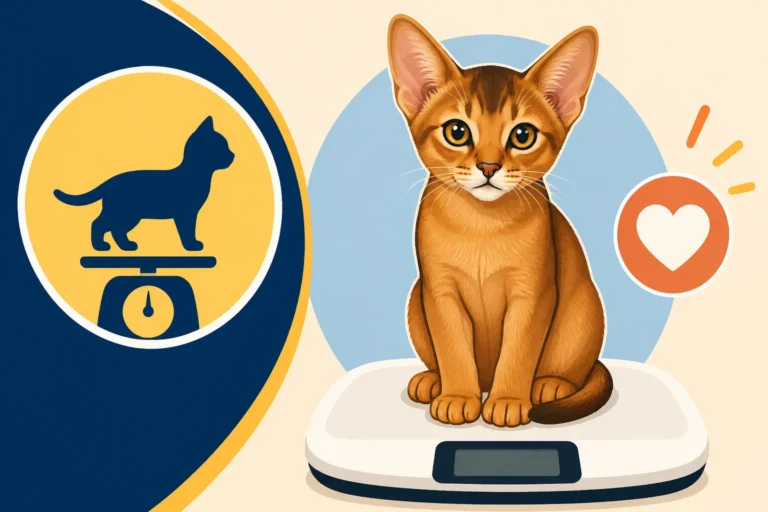
Because Abyssinians are naturally lean and muscular, a slight change in weight can be hard to spot with just your eyes. That's why regular weight checks are so important. Ideally, you should weigh your Abyssinian at least once a month at home, or during their annual vet check-ups. A kitchen scale or a baby scale can work for smaller cats, or you can weigh yourself, then weigh yourself holding your cat, and subtract the difference. Keep a log of their weight to spot trends over time.
Beyond the number on the scale, mastering Body Condition Scoring (BCS) is invaluable. This involves feeling your cat's ribs, spine, and waist.
- Ideal: You should be able to easily feel their ribs with light pressure, but not see them. There should be a noticeable waist tuck when viewed from above, and a slight abdominal tuck when viewed from the side.
- Too Thin: Ribs are very prominent, spine and hip bones easily visible.
- Overweight: Ribs are difficult to feel due to fat cover, no discernible waist, and a rounded abdomen.
A consistent BCS indicates your feeding plan is on track. Learning How to Read an Abyssinian's Body Condition Through That Coat is important because their ticking can sometimes hide subtle changes.
Recognizing Signs of Health Issues
Scheduled feeding offers a fantastic advantage in being able to quickly spot changes in your Abyssinian's appetite or eating behavior, which can be early indicators of underlying health issues. With free-feeding, a slight dip in appetite might go unnoticed for days, but with scheduled meals, a refusal to eat is immediately apparent.
Watch for these signs:
- Lack of Appetite: Consistently refusing one or more scheduled meals.
- Changes in Eating Style: Eating very slowly, dropping food, or showing discomfort while eating (which could indicate dental pain). Why an Abyssinian Drops Food While Eating is a definite red flag.
- Increased Thirst or Urination: While wet food helps with hydration, excessive thirst could be a sign of kidney issues or diabetes.
- Lethargy or Reduced Activity: If your normally energetic Abyssinian suddenly seems quiet or less playful. Why a Suddenly Still Abyssinian Needs a Vet is advice every Abyssinian owner needs to remember.
- Vomiting or Diarrhea: Any digestive upset should be monitored closely.
Don't hesitate to contact your vet if you notice any persistent changes. Early detection can make a significant difference in treatment outcomes.
When to Consult Your Veterinarian
Your veterinarian is your best partner in ensuring your Abyssinian's optimal health. It's always a good idea to consult them when:
- You're making a major dietary change: Especially if your cat has existing health conditions. They can help you calculate exact caloric needs and recommend specific food types.
- Your Abyssinian refuses to eat for more than 24 hours: Anorexia in cats, especially a prolonged one, can quickly lead to serious health problems like hepatic lipidosis. This is a medical emergency.
- You notice persistent weight loss or gain: Despite adjusting food portions, if your cat's weight isn't stabilizing at an ideal level, further investigation is needed.
- Any concerning health symptoms appear: As mentioned above, changes in appetite coupled with other symptoms warrant a prompt vet visit. This could include issues like What Kidney Failure Looks Like in a Young Abyssinian or Why an Abyssinian Kitten's Gums Fail at Six Months.
- For regular check-ups: Even healthy Abyssinians need annual check-ups. These visits include a weight check, physical exam, and discussion about diet and any behavioral changes. What an Abyssinian's Annual Checkup Costs is an essential budget item for any responsible owner.
By being proactive and attentive to your Abyssinian's eating habits and overall health, you can ensure they live a long, vibrant, and healthy life. Scheduled feeding is a powerful tool in your care arsenal, helping you maintain that strong connection with your beautiful, energetic companion.
Disclaimer
This article is for general informational purposes only and does not constitute professional advice. Laws, prices and regulations vary by location and change over time. Consult a qualified professional for guidance on your specific situation.