How Long an Abyssinian’s Legs Are Relative to Its Body
An Abyssinian can look almost all legs when it trots across a room, yet there is no single standard measurement for how long its legs should be compared with its body. The breed’s fine-boned frame, short coat, tucked-up underside, and athletic stance all contribute to that impression. This guide explains what those proportions mean, what is typical, and when an unusual gait deserves attention.
Why an Abyssinian’s legs look so long
A lean body makes every line stand out
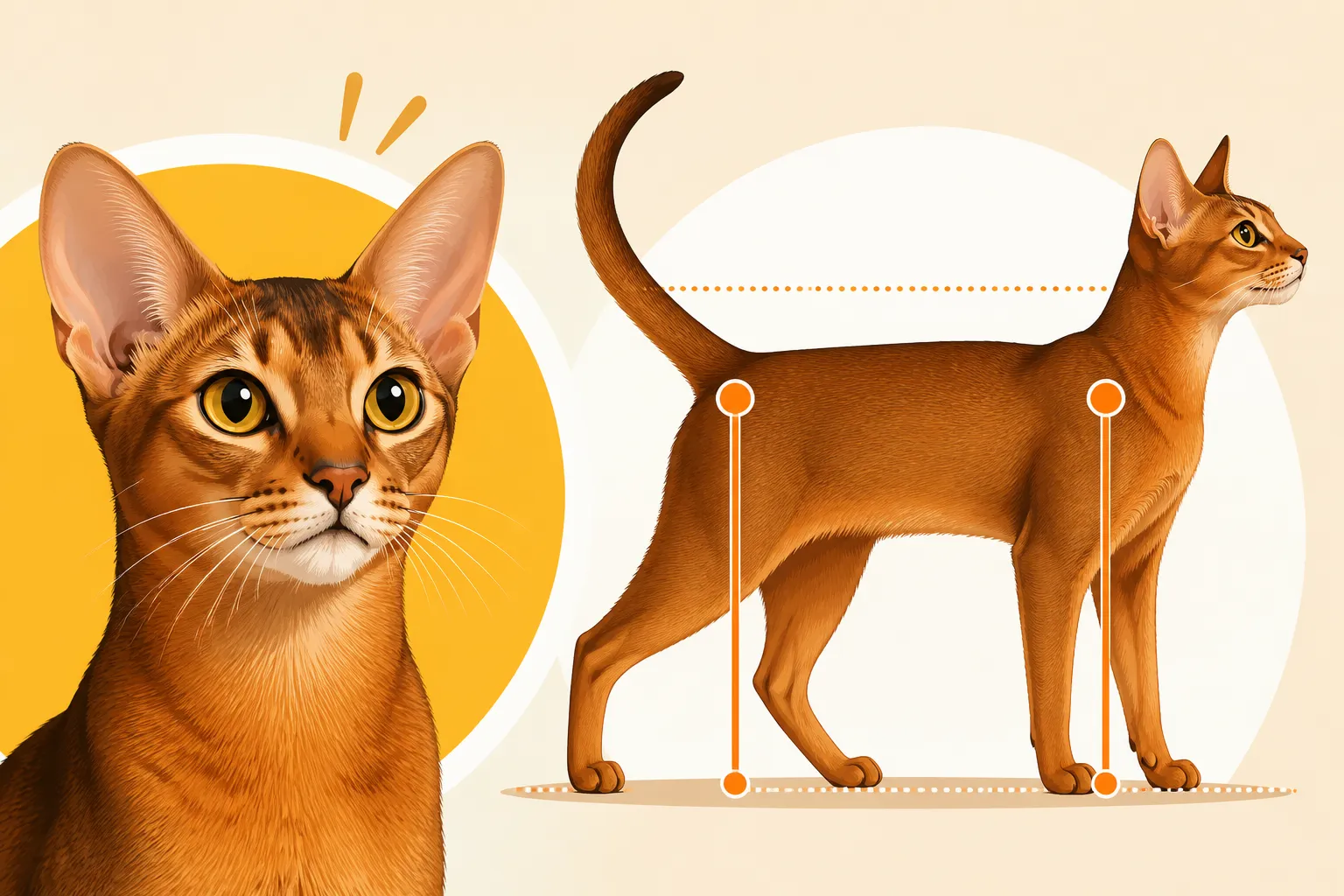
Abyssinians are medium-sized, athletic cats with a relatively fine-boned appearance. Their legs are slender and well muscled rather than heavy, and their short, close-lying coat does little to soften the outline. When you see one moving across a bright floor or standing beside a stockier cat, those clean lines can make its legs seem especially long.
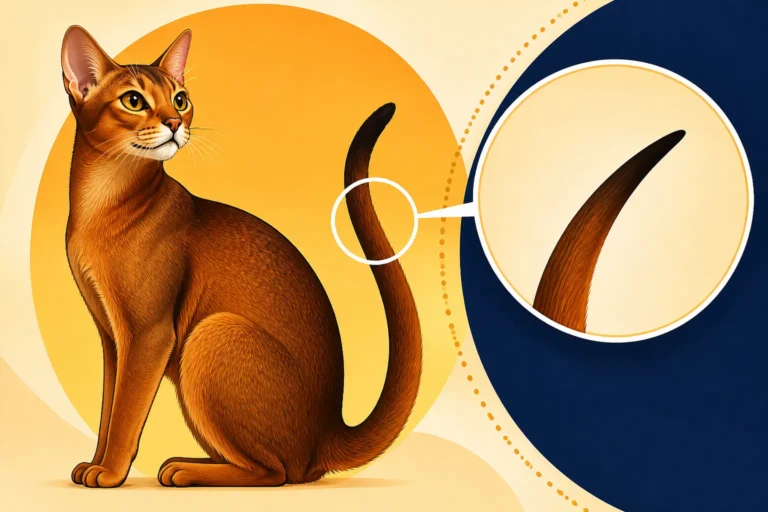
The breed’s body also contributes to the effect. An Abyssinian usually has a defined waist and a noticeable tuck-up beneath the abdomen. That lifted-looking underside creates a visual gap between the chest and the floor, so the legs can appear longer than they would on a cat with a rounder belly or broader frame. Its long, tapering tail adds to the overall impression of an agile, elongated silhouette.
This is a matter of proportion, not a sign that the cat is unusually tall or built like a large wild feline. An Abyssinian should look balanced: leggy and graceful, but not so long in the limbs that the body seems weak or out of proportion. The breed’s athletic build and upright posture are part of what make it look ready to spring onto a shelf at any moment.
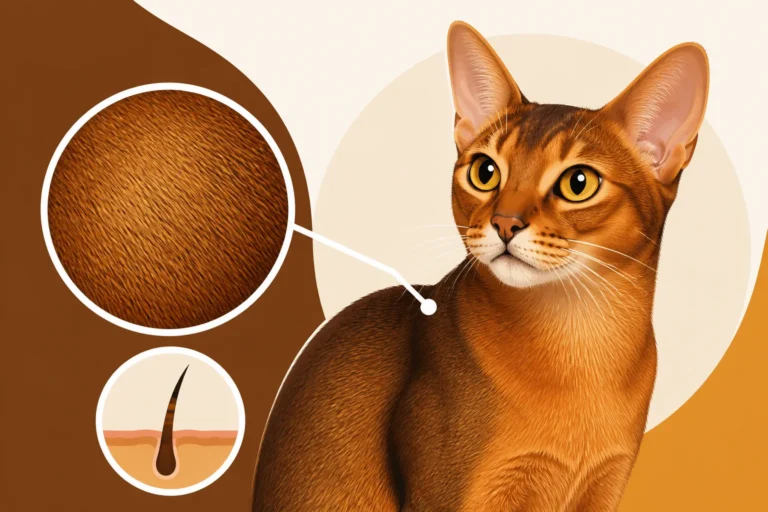
The coat can make that outline more obvious. Because it is short and close to the body, it does not hide the shape of the shoulders, hips, or legs. If you are curious about how coat and body shape work together, What an Abyssinian's Body Type Is Called explores the breed’s overall build, while Why an Abyssinian's Coat Lies Close to the Body explains why the coat reveals so much of the silhouette.
The stance is part of the picture
Cats generally stand and walk on their toes, with the heel raised above the ground. This digitigrade stance gives their legs a longer, springier look than a human-style flat-footed stance would. Abyssinians can appear especially poised because their limbs are slim, their joints are clearly defined, and their bodies are built for quick changes in direction.
When an Abyssinian is standing still, look at the whole outline rather than judging the legs by themselves. The chest, back, waist, hips, and tail should appear to work together. A cat that is relaxed may stand with its weight evenly distributed, while an alert cat might shift its posture forward as it watches a toy or prepares to jump. Either stance can change how long the legs seem.
Movement also affects perception. A walking Abyssinian stretches and gathers its limbs in a fluid, efficient rhythm. During a leap, the legs extend dramatically; when it crouches, they seem much shorter. That difference is normal. A single photograph, especially one taken during a jump or from a low angle, is a poor way to judge whether a cat’s proportions are typical.
There is no standard leg-to-body ratio
Breed descriptions focus on the overall outline and balance rather than prescribing a precise ratio between leg length and body length. Measurements can vary with sex, age, frame, posture, and individual family line. Even two healthy Abyssinians from the same litter may not look identical: one might have a slightly longer-looking body, while another appears leggier or more compact.
That is why measuring from the floor to the hip and comparing it with body length rarely gives a meaningful answer on its own. The result depends on exactly where you place the measuring tape, whether the cat is standing squarely, and whether its spine is relaxed or stretched. A number may sound objective without actually telling you whether your cat is well proportioned or moving comfortably.
If you are comparing your cat with pictures online, be cautious. Camera angle, lens distortion, posture, and the surface the cat is standing on can all change apparent proportions. A cat photographed close to the floor may look taller; one photographed from above can look shorter and broader. A veterinarian or experienced breed judge assesses the whole cat in person, not a single ratio pulled from a photo.
What the legs contribute to an Abyssinian’s build
Long-looking legs support an agile, athletic frame
Abyssinians are known for being active, curious cats. Their legs help them jump, climb, turn quickly, and move around furniture with confidence. They are not just decorative features of a breed silhouette: strong, well-coordinated limbs help the cat reach a high perch, descend safely, and make small adjustments in midair.
That does not mean every Abyssinian needs to leap onto the tallest bookcase. Cats vary in confidence and ability, and a safe home should offer a range of climbing options. A sturdy cat tree, a low step, or a stable window perch gives a cat choices. If you are planning a climbing route, How an Abyssinian's Legs Are Long Relative to Its Body is not the only consideration; the route’s stability and the cat’s comfort matter just as much. For practical setup ideas, see How an Abyssinian's Climbing Route Safe—or, more directly, How to Make an Abyssinian's Climbing Route Safe.
An Abyssinian that has always jumped enthusiastically may start choosing lower surfaces as it gets older, and that change should not automatically be dismissed as “just slowing down.” Pain, stiffness, or weakness can affect movement even when a cat still looks lean and lively. The article How Arthritis Shows in an Abyssinian That Used to Climb covers signs that can be easy to miss in a cat who has always been athletic.
The legs should look balanced with the rest of the cat
Abyssinian legs can look long, but they should still appear in proportion to the body. If the limbs seem extremely thin compared with the torso, or the back appears markedly arched or uneven, take a closer look at the cat’s overall condition and movement. A naturally slender breed is not the same as a cat losing muscle or weight.
A healthy-looking outline also depends on muscle. The shoulders and thighs should support movement without looking weak or hollow. Since the coat is short, changes in muscle condition may be easier to see than they would be beneath a thick coat, but owners can still mistake a naturally lean shape for a new loss of condition. How to Feel an Abyssinian's Ribs Under a Ticked Coat explains how to assess body condition more reliably than relying on appearance alone.
For a kitten, proportions change as the body grows. A young Abyssinian may look awkward for a while, with legs that seem too long for its torso or paws that appear oversized. That uneven stage does not, by itself, mean anything is wrong. Growth happens in fits and starts, and a kitten can look different from one month to the next. Your veterinarian can assess growth alongside weight, muscle condition, and general health.
A quick visual guide
| What you notice | What it may mean | What to do |
|---|---|---|
| Slim legs and a tucked-up waist | A typical athletic outline for many Abyssinians | Judge the full body and how the cat moves |
| Legs that look longer in a jump than while standing | Normal changes in posture and extension | Avoid judging proportions from one action photo |
| One leg held up or a new limp | Possible pain or injury | Contact a veterinarian for guidance |
| A gradual change in jumping or stair use | Could reflect discomfort, weakness, or aging | Track the change and arrange a veterinary check |
| A kitten with temporarily uneven proportions | Often part of normal growth | Bring it up at routine kitten visits, especially if movement seems abnormal |
How to assess your cat’s proportions at home
Watch the cat stand, walk, and jump
If you want a useful picture of your Abyssinian’s proportions, observe it in several ordinary positions. Watch it stand naturally on a level surface, walk at a relaxed pace, and step onto a low, stable platform. Notice whether the limbs move evenly and whether the cat appears comfortable placing weight on all four paws.
Look for changes rather than chasing a perfect measurement. Does your cat now hesitate before jumping onto a chair it used to reach easily? Does one hind leg seem to take a shorter stride? Is it landing awkwardly, avoiding stairs, or grooming less because it has trouble reaching a spot? These details tell you more about comfort and function than the exact distance between the floor and its hip.
You can keep a simple note of what you observe, including when the change began and whether it is getting better, worse, or staying the same. A short video of the cat walking on a level floor may help your veterinarian understand what you are seeing. Avoid repeatedly making your cat jump to “test” its legs; that can be stressful and may aggravate an injury.
Make climbing safer without discouraging normal activity
Abyssinians often enjoy height, but a safe climbing setup should provide secure footing and sensible routes down. Place sturdy shelves or a stable cat tree where your cat can move between levels without needing one enormous leap. Keep tall furniture from wobbling, and avoid arranging perches above hot stovetops, open balconies, or other hazards.
As your cat’s needs change, adjust the environment rather than assuming it has become lazy. A lower resting spot, a step beside a favorite chair, or a ramp to a regularly used perch may help a senior cat keep its routines. If you are shopping for pet steps, a carrier, or other basics, Chewy is one place owners may browse; compare the item’s dimensions and stability with your space and your cat’s size before choosing anything. Store heavy climbing equipment securely and check it regularly for loose parts.
Chewy may also be useful when you are looking for practical items such as a non-slip mat or a carrier that is comfortable to enter. Those products cannot diagnose a mobility problem, though. If a cat suddenly stops climbing, seems painful when handled, or starts favoring a limb, contact a veterinarian rather than trying to solve the change with new equipment alone. For more about environmental needs, How Many Vertical Levels an Abyssinian Needs offers ideas for making height accessible.
Know which changes deserve veterinary attention
A cat’s outline can look different because it is crouching, tense, growing, or simply viewed from an odd angle. A sudden limp, swelling, reluctance to bear weight, crying when touched, or a noticeable change in balance is different. Those signs call for prompt veterinary advice, especially if they follow a fall or other injury.
Less dramatic changes can still matter. If your Abyssinian gradually stops jumping, hesitates on stairs, or spends more time resting in places that are easy to reach, pay attention. Cats often adapt quietly rather than announcing discomfort, and an energetic breed may keep moving even when something hurts. A veterinarian can check joints, paws, muscle condition, and general health to identify possible causes.
Do not try to correct an apparent leg-length difference by stretching a limb, manipulating a joint, or giving human pain medication. Cats can be harmed by medications intended for people, and a home examination cannot reliably distinguish a harmless posture from an injury or developmental issue. If the change is new or persistent, describe what you have noticed and let a professional decide what evaluation is appropriate.
Common questions about Abyssinian leg proportions
Are Abyssinians taller than most cats?
Abyssinians often look taller or leggier than cats with a stockier build, but appearance is not the same as a precise height comparison. Their slim limbs, short coat, and tucked-up waist make the legs conspicuous. Individual cats vary, and overall size depends on frame, sex, age, and body condition.
A better description is that the breed has a graceful, athletic outline. Some Abyssinians look particularly long-legged, while others have a more compact appearance and still fit the breed’s general type. If you are comparing breeds, use descriptions of the complete body rather than focusing on a single feature. How Big an Adult Abyssinian Gets discusses overall size, while How Much an Adult Male Abyssinian Weighs and How Much an Adult Female Abyssinian Weighs address weight differences.
Do Abyssinian kittens have unusually long legs?
Abyssinian kittens can look leggy, especially during growth spurts when their limbs seem to get ahead of the rest of their bodies. A kitten may briefly appear all paws and legs, then look more balanced as its body fills out. That temporary awkwardness is common in growing animals and is not enough, by itself, to identify a health problem.
Pay more attention to function and symmetry. A kitten that plays, walks, and climbs comfortably on all four limbs is different from one that consistently limps, falls, avoids putting weight on a leg, or appears painful. Bring concerns to routine veterinary appointments, and ask sooner if a change is sudden or affects movement.
Should I measure my Abyssinian’s leg-to-body ratio?
Usually, no. There is no standard home ratio that can confirm whether an Abyssinian’s legs are the “right” length. Measuring a moving cat is difficult, and small differences in posture or measurement points can produce misleading results. The figure may create worry without giving you a meaningful answer.
If your concern is appearance, compare the cat standing naturally with its own earlier photos taken from a similar angle. If your concern is health, focus on walking, jumping, symmetry, comfort, and any change from your cat’s normal behavior. Chewy can help owners find everyday pet supplies, but it is not a substitute for an in-person assessment when a cat’s movement changes. For background on the breed’s overall appearance, What an Abyssinian Looks Like Against the Show Standard describes how the full silhouette is considered.
Does a long-legged appearance mean my cat is underweight?
Not necessarily. Abyssinians are naturally lean and fine-boned, so a visible waist and slim legs can be normal. But a new change in body shape, a prominent spine or hips, reduced muscle over the thighs, or unexplained weight loss deserves attention. A cat can lose muscle even if its weight does not appear dramatically different at first.
Use regular weigh-ins and veterinary body-condition checks rather than judging by one glance. If you are unsure whether your cat is maintaining healthy muscle, ask your veterinarian to show you how to assess its condition safely. A cat’s shape is best understood alongside its appetite, activity, weight history, and general health—not by leg length alone.
Disclaimer
This article is for general informational purposes only and does not constitute professional advice. Laws, prices and regulations vary by location and change over time. Consult a qualified professional for guidance on your specific situation.